




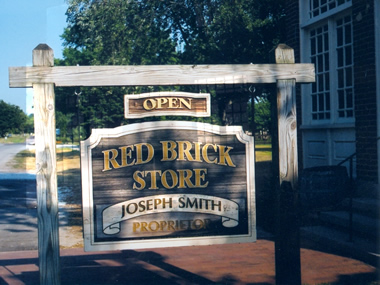
The Relief Society will celebrate its 167th birthday on Tuesday, March 17, 2009. From the 20 women who attended that first meeting in the upper room of Joseph Smith’s Red Brick Store in Nauvoo, Illinois, the Relief Society has grown to a worldwide organization of over 5 million sisters.
The Relief Society actually had its beginnings in the 1830s in Kirtland, Ohio, during construction of the Kirtland Temple. There was much to be done, and as the temple was raised stone by stone, sisters from Kirtland and surrounding areas joined in the work. Some churned butter to send to the workmen, others cooked meals, and still others cleaned and polished the woodwork as it was completed. One day Joseph Smith entered the temple and saw the women working together sewing the temple veils. “Well, sisters,” he said, “you are always on hand. The sisters are always first and foremost in all good works. Mary was first at the resurrection; and the sisters now are the first to work on the inside of the temple.” 1
When the Saints moved to Nauvoo a few years later, women again joined together to helped with the building of the Nauvoo Temple. And again, there were many tasks to be done. Sarah M. Kimball, wife of nonmember Hiram Kimball, and her seamstress sewed shirts for the men working on the temple. Knowing that additional hands could produce more clothing, they invited several neighbors to join with them in the Kimball’s parlor on March 4, 1842. As they worked, the women discussed the idea of a ladies’ society. Their enthusiasm grew as the hours went by; and before the day was over, Eliza R. Snow had been asked to write a constitution and bylaws to present to the Prophet Joseph Smith.
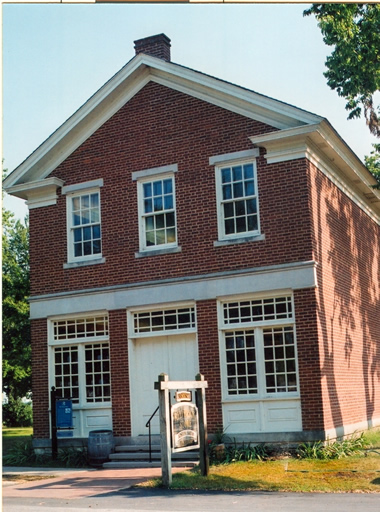
According to Sarah’s account, Joseph told Eliza that although the constitution and bylaws were the best he had ever seen, “this is not what you want. Tell the sisters their offering is accepted of the Lord, and He has something better for them than a written constitution. Invite them all to meet me and a few of the brethren in the Masonic Hall over my store next Thursday afternoon, and I will organize the sisters under the priesthood after a pattern of the priesthood.” 2
When the twenty sisters met with the Prophet on Thursday, March 17, Elders John Taylor and Willard Richards of the Quorum of the Twelve Apostles were also present. Addressing the group, Joseph put in words “the object of the Society”: “that the Society of Sisters mighty provoke the brethren to good works in looking to the wants of the poor—searching after objects of charity, and in administering to their wants—to assist by correcting the morals and strengthening the virtues of the community.” 3 At a later meeting, he told them they were “not only to relive the poor, but to save souls.” 4
The women chose Emma Smith as their president, and she then selected Sarah M. Cleveland as first counselor and Elizabeth Ann Whitney as second counselors. Emma told the sisters, “We are going to do something extraordinary. When a boat is struck on the rapids with a multitude of ‘Mormons’ on board, we shall consider that a loud call for relief; we expect extraordinary occasions and pressing calls.” 5 The name chosen for this new organization was The Female Relief Society of Nauvoo.
Joseph donated a five-dollar gold piece for the initial funding of the society, and additional contributions at that meeting brought the total to $10.62. The women elected Eliza R. Snow as secretary, Phebe M. Wheeler, assistant secretary, and Elvira A. Coles, treasurer. Emma then discussed the duties of the members as she saw them; to “seek out and relieve the distressed—that each member should be ambitious to do good.” 6
Sarah Kimball served as general secretary in 1881. She prepared a jubilee box of photographs, documents, and memorabilia to be opened fifty years later. In 1930, not only a jubilee year but also the centennial of the organization of The Church of Jesus Christ of Latter-day Saints, Louise Y. Robison, then general president, opened the box.

Sarah wrote to her successor:
Hon. Secretary: This is dedicated to you with the fond hope and firm belief that you are enjoying many advantages and blessings that were not enjoyed by your predecessors.
May God abundantly bless you and your labors.
(Signed) Sarah M. Kimball
Sec. Relief Society
Salt Lake City
April 1st, 1881 7
Now in the twenty-first century, we Relief Society sisters around the world are indeed “enjoying many advantages and blessings” that were not enjoyed by [our] predecessors in 1930, 1881, or 1842. We have received a rich heritage of sisterhood from thousands of Relief Society sisters who, often under difficult conditions, have served each other and the Lord faithfully, building the organization of Relief Society as we now know it. To these pioneering sisters and, particularly to the “elect ladies,” the former Relief Society presidents, who shaped and led the Relief Society, we owe an immense debt of gratitude.
Ever since the organization of Relief Society, sisters have “always been on hand” and have been “ambitious to do good.” During the past 167 years, many a figurative boat has been “struck upon the rapids,” and Relief Society members, in innumerable ways, have answered the “call for relief.”
Relief Society is the largest organization for women in the world. But more importantly it is the Lord’s organization for women. Relief Society—and the sisters who carry out His work throughout the world—are indeed “something extraordinary!”
Notes
1 Edward W. Tullidge, The Women of Mormondom (New York, 1877), 76.
2 “Story of the Organization of the Relief Society,: The Relief Society Magazine 6 (March 1919): 129.
3 Minutes of the Female Relief Society of Nauvoo, March 17, 1842, Archives, The Church of Jesus Christ of Latter-day Saints.
4 Minutes, June 9, 1842. See also Joseph Smith, History of the Church 5:25.
5 Minutes, March 17, 1842; also “Story of the Organization of the Relief Society,” p. 133.
6 Minutes, March 17, 1842.
7 Quoted in Janet Peterson and LaRene Gaunt, Faith, Hope, and Charity: Inspiration from the Lives of General Relief Society Presidents (American Fork: Covenant Communications, 2008), p. 2.