









Youth
Stories
Connections
Families
Mobile apps
Interactivity
Collaboration
The exciting world of family history is blossoming with the continuous merging of new technology and a growing body of youthful, energized researchers. The 2013 RootsTech Conference in Salt Lake City, Utah, was attended by 6,700 people plus an additional 2,000 youth (ages 12-18). For three days, attendees were taught by professionals, dazzled by tech, and motivated by industry leaders. The time to jump in and become involved is now.

My motivation to stay motivated was fueled by the classes I attended and by the statements of Dennis Brimhall, President and CEO of FamilySearch International:
- 50% of people in the U.S. can’t name all four grandparents
- Go home and write down one page of what your great-grandchildren would like to know about you
- We’re running out of people who can read the old records
- People can build a family tree using a smartphone; now we’ll find a way to do this using a cellphone
- Traditional avenues we’ve used have got to go
- Create the stories right now. The key to the past is looking forward.
Unlike most people at RootsTech, my personal research extends overseas to a country with limited records and a foreign language. Therefore, one question was at the forefront of my mind at every lecture and at every vendor’s demonstration booth: how does all this affect my personal research?
The answer: profoundly
The reason: collaboration through social media and other internet resources
The days of “lone ranger research” are over. Today’s genealogist is making connections throughout the world; sharing information and exploring resources with newly discovered “internet cousins.” This is what RootsTech has taught me, and the results are astonishing. I have “met” people who can identify faces in my grandmother’s old photos, teach me the history of an ancestral village, point me to records accessible online, and assist me with translation. This is the future of research and I am living it now.
FamilySearch.org is at the forefront of this technology/genealogy evolution. Each week, FamilySearch uploads millions of digitized records that are available free of charge. There is a powerful “wiki” (genealogy encyclopedia) with research guides, over 400 online classes, and enhanced tools to share information and collaborate with others.
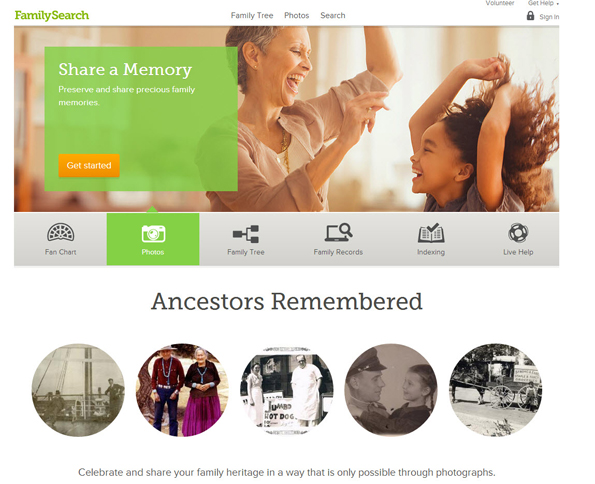
With this week’s release of the new look and expanded features of FamilySearch, there is something to entice everyone into this wonderful world of discovery. The interactive fan chart, Family Tree, and ability to add photos and stories to people on the tree provide innovative ways to view our ancestral lines and put “flesh on the bones” of those who appear there.
We now have the capacity to honor our ancestors by creating a portrait of who they are. Their faces will greet us every time we access our tree. As we add stories of who they became, we will better understand who we have become. What can be a better use of our time than creating this legacy of family?
“Every person who has ever lived has a right to be remembered and is a story waiting to be told. Every family is a story in progress.” Dennis C. Brimhall, CEO, FamilySearch
Carol Kostakos Petranek is a Co-Director of the Washington DC Family History Center and a Citizen Archivist at the National Archives in Washington, D.C.







Beth June 8, 2013
What indeed can be better use of our time than creating a legacy of family. Thank you, Carol, for your clarity and enthusiasm in your article. I'm glad I came here.
Jim IsonApril 19, 2013
Carol, great article. Glad you enjoyed RootsTech. Sorry I missed you. Jim