






After several tries, I discovered why Charles Dickens is called the greatest writer, besides Shakespeare, in the English language.
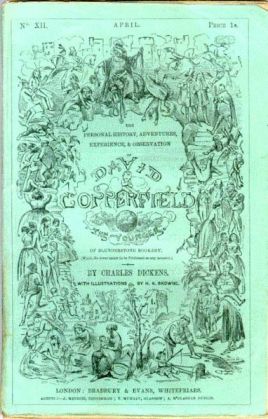 Like most high school students, I was forced to read Dickens. In my case, it was David Copperfield. Miss Henry, the quintessential spinster who taught Honor’s English at Poly High School in Riverside, California, was the prime mover. I was fifteen, and I can’t remember much about it, but I waded through the assigned pages without much enthusiasm. By the time I went to college I was ready to give it another try. For I did love to read, and I knew that if I loved books, I needed to read Dickens.
One day I went to the library and selected Great Expectations, mainly because it looked shorter than the others! I well remember curling up in a corner of the stacks, too excited even to walk back to my dorm. I was smart, I was literate, and I was going to love Dickens! After about fifty long, difficult pages, I put the book back on the shelf. I didn’t check it out, because I couldn’t imagine wading through the rest of it, and went home rather discouraged. If everybody thought Dickens was so great, what did they see that I wasn’t seeing?
It turned out that there wasn’t a big problem with Dickens, or with me as a reader. I just needed to grow up. A couple of years later I tried Dickens for the third time, and that time it clicked. I have been reading and rereading his books for nearly four decades now. I hoard my Dickens, savoring a novel every couple of years, and then revisiting it fifteen or twenty years later, when I will bring a different sensibility to it. This year, to celebrate the 200th anniversary of his birth, I wanted to reread David Copperfield, Dickens’s favorite of his novels, and the very first one I tried to tackle. I have just finished it, and I think it might be, word for word, the best novel ever written.
Perhaps it is a shame that we force Dickens on the young, because (at least for American children) his language is hard to follow. In this age of sound bites and 140-character Tweets, encountering a writer as wordy as Dickens can feel like body surfing a tsunami. Paid by the word, this writer of serial fiction always seems to take the long, scenic verbal route. If one adjective works, five or six are better! Yet, when you slow down and enjoy the ride, the verbal landscape is absolutely stunning. Dickens revels in observation; he sees everything, and he helps you see it too. His ability to inhabit each character, and then to show us the world through his or her eyes, is unparalleled in my opinion. Certain moments in the lives of these fictional creations will stay with you for years.
When I read David Copperfield again this year, I couldn’t remember the events of the plot at some points, yet felt an ache in my heart begin to surface, as if in response to a long forgotten pain from my own life. I didn’t remember what was coming, but I remembered how I felt about it, over forty years ago. How does he do that? He does it by answering the one great question of literature: how does it feel? How does it feel to be abandoned, to be loved, to be ridiculed, to be hungry, to be in love, to want to die, to kill someone, and so on, through the endless myriad of human experiences. How does it feel to be human? To be you?
And that leads to one of the great secrets of Dickens’s enduring popularity: He seems to be talking just to you. Millions of readers, all over the world, hear his voice in their minds as they read, addressed directly to them. He really meant it to be that way. Long before the internet made reader reviews common, Dickens listened to his readers. He read their letters, responded to them, and in many cases, changed his works in progress in response to them. For example, Great Expectations has two endings, a melancholy one and, in response to objections from loyal readers, a happy one. (Order the Recorded Books audio version, and the great Frank Muller will read them both to you.) Miss Mowcher, a minor character in David Copperfield, was changed from a mercenary, conniving dwarf to a more innocent version in response to a letter written by a little person who felt vilified. This intimate approach makes Dickens seem modern and present even two hundred years later. There is a moment I love in A Christmas Carol where Dickens says, “I am standing, in spirit, right at your elbow.” Reading this line always gives me the chills, because I really feel that he is.
Described by Dickens as the favorite of his literary “children,” the best of Dickens is definitely in David Copperfield. The great characters, from the comic McCawber to the slimy reptilian villain Heap, will have you alternately laughing and seething with rage. The long, intricate symbolic chains, from the naming protocol to the use of the sea, give you something to think about long after the last scene fades. (Just tracing the number and meanings of names David is given has undoubtedly furnished fodder for a doctoral thesis somewhere.) Every social theme from domestic abuse to alcoholism to social injustice is touched upon in a way that makes you stop and rethink your position. And finally, there is the artistry. Dickens, when he is on a roll, writes some of the most beautiful prose in the English language. It’s not sound bites – it’s a feast.
By my twenties, I had lived just enough to see that Dickens had something special to share with me. In my fifties, I’m starting to get what he was talking about, and revel in the beauty of his language and insights. In my eighties, I hope I will understand him on a little deeper level. I won’t ever get tired of him, and I count his works as treasures that have enriched my life. G.K. Chesterton said, “There is everything in Dickens.” Yep, just about.