










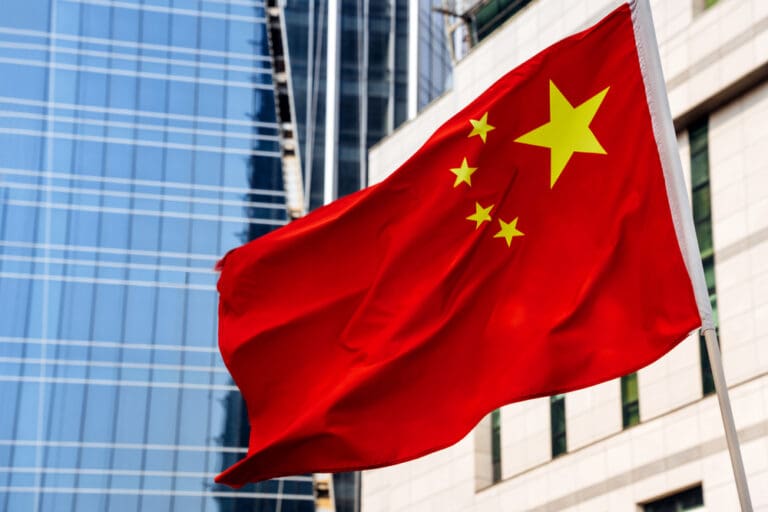


The Church has had two painful setbacks in large foreign countries recently. In Russia, Brigham Young University has been blacklisted as an “undesirable organization” with potential criminal penalties for those affiliated with the university (see stories in the Moscow Times and the Salt Lake Tribune). In China, Church meetings have been banned for local citizens in Beijing and apparently some other cities, as reported in the Salt Lake Tribune. In both cases, we still don’t know why.
Such challenges may happen in many countries that don’t have the strong tradition of religious liberty that America has had. We are a minority almost everywhere on the planet and may need the approval and kindness of national and local governments to meet, to worship, and especially to proselytize. Even some democratic nations such as Switzerland, where I served my mission long ago, don’t allow missionaries to proselytize today.
Respecting the laws of the land wherever we are is an important principle for Latter-day Saints. One of our Articles of Faith declares that “We believe in being subject to kings, presidents, rulers, and magistrates, in obeying, honoring, and sustaining the law.” For example, Brigham Young University students studying at the BYU Jerusalem Center in Israel agree to strictly follow the Jerusalem Center’s non-proselytizing agreement with Israel (an agreed-upon rule rather than a law, as I understand), as explained on the Center’s “Non-Proselytizing webpage.” Students who violate that agreement will be summarily sent home, as I understand.
Foreigners attending Church in China hear statements that are regularly read to the members in Church meetings, reminding them of their duty to follow the law in China and not proselytize Chinese citizens.
In China, where foreign missionaries historically were often followed by gunboats and violent oppression, as in the Opium Wars for the sake of profits from deadly addictive drugs, one can understand China’s reluctance to permit missionaries or to welcome the influence of Western religion unless it is strictly controlled. Given that background, in my opinion it is remarkable how kindly we Latter-day Saints were treated by authorities. Foreigners in many large cities such as Shanghai, the remarkably exciting and safe place where I lived, were allowed to meet and worship openly, but with some strict controls.
We worked hard to maintain trust and observe the rules carefully. We taught members to respect the law, be respectful of the nation and its government, and be cautious with social media. Still, problems could occur, such as naïve travelers giving away Books of Mormon or perhaps a member breaking other laws. We took potential violations very seriously.
When a setback or sudden change in our relationship with a foreign government occurs, I would suggest that a healthy first step for leaders and congregations there would be to have the same attitude that the Apostles of Jesus displayed when Christ told them some terrible news:
Now when the even was come, he sat down with the twelve.
And as they did eat, he said, Verily I say unto you, that one of you shall betray me.
And they were exceeding sorrowful, and began every one of them to say unto him, Lord, is it I? (Matthew 26:20–22)
It might be best to begin by sincerely asking, “Is it I or is it us?” In other words, “Did one of us, perhaps a branch or lone member do something, even in good faith, that might have upset authorities, broken the law, or somehow violated trust?” This may take some investigation, but understanding what might have gone wrong may be an important step in responding to trouble. In large nations with complex bureaucracies, knowledge of a problem might take weeks or months to filter up from local organizations to the central government, so what seems like sudden harsh reaction could have been triggered by something in a seemingly remote past, so don’t limit the investigation to very recent events. It may also take some creative empathy to understand how something might have been viewed as a threat, insult, or breach of trust.
If we see that there might have been a problem, prompt action and open communication with the authorities, coupled with sincere apologies and a clear action plan, may be urgently needed.
If no wrongdoing is evident, don’t assume that there is nothing to correct. Perhaps one can simply speak to government leaders and ask for guidance on what problems might have occurred and what can be done to correct past problems. Local leaders might not be willing to share information for some period of time, but it might help if they know you would welcome feedback and are conducting an investigation to identify and resolve potential misconduct from local and expat members as well as recent tourists.
One of the many surprises I encountered while living in China was that my lifelong attitude about Communism was incomplete and that some Communists (meaning members of the Chinese Communist Party, roughly 7% of China’s population) were genuinely good people, people who were not just seeking power and gain, but were patriots who loved their country, loved their neighbors, and sought to do good. For some, joining the Party was simply the logical way to make a difference and move forward in life, but was not their god. And in spite of official atheism, some Party members were people of genuine faith. China is complicated. All nations and societies are complicated. Stereotypes and lazy assumptions will often fail us.
It’s tempting for Americans, especially those of us living here in the States, to view the unexpected changes in the policies of Russia and China as capricious, illogical actions taken by Communist governments against a benign, lovable minority religion trying to bless both nations. Faithful members of the Church in both countries may be doing much to make life better and happier for others with their examples and charity. However, based on what I experienced during almost nine years in China (and a prior brief visit to Russia), I think it’s a mistake to view the recent actions of China or Russia as irrational. While I strongly favor economic freedom over Communism, a strength of Communism, at least in China and Russia, is the ability to develop and patiently pursue long-term plans with forethought and deliberation. When a surprising setback or unexplained change happens, with closer examination or better communication, one may find that there are fair reasons behind the change. Of course, sometimes those reasons might be wrong or unjust.
No matter what the cause of a setback, beginning with a charitable and introspective “Is it I?” may be the wisest way to respond. Then listening carefully to those with local expertise and understanding may help find problems to resolve, or proactive ways to strengthen relationships and fortify trust. I saw good examples of such proactive efforts to build goodwill and trust by local leaders during my time in the Shanghai District, and trust that such efforts will continue across China and many other lands. China, Russia, and every nation on earth matters dearly to the Savior.
May we be able to build and maintain healthy relationships with many of the countries of the world.








Anna-Sophia McLaughlinJuly 12, 2025
Unfortunately, the recent crackdowns are likely a response to international politics. The Church, though world wide, is for obvious reasons seen as a predominantly American organization.
Jeff LindsayJuly 11, 2025
One reader asked why I didn't discuss the "obvious" theory that the crack down in China was retaliation against the U.S. A fair question, but to me, that's not obvious at all. The new restrictions seem to be directed primarily at local members rather than American expatriates, and are not being implemented uniformly across China, at least not at this time. If the goal were to slap America, I'd expect a nationwide policy to be implemented that did something besides inconveniencing Chinese members of a tiny church that most American politicians don't really care about.