






In President Russell M. Nelson’s April 2023 conference address, “Peacemakers Needed,” he said: “Now is the time to bury your weapons of war.” This, of course, references the Lamanites to whom Ammon taught the gospel. Mormon described how “When these Lamanites were brought to believe and to know the truth, they were firm, and would suffer even unto death rather than commit sin; and thus we see that they buried their weapons of peace, or they buried the weapons of war, for peace” (Alma 24:19).
President Nelson teaches ways we can bury our weapons of contention for peace. A sister to whom I minister made two lists from President Nelson’s talk: positive words that identify peacemaking behaviors and negative words that identify anti-peacemaking behaviors.
Peacemaking behaviors are seeds to be planted and nourished in the heart:
Be a light on a hill
Be charitable
Be civil
Be compassionate
Be decent
Be dignified
Be long-suffering
Be respectful
Bear others’ burdens
Bless those who curse you
Build others up
Build bridges of understanding
Bury your weapons of war
Cast off the natural man
Deliberate by the Spirit
Encourage
Heal misunderstandings
Humble yourself
Inspire
Interact in a higher, holier way
Lay aside bitterness
Love your enemies
Love one another
Love virtue
Make peace
Persuade
Pray for charity
Pray for courage
Pray for them who despitefully use or persecute you
Reconcile
Refuse to take offense
Replace belligerence with beseeching
Replace animosity with understanding
Replace contention by reconciling
Seek inspiration
Anti-peacemaking behaviors are weapons to be buried:
Accuse
Be belligerent
Be bitter
Be envious
Be defensive
Be hostile
Be jealous
Be prejudiced
Be prideful
Be selfish
Belittle
Bully
Condemn
Contend
Control with anger
Damage reputations
Defame
Defend position rigorously
Disagree passionately
Find fault
Insist your way or no way
Heap on burdens
Make others walk on eggshells
Malign
Polarize
Speak evil
Throw insults
Use cutting retorts
Use pathetic and pithy barbs
Use the silent treatment
Use vulgarity
Vilify
Many years ago, I heard of a Native American tradition that a Peacemaker came to them and taught them to bury their weapons. An Internet search shows that the Onondaga Nation does have such a tradition. On their website I read how five warring nations buried their weapons of war to live together in peace.
The Onondaga Historical Association produced a four-minute video about this tradition. Follow this link to watch it now: https://youtu.be/QRzxFULuTz4.
This flag, shown in the video, shows weapons of war under a white pine.
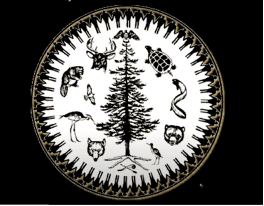
The following information explains how the confederacy of peace came to be:
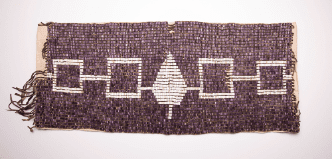
“This belt is a national belt of the Haudenosaunee (hoe-dee-no-SHOW-nee). The belt is named after Hiawatha, an Onondaga who was the Peacemaker’s helper in spreading the good words of Peace. In this belt, it records when five warring nations; the Seneca, Cayuga, Onondaga, Oneida, and Mohawk, buried their weapons of war to live in peace. Today, the Hiawatha Belt has been fashioned into a flag that has been flown in many places around the world. (A sixth tribe, the Tuscarora, joined the confederacy in 1722, thus Six Nations.)
“The Hiawatha Belt is extremely old. This belt was created at the beginning of our confederacy of peace. We do not know when this belt was created, but we know we have had this belt long before the French, Dutch and English explorers made their way to our lands.
“When the peace was made between the 5 nations, the Peacemaker told us to think of us all living together under one longhouse. Just like a longhouse, every nation will have their own council fire to govern their people. But they will govern their people under one common law, one heart, and one mind. The Peacemaker changed 50 evil thinking men to good thinking men (Hoyane/Chiefs) to lead the path towards peace for the people. The Peacemaker also gave the power to the women (Clan Mothers) to replace and remove the leaders. The Hiawatha belt is comprised of 5 symbols joined together….
“Together all five symbols unite to make the Hiawatha Belt. When there is a Grand Council of the Haudenosaunee, the Hiawatha Belt is present to remind the leaders to maintain the peace and to make decisions [not] for only to today, but the future Haudenosaunee citizens yet unborn” (https://www.onondaganation.org/culture/wampum/hiawatha-belt).
The Onondaga Nation today is a sovereign, independent nation, maintaining its own distinct laws, language, customs, and culture. It does not pay income, sales, or excise taxes to New York State or to the federal government, nor does it receive any of the benefits paid for by these taxes. Unlike several other New York native nations, the Onondaga Nation has chosen not to become involved in the casino business or other gambling ventures.
The Nation is still governed by a Council of Chiefs, selected in accordance with its time-honored democratic system. In the same vein, many Onondagas practice traditional ceremonies that predate contact with Western civilizations. (See https://www.onondaganation.org/aboutus/today.)

Interestingly enough, my reading led me to find that aspects of the Great Law of Peace were incorporated into America’s legal system and included in the Constitution.
“In 1744, the Onondaga leader Canassatego gave a speech urging the contentious 13 colonies to unite, as the Iroquois had at the signing of the Treaty of Lancaster. This cultural exchange inspired the English colonist Benjamin Franklin to print Canassatego’s speech.
“We heartily recommend Union and a good Agreement between you our Brethren,” Canassatego had said. “Never disagree, but preserve a strict Friendship for one another, and thereby you, as well as we, will become the stronger. Our wise Forefathers established Union and Amity between the Five Nations; this has made us formidable; this has given us great Weight and Authority with our neighboring Nations. We are a powerful Confederacy; and, by your observing the same Methods our wise Forefathers have taken, you will acquire fresh Strength and Power; therefore whatever befalls you, never fall out one with another” https://www.pbs.org/native-america/blogs/native-voices/how-the-iroquois-great-law-of-peace-shaped-us-democracy/).
A PBS article listed some of the principles of government learned from the Onondaga.
- Restricts members from holding more than one office in the Confederacy. Article I, Section 6, Clause 2.
- Outlines processes to remove leaders within the Confederacy. Article I, Section 6, Clause 2.
- Designates two branches of legislature with procedures for passing laws. Article I, Section 1.
- Delineates who has the power to declare war. Article I, Section 8, Clause 11.
- Creates a balance of power between the Iroquois Confederacy and individual tribes. The differing duties assigned to the three branches of the U.S. Government: Legislative (Congress), Executive (President), and Judicial (Supreme Court) act to balance and separate power in government (Ibid).
We can learn from both accounts of Native Americans in the distant past burying their weapons to make peace, as well as from the words of a living prophet testifying of the Peacemaker, the Savior Jesus Christ.
President Nelson pointed to Jesus Christ as the exemplar of all peacemaking behaviors:
- “True disciples of Jesus Christ are peacemakers.”
- “As we follow the Prince of Peace, we will become His peacemakers.”
- “Charity defines a peacemaker.”
- “Jesus is the Christ…. He will help us to become His peacemakers” (emphasis added).
Finally, the Peacemaker Himself promised: “And blessed are all the peacemakers, for they shall be called the children of God” (3 Nephi 12:9).