








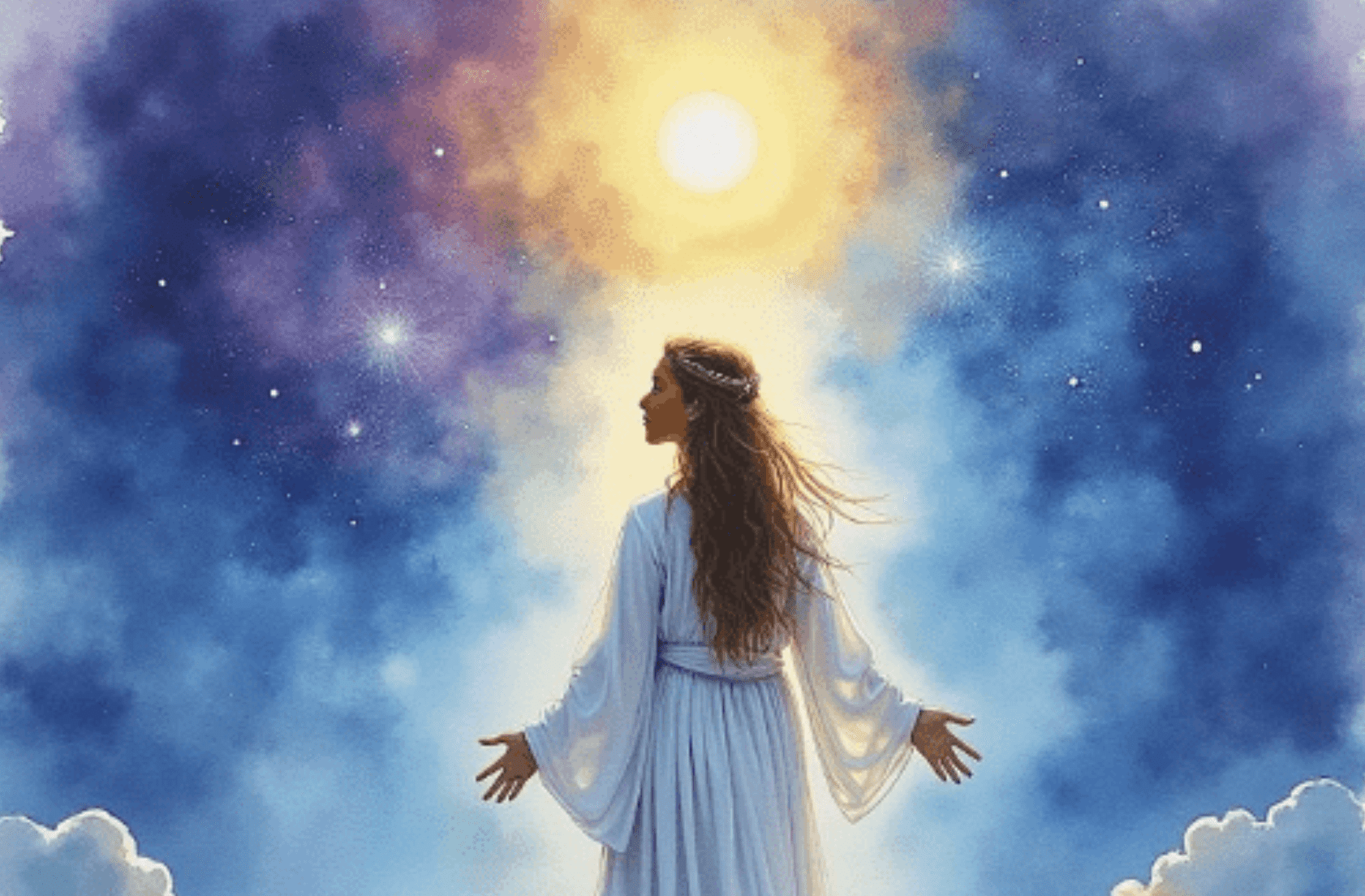


We know so little about the mother in heaven. Our canon says nothing. Our reason provides some, but still our prophets yearn “I wish we knew more.”
Many have taught of her existence, and the reality of gods as male and female pairs. We know the eternal family of father and mother precedes our birth, and continues out of time. We as women look to her, fully God and robed in priesthood power, as a comfort and a reassurance of our value. But we have no words from her, no scripture reference.
We know her as a theology, not as a person.
When we speak of her it is largely speculation. And among these speculations I hear, frequently, this notion – that in every mention of the Father in our revelations, we can or should insert the Mother as well. That his words are also hers, his actions are also hers, that every mention of him can be expanded so she is referenced as well. That the God we know as the Father is not “He” but “They”.
Well.
It is true we know little, but I wonder if there is not more to the story.

Here’s what we know:
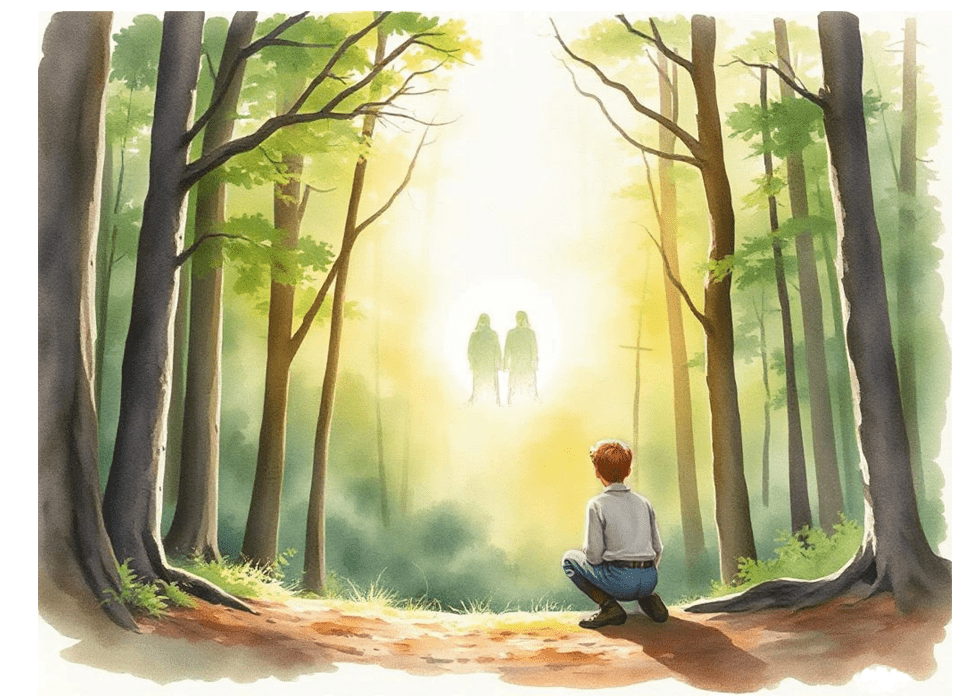
In the garden of Eden, at the beginning of all temporal things, she did not appear. To Enoch, she did not appear. She did not speak from the burning bush. She did not make promises to Abraham, Isaac, or Jacob. She did not appear to Mary or Elizabeth. She was neither seen nor heard at the baptism of her son the Anointed One, who spoke unceasingly of his Father but never, never, never of her. And when the young prophet in New York ushered in the dispensation of the fulness of times, only the Father and the Son attended.
This, then, is the thing we know of her – her role is not the Father’s.
It is not her job to appear, not her job to introduce her son. That is the Father’s job. We know not why it is the one and not the other, and yet, that is how it is. She does not appear. She does not speak. She is silent toward this phase of the earth.
Is this a less-than? Is she prevented? Is her silence coerced? Clearly not. Our Father is not petty, and she is not weak.
In the temple we see Eve, glorious Eve, who speaks no word in the telestial scene. And yet in the garden, she is the driver of events. Eve, who values progress above comfort, acts alone. She does not seek unanimity. She simply chooses. She, as herself, is the mighty spirit who brought us all into this life of love and learning and joy and sorrow; it is she who opened the door for our Savior.
In my heart, I see a fellowship there. Two women, indispensable to the plan of salvation, who are silent and unheralded in the fallen world.
In this face of this silence there are those who would speak for her – they would put the Father’s words into her mouth, put his actions in her arms, place his appearances at her feet.
To me, that says – she cannot be her own self. She cannot be powerful if she is not also visible. There is no job worth doing aside from the Father’s. She can have no worth if we are not told of it.
This Mother we have, what is her role? We know only that it is not the Father’s.
And why should it be? She is our Mother, not our Father, so why do we paste her on to him? Why do we suppose that the only way to make womanhood equal is to make it the same? Why do we put her in scenes she did not attend, as if only in doing what the Father does can she be God?
I fear no inequality in heaven. My Savior faced down hell for my sake; he has graven me on the palms of his hands. What greater mark of worth can there be? No, I fear no inequality in heaven. In that realm it will no more be my job to tag along as an appendage to my husband than it is now. We are partners, not shadows.
This, I suspect, is one of the mysteries of God: what the Mother does, what she accomplishes, what mighty works she prepares with her own job, her own role, her own agency. I have no wish to belittle my Mother with childish insistence that she must, must, must be doing exactly what the Father does or she does not matter.
I prefer to think of her aligned but separate, bursting with power and purpose – not only helping the Father in his role but glorying in her own.
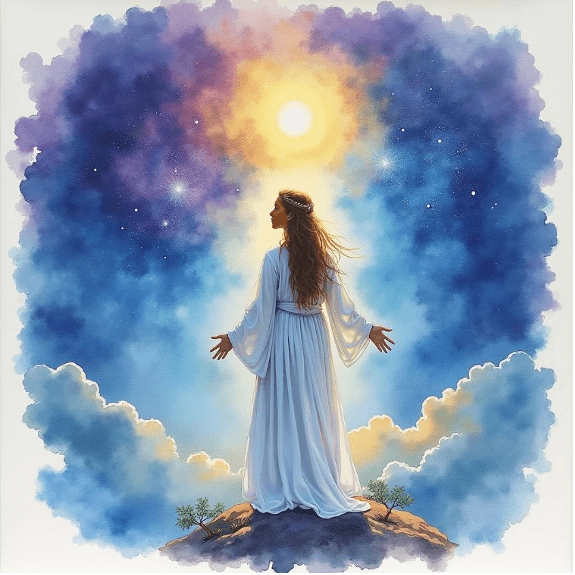
I imagine her as the great Nurturer of pre-earth spirits, or the great welcomer into the realm of death. I wonder if she is perhaps the teacher of the spirits of the dead, the gentle matriarch of the spirit world. Or maybe the tender matron of the hosts of heaven, post-millennium, as they learn and grow into their inheritance of glory. Most likely my imagination fails, and there are celestial jobs to be done that I cannot conceive.
But in my speculation, I will not put her where she has chosen not to be. I will not crush her down to the level of what I can comprehend. She is not the Father. She is herself.
I will let her be.
—
Kimberly White is the co-author with her father, Duane Boyce, of “The Last Safe Place: 7 Principles for Standing With the Prophets in Troubled Times” available here.






NealJune 1, 2025
We were created in God's image..."Male and female created he them."
Ms CatMay 31, 2025
I believe She has been there from the beginning, right up until now, a participant in all of our historical events and I don't believe She has been silently but that even plain and precious things about Her and words from Her have cut out of scriptures. We are Her work and why wouldn't She be there, everywhere and be a part of it all...when Earth was creat, when Adam and Eve were created, when the City of Enoch was taken up, when the Earth was flooded and most of the people, animals and creatures died, when Noah and his family landed, and millions of other examples. Just because we've read nothing, heard nothing and know very little, doesn't mean She wasn't there, doesn't mean She was silent. What it all means is that we don’t know, that's all it means.