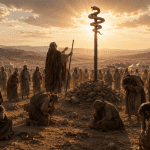




Easter Podcast with Elder Bruce C. Hafen: “God Sent His Son into the World Not to Condemn the World”

Maurine
Hello, we’re Scot and Maurine Proctor and this is Meridian Magazine’s “Come Follow Me” podcast, where today we celebrate Easter. We remember well those events and carry their magnificent hope with us. One night Scot and I were trying to photograph an olive tree on the Mount of Olives, not far from Gethsemane, to represent the Savior in the garden. It was dark and gradually a hush and then silence fell over our world where we worked alone. Because it was dark, these photographs took several minutes, and we worked alone on that mount for nearly three hours, hoping to capture a stunning photograph. We remembered how Elder Jeffrey R. Holland had described the Savior’s atonement. “We celebrate the gift of victory over ever fall we have ever experienced, every sorrow we have ever known, every discouragement we have ever had, every fear we have ever faced — to say nothing of our resurrection from death and forgiveness for our sins.”
Scot
As we consider the Savior’s atonement today we have invited Elder Bruce C. Hafen to join us, whose book The Broken Heart: Applying the Atonement to Life’s Experiences and Covenant Hearts has helped so many understand the atonement more thoroughly.
Bruce Hafen grew up in St. George, Utah. After serving a mission to Germany, he met Marie Kartchner from Bountiful, Utah at BYU. They were married in 1964.
Elder Hafen received a bachelor’s degree from BYU and a Juris Doctor degree from the University of Utah. After practicing law in Salt Lake City, he went to BYU in 1971 as a member of the original faculty of BYU’s new Law School. He taught and published research on family law and constitutional law.
He served as the President of BYU-Idaho from 1978 to 1985. Then he was Dean of the BYU Law School and later served as the Provost — the second in command – at BYU. He was called as a full-time General Authority in 1996, serving in area presidencies in Australia, North America, and Europe. He also served at Church headquarters as an adviser to the Priesthood Department, the general auxiliary presidencies, Church History, and the Temple Department. He became an Emeritus General Authority in 2010 then served as president of the St. George Temple. More recently he served as Chairman of the Utah LDS Corrections Committee, overseeing the Church branches in Utah’s state prisons and county jails. He is the author of several books on gospel topics, including the biography of Elder Neal A. Maxwell, and books on marriage, the temple, and the Atonement — including The Broken Heart: Applying the Atonement to Life’s Experiences and Covenant Hearts and most recently, a book called Faith Is Not Blind, which is a wonderful book for those who are struggling with their faith or having a faith crisis. It’s an excellent book. We highly recommend it.
The Hafens have seven children and 46 grandchildren.
Welcome. We’re so pleased to have you with us.
Maurine
When I think of Easter, I think of a bright morning after a long, dark night because everything that is hopeful for us in our lives are caught up in the Savior’s atonement and resurrection. This is a hard time for a lot of people. The circumstances in the world are so difficult and discouraging. We went from COVID to war to feeling personally in our pocketbooks challenges, shortages, worries about people in our own family. There’s so much to think about and yet here is this hopeful Easter with these beautiful centerpieces of the Savior’s atonement and resurrection. Respond to that, how can we find hope when we need it so badly?
Elder Hafen
Thank you, Maurine, just hearing you talk about that prompts a memory, since you mentioned St. George, of an Easter experience that is my equivalent of what you described. Just an image, a feeling. I was a teenager in St. George a long time ago and on an Easter Sunday, our stake had a fireside for all of the youth and young adult in the St. George Stake. I was one of about eight young people, four boys and four girls, who were invited to go inside the St. George temple, climb up some stairs to some back rooms that I didn’t even know existed and we wound our way until we were out on the little balcony at the very top of the St. George temple. We were outside the temple on the little balcony, looking out to see the whole world. The rest of the kids in our stake were right below us, sitting on the lawn in chairs. It was a “morningside,” as we’d call it now. We could just see the sun coming up east of us. I remember seeing the color streaks of Zion National Park way off in the east, with the sun coming up over it. Our role was to sing a song, and that song has stayed with me ever since.
It came to mind as I was thinking about Easter and as I’ve heard what you’ve said. It goes this way, I wish I could bring all those kids back to sing it for all of us, “God so loved the world that He gave his only begotten Son that whoso believeth in Him should not perish, but have everlasting life. For God sent not His Son into the world to condemn the world, but that the world, through Him, might be saved.” That is Easter morning for me. It’s hope. I love the part about the Lord came not to condemn. That connects to some ideas about the basic framework of Atonement doctrines for me. You know that Marie and I have been interested in trying to understand this doctrine together for a long time. At one point, we found it helpful for us to simply see the framework doctrinally and practically for the blessings of Atonement. Because the blessings go far beyond forgiveness and resurrection. That’s where we start. We ended up just making a little list and I’d like to put what you’ve asked about in the right place in this list as we’ve looked for this doctrinal framework.
We start with the purpose of the Atonement and then we look at the unconditional blessings. Everybody receives these blessings, whether they deserve them, whether they even want them or not. They’ll all be resurrected. We are cleansed from the effects of Adam’s sin unconditionally. Then there are conditional blessings; if we are faithful. The three conditional blessings are: 1) redeeming blessings, 2) strengthening blessings, and 3) perfecting blessings.
Your comment about today’s world has drawn my mind to strengthening blessings. I remember when President Dallin H. Oaks talked about the strengthening blessings of the Atonement in a general conference. It was a beautiful, thoughtful talk and there’s a place in the Old Testament — and we’re studying the Old Testament this year in Come, Follow Me, so it wouldn’t be a bad idea to think about it in that context — Moses had led his people out of Egypt and he was really concerned about where they were going. His people had carried so many burdens and he was personally burdened.“What am I supposed to do now?” must have been his constant prayer. And the Lord came to him when Moses needed it.
For example, notice the Lord’s language in talking to Moses. “God heard their groaning and He remembered His covenant with Abraham, with Isaac, and with Jacob and God said, ‘I have seen the affliction of my people, I know their sorrows.’” And then after he crossed the Red Sea, the great miracle that then protected and freed the Children of Israel to keep going, the Lord said to Moses, “you have seen what I did to the Egyptians and how I bear you on eagles’ wings and brought you to myself, therefore if you will obey and keep my covenants, ye shall be unto me a holy nation.” That captures this personal relationship between God, that was Jehovah, the God of the Old Testament, Christ. He brought them to Himself.
One more place that my mind turns to, as I look at those scriptures is some verses of one of our favorite hymns. It was even known in the first hymn book, it was in that book. We should sing the latter verses more often than we do. I think of these verses and I think of the world you’ve just described, Maurine, which is kind of stunned and disoriented, all of us. The Lord says to us,
When through the deep waters I call thee to go,
The rivers of sorrow shall not thee o’erflow,
For I will be with thee, thy troubles to bless,
And sanctify to thee, and sanctify to thee,
And sanctify to thee thy deepest distress.
When through fiery trials thy pathway shall lie,
My grace, all sufficient, shall be thy supply.
The flame shall not hurt thee; I only design
Thy dross to consume, thy dross to consume,
Thy dross to consume and thy gold to refine.
To me that makes it pretty clear that God understands us. The Savior understands us. He’s the one who’s talking here. “Flame will not hurt thee,” “I call thee to go,” “I will be with thee, thy troubles to bless.” If we were all in one group, everybody who is listening today, maybe we could sing that song because the very familiar music is stirring. That’s one we could all sing when it’s time to sing a hymn.
Scot
I think one of the things that really moved me about what you just quoted, was that the God of the Old Testament, who is Jesus Christ, had seen their affliction and sorrows. Sometimes my view of the Savior or of our Heavenly Father is that He sees my mistakes and my sins, but doesn’t see my afflictions and my sorrows. The latter, the afflictions and sorrows view, seems to be one of great compassion, and one who looks upon me with love and with desire to help me through those circumstances.
Elder Hafen
One of the reasons I think the Lord can look at us that and we can be close to Him, with deep understanding and gratitude that He knows what we’re going through, is that He’s been through it all. Elder Maxwell referred to this part of the Savior’s experience, which is really part of that Easter season and those tremendous, earth-shattering moments of the final days of Christ’s life. In Gethsemane, and with everything that he experienced there; far beyond our ability to comprehend, He felt what we had been through. There are some scriptures that say, I think this is somewhere in the Book of Mosiah, He saw His people. We can see Him. I think it’s possible to reflect on him without understanding what He was doing. The result of all of that, as Elder Maxwell put it, is the Savior’s earned empathy. He empathizes with us because He has been there. He knows it all and we can have total confidence that, even though we don’t see how anybody could go through what we’re going through and survive it, He has been there. He knows.
Maurine
When I was a child and would think about the Atonement, I thought that the Savior was paying in my behalf for a sin here and a sin there. And then as I grew older and saw that my life; as all of our lives are in this mortal, fallen experience; is full of error and challenge and sometimes heedlessness and blindness in relationship to the way we act and are; and I realized that the Lord must have lived my entire life with me. Because as long as we are sinful and mortal, these are all things that the Lord experienced with us and paid for us. And it made it so much more meaningful for my understanding.
Elder Hafen
You’d hope that as we grow, our spirits would grow, our minds would grow, and we would all come to that. I think especially today’s Church, we’re getting better at that. Richard Bushman gave a talk at BYU, it was one of the Easter conference messages at BYU in the last year or two. The title of his talk there was, “The Atonement Then and Now.” And he actually said some things similar to what you just said, Maurine. When he was young, even as a young bishop, he saw the Atonement in the ways you have described. And he would counsel people in those ways. But then he went on to talk about how his life has developed, how society has become more difficult and he has seen growth in the way we, in the Church, understand what the Atonement is about. It is for healing. It is for strengthening. It blesses and helps us. It becomes so much more personal in the way that attaches our thoughts about the Atonement to our personal relationship with Christ. I think that’s really helpful so that we don’t start seeing the Atonement as some new spaceship up in the sky that is a new source of blessings that isn’t part of our doctrine. It’s very central to our doctrine. It’s what the sacrament prayer talks about: if we always remember Him, if we are willing to be witnesses of His name, He will then link us to Him in a relationship that gives us access to Him. His Spirit will always be with us. It’s a relationship with Him. It’s not just some separate idea.
President Nelson gave a wonderful message about that once; about how “the Atonement” is “the Atonement of Christ,” it’s not some new, separate power. I hear some people talking about it as if it were an independent source of emotional and spiritual power that kind of fits the day in which we live; it’s the electronic version. It goes far beyond what normal tools and experiences can get for us. He emphasizes the importance of developing that relationship.
Thinking about something you said does help me. In one of the really strong, beautiful, memorable experiences in the Book of Mormon about what we’re discussing, you may remember this, in Mosiah 24 where we learn about the experience of Alma and his people when they were held captive by Amulon. The people couldn’t pray out loud because they were in bondage. And in those circumstances, the Lord said to Alma and his people, “I, the Lord God, do visit my people—” Notice that, my people, not the people, “I do visit my people in their afflictions.”
“Lift up your heads and be of good comfort, for I know of the covenant which ye have made unto me; and I will covenant with my people and deliver them out of bondage” (Mosiah 24:13).
What covenant is He talking about?
The covenants of baptism, the covenants of the temple; and that’s what make us His. In fact, the ultimate expression of that is in the fifth chapter of Mosiah after his people have listened to his great sermon on the Atonement of Christ and they rejoice and they say they have no more desire to do evil, but to do good continually. That’s an important prerequisite for all of this to happen. It develops, it’s not all at once. But if you keep reading in chapter 5, Benjamin says, “This day hath he (the Savior) begotten you” and you are becoming the children of Christ.
Then Benjamin tells them they’ve entered the path of following Christ, the Savior. President Nelson has really picked up on this and is helping all of us understand it. He talks about the covenant path, stay on the covenant path. It is the path that is marked out for us when we keep the covenants that we’ve made in the temple and in our baptism, and then we keep going. And again, using Benjamin’s phrase, if ye are “steadfast and immovable, always abounding in good works,” so, keeping moving on that covenant path. Then the last part of chapter five of Mosiah right after that phrase, if we keep going, “Christ will seal you His.”
So, that relationship that starts off that we are the children of Christ, we’ve made covenants with Him, where is that going? He will seal you His. That’s a temple word. That’s worth some reflection, I think, for all of us. What would it mean to be sealed to Christ in some way? We’ve grown from being the children of Christ to being full grown men and women of Christ. That’s the quest of a lifetime, really. That’s what the covenant path is about. It’s where we can go.
And incidentally, in today’s world, I’m reminded even as I say the phrase about “Christ will seal you His,” there’s another place in the Book of Mormon, I think it’s in Alma 34, where Amulek is talking and he’s talking about Satan and the power he seeks to have over us. As Amulek describes the influence of Satan, he says words to this effect, if we follow the path that Satan marks out for us than “he doth seal you his.” That is just chilling to me. He wants to take us off the path to follow him on his path. The world is so full of it today, but it has a destination. We will become children of the devil, just as we can become the children of Christ and grow into that full relationship.
Scot
I’m glad you brought up President Nelson’s teachings because one of the things that came to mind as you were talking there, Elder Hafen, was this quote: “Too many people consider repentance as punishment — something to be avoided except in the most serious circumstances. But this feeling of being penalized is engendered by Satan. He tries to block us from looking to Jesus Christ, who stands with open arms, hoping and willing to heal, forgive, cleanse, strengthen, purify, and sanctify us.”1 So, obviously Satan is going to try to block us from having access to that power of the Atonement of Jesus Christ and repentance is part of that process; daily repentance. It is a process, not just an event.
Elder Hafen
Right, and hearing you say that, Scot, reminds me of when I realized that the purpose of the Atonement is to help us grow and learn. It’s not just one and done with baptism or saying we believe in Christ. It’s the process that helps us grow and develop. Other Christian churches don’t believe that that’s what their version of baptism does for people. It’s to be cleansed of Adam’s sin. But when we see that the Atonement has a developmental purpose, then we begin to see our sins, our inadequacies, our mistakes, all of those things, we see them as part of that growth process. We’re on this path of learning and that’s why repentance is really a process of seeing what we’ve done that we could do better. And we welcome the critique instead of hearing the Brethren at conference, or hearing our wife or husband, or hearing from any source about something we need to pay attention to, and do better. It’s just like listening to a good coach help an athlete strengthen his skills. Only a really foolish athlete would say, “Coach, don’t talk to me like that, that makes me feel bad.” If that’s how you feel, then you will never develop the skill, the strength that you would seek to have by even having a coach.
Maurine
I think it’s interesting when you talk about development and how we see it. It isn’t just enough to be forgiven of our sins, though that is huge, but something else needs to happen. I think about the example, let’s say there’s a woman who is praying during the sacrament because she is angry at a family member who she has felt misused and betrayed by. It’s not a small hurt, but a big one. But she doesn’t want to be angry, because she notices that anger divides her from the Spirit and divides her from what she wants. It is wonderful and lovely to be freed from that anger toward that one person, but the Lord wants to take us further to be freed from anger as a way of living, as a way of thinking about other. And then the Lord wants to take us further, He wants us to replace that anger with love, which is his bestowal, His gift. And all of those things are part of the Atonement; it is not only forgiveness of the sin, but that development.
I think it’s so generous because one of the things that hurts us the most are our weaknesses, whether we see it or not. And the Lord is saying, “I’m here to lift these things from you, if you will but completely align yourself with my will, if you will let God prevail. We together can lift these.” And I think it’s so interesting that sometimes if we don’t see all that the Lord is willing to do for us, through his Atonement. We beat ourselves up and we think, “I’m not enough,” “I can’t do enough,” “I fall into error,” “I’m not compassionate enough,” “I don’t see other’s point of view,” “I don’t love enough.” I mean there are so many “not enoughs” that we can add into our thinking. And the Lord says, “Don’t go there, we’re on a journey together and all you need to do is give your very best and rely on this beautiful gift of the Atonement.”
It lifts from us this sense of insecurity and misery that so many of us travel with. We’re on a journey with His presence with us, just like the Children of Israel had His presence with them. We’re on this journey and our destination is His presence and He helps us make that journey. It’s not something we can be casual about, like we say, “Oh, it doesn’t matter if I do this because I can repent tomorrow.” That is a very flippant way of looking at something so holy and gracious. The truth of the matter is, you do have to give your entire heart, but what the Lord gives back is a sense of ease to your soul, a sense of joy that you didn’t have before, hope that you need. These are all His gifts to us through this mighty sacrifice of the Atonement.
Elder Hafen
Thank you for bringing that into our conversation, Maurine. Your insight takes me back to the little list that I offered about categories of blessings to understand the parts of the Atonement. If we are faithful, then following our baptism, we’ve done that part — as one person has said, we get the weeds out of our lives — then once the weeds are out, our land is clear, and we can plant flowers in the place where we had the weeds. That’s the positive part about the Atonement. The little framework that I mentioned suggest that in that part of our growth and following the Savior, we receive redeeming blessings, strengthening blessings, and then perfecting blessings. And what you were just describing about the woman in Church and what she was wanting to go through, it’s really the gift of charity which is an ultimate perfecting blessing. When we receive it as a spiritual gift, if we have been true and faithful in all that that means, then we become as He is. The love that Christ has for other people, the pure love of Christ, when we feel that, we can be completely consumed and changed. The fruits of that kind of repentance and that process of growth and really abundant.
This goes back a few years: I was serving in an area presidency and we received information that someone in our area had been disciplined by a Church council. He had been excommunicated and he was appealing that decision to the First Presidency and the First Presidency sent us the file and asked for a review and a recommendation. We didn’t know this brother and we didn’t know the people in his stake, but the Brethren wanted our input as the general authorities who were really close to that part of the world. And as we looked into what had happened, we learned that the man who had been excommunicated had gotten into an argument with the other man.
It had started at a low level of disagreement and it grew to frustration and finally it became really raging anger. These two men were just so angry with each other that they were worried about what one was saying to other people about them and it kind of got out of control. This led to a disciplinary council. The one man who felt especially hurt, even though he was kind of out of control, he demanded that the other man be excommunicated. Without going into the details, the council (the Stake presidency and High council) decided “Ok, he should be,” but then the other man was so angry that he appealed the decision. They were going to keep venting their anger, bordering on hatred, to the highest court. So, the Brethren sent it back to us and we reviewed it and then had the assignment to call the Stake President who was new. He had not been a Stake president at the time of the decision, but as we talked, he told me how this had happened, that it had all began with a misunderstanding and because of this unwillingness to forgive each other, it grew and grew and got out of control.
So, we finally decided to recommend, and the First Presidency sustained it, that they should start over and have another disciplinary council, which seemed like a strange resolution. We weren’t going to go back in to the facts and arguments and all that. They would start over. Then the Stake President called me a few weeks later, after we’d counseled together and he’d agreed to hold another disciplinary council. He told me what had happened. On the evening of this second council, when these two brethren were in the same place sometime earlier, and the place was probably still fuming with the anger they had brought before, they sat smoldering in the waiting area as their stake leaders discussed the issues and what to do. And then suddenly, one of these men got up, went over to the other man, knelt down in front of him and said, “What are we doing to each other? Can you ever forgive me for this?”
And the other man started to cry. And they began talking softly. And then they embraced and they talked more and within a few minutes, they knocked on the door of the room where the others were deliberating. The Stake President opened the door and he saw these two men arm in arm, with the tears running down their cheeks. He was stunned. “What has happened?” They came into the room and when the other Stake leaders saw them, everybody in the room started to cry.
It was a clear witness to me of what happens when the Lord brings His charity into a room where it is needed. These men were ready for this to happen and they responded to it. Sometimes that energy is there and we don’t hear it, we don’t feel it, we’re not open to it; we’ve shut all those doors. But these two still had enough of the milk of human kindness; they still cared about the Lord enough to reach out and hear Him. I think they possessed that charity from then on.
Scot
Elder Hafen, we appreciate so much that story, that really moves us. I want to ask another question about something that we have noticed that many people are dealing with in our world today and that is, this whole idea of perfectionism.
I remember when I read your book years ago, I think I’ve read it two or three times — the one on The Broken Heart — you had a chapter in there that really caught my attention and I think if I remember correctly, the title of the chapter was “Two Cheers for Excellence.” I was very interested in that because I see this all around me with people feeling like excellence is the most important thing. Perfectionism is what we have to seek for all the time. In fact, we even misconstrue the meaning of “Be ye therefore perfect” and we just don’t get it right. But can you comment on that “Two Cheers for Excellence”?
Elder Hafen
That was a long time ago that you read that chapter, Scot. Yeah, I remember that. What I was concerned about then and what I am still concerned about in the world we live in, is that western society have become consumed with competition against one another. It just goes really contrary to what we’ve been talking about — the desire to come to the Lord and have Him see our weaknesses. I guess I was thinking in general terms. It was kind of a plea for charity because if we’re not open to the Lord’s direction and willing to come to Him and show Him our weaknesses, then He’s not going to strengthen us. I guess it was in Ether Chapter 27 where the Lord says to Moroni — Moroni’s pretty frustrated, I think he’s feeling that he wouldn’t do too well in the Stake writing competition. He says, “the gentiles will mock my words” and so what does the Lord say to him? “I give unto men weakness that they may be humble and if they will come unto me and acknowledge the weakness, I will show unto them.” He’ll tell us more.
That’s why I’ve sometimes thought when we’re feeling very distressed and discouraged and seeing all the things we don’t do well at and we aren’t going to compete in whatever ways we feel we need to. When we are seeing our weaknesses, that’s not necessarily a sign or a clue that the Lord doesn’t care about us anymore. On the contrary, it might be evidence that he’s closer to us than He’s been before. He wants to help us see our weaknesses. Then he will help us overcome them.
“I give unto men weakness that they may be humble; and my grace is sufficient for all men that humble themselves before me; for if they humble themselves before me, and have faith in me, then will I make weak things become strong unto them.”
Those are all words related to the perspective on the Atonement that we have been alluding to. It is all about our learning and growth and when we get so glued to the world and its competitiveness, we can tune out all the signals that are trying to help us, what’s wrong, what do we need to work on. Only wanting to do better compared to other people is just contrary to the Spirit of the Gospel. In addition, it really interferes with the growth process that we are engaged in if we understand the covenant path. The covenant path is not a place where we dash to finish line and see if we get ribbons for the first three places and everybody else has failed. So, that’s probably what I was thinking.
Maurine
We live in a time where many are having faith crises and it seems to be fed by the internet, where they can talk to other people who are having faith crises and they begin to see one flaw after another and then they find themselves in turmoil. I know you’ve been very concerned about this and have written a wonderful book called Faith Is Not Blind addressing this. I’m just wondering if you can talk a little bit about that and connect it to what we’ve been saying here about the Atonement.
Elder Hafen
As I reflect on our conversation today, this Easter day, and reflect on the Atonement, we’ve been describing what the Atonement does to mark the path. “He marked the path and led the way and every point defines.” That applies today and one of the dark clouds that makes things so difficult and disturbing everywhere that we see is the crisis of faith, loss of confidence in each other. There is a way to process the experiences we’re having by recognizing how we’ve going from innocence and good feelings that don’t run that deep, to crises that are really wrenching and difficult — if we persist and we understand a little of what’s going on and have some faith about getting through it — the Lord will help us get through this. And the darkness can change into light if we will allow Him to help us.
When we learn from what we’ve gone through and we come out of the clouds of that darkness into the clear valley of the light of the simplicity beyond complexity — it’s a journey. It’s just like the one we’ve discussed about the Atonement. The Atonement has a lot to do with this, it’s another manifestation of how the Lord works with us through a process of learning from experience until we’re more like Him and we’ve had to struggle through some things that were hard. He helps us.
Scot
We have so appreciated this time together with Elder Bruce C. Hafen. This is Scot and Maurine Proctor. We are excited to continue to study the Old Testament in the coming weeks. Our great thanks again to Jenny Oaks Baker for the music that accompanies this podcast and to our producer, Michaela Proctor Hutchins. Have a great week, a joyous, wonderful Easter and see you next time.
1. https://abn.churchofjesuschrist.org/study/general-conference/2019/04/36nelson?lang=eng&adobe_mc_ref=https%3A%2F%2Fwww.churchofjesuschrist.org%2Fstudy%2Fgeneral-conference%2F2019%2F04%2F36nelson%3Flang%3Deng&adobe_mc_sdid=SDID%3D710306E62D1C46B8-5F176D7DAE5A06D2%7CMCORGID%3D66C5485451E56AAE0A490D45%2540AdobeOrg%7CTS%3D1649400043
Resources to Experience, Share Jesus Christ’s ‘Greater Love’ This Easter
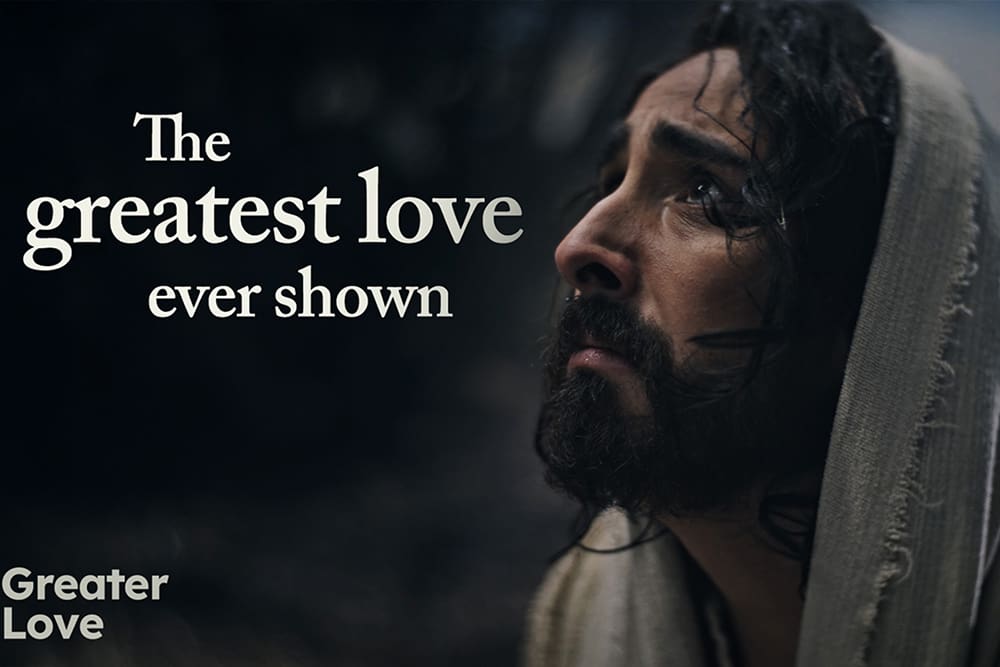
This spring, members of The Church of Jesus Christ of Latter-day Saints are invited to lean into a deeper, more intentional celebration of the Savior. The First Presidency has highlighted Palm Sunday, Easter, and General Conference as pivotal moments to reflect on the Atonement and Resurrection of Jesus Christ.
In a unique alignment of the calendar, Easter Sunday falls on the same weekend as General Conference—April 4-5—offering a rare opportunity to bridge the ancient miracle of the empty tomb with the modern guidance of living prophets.
Expanding Our Easter Focus
Much like the Christmas season, there is a growing movement within the Church to treat Easter as more than just a single Sunday. By extending our focus across a “Holy Week,” we can better emulate the “Greater Love” described in John 15:13.
The 2026 Easter initiative centers on the promise that through Christ, “all will live again.” Whether through the new “Greater Love for You” video (released March 1) or personal study, the goal is clear: to ensure no one feels forgotten and that everyone has the chance to experience a fullness of joy.
First Presidency’s Easter Message
In their recent Easter message, the First Presidency extended an invitation to “seek this Jesus of whom the prophets and apostles have written” (Ether 12:41) during the Easter season.
Key Dates for Your Calendar
The journey through this sacred season follows a beautiful arc of worship and study:
-
Palm Sunday (March 29): Wards worldwide will host a special one-hour worship service focused entirely on the Savior. This is designed as a “visitor-friendly” event, perfect for inviting friends and neighbors to join in a Christ-centered meeting.
- Holy Week (March 29 – April 5): A time for deep immersion into the Savior’s final teachings during His mortal ministry.

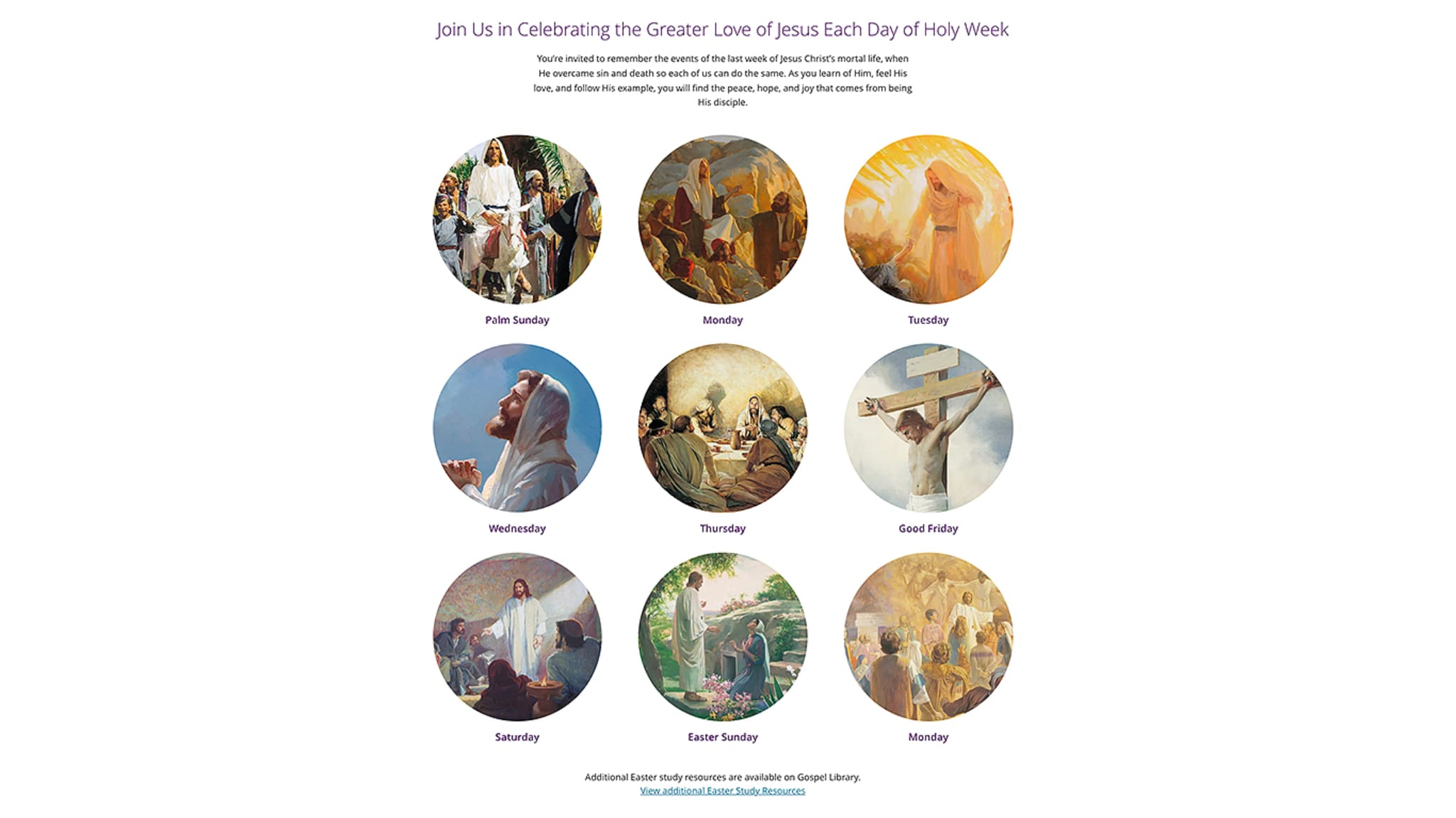
Holy Week study experience available on Easter.ChurchofJesusChrist.org focuses on the Savior’s teachings during the last week of His mortal ministry. This resource is also highlighted in Gospel Library and linked in “Come, Follow Me.”
-
General Conference (April 4–5): This year’s conference marks a historic milestone. We will participate in a solemn assembly to sustain a new First Presidency and two new members of the Quorum of the Twelve Apostles: Elder Gerard Caussé and Elder Clark Gilbert. We will also hear the first conference address from President Dallin H. Oaks as President of the Church.
Note: Per the November 2025 announcement, starting this April 2026, General Conference will no longer include a Saturday evening session.
Resources for Sharing and Study
As requested, here are the official resources provided by the Church to help you enhance your personal experience and invite others to learn more:
-
Easter.ChurchofJesusChrist.org: Launched February 22 in 10 languages, this site is the hub for Christ-centered Easter content, including music, videos, FAQs, and children’s resources.
-
Seasonal Resources for Leaders: Accessible via the main Easter site, leaders can find Palm Sunday service ideas, invitation templates, and tools for customized meetinghouse banners.
-
Social Media: Look for the “Greater Love for You” video on official Church channels to resharing on your personal or organizational pages.
-
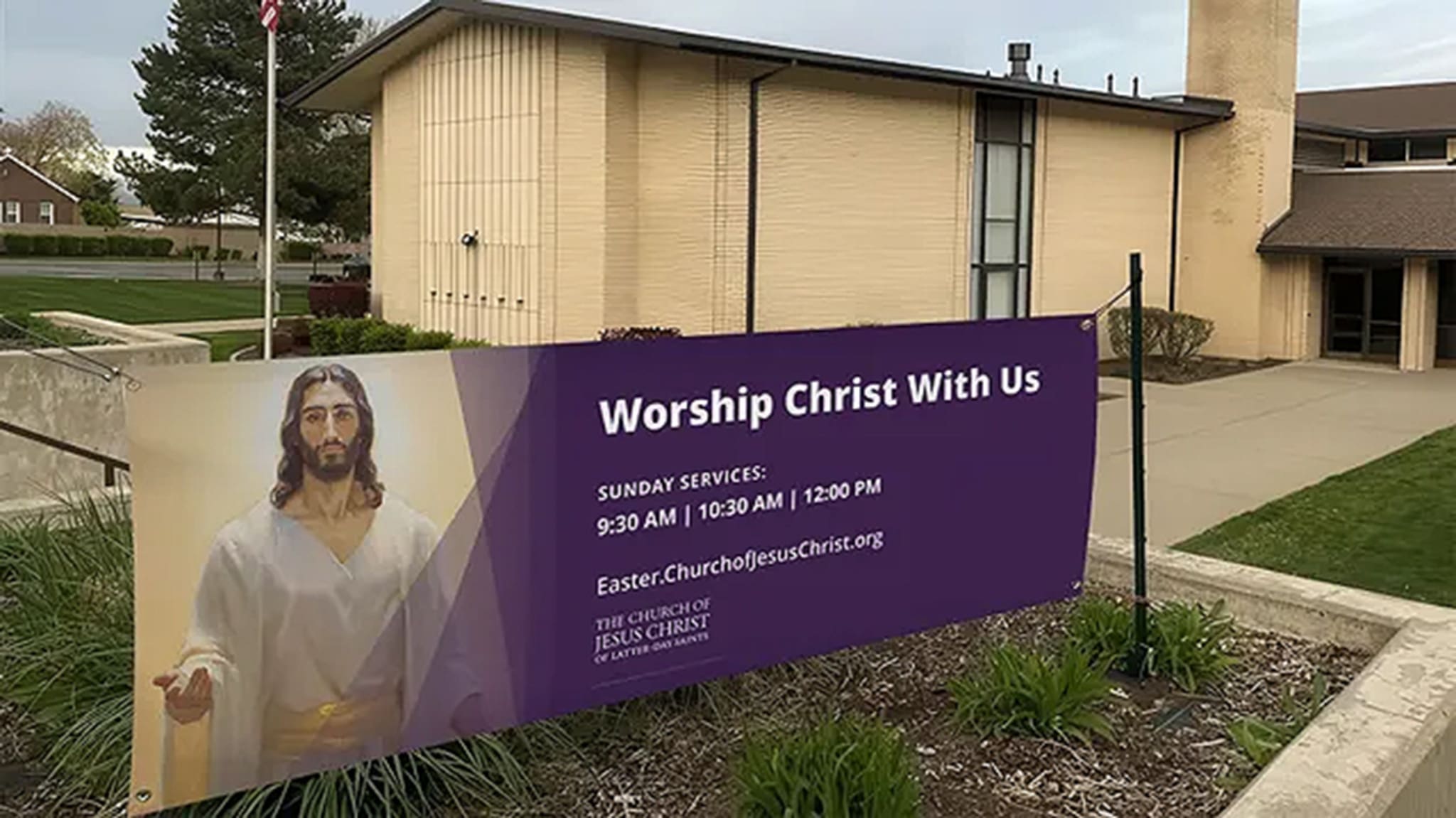
Meetinghouse Signage: To help visitors understand why buildings may be empty during the April 4-5 weekend, councils can download a specific poster (available on the resource site) to display on chapel doors.
An example of a meetinghouse banner used to invite community participation with local worship services.
-
Outdoor Banners: The online tool allows wards to create customizable outdoor signage with specific meeting times and languages to welcome the local community.
-
Activity Sharing: Stake and ward leaders can use the Activity Sharing tile in the Member Tools app to update their public-facing ward web pages with local Easter activities.
An example of a fillable Easter invitation available to local leaders for inviting others to participate in various Easter activities.
Traditions to Make Easter a Whole Season of Remembering

In this inspiring episode from the Measure of Her Creation podcast, Michaela welcomes longtime friend Catherine Arveseth to talk about rediscovering the sacred depth of Easter and creating meaningful faith traditions at home.
From a moving journey through infertility and long-awaited motherhood to a growing passion for honoring Lent, Holy Week, and the celebration of the Resurrection, Catherine shares how intentional worship can shape both our hearts and our families.
Together, they reflect on learning from the wider Christian world, embracing a slower spiritual rhythm, and finding simple, practical ways — even in busy seasons of motherhood — to help our children experience the story of Christ in a living, personal way.
Catherine Arveseth’s Holy Week Guide
Come Follow Me: A Special Easter Podcast

Maurine
Elder Jeffrey R. Holland said, “That first Easter sequence of Atonement and Resurrection constitutes the most consequential moment, the most generous gift, the most excruciating pain, and the most majestic manifestation of pure love ever to be demonstrated in the history of this world. Jesus Christ, the Only Begotten Son of God, suffered, died, and rose from death in order that He could, like lightning in a summer storm, grasp us as we fall, hold us with His might, and through our obedience to His commandments, lift us to eternal life.
“So today we celebrate the gift of victory over every fall we have ever experienced, every sorrow we have ever known, every discouragement we have ever had, every fear we have ever faced—to say nothing of our resurrection from death and forgiveness for our sins.” (Jeffrey R. Holland, “Where Justice Love and Mercy Meet https://www.churchofjesuschrist.org/study/general-conference/2015/04/where-justice-love-and-mercy-meet?lang=eng .
Scot
Welcome to Meridian Magazine’s Come Follow Me podcast where this week we are studying that magnificent gift the Savior gave to us in the atonement and resurrection. Because we take tour groups to Israel and have done extensive photography there, we have often been to that Mount of Olives where Jesus suffered such agonizing pain in the Garden of Gethsemane for us.
We have walked down that Mount, shared testimony in an olive garden there, but one night stands out as singular. We wanted to photograph an olive grove on that mount in the nighttime to capture, as closely as possible, what that scene might have been like 2,000 years ago. Most visitors who go to the Mount of Olives visit the Church of All Nations, where ancient, twisted olive trees grow that date back more than 1200 years, and some claim to that very time when Christ was there.
Yet for our photographs, we went a little further up the Mount of Olives, since the scriptures describe Jesus as going further into the Garden of Gethsemane, and on the Mount of Olives, that means further up.
Maurine
We were there for many hours. The din and honking of the traffic gradually subsided to quiet. The crowds had dispersed and we were quite alone in the olive vineyard. Across the Kidron Valley, the ancient wall of the Old City wound its way with an occasional light upon the golden stones. In the quiet and stillness, we could just imagine how it might have been that night when Jesus suffered here so long ago.
We read aloud. We talked. You took hundreds of photographs, battling against some colored lights that cast the wrong glow into those photos. We used to use film when we shot at night, because then we could use exposures of various lengths. The longer the exposure, the more the surrounding light filled in the details of the photos on the film. But this was a digital shoot, and so you battled graininess in the photos in the darkness of that night.
Scot
With that time, trying to get the photograph I hoped for, we thought. Not far from here, from this very spot, Jesus came with his apostles to a place they knew well—the Garden of Gethsemane, which means the place of the olive press. Here he would know excruciating pressing himself, crushed. The only place the Lord describes this crushing, Himself, in his own personal words, is in the Doctrine & Covenants, “which caused myself, even God, the greatest of all, to tremble because of pain, and to bleed at every pore, and to suffer both body and spirit and would that I might not drink the bitter cup and shrink” ((Doctrine and Covenants 19:18).
Mark records that Jesus “began to be sore amazed, and to be very heavy.” What could cause the mighty Jehovah to be “sore amazed?” Our mortal minds cannot conceive such an exquisite agony, but he said, “My soul is exceedingly sorrowful unto death…And he said, Abba, [which is the most personal form of calling out to a father, the equivalent of saying, “Daddy] Father, all things are possible unto thee; take away this cup from me: nevertheless not what I will, but what thou wilt” (Mark 14: 34,36).
Maurine
That night, we thought, not far from here and on a night maybe something like this, a line of men, carrying torches walked down from the wall of Jerusalem, across the Kidron Valley and to this garden led by Judas, bent on betraying Jesus, whom he had seen with his own eyes heal the blind and raise the dead. “And he that betrayed him had given them a token, saying, “Whomsoever I shall kiss, that same is he; take him, and lead him away safely. And as soon as he was come, he goeth straightway to him, and saith, Master, master, and kissed him” (Mark 14: 44,45). Jesus was betrayed by His executors by a friend with a kiss.
A night like this, not far from here, Jesus faced an unjust and illegal trial, where shadowy, contradictory witnesses could not give coherent or convincing testimony, but he was convicted anyway. As for his supporters and disciples, Jesus had warned them, “All ye shall be offended because of me this night for it is written, I will smite the shepherd, and the sheep of the flock shall be scattered abroad,” (Matt. 26:31) and they were, scattering into the night in their fear.
Scot
Not far from here, on a morning of Passover, that holy time the Children of Israel had celebrated for centuries to remember the angel of death passing over them because they had painted the blood of the lamb over their door, they would entirely miss the lamb when he stood before them.
So many of us in the world today are no different, searching frantically for peace and relief, when the Lord is right before us with His arms outstretched inviting us into the safety of His embrace.
Elder Dieter F. Uchtdorf said, “When I think of this, I am reminded of the Savior standing before the Roman prefect of Judea, Pontius Pilate, just a few hours before the Savior’s death.
Maurine
“Pilate”, Elder Uchtdorf said, “viewed Jesus from a strictly worldly perspective. Pilate had a job to do, and it involved two major tasks: collecting taxes for Rome and keeping the peace. Now the Jewish Sanhedrin had brought before him a man who they claimed was an obstacle to both.
“After interrogating his prisoner, Pilate announced, ‘I find in him no fault at all.’ But he felt he had to appease Jesus’s accusers, so Pilate called upon a local custom that allowed one prisoner to be released during Passover season. Would they not have him release Jesus instead of the notorious robber and murderer Barabbas?
“But the tumultuous mob demanded that Pilate release Barabbas and crucify Jesus.
“’Why?’ Pilate asked. ‘What evil [has] he done?’
“But they only shouted the louder. ‘Crucify him!’
Scot
Elder Uchtdorf said, “In one final effort to satisfy the mob, Pilate ordered his men to scourge Jesus. This they did, leaving Him bloodied and bruised. They mocked Him, placed a crown of thorns on His head, and clothed Him in a purple robe.
“Perhaps Pilate thought this would satisfy the mob’s lust for blood. Perhaps they would take pity on the man. ‘Behold, I bring him forth to you,” Pilate said, “that ye may know that I find no fault in him. … Behold the man!’
The Son of God stood in the flesh before the people of Jerusalem.
“They could see Jesus, but they did not truly behold Him.
“They did not have eyes to see.
Maurine
“In a figurative sense,” he said, “we too are invited to ‘behold the man.’ Opinions about Him vary in the world. Ancient and modern prophets testify that He is the Son of God. I do this too. It is significant and important that we each come to know for ourselves. So, when you ponder the life and ministry of Jesus Christ, what do you see?
“Those who find a way to truly behold the Man find the doorway to life’s greatest joys and the balm to life’s most demanding despairs.
“So, when you are encompassed by sorrows and grief, behold the Man.
“When you feel lost or forgotten, behold the Man.
“When you are despairing, deserted, doubting, damaged, or defeated, behold the Man.
“He will comfort you.
“He will heal you and give meaning to your journey. He will pour out His Spirit and fill your heart with exceeding joy.
“He gives ‘power to the faint; and to them that have no might he increaseth strength.’
Scot
Elder Uchtdorf promised, “When we truly behold the Man, we learn of Him and seek to align our lives with Him. We repent and strive to refine our natures and daily grow a little closer to Him. We trust Him. We show our love for Him by keeping His commandments and by living up to our sacred covenants.
“As you accept His sacrifice, become His disciple, and finally reach the end of your earthly journey, what will become of the sorrows you have endured in this life?
“They will be gone.
“The disappointments, betrayals, persecutions you have faced?
“Gone.
“The suffering, heartache, guilt, shame, and anguish you have passed through?
“Gone.
“Forgotten.” (Dieter F. Uchtdorf, “Behold the Man” https://www.churchofjesuschrist.org/study/general-conference/2018/04/behold-the-man?lang=eng
Maurine
We seek to “behold the man” and learn line upon line to truly understand the sacrificial and profound gift of the Lord to us. We spend our lifetime seeking to see Him more clearly, implant His sacrifice more deeply in our hearts because he is the only one who truly sees us.
My heart is breaking, my knees are slacking in despair. He says, “I see you.”
My weaknesses keep me in bondage, repeating the same patterns that have chained me before. He says, “I see you.”
My soul is withered under disappointment. My hope is slacking. He says, “I see you.”
Scot
We may cry like the Psalmist, “My heart is sore pained within me: and the terrors of death are fallen upon me…and horror hath overwhelmed me…Oh that I had wings like a dove! For then I would fly away, and be at rest…I would hasten my escape from the strong, stormy wind and tempest.” (Psalm 55: 4-8).
We do have wings like a dove to fly away and be at rest. Those wings are the sacrifice of Jesus Christ who strengthens us, comforts us, feels with us, enlightens and expands us. He can do this because He sees us clearly. He sees the goodness in our hearts, our best intents. He knows that we are better than we sometimes seem. Like the words of Come Thou Fount of Every Blessing, say, “Prone to wander, Lord I feel it. Prone to leave the God I love.” He knows that we don’t want to wander. He knows how to bring us back. He knows how to help us “come to ourselves.”
Maurine
He sees who we’ve always been before this world was. He sees who we will be stretching forward into the eternities. When we feel so stricken, so overcome, so beset with challenges that fly at us like lethal arrows, He knows. You may think no one understands me. No one can help me, but that is not true. There is One who perfectly understands and delivers the most healing balm to your wounds. There is One who, seeing you better than you see yourself, has made His entire focus your ultimate happiness.
Seeing you clearly, He lifts you from what hurts you most, which is your own weakness.
The Psalmist says, “As the deer pants for streams of water, so pants my soul after thee, O God. My soul thirsts for God, for the living God. When shall I come and appear before thee, O God?” (Psalm 42: 1,2)
No wonder we long for Him. He is the only one who can fill that hole in our being. He is the only one who can quench that thirst that is always upon us.
Scot
He is the only one who knows us so personally and completely, and therefore can succor us perfectly. Psalm 139 reads:
“O Lord, thou hast searched me, and known me.”
When did He search us and come to know us? It was not only from the long view of having seen us through an eternity, but when He personally took upon Himself our sins, heartache, and pain as He atoned.
“Thou knowest my downsitting and mine uprising, thou understandest my thought afar off.
Maurine
“Thou compassest my path and my lying down, and art aacquainted with all my ways.”
What does it mean that he knows my downsitting and compassest my path? It means that what we do, what we are, what we think is entirely in His gaze.
“For there is not a word in my tongue, but, lo, O Lord, thou knowest it altogether” (Psalm 139 1-4). Or the NIV translation says, “Before a word is on my tongue, you, Lord, know it completely.” He knows my impulse, my hesitation, my failings, my joys. He knows what the natural yearnings of my ancient soul cannot live without. This is all encompassed in the atonement.
Scot
Elder Matthew Holland said, “Regardless of the causes of our worst hurts and heartaches, the ultimate source of relief is the same: Jesus Christ. He alone holds the full power and healing balm to correct every mistake, right every wrong, adjust every imperfection, mend every wound, and deliver every delayed blessing. Like witnesses of old, I testify that ‘we have not an high priest which cannot be touched with the feeling of our infirmities but rather a loving Redeemer who descended from His throne above and went forth “suffering pains and afflictions and temptations of every kind … , that he may know … how to succor his people.”16
For anyone today with pains so intense or so unique that you feel no one else could fully appreciate them, you may have a point. There may be no family member, friend, or priesthood leader—however sensitive and well-meaning each may be—who knows exactly what you are feeling or has the precise words to help you heal. But know this: there is One who understands perfectly what you are experiencing, who is “mightier than all the earth,”17 and who is “able to do exceeding abundantly above all that [you] ask or think.”18 The process will unfold in His way and on His schedule, but Christ stands ready always to heal every ounce and aspect of your agony.” (Elder Matthew S. Holland, “The Exquisite Gift of the Son” https://www.churchofjesuschrist.org/study/general-conference/2020/10/26holland?lang=eng )
Maurine
As John says in Revelation, “They shall hunger no more, neither thirst any more: neither shall the sun light on them, nor any heat. For the Lamb which is in the midst of the throne shall feed them, and shall lead them unto living fountains of waters: and God shall wipe away all tears from their eyes” (Revelation 7: 16-17).
Where we worked that night photographing in a garden on the Mount of Olives, the atonement had been given, not far from there. Yet, the Savior’s sacrifice is forever not far from the very core of our souls as our anchor and hope.
When I was a child in primary, I remember a teacher telling us a mistaken idea. She said that our sins were like nails being driven into a smooth board, and the Savior’s atonement removed those nails, but unfortunately the holes would always be there. She was wrong, of course, and I came to know that with the atonement there are no holes left. We are made so that all things are new in us. We are transformed. Born again.
Yet, as a child, I continued to think for a long time that the atonement was about individual acts like nails. You needed to repent; you needed the Savior’s atonement because you were irritated on Tuesday and lazy on Thursday when you should have helped with dishes. Or maybe the atonement was for bank robbers or people who did very bad things.
I thought sins were disparate events or transgressions that erupted here and there in our lives.
Though the Lord knows us, we come to know Him and what He has done for us only with time and effort. Life reveals our need.
We come to see that because we are mortal, we are blind and wounded and miss the mark all the time. We come to realize that weakness is in us, that unmet expectations are regular, that heartache comes, and that even death is part of our inheritance. We don’t need the atonement sometimes, or here and there, or now and then. We need it with every breath and in every cell where we find ourselves unable without his strength to be transformed. We need it to shed what hurts and what limits us.
Scot
It is about what is happening today in your life. It is about how you respond to the myriad of choices you make every day the minute you open your eyes. Are you responding with weakness or left in your own strength? Are you burdened with the betrayals and self-betrayals of your past? Are you frightened about the future? Or are you made new by the gift that was given to you? Are you living a life of stress, fear and burden, thinking it is all on you or has the atonement flooded your thinking so that you live with hope and trust?
Because life is so often about missing the mark, when Jesus suffered the atonement, He lived every second of our lives with us, even though we would be born 2,000 years later. Since as it says in the Doctrine and Covenants, “all things for their glory are manifest, past, present, and future, and are continually before the Lord”, the Lord already comprehended and knew our fallen state, our stumblings while we grow, and our need for his strength, help and forgiveness.
The Lord said, “I am the vine, ye are the branches. He that abideth in me, and I in him, the same bringeth forth much fruit, for with me ye can do nothing” (John 15:5).
Maurine
That night we photographed on the Mount of Olives, I was thinking about my ever growing awareness of the significance of the atonement. The need for help and comfort had created in me, an ever expanding love of the Lord. Life is not a do-it-yourself experience and I did not need to be haunted or fearful about what I am not yet.
But even then, I didn’t realize all He had given to me. When our oldest daughter, Melissa died many years ago, the pain was so red-hot intense I didn’t know how to make it through each day. All I wanted to do was escape this pain, or as the Psalmist said, “fly away and be at rest.”
In my struggles, I came to see that I hadn’t yet seen the entire gift that Christ had given me. All the times I had thought about Christ in the Garden of Gethsemane and been grateful, I didn’t know that already in that garden He knew about my loss, experienced it with me, and had already paid a price to lift my mother pain from me with perfect understanding.
This, too? This too Jesus did for me and what more that I cannot see or dimly comprehend at this time? This gift is more profound than any of us can realize. We have not begun to see it.
Scot
Elder Jeffrey R. Holland said, “My declaration is that this is precisely what the gospel of Jesus Christ offers us, especially in times of need. There is help. There is happiness. There really is light at the end of the tunnel. It is the Light of the World, the Bright and Morning Star, the “light that is endless, that can never be darkened.”3 It is the very Son of God Himself. In loving praise far beyond Romeo’s reach, we say, “What light through yonder window breaks?” It is the return of hope, and Jesus is the Sun.4 To any who may be struggling to see that light and find that hope, I say: Hold on. Keep trying. God loves you. Things will improve. Christ comes to you in His ‘more excellent ministry’ with a future of ‘better promises.’ He is your ‘high priest of good things to come.
Maurine
Elder Holland said, “I think of those who want to be married and aren’t, those who desire to have children and cannot, those who have acquaintances but very few friends, those who are grieving over the death of a loved one or are themselves ill with disease. I think of those who suffer from sin—their own or someone else’s—who need to know there is a way back and that happiness can be restored. I think of the disconsolate and downtrodden who feel life has passed them by, or now wish that it would pass them by. To all of these and so many more, I say: Cling to your faith. Hold on to your hope. ‘Pray always, and be believing.’ Indeed, as Paul wrote of Abraham, he ‘against [all] hope believed in hope’ and ‘staggered not … through unbelief. He was ‘strong in faith’ and was ‘fully persuaded that, what [God] had promised, he was able … to perform.’” (Jeffrey R. Holland, “An High Priest of Good Things to Come”, https://www.churchofjesuschrist.org/study/general-conference/1999/10/an-high-priest-of-good-things-to-come?lang=eng )
Scot
We have a Lord who is touched by the whole spectrum of our infirmities. He is not an indifferent God who sits in yonder heaven so far away and looks down upon us, but a personal God who walks with you. When you close your eyes to pray, you are not sending a message through the reaches of space, but to someone close by who not only knows your situation, but has experienced it.
We are shown in scripture how the Lord allows our plight to touch him. When Jesus was in Capernaum on his way to the synagogue to heal Jairus’s daughter, he was jostled and surrounded by many people. One woman who had had an issue of blood for 12 years and had spent all her money to no avail seeking help, crept into the crowd. A woman in this condition would have been shunned by the people of her time. Her health would have worn her to the brink, and she would not have ventured out for a very long time. It was great faith that propelled her to reach through that busy, oblivious crowd and touch the hem of Christ’s robe. He responded, “Who touched me?”
By any reckoning of that crowd, she was not a very important person, but of all the people, Christ particularly felt her need
Maurine
In turn, the Savior has a personal touch for us as well. When Christ turned the water into wine in Cana, He did not need to touch it, so it is evident that He could perform miracles without touch. Yet, the gospels repeatedly witness that Jesus touched people as He healed them.
He touched Peter’s mother-in-law, who was sick with fever (Matt. 8:15)
“And he touched her hand, and the fever left her: and she arose, and ministered unto them.”
He touched Peter, James, and John at the Mount of Transfiguration (Matt. 17:7)
“And Jesus came and touched them, and said, Arise, and be not afraid.”
Scot
He touched the two blind men who were sitting by the wayside. They cried out, “Have mercy on us, O Lord, thou Son of God”… and “Jesus had compassion on them, and touched their eyes: and immediately their eyes received sight and they followed him.”
That personal touch was healing. Jesus touched the daughter of Jairus when He raised her from the dead. “And he took the damsel by the hand, and said unto her, Tallitha cumi;…Damsel I say unto thee, arise” (Mark 5:41).
There was the boy with the “foul spirit”, who they brought to Jesus, who was wallowing and foaming and often times casting himself into the fire. Jesus healed him and then “took him by the hand, and lifted him up; and he arose” (Mark 9:25).
Maurine
How about the woman who “had a spirit of infirmity eighteen years, and was bowed together, and could in no wise lift up herself. And when Jesus saw her, he called her to him, and said unto her, Woman, thou art loosed from thine infirmity. And he laid his hands on her; and immediately she was made straight, and glorified God” (Luke 13:11-13).
What I love about seeing again and again in scripture that the Lord reaches and touches people is that you don’t touch a crowd. You don’t personally touch a stadium full of people. Touch is by its nature one on one. Touch says I see you.
Jesus touched Peter as he sank into the sea after briefly walking on water. “ And immediately Jesus stretched forth his hand and caught him, and said unto him, O thou of little faith, wherefore didst thou doubt?
(Mat. 14:31).
Scot
What would have been most remarkable of all in that time period, is that Jesus touched the leprosy-affected. Because leprosy was thought to be contagious through touch and because in the law of Moses, leprosy made one ritually unclean, no one would touch a person with leprosy. Still, we learn in Matthew 8:3, that when the leprosy—afflicted man asked for healing, “Jesus put forth his hand, and touched him, saying, I will: be thou clean. And immediate his leprosy was cleansed.”
Maurine
Of Jesus’ touch of the leper, the nineteenth-century cleric George Macdonald wrote:
“Jesus could have cured him with a word. There was no need he should touch him. No need did I say? There was every need. For no one else would touch him. The healthy human hand, always more or less healing, was never laid on him; he was despised and rejected. It was a poor thing for the Lord to cure his body; he must comfort and cure his sore heart. Of all men a leper, I say, needed to be touched with the hand of love. . . . It was not for our master, our brother, our ideal man, to draw around him the skirts of his garments and speak a lofty word of healing, that the man might at least be clean before he touched him. The man was his brother, and an evil disease cleaved fast unto him. “Out went the loving hand to the ugly skin, and there was his brother as he should be—with the flesh of a child. I thank God that the touch went before the word. Nor do I think it was the touch of a finger, or of the finger-tips. It was a kindly healing touch in its nature as in its power. Oh blessed leper! thou knowest henceforth what kind of a God there is in the earth— . . . a God such as himself only can reveal to the hearts of his own. That touch was more than the healing. It was to the leper . . . what the [statement] Neither do I [condemn thee] was to the woman [at] the temple.”
Scot
So Christ’s suffering gift of the atonement, which includes resurrection, was for us to do what we could never do for ourselves—and it was personal. Your weaknesses, your grief, your sins, your halting before what is good. The atonement is all for the purpose of making you happy.
Elder Matthew S. Holland again, “We must never forget that the very purpose of repentance is to take certain misery and transform it into pure bliss. Thanks to His ‘immediate goodness,’ the instant we come unto Christ—demonstrating faith in Him and a true change of heart—the crushing weight of our sins starts to shift from our backs to His. This is possible only because He who is without sin suffered ‘the infinite and unspeakable agony’ of every single sin in the universe of His creations, for all of His creations—a suffering so severe, blood oozed out of His every pore.’
Maurine
So the question is how do we receive this great gift and be enlarged by it? We see that happiness is deeply tied to holiness. With humility, we recognize the need for the grace and power of the atonement in our lives daily.
President Henry B. Eyring shared this story: ‘Over a lifetime, my wife has spoken for the Lord and served people for Him. As I’ve mentioned before, one of our bishops once said to me: ‘I’m amazed. Every time I hear of a person in the ward who is in trouble, I hurry to help. Yet by the time I arrive, it seems that your wife has always already been there.’ That has been true in all the places we have lived for 56 years.
“Now ,” he continued, “she can speak only a few words a day. She is visited by people she loved for the Lord. Every night and morning I sing hymns with her and we pray. I have to be voice in the prayers and in the songs. Sometimes I can see her mouthing the words of the hymns. She prefers children’s songs. The sentiment she seems to like best is summarized in the song “I’m Trying to Be like Jesus.”
“The other day, after singing the words of the chorus: “Love one another as Jesus loves you. Try to show kindness in all that you do,” she said softly, but clearly, “Try, try, try.” I think that she will find, when she sees Him, that our Savior has put His name into her heart and that she has become like Him. He is carrying her through her troubles now, as He will carry you through yours.”
Scot
We will end with one last story, since we started talking about doing photography in Israel. One night we were trying to get a photo to illustrate the story of Nicodemus coming to see Jesus by night. We wandered down the many cobble-stoned streets of the Old City, and finally came upon a door opened to a set of stone stairs. Light spilled down those stairs and out the doorway as if it were an invitation to come in. It was the perfect image.
These were days when I was taking pictures with film and so to capture this lit, arched doorway against the dark street, I had to take a series of photos of different exposures—some two minute, some four minute, and an eight minute exposure to see how long it would take for the existing light to paint in the dark places on the film.
No one could walk through those photos while the film was being exposed, or the image would be destroyed. Nothing like having a living person walk through your photo.
Maurine
It was my job to stop anyone from walking through the scene—and it wasn’t an easy one. I stood in the sidewalk, asking people if they would please, please go around, because we were taking a long-exposure picture. They weren’t always happy about that. But onto the scene strolled a cat who didn’t follow my instruction and was quite sure of himself. He walked right into our eight-minute exposure, sat for awhile on the stoop, and then finally sauntered out like he owned the place.
Scot
We hoped our other exposures would work, because the eight-minute one was obviously destroyed by this oblivious cat. These were long before the days of digital cameras when you could see right on the spot what you had shot. Instead, when we got back home and developed the photos, we had to hope we had shot something stunning. We looked at the exposures. The two-minute exposures were too dark, and so was the four-minute exposures. Oh no, we had only one eight-minute exposure left, and we knew what that cat had done.
When we looked at the eight-minute exposure, the shot was astonishing. The light that spilled down the stairs had also come to paint the stones around it in the archway. And the cat? It wasn’t there. No trace of the cat that we thought had destroyed our photo was there. No little blur. Nothing. Apparently, the cat had not been in the light long enough to be recorded on the film.
Maurine
So our sins and distresses, our insecurities and fears, the burdens we cannot carry are like the cat in that photo because of the great gift of our suffering Savior. If we are true to our covenants, like the cat, they won’t be in our life’s picture when we finally get to see the image. They will have disappeared and not even a remnant or a blur will still show up. We will have received the gift because of our faithfulness, but much more so because of His in being the perfect Son of the perfect Father and being willing to partake of the bitter cup.
Scot
That’s all for today. We’re Scot and Maurine Proctor and this is Meridian Magazine’s Come Follow Me podcast. Find the transcripts at latterdaysaintmag.com/podcast and don’t forget to read the daily magazine. Tell a friend about the podcast or share it on Facebook. Thanks to Paul Cardall for the music and to Michaela Proctor Hutchins, our producer. Next week we’ll study Doctrine and Covenants 30-36, “You are Called to Preach My Gospel.”
A God Who is Touched by Our Infirmities

Sign up for Meridian’s Free Newsletter, please CLICK HERE
Cover Image: I Am by Simon Dewey.
This is a companion piece to celebrate Easter to the recent article “The Lord’s Touch is a Symbol of the Atonement.”
One of the tenderest moments in scripture is the story of the prodigal son, who, having left home to pursue wild times, finally finds himself, instead, starving and degraded to eating husks with the swine. When at last he “came to himself” he turns his face home again.
What is so noteworthy here is that in that journey back, while he is “yet a great way off” his father “ran and fell on his neck, and kissed him” (Luke 15:20). How could there be a kinder, more tender, more meltingly forgiving embrace than this one? All the longing of a fond parent was poured into this moment with a son who hardly deserved such compassion.
This, father, of course, represents the Lord. Think of the level of rejection this parent had faced.
In requesting his inheritance the boy had essentially said, “You are as good as dead to me. I discard your teachings, your honor, your name, any life with you. “Then, in a fit of entitlement, he says, “I demand that you give me my inheritance.”
Did the father have to sell part of his business or his land to grant this inheritance? Did he impact his own security in doing this? We are not told, but certainly in every way this father’s dignity had been impinged. Add to that the years of agonizing worry he had experienced wondering how his son fared. The injury and rejection was certainly a mountain high.
We are not told how the father knew that the son had turned his face back home or where he was in his return journey when he ran to greet him. It could have been others who passed the word along. Or perhaps the father was so keyed into the boy that he ‘just knew.’ Either way, this running while the son was still a great way off speaks volumes about the depth of his love. No indignity or prior offense stopped the father from running to his repentant son. No indiscretion or riotous living had quenched the father’s love. He fell on his neck to embrace him because being the father he was, he could not do otherwise.
A Touch is a Personal Thing
It is the love of the Lord this story teaches, a God who falls upon us who are all sinners, with an embrace when we come home to him. This is a God who touches us rather than remain in some distant heaven, far away.
The Lord’s touch is individual, meant for us personally. One can hardly touch a crowd. No matter how many children He has, He is still able to touch us one at a time where we are. What’s more, though, his is a customized touch. It is meant just for us–for you–to soothe the pain and weariness that all of us carry. It is a touch of relief and knowledge.
He Lets us Touch Him
Though in an earlier article I discussed how the Lord touches us, it is just as compelling to realize that He also allows the reverse. He let’s us touch Him! This personal, connecting touch goes both directions.
We see examples of literal touching in scripture. The woman from Capernaum who had had an issue of blood 12 years decided to actually reach out and touch the hem of his garment hoping for healing. Her touch, and more, her agonizing condition, penetrated His being. He felt her touch as he perceived that virtue (or power) had gone out of Him. She was healed from that very hour.
Again, the people in the New World were invited to come and touch him one by one. This is not a small commitment or passage of time when you consider that 2500 people were present—each with a personal invitation to come and touch him. “The multitude went forth, and thrust their hands into his side, and did feel the prints of the nails in his hands and in his feet; and this they did do, going forth one by one until they had all gone forth” (3 Nephi 11:15).

via Columbia Pictures film, Risen.
More than Just a Literal Touching
That the Lord can be touched by us is not only literal. It is also meant in much larger terms that is captured in this scripture, “For we have not an high priest which cannot be touched with the feeling of our infirmities; but was in all points tempted like as we are, yet without sin” (Hebrews 4:15).
He is touched by our pain, our longing, yearning hearts. He is touched by our weakness our cries in the night. He is touched by our infirmities.
As Elder David A. Bednar said, “There is no physical pain, no spiritual wound, no anguish of soul or heartache, no infirmity or weakness you or I ever confront in mortality that the Savior did not experience first.”
This is not meant in some general way. He has traveled where you’ve traveled. In fact, in some way we don’t fully understand, since time is all present before God, he got there before you. He has felt the pain, the heartrending pangs of every separate man, woman and child.
There are those who might cry out—how can the Lord allow the pain of this world? How can He stand to send a young man to war, watch a woman be tortured or a helpless child abused? Where is He when the cancer patient cries out in desperate pain or a young wife loses her husband? Where is He when the depressed cry or the mourning grieve? How can He watch us writhe before rejection and failure or size up our entire life as a disappointment? What does he know of bipolar mood swings or mental breakdowns? Can he possibly get the anguish of the abandoned wife, the empty arms of the infertile? How can He comprehend the scarred face of a burn victim, the innocence blasted of the molested?
Oh, how we have nothing to teach Him of any of this. Every place we’ve been He went in advance. Though the atonement took place in the Garden of Gethsemane and on the cross two thousand years ago, in some way we don’t understand it is also very present. He sent Himself already into our lives and knows of every injustice we’ve endured, every weakness we’ve cried about, every sin that became addictive.
When we are in the midst of any of the many trials that rock our world, the illness that eats away our body or the sin that robs us of our wholeness, He has been there with us. He has let out entire experience already touch Him so that He in turn could reach out and touch us.
As author Shalissa Lyndsey says, “God hasn’t forgotten how much it hurts. In a sense He is still feeling it all.”
This gives new meaning to Psalm 139: “O Lord, thou hast searched me, and known me. Thou knowest my downsitting and mine uprising, thou understandest my thought afar off. Thou compassest my path and my lying down, and art acquainted with all my ways. For there is not a word in my tongue, but, lo, O lord, thou knowest it altogether.”
How could He know all these things so intimately and personally? When did he search me and know me? In one way, it is because He is omniscient. He knows all things. But in a more personal way, it is actually because He has felt all things with us. He has lived our lives with us in that Garden of Gethsemane—every paltry and tedious moment and every anguish and agonizing cry, every dark or selfish thought, every time we gave in to being less than we are.
Sometimes when we are pained, we are tempted to shake our fist at the Lord and scream out, “Why don’t you just relieve me?” We are tempted to think He is stingy with his blessings. It is in these moments that we are blind. We have scales upon our eyes. He is there in the Garden, having felt it with us, so that He can perfectly heal us in the right time and in the right way. He is our only total companion in the darkness—our only companion because no one else will ever entirely know how we feel.
This mortal life with its burdens must have been necessary for us in ways we cannot now completely see because the Lord Himself allowed this collective agony to come upon Him that he might succor each individual in their times of need. What a generous God to walk with us on this path. What a kind Savior to endure all things to the point of being “sore amazed” that I never be alone. How can I say how much I love Him?
Several years ago, our oldest daughter, Melissa, died unexpectedly. Our world came crashing down and my grief felt boundless, an infinite sinkhole in my soul. When I cried on my pillow and shouted at the night, I felt something also profound.
Because we lead tours to Israel every year, I have spent many hours in Gethsemane, contemplating the Savior’s atonement. What I never knew, all that time, was that when he suffered there, He was already suffering for my aching, seemingly impenetrable grief, taking it upon Himself so that He could perfectly heal me.
My grief was not impenetrable. He penetrated it. This grief He knew for me, long before I knew it for myself. All those times I had been in Gethsemane, I didn’t know He had already felt something there for me that I could not have imagined. Yet in those hours and hours of tears, I could feel Him with me. I hungered for the words of solace that so many kind friends sent. I lapped up the love that was shed upon us from neighbors. But only Christ was entirely there with me. He had been all along.
I celebrate a Savior who reaches out and touches me. I rejoice in a Savior who also lets everything about my life and circumstances touch Him. The atonement has forever connected us. For all of us, every day is Easter.
Why We Mourn with Hope

Sign up for Meridian’s Free Newsletter, please CLICK HERE
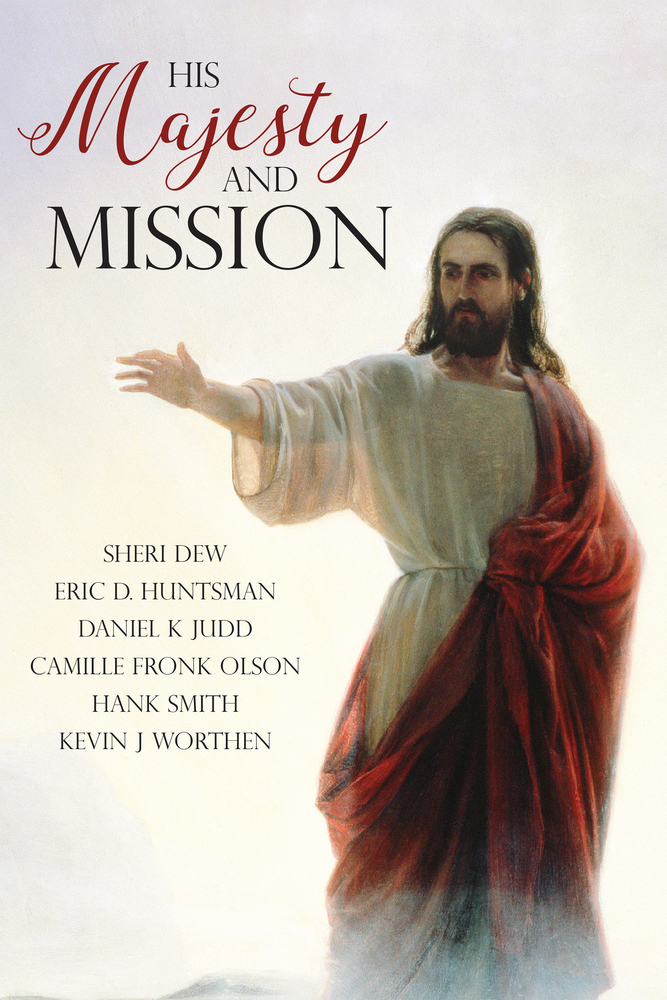
The following is an excerpt from a new book entitled, His Majesty and Mission. It is a compilation of presentations given at BYU’s annual Easter Conferences published by the Religious Studies Center at Brigham Young University in cooperation with Deseret Book. Authors include Sheri Dew, Kevin J. Worthen, Eric D. Huntsman and others.
The following is an excerpt of a presentation by Hank R. Smith, an assistant professor of ancient scripture at BYU.
Click here to get your copy of ‘His Majesty and Mission’.
On the spring morning of Sunday, 20 March 1842, Joseph Smith stood in a grove of trees near the construction site of the Nauvoo Temple. He was speaking to a group of Saints who had gathered to hear him preach on baptism. However, because of the recent death of a young child, a two-year-old girl named Marian S. Lyon, the Prophet had altered his remarks to include thoughts on death and resurrection. At one point in his sermon, the Prophet said, “[We] mourn the loss but we do not mourn as those without hope.”
Joseph’s statement may be taken to mean that in the Church of Jesus Christ of Latter-day Saints we do mourn the deaths of our beloved friends and family members, but we mourn differently than others. One might say we mourn with hope. Where does the hope that Joseph spoke of stem from? The answer to this question is significant. Death is both universal and personal–perhaps more than any other experience in mortal life. All of God’s children must deal with deep loss throughout mortal life, and all must eventually contemplate their own assured death.
The Sting of Death
Each individual has experienced or will experience the aching and sometimes overwhelming grief that comes with the passing of a cherished individual. Our Heavenly Father has given each of us a remarkable mind. With concentration, we can recall in our minds the voices and the laughter of those we love who have died. The human mind’s ability to draw on memories from even decades ago is astounding. In our minds eye, many can still recall a smile of a loved one now passed on or a familiar phrase they would often repeat. Despite the time that has gone by, in a still moment we may hear the voice of a cherished family member or friend echoing across our memories, often with incredible clarity–a voice of a person whom we long to see again, to talk to again, to laugh with again. In such moments we feel both sweet happiness and piercing heartache. These experiences bring to mind the scriptural phrase, “the sting of death”–the deep and inescapable pain of missing terribly a beloved mother or father, grandmother or grandfather, sister or brother, aunt or uncle, a close friend, or perhaps most painful of all, a child.
Jacob, the fifth son of Lehi, described death and hell as a monster. With this unique description, Jacob may teach us, at least in part, why human beings are naturally afraid of death. The word “monster” might take us back to our childhood bedrooms. How is death like the monsters of a dark closet or the dreaded monsters we were sure were lurking under our bed? What is it that children actually fear? Perhaps our fear of a monster was actually fear of the unknown. Without knowing what the monster actually looked like, our young imagination was free to create the most hideous and fearsome creature it could devise. We knew the monster was both powerful and merciless. We knew that no matter how we struggled to fight or how sincerely we cried out for sympathy, the monster could not be stopped and would choose to stop until we were destroyed.
Perhaps Jacob used this description because death may seem both unknown and merciless. The fear of death is natural to our human experience and it, amid other reasons, keeps us striving to stay alive as long as possible. Like children, we feel vulnerable in the face of the unknown, the powerful, and the merciless. Epicurus, the ancient Greek philosopher wrote, “Against all other hazards it is possible for us to gain security for ourselves but so far as death is concerned all os us human beings inhabit a city without walls.” In other words, death brings a sense of vulnerability unmatched by any other fact of life. We stand in its path, completely exposed and without any form of defense.
When we experience the passing of a loved one, we may, in the grip of inescapable grief, even cry out in anguish or anger against the monster of death and hell. Said Ralph Waldo Emerson, “Sorrow makes us all children again–destroys all differences of intellect. The wisest know nothing.” The monster seems to steal our cherished loved ones without remorse.
….
Said Roman poet Horace, “Death with impartial step knocks at the huts of the poor and at the palace of kings.” All humanity will experience death–both as an observer and participant. Sorrow, fear, and despair are the common response, especially to those without knowledge of the plan of salvation. Modern philosopher and Cambridge professor Stephen Dave has said, “We have to live in the knowledge that the worst things that can possibly happen one day surely will, the end of all our projects, our hopes, our dreams, of our individual world. We each live in the shadow of a personal apocalypse. And that’s frightening. It’s terrifying.” British novelist Howard Jacobson wrote, “How do you go on knowing that will never again–not ever, ever–see the person you have loved? How do you survive a single hour, a single minute, a single second of that knowledge? How do you hold yourself together?” Ancient Greek playwright Euripides wrote to a loved one who had passed away, “Come back! Even as a shadow/even as a dream.”
…
Light, Life and Hope
When the people of the Book of Mormon were encompassed in the overwhelming darkness described in 3 Nephi 8, the record states that they were “mourning and howling and weeping” (3 Nephi 8:21). Sometime toward the end of the three days of complete darkness, they heard a voice. Amid the message given to them they heard, “I am Jesus Christ the Son of God…I am the light and the life of the world.” Not long after the voice had spoken, “the darkness dispersed from off the face of the land..and the mourning, and the weeping, and the wailing…did cease; and their mourning was turned into joy, and their lamentations into the praise and thanksgiving unto the Lord Jesus Christ, their Redeemer.”
Not long after, the resurrected Lord appeared to the Nephite people. Their confusion about what was happening slowly turned into comprehension. As they processed the reality of his presence, and all that it meant, they fell to the earth in worship. This was not a dream. This was not a hallucination. It was Jesus Christ. He was right there in front of them to see, hear, and touch. It was overwhelming in every sense. Among many other things, his presence was an irrefutable witness of life after death–his life after death and the life after death of so many loved ones. Annihilation quickly became a myth of yesterday. After this day, all about yesterday would seem like a completely different life. It is no wonder why Elder Jeffrey R. Holland referred to it as “the day of days!”
The Lord Jesus Christ, our Savior and Redeemer, our brother and friend, turns darkness into light and mourning into joy. His entire existence witnesses the reality that death is not the end. Like the first glimmer of dawn turns into a glorious morning sun after the darkest and coldest of nights, he has gloriously risen as the supreme embodiment of light and life. Weeping did endure for a night, but joy has come with the rising Son.
To read the full presentation from Hank R. Smith and the other incredible Easter messages in “His Majesty and Mission“, get your copy by clicking here.
Cartoon: Easter Eggrolls
Sign up for Meridian’s Free Newsletter, please CLICK HERE

Finding Peace Through Gratitude #PRINCEofPEACE

Sign up for Meridian’s Free Newsletter, please CLICK HERE
Throughout the course of this Easter week, the Church of Jesus Christ of Latter-day Saints invites you to find the peace and comfort that can come from the life and teachings of Jesus Christ, the Prince of Peace.
As we approach the celebration of His wondrous resurrection, visit Mormon.org to learn more about principles of peace highlighted from the life of Christ and about members just like you who have had personal experiences with them. Each day’s principle also comes with suggested ways you can incorporate that principle into your week as we approach Easter this coming Sunday.
Today’s principle is finding peace through GRATITUDE.
“Reflecting on the innumerable blessings Jesus Christ has made possible in his life helped Jon put things in perspective—allowing him to dwell on the good instead of the bad. Watch how his gratitude blessed him and others as well.”

Invite your friends to develop peace through compassion. Use #PRINCEofPEACE.
Selecting and Baking Your Holiday Ham

Sign up for Meridian’s Free Newsletter, please CLICK HERE
Get 2 dinner roll mixes for $1.00 each! Sour Cream Potato Dinner Rolls! Use code “DOUBLE” at checkout.
Limit 1 double-pack. Not valid with other coupons. Valid in the store with a $20 purchase.

Use this guide to help you select and prepare your baked ham for that special meal. With this guide, you will be able to identify and understand the various types of hams and select the best ham for your family. We’ll even tell you how to bake your ham.
This guide is organized in a question-and-answer format for easy reference.
What are the different types of hams that I should consider?
A ham is cured pork, specifically the entire back leg of a hog. But ham is very different than uncured pork. It’s the curing process that changes the flavor and texture of the meat. Cured hams can be either cured in brine—the most common—or dry cured. There are four major types of brine-cured hams: fresh, cured, canned but not pasteurized, and canned and pasteurized. With the exception of some dry-cured hams, any ham that is not pasteurized must be refrigerated.
Dry cured hams are usually more expensive, are quite salty, have a unique flavor, and are not commonly used as dinner hams. A country ham is a dry cured ham that is usually heavily salted and soaked to remove some of the salt before it is cooked and eaten. Dry cured hams are not generally found in grocery stores. Dry cured hams include prosciutto, serrano, and similar types.
Hams may be whole or half. A half will be labeled either as a rump half or a shank half. In some cases, a half ham has had a cut removed and is therefore a rump portion or a shank portion. A shank portion will have more connective tissue and will be less meaty.

What about water content?
Except for dry cured hams, hams absorb moisture from the curing brine either by soaking or injection. In smoking and drying, that moisture may be removed. The government dictates that the moisture level must be indicated on the labeling. The driest product labeled “Ham” will not exceed ten percent added water. A product labeled “Ham with Natural Juices” is the next driest, then “Ham Water Added” and finally a “Ham and Water Product” which has as much as 35% water.
Should I be concerned about nitrites?
The brine used for curing is a combination of water, sugar, salt, and sodium nitrite. After several days of curing, the ham is washed free of brine, cooked, and is sometimes smoked. According to government allowances, the finished product cannot contain more than 200 parts per million of nitrite. All processors are regularly inspected by the USDA to assure compliance.
The nitrites used are approved by the FDA as safe in the concentrations allowed.
How do I select a quality ham?
Hams may be one of those items where you usually get what you pay for. Mass produced, inexpensive hams may be processed in as little as twelve hours. More expensive hams may not be ready for market with less than two weeks of processing. Additionally, the best hams come from selected pigs that have been fed high protein diets prior to slaughter.
Processors may vary the amount of salt or sugar in a ham to meet company specifications. Additionally, the smoking process may vary. When you find a ham that has the flavor that you like, stick with it.
Color and appearance are important considerations in selecting a ham.
Select a fresh ham that is a bright grayish-pink. Those fresh hams that have a pale, soft, watery appearance are less desirable. A fresh ham that has a greenish cast may indicate bacterial growth and should be avoided.
Select a cured ham that has a bright pink color. A lighter-colored pink or a non-uniform coloring may be the result of improper curing or exposure to store lights. Again, a greenish cast may reflect the presence of bacterial growth. Avoid those hams that have a multi-colored appearance. It may suggest the presence of bacteria.
Avoid those hams that have excessive marbling. These may have a greasy taste.
The general rule is to plan on six to eight ounces of boneless ham per serving and eight to twelve ounces of bone-in ham per serving.
It is the opinion of some that bone-in hams taste better.
How do I prepare my ham?
Most hams, including many canned hams, require refrigeration before baking. Unless it is pasteurized and states that refrigeration is not required, keep your ham in the refrigerator.

As with all meat products, make certain that your ham is properly baked–though a ham marked “fully cooked” does not need to be cooked again. A meat thermometer is essential. Measure the baked temperature of the meat in the thickest portion of the ham and in at least two spots to make sure that the thermometer is not inserted into a pocket of hotter fat. Make certain also that the thermometer is not placed against the bone.
To be safe, a fresh ham should be baked to 170 degrees and a cured uncooked ham baked to 160 degrees—many bacteria can survive to temperatures of 140 degrees. If you are warming a fully cooked ham, heat it to 140 degrees.
If you are purchasing a bone-in ham, be certain of your carving skills. Carve at right angles to the bone. Let the baked ham set for five minutes before beginning to carve.
What about glazes for my ham?
Glazes are a very nice touch for you ham. You can make a glaze or simply glaze your ham with a jelly. Red currant jelly is the traditional favorite followed by pineapple jelly. Pomegranate jelly which is bright and clear and sweet is our favorite. All three are available at The Prepared Pantry.
See more ideas for ham glazes.
About the Author
Dennis Weaver has burned food from Point Barrow, Alaska, to Miami, Florida. He is the founder of The Prepared Pantry in Rigby, Idaho and the author of “How to Bake: The Art and Science of Baking” available as an E-book or as a Kindle book on Amazon. Dennis lives in Rigby, Idaho, with his wife, Merri Ann. They have five wonderful children and six beautiful granddaughters.
Finding Peace Through Compassion #PRINCEofPEACE

Sign up for Meridian’s Free Newsletter, please CLICK HERE
Throughout the course of this Easter week, the Church of Jesus Christ of Latter-day Saints invites you to find the peace and comfort that can come from the life and teachings of Jesus Christ, the Prince of Peace.
As we approach the celebration of His wondrous resurrection, visit Mormon.org to learn more about principles of peace highlighted from the life of Christ and about members just like you who have had personal experiences with them. Each day’s principle also comes with suggested ways you can incorporate that principle into your week as we approach Easter this coming Sunday.
Today’s principle is finding peace through COMPASSION.
“Jesus Christ’s selfless acts of service brought peace to the blind, the leprous, the lonely, and the sin-laden. Watch how the Burnetts followed His example to find peace in the midst of tragic loss.”
https://youtu.be/tcFGZA6P4qc

Invite your friends to develop peace through compassion. Use #PRINCEofPEACE.
FEATURES