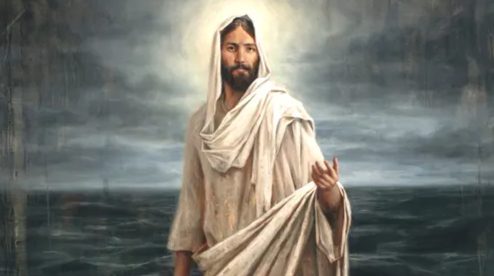



The Old Testament is a testimony of Jesus Christ
When Isaiah prophesied that “unto us a child is born, unto us a son is given,” and declared that this child would be called “Wonderful, Counsellor, The mighty God, The everlasting Father, The Prince of Peace” (Isaiah 9:6), he was joining a long procession of prophets who bore witness of Jesus Christ across the ancient record. Many readers today instinctively divide the Bible into two stories—one about ancient Israel and another about Jesus of Nazareth. Modern revelation quietly overturns that division. It assures us that there is, in truth, a single, unified story. In the Old Testament we see the road to Christ; in the New Testament we see Christ on the road.
Jesus Christ “was the Great Jehovah of the Old Testament, the Messiah of the New.”1 This declarative sentence from “The Living Christ: The Testimony of the Apostles” does more than inform; it reorients our reading of scripture. It invites us to see the Old Testament not as a mere historical prelude but as the first testament of Jesus Christ—a vibrant, multivoiced witness of His divine nature, His covenantal dealings, and His atoning mission. What looks like a maze of kings and commandments becomes, on closer view, a single Face looking back at us.
As Latter-day Saints, we are blessed with additional books of scripture and living prophets that help us recognize the Savior’s presence throughout these ancient texts. The Book of Mormon, the Doctrine and Covenants, and modern prophetic teachings make it clear that Jesus Christ—our Savior and Redeemer—is the God of Abraham, Isaac, and Jacob. He is the One who brought Israel out of bondage, guided them through their wilderness, spoke through seers and prophets, and established covenants with His people. He is not only the God who parts seas and topples walls; He is the God who remembers sparrows and whispers to solitary hearts.
Jesus Christ stands as both the foundation and the fulfillment of the Old Testament. As Jehovah, He revealed Himself to patriarchs and prophets; as Jesus of Nazareth, He fulfilled the types, shadows, and promises woven into their writings. When we begin to see these connections, our scripture study ceases to be a tour through religious history and becomes instead a living journey into the presence of the Savior Himself. We thought we were reading about people who were waiting for Him; we discover that He has been waiting there for us.
Jesus Christ is the Great “I Am”
President M. Russell Ballard testified that the Old Testament is “the first testament of Christ, . . . which predicted and prophesied of the coming of the Savior, His transcendent life, and His liberating Atonement.”2
On a mountain slope near Horeb (also called Sinai), the Great Jehovah revealed Himself to Moses in a flame that burned but did not consume. As Moses drew near to the bush, the Lord disclosed His name: “I AM THAT I AM” (Exodus 3:14) and “the Lord God of your fathers, the God of Abraham, the God of Isaac, and the God of Jacob” (Exodus 3:15). In Hebrew, this “Lord God” is יהוה (YHWH), rendered as Jehovah—the very Being who would later come down among us as Jesus Christ. The God who stood above the bush in fire would one day stand above the grave in flesh.
The Great Jehovah is the Light of the World. The Psalmist declared, “Thy word is a lamp unto my feet, and a light unto my path” (Psalm 119:105). The Lord is that lamp and that path. He is a fire that does not consume but illumines. He is “the way, the truth, and the life” (John 14:6). He is the road under our feet, the light by which we see it, and the life that walks upon it. He is the journey, the compass, and the destination. He is not a pale idea, but a blazing Reality—more like a White Sun than a dim candle in the mind.
President Dallin H. Oaks taught, “The gospel of Jesus Christ is a plan that shows us how to become what our Heavenly Father desires us to become.”3 That plan appears first on the pages of the Old Testament, where the Lord God—Jehovah—calls, delivers, chastens, and comforts His people. In the meridian of time, He condescends to come as Jesus Christ, the suffering Servant and risen Lord of the New Testament. He then manifests Himself as the resurrected Christ to those in the ancient Americas, as recorded in The Book of Mormon: Another Testament of Jesus Christ. And in our own day, He continues to reveal His will through latter-day prophets and apostles.
Taken together, these witnesses are like facets of a single precious stone. Turn the gem in your hand and light flashes from a new angle—but it is the same Light, the Light of the World, refracted and made more glorious. We handle many books, but we keep meeting the same Person.
Jesus Christ is the fulfillment of the Old Testament
At first glance, the Old Testament can feel like a crowded tapestry of narratives, laws, genealogies, poems, visions, and laments. The many books, authors, and genres move and weave like a dance, but to some readers it looks more like rush hour traffic—the constant starting and stopping, the sudden merges and exits, the nagging sense that we may have missed a turn somewhere back. We might even wonder whether these highways are all headed to the same place, and whether we want to go there. The problem is not that the road has no destination, but that the destination is larger than our map.
On the very day of His resurrection, the risen Christ gave us the answer.
Two disciples were walking the road to Emmaus, sorrowful and confused, when Jesus Himself drew near, “but their eyes were holden that they should not know him.” They rehearsed the events of His crucifixion and the strange reports of angels and an empty tomb. Then He asked them, “Ought not Christ to have suffered these things, and to enter into his glory?” And “beginning at Moses and all the prophets, he expounded unto them in all the scriptures the things concerning himself” (Luke 24:13–27).
In that quiet walk, the Lord of glory interpreted the Old Testament as a book about Himself. The laws, the prophecies, the sacrifices, the stories—they all found their meaning and their full expression in Him. Their hearts burned before their minds understood, and by the time they saw His face, they had already seen His fingerprints on every page.
Paul later told the Galatians that the law of Moses was a “schoolmaster” (or tutor), given to train and discipline God’s people and lead them to Christ (see Galatians 3). Centuries earlier, Jacob, the brother of Nephi, had testified that his people “knew of Christ, and . . . had a hope of his glory many hundred years before his coming; and not only we ourselves had a hope of his glory, but also all the holy prophets which were before us.” Jacob explained why they observed the law of Moses: “for this intent we keep the law of Moses, it pointing our souls to him” (Jacob 4:4–5).
If we will let them, the Old Testament’s laws, stories, and ordinances will do the same for us.
So, as we navigate these ancient pages, let us view the varied statutes, narratives, and events as divinely given means of coming unto Christ. When we do, we discover that the highway we struggled to follow is, in fact, a “way of holiness” that leads to life and abundance (Isaiah 35:8). No wonder, for the Great Jehovah of the Old Testament is the same “way, the truth, and the life” (John 14:6) revealed in the New. What seemed like chaotic traffic turns out to be ordered movement. The Old Testament—and our own lives—are actually going somewhere. That destination is both a place and a Person: our Savior. The more we see Christ in their story, the more we see Christ in our own; and the more we see Christ in our own story, the more clearly we read theirs.
Read and receive
The Prophet Joseph Smith once wrote of the Bible, “He that can mark the power of Omnipotence, inscribed upon the heavens, can also see God’s own handwriting in the sacred volume: and he who reads it oftenest will like it best, and he who is acquainted with it, will know the hand wherever he can see it; and when once discovered, it will not only receive an acknowledgment, but an obedience to all its heavenly precepts.”4
Those who read the scriptures—and read them “oftenest”—will indeed like them best. The scriptures lend us other eyes with which to watch the Lord at work among His children. As we see the diverse ways He speaks and leads, we grow more able to recognize His hand in our own lives. Nephi taught that the Lord “speaketh unto men according to their language, unto their understanding” (2 Nephi 31:3; see also Doctrine and Covenants 1:24). We borrow their eyes to read His works then, and find, to our surprise, that we are seeing our own world for the first time.
The Old Testament is a rich field in which to observe this divine pattern. Within its pages, the servants of God receive dreams, commandments, rebukes, deliverances, and consolations. Some hear a still small voice; others see visions of wheels and wings. In their variety, they mirror us. As we read and honestly bring our questions to the text, those questions can become doors through which new light and personal revelation enter. Our questions need not be barricades against belief; they can be ladders, windows, and wells.
Here are a few examples of how we might read with Christ in mind: We are not adding Christ to these stories like a footnote; we are uncovering the Christ who was there before we ever opened the book.
- When reading the creation narratives in Genesis, Moses, and Abraham, how is the unfolding work of creation like your own spiritual journey toward finding rest in the Lord?
- When reading the story of Joseph in Egypt, how does his life testify of Jesus Christ? Joseph offers bread to a starving world; how does this foreshadow the Savior’s gift of the bread of life? What did the Egyptians and Israelites have to do to receive that bread? What must I do?
- Moses is described as being “in the similitude” of Christ (see Moses 1:6). In what ways does his mission to deliver Israel from bondage resemble the redemption our Lord offers from sin and death?
- As Israel journeys toward the promised land, they depend utterly on water in the wilderness. How is this like my own journey toward my promised land? And what is that land of promise in my life? What, precisely, has the Lord promised? When you read Exodus 15 and encounter the bitter waters of Marah, notice that the waters become sweet when Moses casts a tree into them. It is a strange detail—unless we remember another Tree, a wooden cross, by which the bitter waters of mortality can be sweetened through Christ. Then, at the end of the chapter, Israel arrives at Elim, “where were twelve wells of water, and threescore and ten palm trees.” Do these numbers and images say anything about covenant, abundance, and rest along our own covenant path?
- In 1 Samuel 25, Abigail steps between David and bloodshed. She mediates, intercedes, and brings gifts of food and wise counsel. How does Abigail’s story deepen your understanding of what the Lord Jesus Christ does as Mediator, Intercessor, and Giver of every good gift?
- Paul taught that “the law was our schoolmaster to bring us unto Christ, that we might be justified by faith” (Galatians 3:24). When reading the laws in Exodus and Leviticus, ask: How does this statute, ordinance, or sacrifice point to some aspect of Jesus Christ’s character, His atoning work, or His covenant with me?
These questions are not meant to exhaust the meaning of the text but to open it—to turn our hearts deliberately toward the Savior whom the text ultimately reveals.
A simple caution and a clear challenge
In studying the Old Testament, we often encounter what might be called “Yeahbuttery”—the habit of letting every passage dissolve into debates about translation, historical reconstruction, or apparent contradictions. Someone reads a verse and immediately replies, “Yeah, but . . .” There is a place for careful scholarship, and faithful study can be enriched by historical and linguistic insight. But if we are not careful, these secondary questions can keep us circling around the text instead of entering into it.
In our day, we have access to a flood of resources—podcasts, articles, commentaries, lectures, and online discussions. These can bless us, but they can also leave us feeling like Bilbo Baggins, who confessed that he felt “all thin, sort of stretched, if you know what I mean: like butter that has been scraped over too much bread.”5 With so many voices, we may become tired before we have even sat down with the text itself. Study aids are good servants, but very bad masters; they should point us to the scriptures, not push the scriptures to the margins.
Let us not miss the light while we are busy analyzing the lantern. The most important step is the simplest: read the scripture itself. Let its narratives, its images, and its people move into your mind and heart. Then let the Spirit work. We do not read scripture to master a book, but to be mastered by the One the book reveals.
Jesus Christ is the Great Jehovah of the Old Testament. He is the way, the truth, and the life. In that ancient record, “by the prophets [He has] multiplied visions, and used similitudes” (Hosea 12:10) to reveal Himself to His people. He is the beginning, the foundation, and the ultimate fulfillment of the Old Testament. Those who read it—and read it “oftenest”—will not only come to love that book best; they will discover new ways of loving the Lord and of loving their neighbor.
Footnotes
- “The Living Christ: The Testimony of the Apostles,” Gospel Library.
- M. Russell Ballard, “The Miracle of the Holy Bible,” Liahona, May 2007, 82.
- Dallin H. Oaks, “Kingdoms of Glory,” Liahona, Nov. 2023, 28.
- Teachings of Presidents of the Church: Joseph Smith (2007), 66.
- J.R.R. Tolkien, The Fellowship of the Ring [Boston: Houghton Mifflin Harcourt, 2014], 32.