





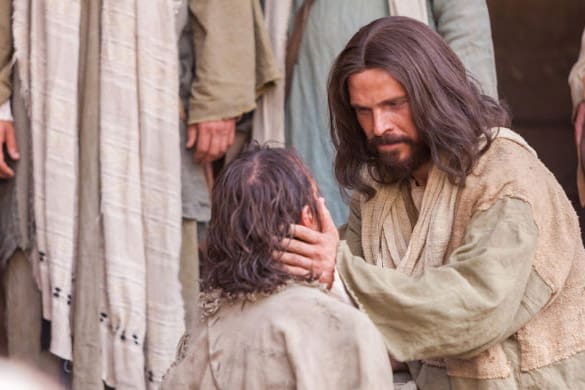


The prophet Isaiah wrote prophetically of the Messiah, “The Spirit of the Lord GOD is upon me; because the LORD hath anointed me to preach good tidings unto the meek; he hath sent me to bind up the brokenhearted, to proclaim liberty to the captives, and the opening of the prison to them that are bound” (Isaiah 61:1.) Those who have been divorced because of abuse or neglect know the reality of feeling brokenhearted captives, who are at least figuratively in a prison of despair—seemingly trapped in a relationship which lacks the attributes of a real marriage but nonetheless is legally and socially recognized as one.
Persisting in an abusive marriage is profoundly dehumanizing. Often, after a person physically escapes an abusive relationship, he or she remains confined in a prison of fear, anxiety, and isolation. Many are terrified to move forward into new relationships for fear of getting stuck in such a recurring nightmare again. The message of this article is that there is hope for freedom through the Messiah.
The Book of Mormon contains a story about a man named Morianton who was the ruler of the Land of Morianton, which was in a “warm contention” over who should possess a portion of the Land of Lehi. (Alma 50:26). The people of Morianton took up arms over this dispute. But the people of the Land of Lehi made common cause with Captain Moroni, and Morianton feared defeat. He decided instead to occupy the land northward, make alliances, and overthrow the liberty of the Nephites (Alma 50:32). As Morianton was making these plans, the Book of Mormon records that:
“[T]hey would have carried this plan into effect, (which would have been a cause to have been lamented) but behold, Morianton being a man of much passion, therefore he was angry with one of his maid servants, and he fell upon her and beat her much. And it came to pass that she fled, and came over to the camp of Moroni, and told Moroni all things concerning the matter, and also concerning their intentions to flee into the land northward” (Alma 50:30-31, emphasis added).
Unfortunately, we do not know the name of this courageous abuse survivor. For purposes of this article, I will call her Miriam, which means “rebellion” or “strength.” Her story supports Ralph Waldo Emerson’s statement that, “there is properly no history; only biography.” Empowered by the information given to him by Miriam, Captain Moroni sent an army to thwart Morianton’s plot, which resulted in the people of Morianton “covenanting to keep the peace” (Alma 50:36).
Miriam fled the service of an abusive man who held power over her livelihood. And she had as much to do with saving the Nephite nation as Captain Moroni. She may have left Morianton with her own liberty in mind. But her willingness to value her own safety and inherent dignity as a child of God ultimately resulted in freedom for an entire nation. I wish we knew more about Miriam’s life after she fled from Morianton. But I am reasonably sure that she was a woman of courage and strength, and that she was well-received by Captain Moroni and those who followed him.
Often p,eople living in abusive situations are so consumed with fear and so immersed in their situations that they can’t imagine escaping the abuse and the joy they might have after such liberation. It may feel nearly impossible to imagine the effects their decision might have on many future generations of their families that will follow.
This article is primarily written to those who have already left abusive relationships and want to move on and rebuild a good life, perhaps with another partner. And it may help you to summon the courage if you are considering leaving an abusive partner, but don’t know whether you should. The following are my suggestions for recovering from abuse:
1. Radical Acceptance. This means acknowledging what happened to you and calling it by its name. Many people are reluctant to call abuse by its name because they are ashamed of what happened or believe they contributed to the abuse. Physical, emotional, psychological, financial, or sexual abuse can each leave lasting emotional scars. Understanding that abuse occurred is a sign of self-awareness—not weakness. Many abusers will tend to minimize their own conduct and manipulate the victim to believe it was not that serious or was the victim’s fault. Radically accepting that you were abused does not mean you condone it—just that you acknowledge what happened and that it was abuse. It is not uncommon for abuse in relationships to be mutual. A 2007 study by Daniel J. Whitaker, et. al, published in the American Journal of Public Health reported that 50 percent of reported abuse cases were mutual. Whatever your own mistakes may have been, however, the abuse you suffered is bound to leave emotional scars. So, even in cases involving mutual abuse, you are bound to be carrying emotional scars which you need to acknowledge before they can be healed.
The Church’s website defines abuse as follows:
“Abuse is the mistreatment or neglect of others in a way that causes physical, emotional, or sexual harm. The Church’s position is that abuse cannot be tolerated in any form and that those who abuse will be accountable before God.”
If you doubt whether this definition applies to you, please talk to your bishop and a qualified counselor. While the Church does not counsel members to separate or divorce over minor issues, the Church is also clear that, “No one is expected to endure abusive behavior.”
2. Create an emotional support system. Abusive relationships are often codependent relationships. When you choose to separate from an abusive partner, you may feel terribly lonely, which causes many to return to their abusive relationships. Often the abusive relationship was very isolating and created distance from loved ones. It is vital that you begin reaching out to people you can trust and who will support you. These may be friends from any earlier phase of your life including mission companions, college friends, or even high school friends. Think particularly about friends and family members who have been divorced. They may be particularly empathetic. When I was going through my divorce, technology allowed me to reach out and have positive conversations with friends in other states—which was a tremendous blessing. I also recommend that you connect with your ward family and seek support. You may also find good support groups online, though I would suggest that you be discerning. Some online communities are better and more supportive than others.
The most important thing is that you need other human beings to talk to and connect with who will fill that void left by your former partner. I generally recommend that abuse survivors not jump into a new dating relationship until significant healing has taken place. Until you can feel strong without a partner, you will be prone to create imbalanced and co-dependent relationships where abusive tendencies and incompatibilities may be overlooked because you need the new relationship so much. A new dating relationship is not the antidote to loneliness or pain resulting from an abusive relationship. When you no longer need a relationship, you are ready for one.
3. Process Trauma in a safe place. I recommend trauma therapy with a qualified trauma therapist. This may be EMDR or some other related modality. If you cannot afford it, let your Bishop know your needs. Many community-based clinics also offer sliding scale fee structures to allow clients to pay a fee that is based on their ability to pay, rather than a fixed hourly fee. Abuse can have lasting effects, which are likely to spill over into future relationships if not dealt with in a way that releases the resulting trauma. A good professional therapist can be life-changing.
4. Set boundaries. You have the right to limit or exclude your abuser and other non-supportive people from contact with you. Prayerfully consider whether contact with certain people is going to aid or detract from your healing process. Abuse often strips the survivor of his or her feeling of being in control over his or her life. Reclaiming your feeling of control over your life includes trusting your own judgment and instincts and saying a firm “no” to people that are not supportive and do not belong in your inner circle. Miriam left Morianton and revealed his nefarious plot to Captain Moroni—much like a call to law enforcement today. She put distance between herself and her abuser and perhaps found it empowering to tell Captain Moroni about Morianton’s evil plot.
5. Recognize that healing can take time. Healing from abuse is not a linear process. You may believe you are healed and find that painful emotions arise in a future relationship—even a healthy one. You may find that you feel consistently good for a long time and then painful emotions and even tears arise without warning. That does not mean you aren’t healing or that you have had a setback. When emotions arise in you, they are ready to be healed. So, you will need to work through them to let them go.
6. Remember that your abuse does not define you. Your abuse was part of your path. You did not ask for it and certainly did not wish for it. But it is a crucible through which you have passed and helped to create the person you are. Opening yourself up to future relationships may seem too frightening to even contemplate. Dating again may take courage. You may wonder if anyone will be patient and understanding enough to give you the time and extra sensitivity you may need to learn to trust another partner. Once you start dating after divorce, however, you are likely to find that most of your partners have a few emotional scars of their own, with which you will need to be patient. You will have the dual challenge of dealing with your own pain and being sensitive to your partner’s emotional sensitivities at the same time. This will require something bigger and more powerful than compatibility. It will require intentionality. But once you have intentionally created a safe place for each other and learned to trust each other in that space, you will have forged a bond that nothing can break. Ironically, as you are vulnerable to each other, you will find that your brokenness is your connection.
If you work through the emotions surrounding your abuse, your understanding will deepen, and you may even find joy in reaching out as a steady hand and a comforting presence for others who are not as far along in the healing process as you are. But your abuse, by itself, need not define you.
You are not only an abuse survivor. You are also the person who loves baseball or art museums, skiing or tennis, great literature or personal development books. These things can help to define you too. The “self” is more a creation than a discovery. Take the opportunity to write your own story without the approval of your abuser. The thing that defines you most of all is your faith in the Lord Jesus Christ, despite the painful things you have been through—and your trust in His healing power. The Church’s website includes this language:
“While some types of abuse may cause physical harm, all forms of abuse affect the mind and spirit. Victims of abuse often struggle with feelings of confusion, doubt, guilt, shame, mistrust, and fear. They may feel helpless, powerless, lonely, and isolated. They may even question the love of Heavenly Father and their own divine worth. But victims and those who support them can be assured that, through His infinite Atonement, the Savior extends succor, healing, and power.”
7. Forgive. You should give yourself time to work through your anger, resentment and bitterness. Don’t pay attention to pressure to forgive with your words, even while harboring resentment in your heart. Take the time you need to truly forgive. Understand, however, that constantly dwelling on the pain is ultimately not a place you want to get stuck for the long-term. The longer you persist in anger or despair, the more consumed by it you will be.
The word translated “forgive” in the New Testament comes from the Greek word “aphíēmi” (af-ee’-ay-mee) which literally means, “to send forth, in various applications (as follow) [other] KJV Translation(s): cry, forgive, forsake, lay aside, leave, let (alone, be, go, have), omit, put (send) away, remit, suffer, yield up” (Strong’s Concordance 863). In simpler terms, to forgive means to completely let go of something, leaving it behind, letting it be, or sending it away. Is it more difficult to carry a large rock or to put it down and move on without it?
I once told my therapist that I often felt like I had forgiven my former wife for her role in our divorce. But every now and then, I would see her do or say something that reminded me of painful things that happened in our marriage, and I could feel myself picking up the rock again. My wise therapist said, “That’s good. Because if you can notice yourself picking up the rock, you can intentionally take a deep breath and gently put it back down again.” I was struck in that moment that this is what Jesus meant when he asked us to forgive “seventy times seven” (Matthew 18:22). When painful feelings are triggered, you have another opportunity to forgive by, figuratively, putting down the rock. You don’t need to make him or her understand how you feel or regret anything. You don’t need someone to change or apologize or otherwise deserve your forgiveness. Don’t give them that power over you. You just need to keep putting down the rock.
If you suffered abuse in a marriage or dating relationship, you have a special place in my heart and certainly in the Lord’s heart. He has suffered with you and knows your pain (Alma 7:11-12). Most of all, I want you to understand that there is a beautiful life awaiting you as you heal. As President Russell M. Nelson said in his 2005 General Conference talk, Jesus Christ—the Master Healer, “Thanks to [Jesus Christ], no condition is hopeless. Thanks to Him, brighter days are ahead, both here and hereafter. Real joy awaits each of us—on the other side of sorrow.”
Resource:
Intentional Courtship can help in this journey.
About the Author
Jeff Teichert, and his wife Cathy Butler Teichert, are the founders of “Love in Later Years,” which ministers to Latter-day Saint single adults seeking peace, healing, and more joyful relationships. They are co-authors of the Amazon bestseller Intentional Courtship: A Mid-Singles Guide to Peace, Progress and Pairing Up in the Church of Jesus Christ of Latter-day Saints. Jeff and Cathy each spent nearly a decade in the mid-singles community and they use that experience to provide counsel and hope to mid-singles and later married couples through written articles, podcasts, and videos. Jeff and Cathy are both Advanced Certified Life Coaches and have university degrees in Family & Human Development. They are the parents of a blended family that includes four handsome sons, one lovely daughter-in-law, and two sweet little granddaughters.
Purchase Jeff & Cathy’s book Intentional Courtship:
https://amzn.to/3GXW5h1
Connect with Jeff & Cathy:
Website: http://www.loveinlateryears.com/
Podcast: https://anchor.fm/loveinlateryears
YouTube: https://www.youtube.com/c/loveinlateryears
Facebook: https://www.facebook.com/groups/LoveInLaterYears
Instagram: http://instagram.com/loveinlateryears/
Email: [email protected]