




Filmmaker Christian Vuissa wanted to make a movie that made an impact beyond the 14 million members of the LDS faith.
And after two years of research and 23 days of movie production, Vuissa hopes his new film, Joseph Smith | Volume 1: Plates of Gold, is one more way people can find out the truth about the restored gospel.
“Joseph Smith started a movement that changed America, and then changed the world,” Vuissa said. “The Mormon church has millions of members. Today, I can travel almost anywhere in the world and find a congregation.”
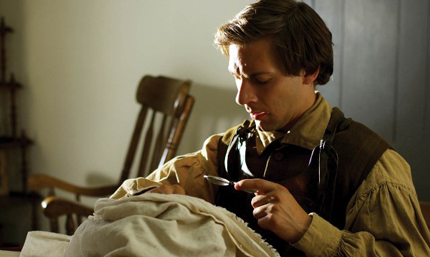
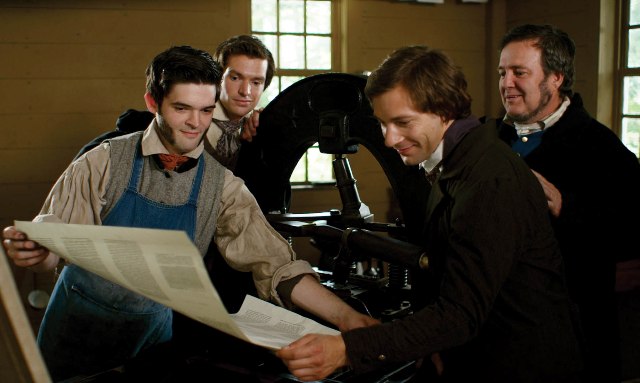
The film details the story behind the coming for of the Book of Mormon, and how Joseph pursues the translation of the plates amidst personal hardships and trials.
Plates of Gold was shot in all four seasons, beginning in September of 2009. Most of the filming took place in Massachusetts, but some segments were shot at “This is the Place Heritage Park” in Salt Lake City.
Vuissa said that he wanted this movie to examine the prophet’s life that covers the years before the founding of the church, unlike many films about Joseph Smith that cover his life after the church was restored.
And there is also a romantic element in the film.
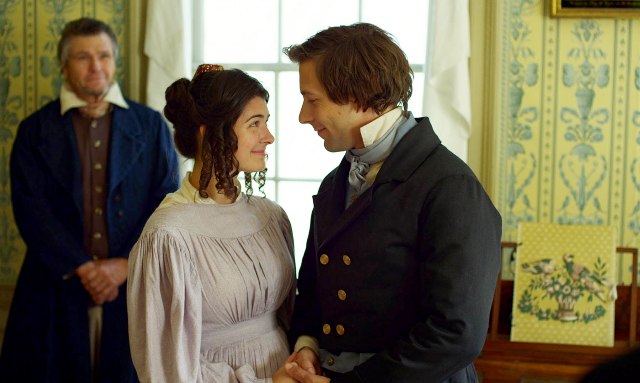
“The film also captures the courtship and first years of marriage between Joseph and Emma, and shows how young the two are during this period. They were basically the same age as our missionaries today,” he said.
 When Vuissa was casting the roles of Joseph, he said he looked for characteristics that the real Joseph possessed.
“Of course, he had to be young. He had to be innocent and playful, but also mature enough to be genuine and sincere. With Dustin Harding (Joseph Smith), I found an actor who was able to capture that. He gave Joseph’s character warm and compassionate sincerity, someone capable of keeping hope and faith alive throughout multiple tribulations,” Vuissa said.
Vuissa said it was important to keep Joseph’s character realistic.
“Naturally in many portrayals of the prophet, he appears iconic and larger-than-life. But I believe one of his unique character traits was that he was so down-to-earth and relatable. I wanted to find that human element so audiences could really get acquainted with him as someone who is in many ways like him.”
Vuissa said he also found an actress who could portray the strength and human side of Emma Smith.
“Emma is often portrayed as this stoic woman, but I am sure she wasn’t stoic when she was young. Lindsay Farr (Emma Smith) was able to portray a young woman full of life and hope, who grows through trials and hardships as she remains loyal to her husband,” he says.
Vuissa hopes his film will help people realize what an impact the Book of Mormon has had not only in the Latter-day Saint faith, but in history, as well as clear up any misconceptions that people have about Joseph Smith.
“I think we sometimes assume that Joseph had all the answers from the get-go — that because he had the first vision and talked with heavenly messengers he basically knew at all times what to do. But like everyone else, he received line upon line and precept upon precept, and had to figure things out as he went along,” Vuissa said. “We are always a work in progress, and Joseph’s experience was no different in that aspect. He had to work through doubts, fears and worries, like we all do.”
Vuissa said that often people get hung up on every detail of the translation of the Book of Mormon, not realizing it was a learning process for Joseph.
“It is often assumed that Joseph translated the Book of Mormon in one specific way and people get caught up in determining how he did it. For me, there is clearly a progression in his ability to translate from the plates, and he used different techniques to do it,” he said. “In the end, it was a lot faster than the beginning and the Lord works with our abilities and improves our skills and increases our understanding over time. That’s what growth is about.”
Vuissa, a native of Austria, is an example of how far-reaching Joseph Smith’s work has been. He joined the LDS church at age 22, after growing up in a Catholic home. When he was a child, two sister missionaries showed up on his doorstep and taught his family. His mother joined the church, but Vuissa’s father remained Catholic and requested his children remain in the faith with him.
It wasn’t until his adult life that Vuissa became more serious about religion. After studying the bible, he felt prompted to join the LDS church, make changes in his life, and serve a mission. Later, he studied at BYU and developed a greater love for film. He has since made award-winning films (One Good Man, The Errand of Angels and Baptists at Our Barbecue) that have given him various opportunities to share gospel messages and themes to the world.
Vuissa is also known for creating the successful LDS Film Festival (based in Orem, Utah) which he started in 2001. The festival showcases new and upcoming filmmakers and attracts thousands of visitors each year. Vuissa often presents one of his new films at the festival.
“My goal as a filmmaker is to portray real people, relatable human beings. I’m interested in exploring humanity in everyday situations and experiences,” he said. “In Plates of Gold, Joseph’s external struggle always concerns the golden plates; how and when to receive them, how to keep them, how to translate and publish them,” he said. “But the bigger, more important struggle is internal. It is his quest for salvation. This is what brought Joseph to the sacred grove in the first place.”
Although Vuissa said he greatly enjoyed making the film, there were some challenges for the director as production began.
“It wasn’t easy to make a historical film with small means. It was also challenging and difficult to package this fascinating story and history in to a feature-length film. I had to cut many interesting historical details both in the script and later in the editing phase.,” he said. When I finished the first draft of the script, it was twice as long and detailed as the final film. After editing the script down to a shootable size, I still ended up cutting many scenes that I found historically fascinating.”
Despite the challenges for Vuissa, he said that this film opened his eyes to many truths. Although he had a knowledge of the life of Joseph Smith before making this film, Vuissa said that he gained a deeper knowledge and appreciation for the service of both Joseph and Emma.
He said that many people have the same reaction to the film.
“So far, most people who have seen the film, already know the story. But the experience is still such that people come out of the movie theater with a greater appreciation for the prophet Joseph and for the Book of Mormon.
They say that through the film, they got to know the prophet on a very personal level and it made them more deeply aware of the sacrifices involved, and they say they have a renewed appreciation for the Book of Mormon,” Vuissa said.
Vuissa also said that during his research for the film, it was affirmed to him that Joseph was a man who many loved and revered, but also a man whom many people spoke ill of.
“After spending over two years researching history and making this film, I realized that Joseph Smith will always be a polarizing figure. That is one of the first things the angel Moroni tells him in 1823, namely that his name ‘should be both good and evil spoken among all people.’ This is part of the prophecy and probably part of the plan, and will not change regardless,” he said.
The film is currently premiering in 25 cities on the east coast. The film has already screened to sold-out houses in Austria, Germany and Switzerland. This fall, the DVD of Plates of Gold will be available in stores.
For more information about the Joseph Smith | Volume 1: Plates of Gold please visit www.josephmovie.com where you can watch the trailer, read audience responses, and find locations and showtimes.