








Summer is upon us, and so are the children! The book selection this month isn’t exactly a light summer read, but it isn’t too heavy either. In fact, I’d say it is just the right thing to throw into your beach bag and jump-start your summer reading.
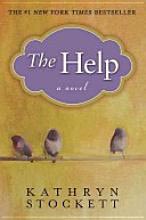
The Help, Kathryn Stockett
OK, so I really don’t like to read books just because they are popular at the moment. I’m more of a “wait-until-it-comes-out-in-paperback-and-it’s-on-the-discount-shelf-at-Half-Price-Books” kind of reader. However, participation in our ward book group forced me to buy The Help in hardback (gently used from Amazon), and I can honestly say I was not disappointed to have spent the money.
Set in Jackson, Mississippi, in 1962, The Help is very much a coming of age story about the Deep South. Chronicling a year in the life of twenty-two year old Ole Miss graduate Skeeter Phelan as she tries to find her place in southern society after college, Stockett manages to capture both the feel of the time period and the prevailing attitudes of the day in regards to race and culture.
Although young Skeeter’s biggest dream is to be a writer, her mother only dreams of a proper marriage with proper connections for her so obviously eligible, yet frustrated daughter. Working in the background while Skeeter tries to find some sort of definition to her life are “the help.”
Otherwise known as the black maids who run the households and raise the children of Jackson’s privileged white families, the help are the unacknowledged lifeblood of the upper crusts’ homes. These meagerly paid women work holidays in their employers’ kitchens, clean up other women’s husbands’ messes, and even potty train children who are not their own, all the while forming bonds unknown to the distracted socialites for whom they work.
The president of the local ladies’ social league is the formidable Miss Hilly, who has been Skeeter’s best friend since childhood. But Skeeter is changing, quietly questioning and struggling against the societal norms with which she has been ingrained the whole of her life. Hilly, however, has never been more certain of the status quo. After all, she is the center of Jackson society, with the perfect husband and beautiful children. She is not about to start worrying about the civil rights and fair treatment of Jackson’s maids.
Additionally, Hilly has the grand responsibility of deciding who is who “in,” and who is “out” of the important committees and social life around which so much of Jackson revolves. Despite a lifetime of friendship, Skeeter is dangerously close to being “out;” her recent alteration in attitude and lack of conformity has not gone unnoticed by The League.
With increasing self-consciousness, Skeeter feels the pressure and isolation of knowing that her friendships are only tenuously surviving. Also looming large in the young woman’s mind is the conspicuous absence of Constantine, the loving and beloved maid who raised Skeeter. Anticipating a grand reunion with her old confidante, Skeeter was heart broken to find Constantine had left her family’s employ just weeks before she was due home from Ole Miss.
Her own mother has been less than forthcoming with any details about Constantine, but Skeeter can’t just dismiss something this big. She must find out what happened to this woman who was as much a mother to her as the woman who bore her.
So, in a true departure from Southern decorum, Skeeter turns to the help for answers. A friend’s maid, Aibileen, seems to be her best hope for discovering what caused Constantine to leave Jackson so abruptly. Unfortunately for Skeeter, the help aren’t used to trusting white women, and the answers she desires are given only after a long, arduous process of trust-building between races and cultures.
A single question to an aging housekeeper, wherein Skeeter asks, “Do you ever wish you could … change things?”1 in turn changes the course of Jackson social history and leads to the construction of unexpected friendships, shocking revelations, and the unearthing of a strength a number of women, white and black alike, didn’t know they had in themselves.
When I reviewed The Book Thief a few months back, I quoted a Good Reads commentator who wondered about the need for “yet another” Holocaust memorial.
The same could be said about the need for yet another “black-people-oppressed-by-Southern-white-society-during-the-civil-rights-era story.”
In another Good Reads review, new Meridian writer Emily Geddes remarks that, “It takes a measure of chutzpah for a white woman today to presume to speak for black women in the 1960s.” That line made me laugh, and I’d have to agree (though I’m wracking my brain trying to remember the number of prominent books on the subject that weren’t written by white women).
Nevertheless, like the Holocaust, readers can’t seem to get enough of these stories. I think it must be the friendships. For all of our electronic disconnectedness as a modern society, we still like the humaneness of relationships – especially those that bridge gaps. And anytime someone tries to walk a mile in the shoes of another, it is a good thing.
I appreciated The Help for once again (and not without humor) reminding us of how far we have come in so short a period of time. We have truly made great strides in the U.S. since 1962, and that needs to be acknowledged. Stockett’s characters were well developed and satisfyingly “human.”
I’m certain there were a myriad of flesh and blood people from Stockett’s own Southern childhood from which she drew her creative inspiration. What added so much to the story, however, was that each character, whether you liked him or not, was complete with strengths and weaknesses. Several of her characters, largely the ones you just wanted to despise, had some completely unexpected redeeming qualities! Just like us all, I guess.
End Note
1. Kathryn Stockett, The Help. (Amy Einhorn Books: New York) 10.
I’d love to know what books you’re reading and whether or not you’ve enjoyed my recommendations. Please, add me to your friends’ list at GoodReads.com (key word: Tennessee) or contact me via email at [email protected]