








Part 1
By Mark W. Cannon
An unusually large group of six new LDS Federal Judges were nominated by President Bush, confirmed by the U.S. Senate and sworn in during 2002 and 2003. They provide an interesting picture of the contemporary Church. That six LDS judges were appointed and that they are about a third as many active LDS as were appointed by all previous Presidents of the U.S. is a surprise even to highly knowledgeable Church members. These new judges have exceptional characteristics.
All 6 won Federal judicial clerkships – two at the prestigious U.S. Supreme Court.
Of the five who went to courts whose judicial nominees are rated by the American Bar Association, all five received the vaunted highest rating of the ABA “well qualified”.
It has been rare for an LDS judge to be appointed outside of Utah. All six of these were appointed to Courts outside of Utah, some as far away as Delaware and Oregon.
Their high quality of performance, public service commitments and reputation for integrity caused them to be acceptable to the Democratic Senators as well as to the majority Republicans. The U.S. Senate unanimously confirmed nearly all.
All five of those who were LDS in their youth filled missions, graduated from BYU or Ricks, or taught at BYU, and have been active in Church service. Two graduated from BYU Law School.
These same five all have long and stable marriages, are deeply committed to their families, and all have from four to six children – much higher than the average for elites outside of the Church.
A half-century earlier, this never could have happened. Discrimination against the Church had precluded any LDS from being appointed to be a Federal Judge. Though Latter-day Saints had consistently been a majority of the Utah population, there had never been an LDS Federal Judge in Utah or elsewhere.
With the promotional effort of Senators Arthur Watkins and Wallace F. Bennett, President Eisenhower nominated Sherman Christensen for the Utah District in 1954 and this first LDS judge served, at least in part-time senior status in his latter years, until his death in 1996. Judge Christensen’s unimpeachable integrity, courage and judicial performance produced ripples of admiration throughout the judiciary and to legal leaders and contributed to increasingly positive attitudes. Prominent Judge Frank Johnson, an Eisenhower appointee who carried out the Supreme Court desegregation decision despite threats to his family, told me that he had a “spiritual high” every time he talked with Sherman Christensen.
We have now reached the point that remarkably competent lawyers of high integrity, who have filled countless public service positions, and have been visibly active in the Church, can be nominated with and confirmed from outside Utah with their Senators’ active promotion or, at minimum, acquiescence.
This is all the more remarkable given the many diverse people and groups that must approve these nominations including Senators in the majority party who normally initiate the nominating process, Senators in the minority party who are from the relevant state who must at least acquiesce, prominent legal groups in the relevant states at least informally, the Department of Justice, the American Bar Association, the President of the United States, the Judiciary Committee of the Senate, and finally, the Senate as a whole must vote to confirm. There are many points at which some one or group who want to destroy the prospects to be a judge are often able to do so.

Having the character and reputation to make it through so many hurdles is one reason that the candidates who attain these prestigious judgeships are normally highly competent, untainted by corrupt practices, and are widely respected. Despite the fact that judges’ rulings sometimes affect billions of dollars, Federal judges have very rarely ever been accused of corruption. Federal judges are normally prestigious, influential leading citizens in their states. All of this contrasts with judges in many countries.
These new LDS judges include four District Judges, who largely preside at civil and criminal trials. They are David G. Campbell, U.S. District Court for Arizona; Kent A. Jordan, U.S. District Court for Delaware; Robert Clive Jones, U.S. District Court for Nevada; and Michael W. Mosman, U.S. District Court for Oregon. There is also a judge in the Ninth Circuit Court of Appeals, Jay S. Bybee, who largely hears and votes on legal issues in appeals from District Court judgments, and Lawrence J. Block on the U.S. Court of Federal Claims, which largely adjudicates claims against the U.S. Government. What kind of people are these new LDS appointees?
Lawrence J. Block
Lawrence J. Block was confirmed by the U.S. Senate as a judge on the U.S. Court of Federal Claims October 2, 2002 at the age of 51. He said his profound love of the American Constitution is because “My mother fled to this country in 1938 from the Nazi empire and most of her family was tortured and murdered in unimaginable ways in a systematic attempt by Hitler and his criminal cronies to exterminate Europe’s Jewry. These were decent and hard-working people. Their only crime: to worship the Lord in their own way and to practice the faith of their ancestors, Abraham, Isaac and Jacob.

“Since childhood, I have been conscious more than most, therefore, of the blessings that G-d Himself has bestowed on this nation. These blessings are not simply great wealth, but are instead the gifts of liberty and peace. There is not a day that goes by that I do not thank G-d for sparing my mothers life and for the great gifts that we Americans share. Simply put, I am a living example of what is still the ‘American Dream.’ I am a son of a refugee. And my elevation to the federal bench truly represents the victory of that American dream and in a very real way the final defeat of Adolph Hitler.”
Judge Block earned his B.A. magna cum laude, from New York University and his Law Degree from The John Marshall Law School. He was a law clerk to Judge Roger J. Miner, Northern District of New York; litigation attorney for U.S. Department of Justice; Adjunct Professor at George Mason University School of Law, and Deputy Assistant General Counsel for Legal Policy at the U.S. Department of Energy. From 1994 until his judgeship, he was Senior Counsel to the Senate Judiciary Committee while Senator Orrin Hatch was either Chairman or a ranking member of the Committee and a supporter of Block. He is both Jewish and LDS.
David G. Campbell
 Judge J. Clifford Wallace of the Ninth Circuit has a reputation for selecting excellent law clerks. He describes David Campbell as particularly talented. Judge Campbell was nominated to the United States District Court for the District of Arizona, which has 13 judges in March 2003, and was unanimously confirmed by the U.S. Senate July 8, 2003 at the age of 51. A native of Utah, he earned B.A. and Law Degrees from the University of Utah. After clerking for Judge Wallace, he was law clerk to U.S. Supreme Court Justice William Rehnquist. Being a Supreme Court clerk is one of the most prestigious positions in the U.S. government.
Campbell has been Adjunct Professor teaching Constitutional Law at Arizona State University and was a Visiting Professor at BYU Law School where he was named Professor of the Year. He was a highly respected trial lawyer with numerous public service assignments.
How did he become a judge? Campbell responded: “The process was initiated when I was contacted by Senator Kyl and others and asked if I was interested in becoming a judge. I was — I had long hoped to have an opportunity for public service. Senator Kyl was my principal supporter in the nomination. Senator Hatch helped at the Judiciary Committee.”
Campbell filled a mission in the England Birmingham Mission. He is a former Bishop and is serving in his second Stake Presidency. Judge Campbell says he has “been happily married to Stacey Sweet Campbell for 27 years. Marrying her is still the best decision I’ve ever made.” They have five children.
Not surprisingly, his children are achievers and all are active in the Church. Katie received her Bachelor of Fine Arts from BYU. Her husband, Matt Rojas is a law student at University of Michigan. They are raising the first granddaughter, Lucy. Jenny graduated from BYU and is studying for her Ph.D. in Chemistry at the University of Wisconsin-Madison while being married to Jesse O’Neil. Rob is a BYU student, currently serving in the St. Louis, Missouri Mission. Sarah is a high school soccer and cello player. Matt is an 8th grade soccer player.

The family enjoys snow and water skiing, fly-fishing and backpacking. As a family they have climbed the Grand Teton in Wyoming, seen the natural wonders of Africa, salmon fished in British Columbia and sea kayaked in Hawaii.
Kent A. Jordan
Kent A. Jordan became one of the four authorized judges in the U.S. District Court for Delaware in November 2002 at age 45. What kind of a family offers the formative influences that produce a Federal Judge? Judge Jordan’s father, Amos Jordan, was First Captain of the Corps of Cadets at West Point, a Rhodes Scholar, the youngest professor in the history of the United States Military Academy, a Brigadier General and a senior official in the Departments of State and Defense, author of a widely used text on national security and head of the Georgetown Center for Strategic and International Studies. At 83, he was recently asked to help former Defense Secretary James Schlesinger to assist in the preparation of and to review the report on the Abu Ghraib prison scandal. “Dad has been and continues to be the great example to me of public service and integrity.”

Judge Jordan’s “remarkably gifted” mother’s “example of loving support and spiritual commitment has been enormously influential in our family.” She “has a sensitivity to the well-springs of human behavior that gives her an emotional IQ that must be off the charts. She expresses herself with language that is simple but beautiful and powerful.” As a child, he was proud to see her children’s book on Brigham Young in libraries. His father served as a Bishop and his parents filled many church callings including being senior missionaries in Hong Kong. On their second senior mission, they worked with BYU-Hawaii to help open doors for their graduates to private and public jobs throughout Asia.
His five brothers and sisters, including David Jordan who was U.S. Attorney in Utah “are all thoroughly accomplished, public spirited, and service oriented souls.” His in-laws are also highly accomplished, including former Pulitzer Prize winner and current Editor-in-Chief of the Deseret News, John Hughes. “There is no such thing as a boring conversation when this extended family gets together, especially when the twenty-four grandchildren are there, some with spouses and children of their own.”
Judge Jordan received his B.A. from BYU with high honors and his law degree from Georgetown University Law Center. He clerked for U.S. District Judge for Delaware James L. Latchum, a remarkable mentor. Judge Jordan had extensive law firm and corporate practice particularly related to intellectual property law, which is a major source of litigation in Delaware where Du Pont Corporation is located. He was Assistant U.S. Attorney for the District of Delaware 1987 to 1992 where he was Chief of the Civil Division. He performed numerous civic, educational and professional activities.
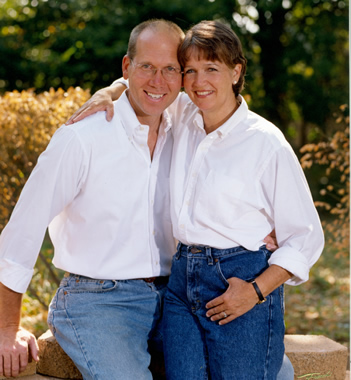
He married Michelle Weaver 23 years ago. They have six children, two of whom are on missions in Bulgaria and Australia. His many Church positions range from his mission in Japan to teaching seminary to serving in Bishoprics.
PART 2 Tomorrow
2004 Meridian Magazine. All Rights Reserved.