






SANTIAGO, Chile — One person can make a difference.
That’s the firm belief of Sister Sharon Brown and her husband, Elder Keith Brown, senior missionaries from Rancho Cucamonga, Calif. They’ve been serving as area welfare specialists in Chile since October 2006 — long enough to see the axiom in action.
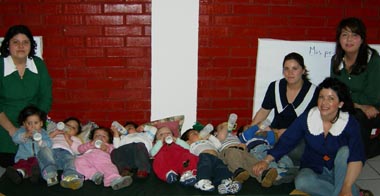
They’ve seen a woman bless a village with a small day-care center. With a high population of Mapchue Indians and few resources in Perquenco, many women have no choice but to support their families
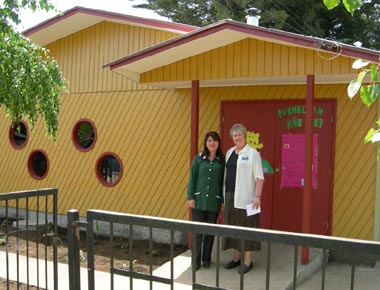
Claudia Montiel, a Church member in Temuco, saw the need in Perquenco and convinced the community’s mayor to purchase a small house where babies could be cared for while their mothers work. LDS Humanitarian Services provided cots, cribs, mattresses, bedding, and toys. The municipality provides food for three meals a day for the children.
Sister Montiel is teaching the mothers skills such as gardening, food preservation, knitting, child care, and self-sufficiency, says Sister Brown. “Because of Sister Montiel, a whole community is elevated.”
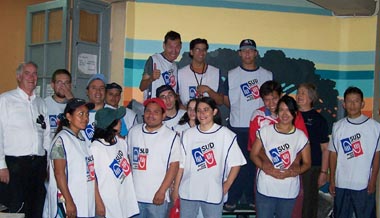
One by one, young adults in the Republica Stake in Santiago are learning the rewards of serving as they offer a day of service each month. “Service is what we do for fun” said Mauricio Chamaya, leader of the Young Single Adults group.
One early morning in January, they gathered to paint the blood bank at Hospital San Borja Arriaran. They scrubbed walls, scraped off peeling paint, and repaired damaged areas before giving the whole place a fresh, new coat of paint, only stopping briefly for lunch.
In February, the young adults scrubbed and scoured a home for mentally handicapped girls.
The Browns, whose job is to work with non-LDS agencies and provide help from the Church from their base in Santiago, are often astounded in their visits throughout Chile at what an “ordinary” person can do to help others.
One woman in Temuco whose son had survived childhood cancer showed her gratitude by starting a home where parents can stay with their children who are receiving chemotherapy treatment. She’s also started a school so they can keep up with their studies from the hospital, at home, or through home tutoring.
“The government supplies the teachers, but this woman provides the place and other supplies,” explains Sister Brown. Children from surrounding schools do fund-raisers to purchase food for the home.
An LDS volunteer with the organization brought Hogar de Nino Leucemico de Temuco to the attention of the Church’s area welfare services. The Church has supplied personal hygiene items, cleaning supplies, and school supplies, plus food during the two months the local schools are on vacation. The Church also gave three laptop computers to the program so children can do their school work while confined to bed.

In another case, a Santiago woman who is also a nurse discovered that hospitals often release people who have no place to go. It started with a Peruvian woman, dying of cancer, who had two young children and was released with nowhere to go but the street. The nurse took her into her own home until she died, then sent the children to Peru to live with grandparents.
With her own funds, along with money donated by friends and neighbors, this woman bought a house across the street from her own. It provides a temporary haven for ill mothers and their children. The women living there wanted to earn money to provide for themselves, so the Church has provided wax for making candles, and yarn for making the handicrafts that they sell.
“We spend most of our time deciding who to help, and how,” explains Sister Brown. As area welfare specialists, the Browns have a two-fold responsibility to train leaders in the principles of welfare, and to find opportunities to implement humanitarian service to non-LDS organizations.
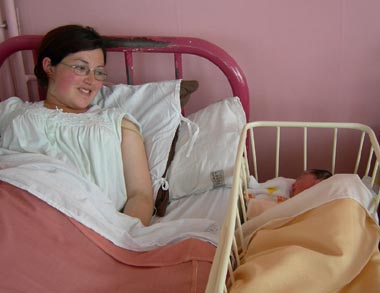
For example, the Church provided 40 infant bassinets to a hospital in Concepcion so new mothers do not have to sleep with their babies in bed with them. It has recently provided 2,000 wheel chairs in Chile.
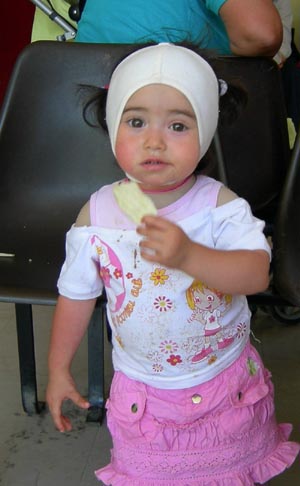
The Church recently approved buying equipment to build a sterilization center in the Coaniquem burn center in Pudahuel, a suburb of Santiago. The center and its satellites throughout Latin America treat many young children who’ve suffered major burns because of the widespread use of open fires for cooking, household accidents, and space heaters that are often the only source of heat in homes.
The burn center — which treats children over the years, because scar tissue does not grow — is the result of one person trying to make a difference. Dr. Jorge Rojas founded Coaniquem in 1979. The center and its satellites annually treat 9,000 children, at no charge for those who cannot afford to pay.
Sister Brown says the best part of their missionary calling is “being able to work with people who are so giving and self-sacrificing and want to serve. They have a great love of their Heavenly Father and their fellow man.” As the Browns determine how the Church can help, “It is soul-satisfying to assist a group to increase their ability to help those they serve.”
For her husband, “It’s rewarding to see members of the Church serving — the quality of the leaders, the young people.” And in his position, he is aware of how much service is given.
Elder Brown pointed out a service project in Talca, where one stake tied 50 quilts in one day, using their own home-made frames. The quilts were donated to a women’s shelter. Church members in Concepcion painted a maternity ward, and scrubbed and painted the beds. A stake in Copiapo not only made and donated 130 quilts but taught needy young women how to make their own.
But service need not come from an official organization. It begins with individuals, as the Browns have witnessed.
“Many of us see a need and say, ‘Someone should do something about this,’ says Sister Brown. “Then there are those who say, ‘I need to do something about this’ — and do.”