





Harry Potter Grows Up
By Orson Scott Card
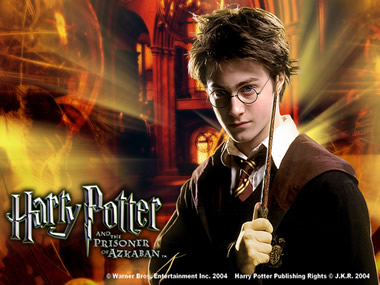
Because the first two Harry Potter movies hewed closely to the storyline of J.K. Rowling’s books, and because the performers were so engaging, I was satisfied with them.
I knew that I had never much liked Chris Columbus’s films, but these weren’t bad. In fact, they were good. It almost made me think Columbus might not be such a wretched director after all.
Then I saw Harry Potter and the Prisoner of Azkaban, and I realized that compared to what could have been done, the first two movies were hollow.
This movie actually feels magical. Director Alfonso Cuarn creates a Hogwarts Academy that feels like a truly ancient building, and he shows us a wild, untamed north country of England that makes the magic come to life.
It’s not just the photography, though. The script, while true to the story (except for the compression necessary to fit a long book into two hours of running time), adds clever details that make Hogwarts come to life. Since Steve Kloves wrote the previous two movies, I have to conclude that it was Cuarn who made the difference, though.
We get to see kids having fun with each other. They move through a school building that shows its great age. Birds fly through many a scene; there’s a sense that the whole place is teeming with wildlife. Magical creatures aren’t made cute; nothing is tame.
Nothing is safe. And that’s exactly right: That’s the world children actually live in. To children, all dangers are real, even those that adults dismiss as trivial. For the first time, a Harry Potter movie is truthfully about children, not just for children.
And something else has happened. The kids have learned how to act.
Perhaps it comes from a couple of years of hanging around with some of the finest actors in Britain.
But I suspect it’s also the director’s touch. Whereas Chris Columbus is noted for getting the worst performances of his actors’ careers, Cuarn may soon have a reputation for getting the best.
Even the actors playing the Weasley twins, Fred and George, who were abysmal in the earlier films, are charming and believable.
When a director knows how to use them, British actors can create characters that entrance us with only a few moments of screen time. As a result, it doesn’t feel like you’re racing through the story (though this film covers an astonishing amount of story in a short amount of time).
We hardly see Gary Oldman as Sirius Black until near the end of the film – but in that short amount of time, Oldman makes us utterly believe an astonishing set of transitions.
Joined by David Thewlis as Professor Lupin in a gentle and loving performance, Emma Thompson in a delightful comic turn as the spaced-out Sybil Trelawney, and Alan Rickman in a more measured performance as Severus Snape, these actors show us the difference between British and American acting styles. They disappear into their role; they revel in small parts with great potential.
Even Michael Gambon, facing the thankless task of following the late Richard Harris as Albus Dumbledore, did not try to match the star-like twinkle of Harris’s performance, but made it his own, so that by the end, when we do get a glimpse of wryness and irony from him, it came as a surprise instead of being so obvious you wonder why everyone else doesn’t catch on.
But the glory of this movie is the performances of the children. Daniel Radcliffe has truly grown as an actor, and perhaps as a person, too, since the Harry Potter we see is capable of showing pain (though not, as yet, tears); and Emma Watson as Hermione Granger has learned to take command of a scene and make it real. Rupert Grint as Ron Weasley is a delight, though his role is largely limited to doing flustered “takes.” And Tom Felton as Draco Malfoy showed himself capable of playing something other than mere snideness.
Seeing this movie made me wish I could see what Cuarn and Kloves might have done with the first two books. The good news is that Kloves is signed on to write adaptations of the next two books as well.
The bad news is that Cuarn is not.
But I won’t let that grieve me now. This is a wonderful movie, richly imagined and beautifully performed. The Harry Potter franchise has grown up into being good art, not just decent adaptation.
And for those troubled by the omissions, just remember that the movie doesn’t erase the book. So what if there’s only one quidditch match shown, or if the Firebolt broom isn’t as big a deal here as in the book. You can go back and read it to your heart’s content.
This is what film adaptation ought to be: faithful to the truth of the story, without being enslaved to it.
If you have small children, though, be aware that the dementors are genuinely frightening, as are a few other aspects of this movie. Don’t bring nightmare-prone younger kids. As the students at Hogwarts grow up, so do the movies.
FEATURES