








Paha L. Image from BigStockPhoto.com
A Note to Readers
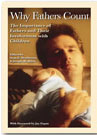 Welcome to the on-line introduction of our new book, Why Fathers Count: The Importance of Fathers and Their Involvement with Children. We have agreed to have some portions of this book serialized on Meridian Magazine each month during 2007. We hope that the material shared will enrich your understanding of men, family life, and the important contributions of fathers and father figures to children, families and communities. We intend to focus on sharing fresh insights and practical tips on fathers, parenting and family life in the articles we select. We also encourage you to head on over to our on-line page where you can order individual copies of the book by clicking here.
We begin with an introduction: How did we end up writing and editing a book on fathers and family life with a total of 38 contributing authors. anyway?
An Introduction to Why Fathers Count
When Jim Doyle, the publisher of Men’s Studies Press, picked up the phone and called us about doing a book on the importance of fathers in the lives of children and families, it was a leap of faith. We had never met. We were (and still are) two young, unknown family scholars located in the obscure upper Midwest in the United States.
We were already relatively busy with research projects, work responsibilities, family relationships, and other life projects. Jim’s call was a bolt from the blue, and yet that call initiated an opportunity and a continuing desire to make available a clear, compelling case for why fathers count in the lives of children and families and to make that case to an important general audience, one that goes beyond the ivory tower.
Making the case for why fathers count from an empirical, statistical perspective is fairly easy. The data overwhelmingly demonstrate the positive impact fathers have when they are involved in the lives of their children and the negative outcomes when fathers are absent. Many of these findings will be discussed throughout the book.
Making the case for responsible fatherhood from a political perspective is also fairly easy. The most prominent political leaders in the United States have recognized the importance of this issue. The social concern over fatherhood, in fact, led former President William J. Clinton to authorize a 1995 executive order in which he instructed all federal departments and agencies to review their programs “that pertain[s] to families to ensure” those programs would “seek to engage and meaningfully include fathers.” [i]
This attentiveness to supporting fathers’ roles in family life elevated the issue and prompted greater awareness of the need for encouraging responsible father involvement. Further, in an address at the National Fatherhood Summit in 2001, President George W. Bush articulated a clear perspective on fathers:
Nearly every man who has a child wants to be a good father, I truly believe that. It’s a natural longing of the human heart to care for and cherish your child. But this longing must find concrete expression. Raising a child requires sacrifice, effort, time, and presence.
And there is a wide gap between our best intentions and the reality of today’s society. More than one-third of American children are living apart from their biological fathers. Of these, five out of six do not see their fathers more than once a week. And 40 percent of the children who live in fatherless households have not seen their fathers in at least a year.
Some fathers are forced away by circumstances beyond their control. But many times when a couple with children splits up, the father moves away or simply drifts away. We know that children who grow up with absent fathers can suffer lasting damage. They are more likely to end up in poverty or drop out of school, become addicted to drugs, have a child out of wedlock, or end up in prison. Fatherlessness is not the only cause of these things, but our nation must recognize it is an important factor. [ii]
The gap between “our best intentions and the reality of today’s society” is genuine, but too great a focus on the problems in family life can leave us without energy to pursue necessary solutions. Attentiveness to the broad scope of the issue is required. President Bush went on to say:
There is a familiar litany that behind every statistic is a child, and a compassionate society can never forget the large place a father occupies in that child’s life. Children look to their fathers to provide – even imperfectly – and nurture protection, provide discipline and care, guidance and, most importantly, unconditional love. Fathers are the object of a young child’s admiration.
The absence of a father can shatter a child’s world. One 14-year-old girl put it this way: “My father left me when I learned to say “daddy.” Even though my father is not around, in my heart he’s always there. Every birthday, every Christmas, I cross my fingers in hopes that my father will come home. Does my wish come true? No. But I never quit looking and hoping.”
It was clear to us that continued attentiveness to understanding and encouraging responsible and caring father involvement is important. Deciding how to make the case for why fathers count to a diverse, general audience, however, proved interesting and challenging.
After a good deal of conversation and a flurry of e-mail activity, we launched the project and set sail for distant shores. We hope this brief introduction will serve as an outline of our journey and an invitation into your own voyage of discovery about fathers and fathering. While our main qualification for editing this volume was enthusiasm, we also were guided and gifted by four other elements that we felt would make this book a meaningful contribution.
First, we have a personal and professional passion for the topic of fathering. We sincerely think that healthy, caring, and involved fathers are the most important and untapped resource in the world today.
Second, we believe in people and what they can bring to such a book. We felt that, if given the opportunity, a wide range of scholars, community professionals, and family practitioners would respond to the opportunity to share their vision of how fathers make a meaningful difference in specific areas of family life. We were not disappointed.
Third, we have a profound respect for parenting and its importance not only for families but for society. Whether parenting is done by a mother or a grandfather or a caring teacher; in a family of Mexican, Anglo, or Hawaiian ancestry; on a rural farm or in an urban city – it is of vital importance.
As children of caring parents, as parents ourselves, and as observers of parenting in family life, we think parenting ought to be greatly appreciated, that its importance should be examined and better understood.
And fourth, we are confident in the promise of such a book, in the belief that we could harness the collective insight and wisdom of many contributors to paint anew a vision of the importance of fathers in family life. Ideas are powerful, so we started with one idea: fathers make a difference.
Exploring the Terrain of Fathering
It can be surprising how difficult the task of articulating and agreeing upon a basic vision for an edited book such as this can be. In the early stages, we talked and planned and outlined and started over again, stuck on the initial question of what we wanted to accomplish.
Did we need to define the boundaries of responsible fatherhood and healthy father involvement? Did we wish to document the ongoing academic investigation of fathers in family life? Did we want to enter the sometimes vociferous debate about the roles of men in contemporary society and family life? These and other questions shaped our discussions, but in the end, we agreed that ours was a voyage of discovery more than anything else. Most of all, we wanted to explore the worlds and experiences of fathers and those who work or live with them and to invite others to journey along with us.
One of the first and most important questions we settled early on was whether a journey of exploration into the worlds of fathering was worth taking in the first place. After all, there are those who think and write about fathers from a perspective of skepticism. In other words, they wonder aloud whether fathers are genuinely important and question the emphasis on father involvement.
These are important questions that deserve consideration, and we have dealt with them in our own scholarly work elsewhere. [iv] However, for this project, we were less interested in an “ivory tower debate” about the legitimacy of father involvement and much more interested in a learning dialogue about the contributions of fathers to family and community life.
As fathers ourselves, it struck us that our relationships with our own children do not begin with a question about whether we are important in their lives. Instead, interactions with our children consistently engage and challenge us to make meaningful and lasting differences in their lives. In other words, this journey does not focus on the question of whether fathers make a difference, but instead it begins with the assumption that fathers and father figures do make a difference, and we are on an expedition to learn how and why. To us, this is the important and logical next step in exploring the terrain of fathering since we have determined there is sufficient evidence for the importance of father involvement to warrant making such a journey.
In developing a book focused on the topic of why fathers count in the lives of children and families, we wished not only to identify fathers’ contributions but explore their experiences, share their voices, highlight key principles, provide ideas and insights, and suggest best practices related to fathers and family life. We wanted not only to facilitate an understanding of fathers, but to also encourage better fathering and improved efforts to engage and support fathers in family life.
Alan Hawkins and David Dollahite, two family scholars, have previously suggested that “a perspective of fathers as generally deficient in their paternal role is not the best place to begin to understand and encourage better fathering.” [v] We agree with this sentiment. We have thus sought to develop a focused collection of articles centered on the assumption that fathers can and should be meaningfully involved with their children and families.
In the process of recruiting contributors for this book, we asked potential authors to explore their particular area of expertise or special content area with an emphasis on the importance and value of meaningful father involvement in that context. We asked them to provide examples of how and why fathers made a difference in their given area, examples that were practical and personally relevant or that came from their research experience.
We also wanted relevant suggestions that scholars, practitioners, fathers, and families themselves could use in personal and professional settings.
Finally, we asked that each chapter essay be addressed not solely to an academic audience but to the broader community of interested readers who would like further information and insight on the specific topic of how and why fathers are important in the lives of children and families.
Objectives and Content of Why Fathers Count
What did we hope to accomplish with this book? After considering whether to pursue a “Universal Handbook of Fatherhood” that would address everything from Caribbean fathers to fathers in contemporary literature, we opted to focus more on conceptual simplicity and address central elements of fathers’ experiences with their children and families.
These elements include:
- relationships and relationship processes;
- domains of development; and
- contexts of influence, involvement and support.
Each chapter written for this volume addresses certain dimensions of the fathering experience, many of which are common across family relationships and some that are unique. As mentioned, we chose to focus generally on aspects of fathering experience that are common to most or all fathers, and asked contributors to construct their chapters to be informative, insightful, and practical. A few of the many topics addressed in detail include:
- The vital importance of healthy father involvement to the future of our children, families and society;
- Becoming a father and the transition to parenthood;
- Fathers and mothers working together in family life;
- Fathers and marriage in family life;
- Keys to healthy father-daughter relationships;
- Building parent-child connections between fathers and children;
- Play and its importance in fathers’ involvement with children;
- Reading, family relationships, and father involvement;
- Fathers and the moral development of children;
- Spiritual development of children and fathers’ guidance;
- Fathers’ involvement with children following divorce or separation;
- How fathers make a difference in a child’s school achievement and learning;
- Religious influences on fathering and family life;
- A father’s leadership and service in the home setting;
- The “fun and frolic” of fathers parenting at home.
The Fathering Journey
We strongly believe fathering must be understood and acknowledged as a developmental journey in the life of a man. Men enter into the experience of fatherhood at differing points in time and through varying passages. Some men become fathers in less than ideal circumstances; some come to fatherhood by marrying and having a child with a woman they love; some enter fatherhood by taking on the role of stepfather; and some become father figures in the lives of children they love as uncles, grandfathers, mentors, teachers, or other caring figures.
Healthy fathering can benefit children, but it also tends to act as a balancing experience for men and can aid them in developing into more mature, sensitive, and caring individuals.
As we have explored the fathering journey, we have been led to see the experiences of men, women, and children in family life from new vantage points and fresh perspectives. We have been led to consider the critical role that mothers play in facilitating father involvement and the dance steps that occur as fathers raise their daughters.
We have learned how fathers can affect children by playing on the floor or shaping a child’s moral thinking. We have more deeply understood how race or a life behind bars can influence a father’s outlook and experience. We have come to see how fathers can contribute to family life through harmonizing work and family experiences, volunteering as a mentor in the community, or engaging in servant leadership at home. All this has guided us on this learning journey of fathers’ influence in many areas of life. It is our hope that you, too, will enjoy this journey and grow in your understanding of why fathers count. We hope it will add to your personal and professional life experience in new and unexpected ways. We hope you enjoy the voyage.
Sean welcomes your comments at [email protected]“>[email protected]
Endnotes
[i] Clinton, W. (1995). Memorandum for the heads of executive departments and agencies: Supporting the roles of fathers in families. Washington, DC: The White House.
[ii] Bush, G. W. (2001). Remarks by the President to the Fourth National Summit on Fatherhood. Washington, DC: The White House.
[iii] Bush, G. W. (2001). Remarks by the President to the Fourth National Summit on Fatherhood. Washington, DC: The White House.