






Fear not; let earth and hell combine against you, for if ye are built upon my rock, they cannot prevail. –Doctrine and Covenants 6:34
Consigned to Death
Since the days of Abraham, in times of grave danger for the House of Israel, it is the God of Abraham who comes to their rescue as both He and his people remember Abraham and the covenant made to him. When the Israelites groaned under the heavy burden of Egyptian bondage, “God heard their groaning, and … remembered his covenant with Abraham, with Isaac, and with Jacob” (Ex. 2:24), whereupon he announced himself to Moses and his colleagues as “the God of Abraham, Isaac, and Jacob” (Ex. 3:6, 15-16).
Later, when Israel was about to be destroyed in the wilderness for worshiping the golden calf, Moses persuaded God to mercy by imploring him to remember Abraham, Isaac, and Jacob (see Ex. 32:13). “In each of these dangerous times,” notes a prominent scholar, “the memory of Abraham induces a turn of mind and opens a possibility for overcoming a dire crisis.” [1]
Likewise at the commencement of the New Testament story, with Israel under Roman oppression, God’s impending intervention in sending his Son is hailed by Mary and Zechariah praising God for rescuing Israel in remembrance of his covenant to Abraham (Luke 1:46-55, 68-79).
A similar phenomenon is seen repeatedly in the Book of Mormon. Limhi’s people in bondage are counseled to “put your trust in God, in that God who was the God of Abraham, Isaac, and Jacob” (Mosiah 7:19), while the three different reports of God delivering Alma’s people from bondage all emphasize that it was only by the power of the God of Abraham, Isaac, and Jacob (Mosiah 23:23; Alma 29:11; 36:2).
Later, when the Nephite nation is delivered from their enemies, they declared: “May the God of Abraham, and the God of Isaac, and the God of Jacob, protect this people in righteousness” (3 Ne. 4:30). And when Moroni seeks to convince latter-day readers about the power of the Almighty, he promises to show them “a God of miracles, even the God of Abraham, and the God of Isaac, and the God of Jacob” (Morm. 9:11).
What all these passages consistently presuppose is some kind of miraculous deliverance of Abraham himself, momentous enough to inspire his future descendants to trust in that same God for their own deliverance in the face of otherwise impossible odds. No such event in Abraham’s life appears in Genesis, but it was the opinion of no less an authority than Nachmanides, the learned medieval rabbi who wrote an extensive commentary on the Torah, that Genesis had in fact once contained just such an account, but that “Scripture no longer mentions this miracle.” [2]
Singular Miracle
Fortunately, with the restoration of the gospel came the restoration of scripture – the Book of Abraham – narrating that singular miracle, which is similarly described in numerous other ancient sources.
The story begins with young Abraham on a collision course with the world around him. He was opposing the practices not merely of a few wicked individuals but of a whole society whose “hearts were set to evil” (Abr. 1:6) and who would brook no questioning of their evil ways. The result was a tumult not unlike what Abraham’s descendant Joseph Smith would excite, part of what Hugh Nibley calls the “astonishing parallels”[3] between the two even as boys:
The youthful Abraham, like the youthful Joseph Smith, seems to have been in trouble with his society, and … caused a great stir and annoyance … When we read of an … innocuous young man exciting general uproar throughout the length of Mesopotamia or causing a mighty monarch to spend sleepless nights, we smile and brush the thing aside as the stuff of legend … Such things, we say, just don’t happen in real life.
Only oddly enough, there is an exception – in the case of real prophets, they do happen, as modern history attests. What would students say 3,500 years from now to the proposition that thousands of years before there lived a naive, uneducated, and guileless country boy in a small village somewhere in the woods beyond what were known as the Allegheny Mountains who by a few tactless and unbelievably artless remarks created the greatest excitement in the large seaboard cities of the continent, was hotly denounced in thousands of pulpits throughout the civilized world, and was given front-page coverage in the major newspapers of the capitals of Europe? Could a less plausible story be imagined? [4]
Jewish tradition remembers that “when Abraham attacked the doctrines of his fellow-men who adhered to erroneous views, he was denounced and scorned,” [5] “reviled and cursed,” but responded only with silence. [6] Nevertheless, “they rose against him, looted his property, imprisoned him.” [7]
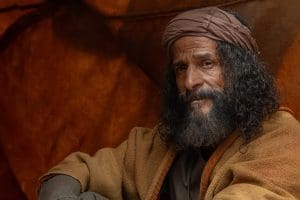
According to ancient Jewish tradition, Abraham was incarcerated several times for lengthy periods, perhaps years, in cities in the region of present-day eastern Turkey. [8] From the crucible of tribulation can come greatness, and Abraham is the parade example. He “learned compassion by being an outcast himself,” [9] observes Hugh Nibley. Several sources report miraculous protection during the difficult trial: when Abraham was deprived of food and water by direct order of the King, the Lord provided the needed sustenance. [10] Abraham used the occasion to teach the astonished jailer about the power of the true God, and the jailer believed. [11]
Incredible Persecution
The incredible persecution heaped upon young Abraham foreshadowed the same fate awaiting his descendant Joseph Smith, who would marvel at the “bitter persecution and reviling” he was called to pass through while yet in his youth (JS-H 1:23), and who also would endure imprisonment and privation (see D&C 121-123). Both were warned at an early age by God of the tribulation that awaited them in this life: “In this world,” God told young Abraham, “thy life will indeed be precarious, but thy reward awaits thee in the hereafter.” [12]
The youthful Joseph Smith was similarly told to “be patient in afflictions, for thou shalt have many; but endure them, for, lo, I am with thee, even unto the end of thy days” (D&C 24:8).
Thus did the Almighty predict their many problems, but why did He allow such problems in the lives of these choicest of servants? While the Prophet Joseph languished in Liberty Jail, he received a revelation assuring him that the unjustified maltreatment would “give thee experience, and … be for thy good” (D&C 122:7). What Brigham Young later said of Joseph Smith seems to apply equally to Abraham: he “could not have been perfected, though he had lived a thousand years, if he had received no persecution.
“ [13]
In the words of Jewish scholars, “great though Abraham was, he became greater with each triumphant surmounting of a new trial.” [14] As did his future posterity, as understood by Judaism: every trial that he had “remained with us and became a part of us” as God proceeded each time “to chisel a new trait into the eternity of Israel.” [15]
The same truths that Abraham preached to the lowly jailor he was no less shy in proclaiming to the king. “Oh Nimrod,” declared Abraham in one of apparently many face-to-face dialogues with the monarch, “I ask you to become a true believer.” [16] But Nimrod and the others in power remained as hard-hearted as ever, and, inspired by Satan, [17] decided that Abraham was to become the victim of the human sacrifices that he had preached against.
Abraham’s message was dangerous, striking at the very heart of the royal ideology that served as the foundation of Nimrod’s power. No wonder that Nimrod finally “decided that Abraham’s presence would be menace to his throne.” [18]
Abraham received no assistance from his father, whose worldly wealth and status depended directly on Nimrod’s favor. A midrash tells of a time when the Lord warned Abraham of the evil intent of his smooth-talking relatives and own father: “Thy father and thy brethren speak fair words; do not believe them, for they are all in conspiracy against thee, seeking to slay thee.” [19] In Abraham’s own words reported in the Book of Abraham, “My fathers … hearkened not unto my voice, but endeavored to take away my life” (Abr. 1:5-7; and see v. 30). Jewish tradition tells that it was Terah himself who delivered Abraham into the hands of Nimrod. [20]
The Book of Abraham tells of an “altar which stood by the hill called Potiphar’s Hill, at the head of the plain of Olishem,” where human sacrifices were offered. “And it came to pass that the priests laid violence upon me, that they might slay me also” (Abr. 1:10, 12). A Turkish source relates that they took him from the place where they had kept him bound “with heavy fetters.” [21]
Nibley explains that “the setting is typical of the ancient cult-places with their broad plain of assembly,’ the elevated mound, hill, or tower (hence pyramid and ziggurat), and the altar for sacrificing.” [22] Jewish tradition tells of a vast audience assembled: “all the king’s servants, princes, lords, governors and judges, and all the inhabitants of the land, about nine hundred thousand” in number, came “to see Abram. And all the women and little ones crowded … together … and there was not a man left that did not come on that day to behold the scene.” [23]
One can get some idea of the horrific scene from atop one of the pyramids at Teotihuacan outside Mexico City, where Aztec priests likewise sacrificed human beings in front of multitudes. Why the grandiose display? Because these were not just executions, but carefully staged rites designed by the ruling powers pursuant to an elaborately evil theology. As one scholar has explained about human sacrifice among the Mayas, it “was a public spectacle, a collective experience” that “crowds … pressed” to witness, carefully orchestrated to increase the power of the ruling elite. [24]
But in Abraham’s case there was something more, something that made this particular sacrifice unique in all of history. Abraham’s own illustration of the scene shows a ceremonial ritual setting with himself lying on an altar shaped like a lion, next to which are idols representing different gods, including the gods of a king: not Nimrod but Pharaoh, king of Egypt. Standing over the altar is a figure described as the priest of both Pharaoh and of Elkenah, [25] the latter being probably one among that “circle of gods, attested from the earliest inscriptions of the thirtieth century b.c., who were current at the [Egyptian] royal court as well as having their own cult places.” [26]
In Abraham’s case, the cult place was outside of Egypt, on Asiatic soil in the land of Ur, yet there is still heavy Egyptian influence, calling to mind that in Jewish tradition, Nimrod is repeatedly referred to as a descendant of Canaan [27] (whose sister, as the Book of Abraham relates, founded the first dynasty of Egypt with her son as the first Pharaoh; see Abr. 1:20-27).
An early Samaritan source unknown in Joseph Smith’s time tells that in the days of Abraham, Egypt and Canaan were ruled by the same monarch. [28] And recent archeological findings, as explained in Redford’s authoritative Oxford Encyclopedia of Ancient Egypt, confirm that during the early second millennium b.c., Egypt exercised great influence in the region of Syria-Palestine. [29]
The remarkable thing for Latter-day Saints is that none of this was known in Joseph Smith’s day, and the twentieth-century discovery of Egyptian political and cultural influence during Abraham’s day was startling enough to warrant special comment in the 1965 revised edition of the Cambridge Ancient History. Recent discoveries in Syria and Palestine, say the authors, leave “the impression of domination by the pharaohs, eneven and uninterrupted, no doubt, but on the whole vigorous. Its precise nature still eludes us; fifty years ago it was barely suspected.
In view of this progressive increase in our knowledge, we shall err less if we exaggerate than if we minimize the hold the Twelfth Dynasty had over Syria and Palestine. For the first time in history, those countries experienced the effects of a considerable expansion on the part of Egypt and were likewise subjected to her cultural influence.[30] It is yet another vindication of the Book of Abraham, explaining what was not apparent in Joseph Smith’s day – how it was that a ritual human sacrifice could have been performed under Egyptian auspices in Ur of the Chaldees.
In fact, one of the Twelfth Dynasty pharaohs of that era is famous for his military campaigns abroad, including in Syria-Palestine. [31] That same pharaoh is also on record [32] as an example of the ancient requirement that the king lay down his life for his people in a ceremony to propitiate the gods. [33]
It was “the ancient penalty of kingship” [34] for both Egyptian and Mesopotamian kings, a penalty usually paid by means of a substitute sacrifice who was often a foreigner. [35] Abraham was apparently being offered in that same rite as a sacrifice for the king. [36]
As Nibley explains, “Abraham is not simply being executed; he is the central figure of an extremely important ritual in which the idolatrous god of Pharaoh’ figures conspicuously, and the competing powers of heaven and hell come into conflict both in their superhuman and their appointed representatives.
“ [37]
The profound irony was that Pharaoh, like Nimrod [38] (one tradition remembers Pharaoh as being the son of Nimrod [39] ), was a pretender to the patriarchal authority reserved for Abraham, and had – as we learn from Abraham himself in the Book of Abraham – established a highly sophisticated but corrupt imitation of the ancient order of Zion (Abr. 1:26-27).
Hence the intended sacrifice of Abraham was not only the height of paradox but was, and remains to this day, absolutely unique in all of history: the true patriarchal heir to the authority of Zion was about to be slaughtered as a ritual substitute for his rival who falsely claimed that very authority. Zion’s evil counterfeit in all its pomp and ceremony was about to execute the one righteous man whom God had sent to bless the world and reestablish on earth the true Zion. Only in the sacrifice of the Savior do we see a similar phenomenon, of which Abraham on the altar is a striking type.
[1] .Hendel, Remembering Abraham, 32.
[4] .Hugh Nibley, “The Unknown Abraham: A New Look at the Pearl of Great Price, Part 7, Continued,” Improvement Era, April 1969, 67.
[8] .See Nachmanides on Genesis 11:28, in Chavel, Ramban, 1:157; Pirke de Rabbi Eliezer 26, in Friedlander, Pirke de Rabbi Eliezer, 188; Klinghoffer, Discovery of God, 21; and Ginzberg, Legends of the Jews, 1:198.
[10] .See Ginzberg, Legends of the Jews, 1:198; Culi, Magriso, and Argueti, Torah Anthology, 1:436-37.
[17] .Satan appeared to Nimrod and instructed him on how to take Abraham’s life. Baring-Gould, Legends of the Patriarchs, 159.
[22] .Hugh Nibley, “The Unknown Abraham: A New Look at the Pearl of Great Price, Part 7, Continued,” Improvement Era, March 1969, 79.
[24] .”The victim met his end at the top of a pyramid … Sacrifice represented the recycling of sacred energy, the blood that was shed bringing divine power into the immediate world to make the crops grow and bring prosperity to the community at large. Of course the whole procedure also bestowed enormous power on the small number who organized it all, who mediated between the humans and the gods, in other words … kings. The drama of human sacrifice was but one element in the display of their religious and political authority, which were indivisible.” Drew, Lost Chronicles of the Maya Kings, 314, describing the human sacrificial rites of the Mayas.
[31] . The Twelfth Dynasty’s Senwosret (or “Senusret” or “Sesostris”) III, who the classical writers designate as Sesostris. See Redford, Oxford Encyclopedia of Ancient Egypt, 3:268; and Clayton, Chronicles of the Pharaohs, 85-86.
See Wainwright, Sky-Religion in Ancient Egypt, 39, 47-51. Senwosret III and Senwosret I may have been combined into one account by the ancient classical writers. See Redford, Oxford Encyclopedia of Ancient Egypt, 3:268.
[33] .Wainwright, Sky-Religion in Ancient Egypt, 26-27, 32, 38, 47-53, 60, 64-66, among others. The entire study explores this very phenomenon.
[35] . Ibid., 60. we now have what we did not in Joseph Smith’s day: actual archeological and documentary evidence for human sacrifice in ancient Egypt. Ritner, Mechanics of Ancient Egyptian Magical Practice, 162-163, mentions archeological evidence. Documentary evidence has been found by Egyptologists at Brigham Young University.
[37] .Hugh Nibley, “Facsimile No. 1, A Unique Document: A New Look at the Pearl of Great Price, Part 6, Continued,” Improvement Era, December 1968, 33.
[38] .On the possibility that Nimrod was actually Pharaoh, see Nibley’s discussion in Abraham in Egypt, 227-28. However, the fact that the name Nimrod is so prevalent as a place name in the region of Turkey where Abraham was probably born may suggest that the Nimrod and the Pharaoh of the Abrahamic traditions were not the same individuals, even though they may have been allied politically.