












Because of my involvement with the Interpreter Foundation’s new series of mini-documentaries, “Becoming Brigham,” which launched on Monday, 26 January, and which will continue releasing weekly episodes into 2027 (see becomingbrigham.com), I’ve spent several days in and around Nauvoo, Illinois, on each of perhaps five different occasions within roughly the past year. That’s more times than I had visited the town in all of my previous life.
I’ve seen Nauvoo in various seasons, from various angles, spending time in many of its original and reconstructed buildings. I’ve spoken on camera and I’ve reflected silently in Carthage Jail. I’ve stood at the graves of Joseph and Emma and Hyrum Smith.

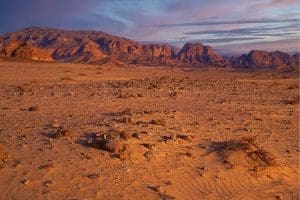
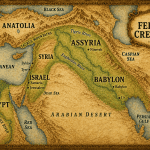
Perhaps because of this, I’ve come to appreciate more deeply than ever before the tragedy of Nauvoo. I find myself thinking of the lament of the biblical Psalmist, carried away from Jerusalem and its temple into Babylonian captivity:
“By the rivers of Babylon, there we sat down, yea, we wept, when we remembered Zion.
“We hanged our harps upon the willows in the midst thereof.
“For there they that carried us away captive required of us a song; and they that wasted us required of us mirth, saying, Sing us one of the songs of Zion.
“How shall we sing the Lord’s song in a strange land?
“If I forget thee, O Jerusalem, let my right hand forget her cunning.
“If I do not remember thee, let my tongue cleave to the roof of my mouth; if I prefer not Jerusalem above my chief joy.” (Psalm 137:1-6)
Colonel Thomas Kane, a friendly and well-positioned outsider who would become a lifelong friend of the Latter-day Saints, visited the city after the pioneer companies had left. He arrived in September 1846 just after the “Battle of Nauvoo” (10-12 September 1846), when the last remaining sick and destitute members had been driven out. (For many, this wasn’t their first exile.) Later, he wrote an evocative description of what he saw:
“Half encircled by a bend of the river, a beautiful city lay glittering in the fresh morning sun; its bright new dwellings, set in cool green gardens, ranging up around a stately dome-shaped hill, which was crowned by a noble edifice, whose high tapering spire was radiant with white and gold. The city appeared to cover several miles, and beyond it, in the background, there rolled off a fair country, chequered by the careful lines of fruitful husbandry. The un-mistakeable marks of industry, enterprise, and educated wealth everywhere, made the scene one of singular and most striking beauty. It was a natural impulse to visit this inviting region. I procured a skiff, and rowing across the river, landed at the chief wharf of the city. No one met me there. I looked, and saw no one. I could hear no one move, though the quiet everywhere was such that I heard the flies buzz, and the water-ripples break against the shallow of the beach. I walked through the solitary street. The town lay as in a dream, under some deadening spell of loneliness, from which I almost feared to wake it, for plainly it had not slept long. There was no grass growing up in the paved ways; rains had not entirely washed away the prints of dusty footsteps.

“Yet I went about unchecked. I went into empty workshops, rope-walks and smithies. The spinner’s wheel was idle; the carpenter had gone from his work-bench and shavings, his unfinished sash and casing. Fresh bark was in the tanner’s vat, and the fresh-chopped lightwood stood piled against the baker’s oven. The blacksmith’s shop was cold; but his coal heap and lading pool, and crooked water horn were all there, as if he had just gone off for a holiday. No work-people anywhere looked to know my errand.
“If I went into the gardens, clinking the wicket-latch loudly after me, to pull the marigolds, heartsease, and lady-slippers, and draw a drink with the water-sodden well-bucket and its noisy chain; or, knocking off with my stick the tall, heavy-headed dahlias and sunflowers, hunted over the beds for cucumbers and love-apples—no one called out to me from any opened window, or dog sprang forward to bark an alarm.
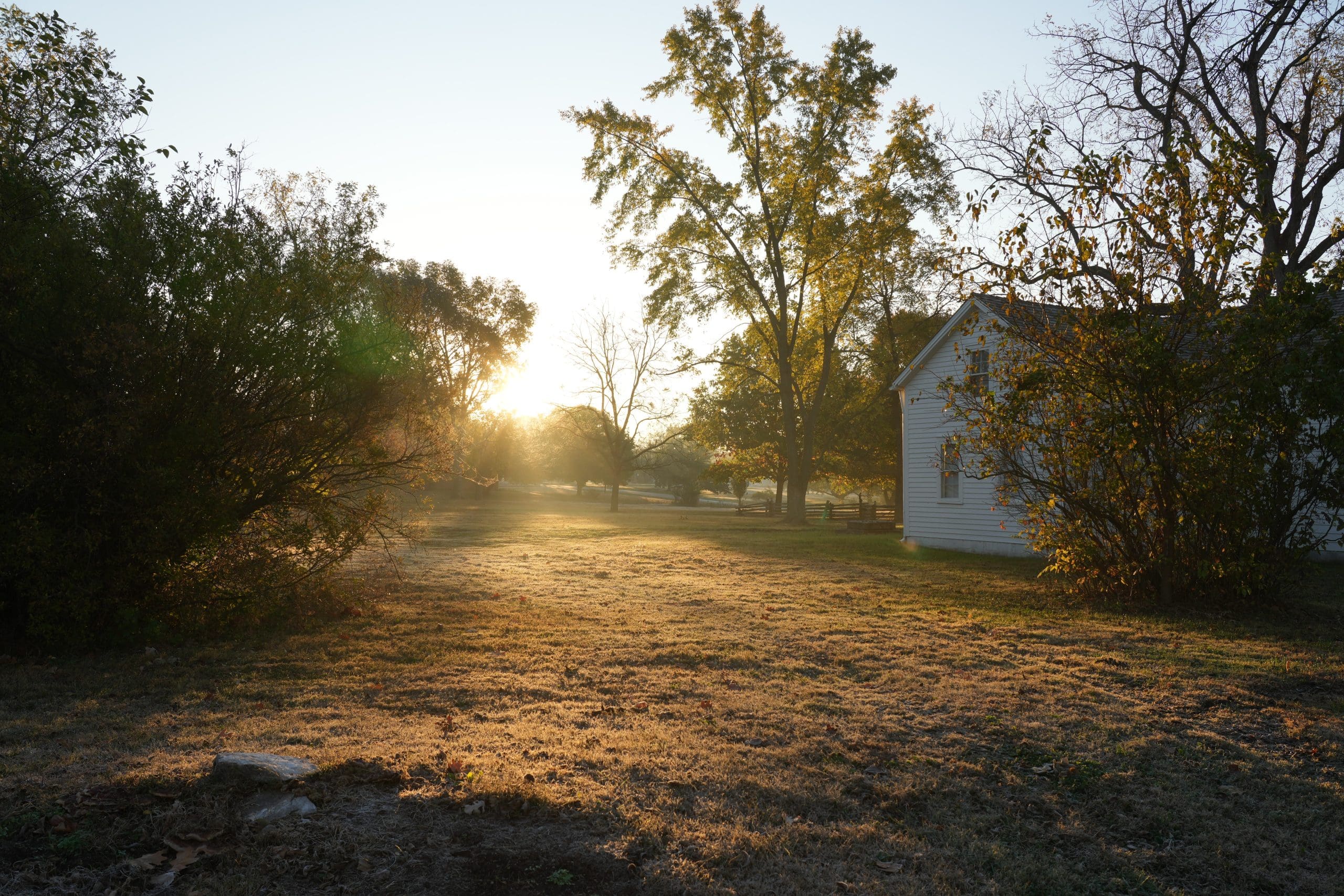
“I could have supposed the people hidden in the houses, but the doors were unfastened; and when at last I timidly entered them, I found dead ashes white upon the hearths, and had to tread a tip-toe, as if walking down the aisle of a country church, to avoid rousing irreverent echoes from the naked floors. On the outskirts of the town was the city graveyard; but there was no record of plague there, nor did it in anywise differ much from other Protestant American cemeteries. Some of the mounds were not long sodded; some of the stones were newly set, their dates recent, and their black inscriptions glossy in the mason’s hardly dried lettering ink. Beyond the graveyard, out in the fields, I saw, in one spot hard by where the fruited boughs of a young orchard had been roughly torn down, the still smouldering remains of a barbecue fire, that had been constructed of rails from the fencing around it. It was the latest sign of life there. Fields upon fields of heavy-headed yellow grain lay rotting un-gathered upon the ground. No one was there to take in their rich harvest.

“As far as the eye could reach they stretched away—they sleeping, too, in the hazy air of autumn. Only two portions of the city seemed to suggest the import of this mysterious solitude. On the southern suburb, the houses looking out upon the country showed, by their splintered wood-work and walls battered to the foundation, that they had lately been the mark of a destructive cannonade. And in and around the splendid Temple, which had been the chief object of my admiration, armed men were barracked, surrounded by their stacks of musketry and pieces of heavy ordnance. These challenged me to render an account of myself, and why I had had the temerity to cross the water without written permit from a leader of their band. . . . Though these men were generally more or less under the influence of ardent spirits.”
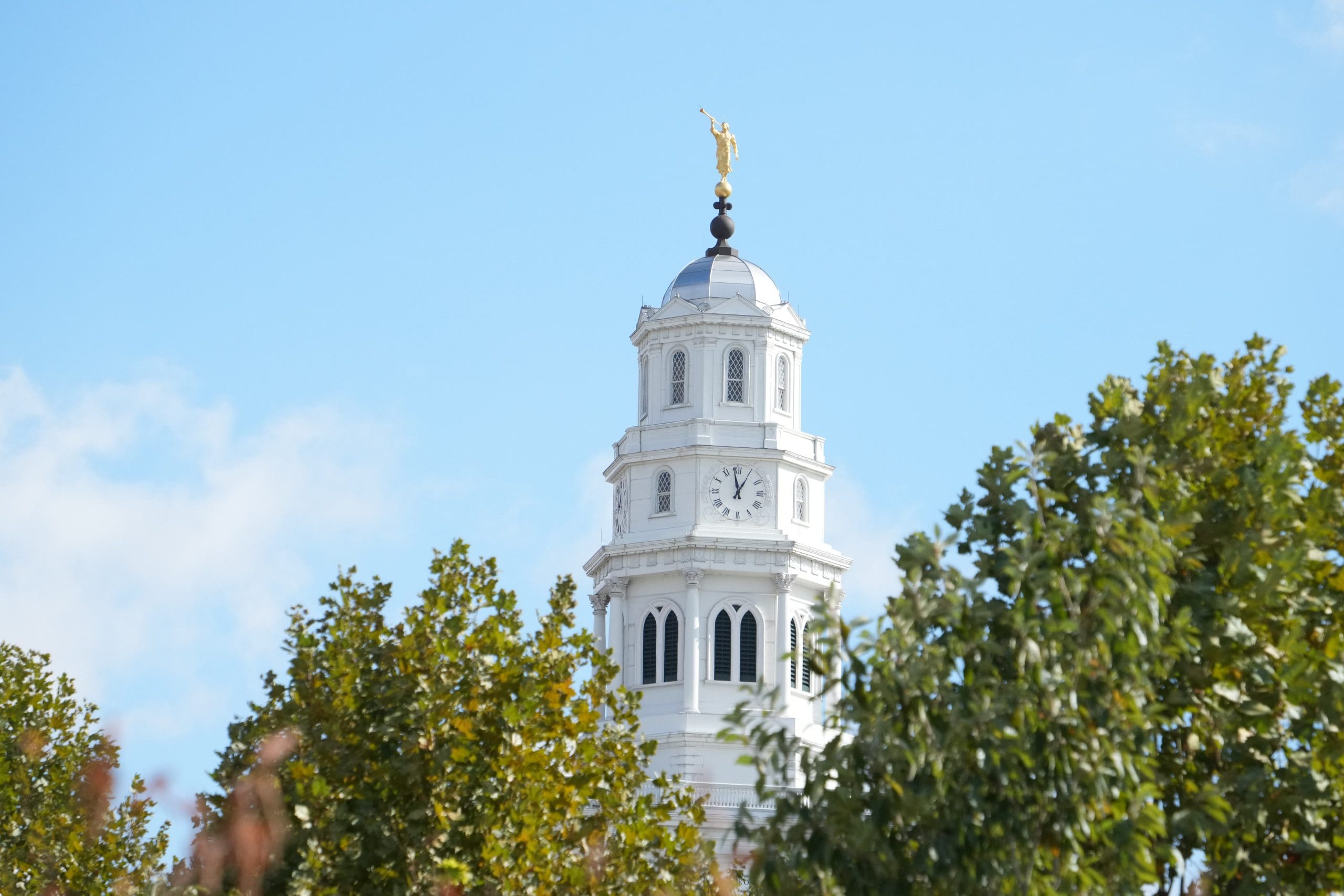
Brigham Young was centrally involved in completing the Nauvoo Temple despite intense persecution and internal turmoil, as well as in directing and administering its ordinances even while the Saints began their exodus westward toward the Great Basin—which also took place under his direction. After the departure of the Saints, the temple was vandalized, desecrated, and defaced. A fire set by an arsonist in 1848 destroyed its interior, leaving only an empty shell standing until, on 27 May 1850, a tornado hit the structure. According to Henry Horner’s 1939 Illinois: A Descriptive and Historical Guide, one source claimed that the storm seemed to “single out the Temple,” destroying “the walls with a roar that was heard miles away.”
Responding to news of the temple’s destruction, Brigham responded, “I would rather it should thus be destroyed than remain in the hands of the wicked.”
But the exiled Israelites who lamented “by the rivers of Babylon” eventually returned and, after a further and still-lengthier exile, many of their descendants live once more in the land of Israel, with Jerusalem as its capital. Indeed, exile and return, gathering and scattering and regathering, are major recurrent themes of the Hebrew Bible, the Old Testament, and of the Gospel in all its ages. The elements will melt with fervent heat and the heavens will be rolled up like a scroll but, in the end, the earth will be restored and receive its paradisiacal glory. We will lie down in death, but we will rise again.
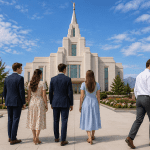
In its humble and, in a certain sense, mundane way—a matter of bricks, boards, and stone—Nauvoo illustrates the Gospel’s promise of rebirth, of victory over death and defeat. Today, scores of senior missionaries serve in the rebuilt Nauvoo Illinois Temple and explain the brief but deeply significant history of the nineteenth-century Latter-day Saint city to visiting Latter-day Saints and curious nonmembers alike.
I myself have been able to serve and to worship in the temple here—something that, in my first several decades, I could never have predicted. I’ve thought of the Saints who went into exile from Nauvoo while taking one last look at it across the Mississippi River and who then learned of its desecration by drunken mobs, the destruction of its interior by arson, and, finally, its leveling by a tornado. I’ve wondered what those refugees would have made of the fact that it now stands again, fully finished this time, and fully dedicated for the first time, on the bluff overlooking the river. At night, it glows with a light that they, in their pre-electric era, could never have imagined.
I’ve seen what was left of the tavern in Warsaw where Thomas Sharp, the fiercely anti-Mormon editor of the Warsaw Signal, and his associates plotted the assassination of Joseph and Hyrum. I’ve seen the house where he lived.
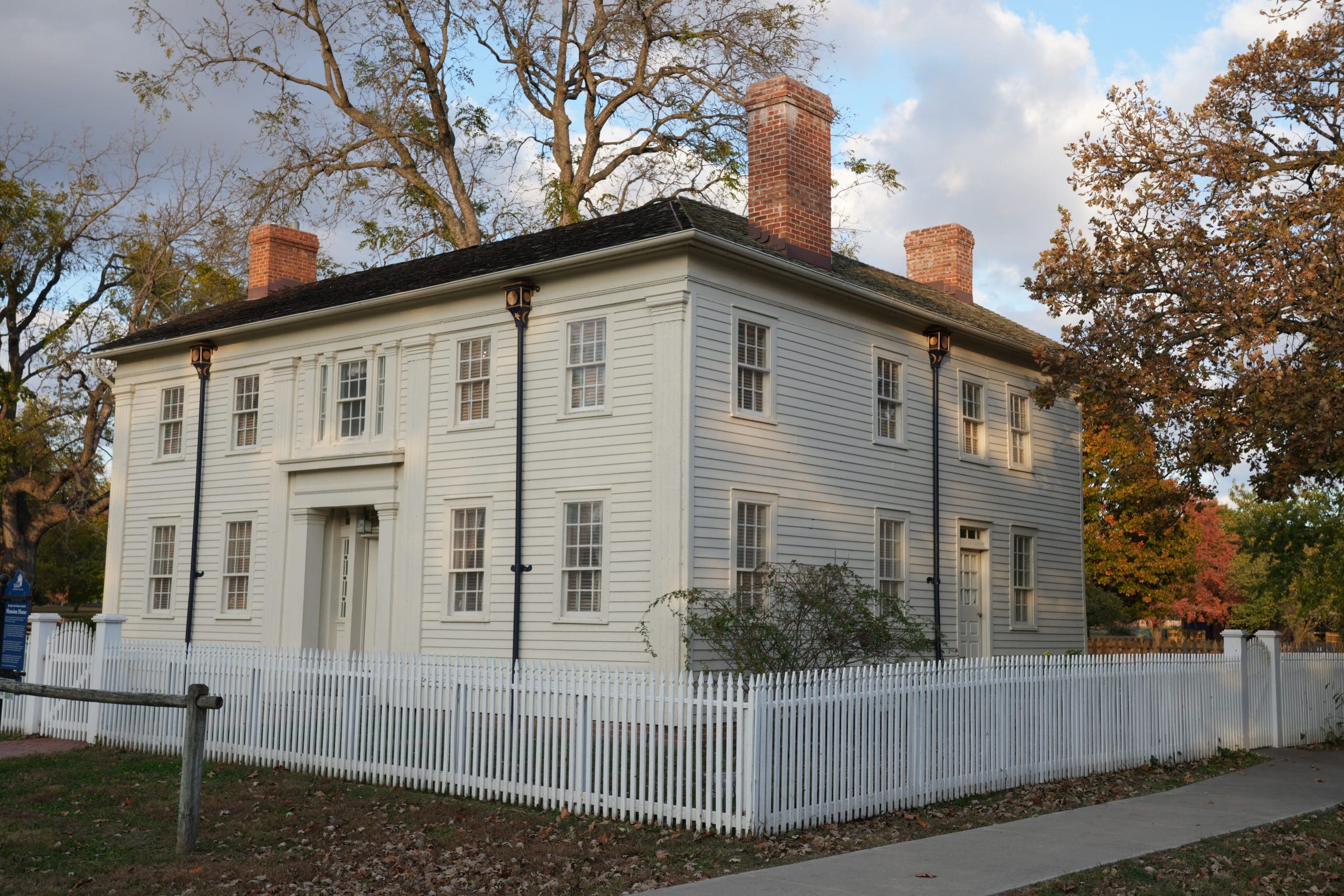
What, I’ve wondered, would Tom Sharp make of that temple on the hill, and of the return of the Latter-day Saints to Nauvoo and surrounding areas? What would he think of the fact that, as I’m told, a Latter-day Saint has restored his home and now occupies it? Would he be surprised to learn that, to the extent that he’s remembered today at all, it’s largely as a footnote to the story of Joseph and Hyrum Smith? Would he and the mobs that he helped to incite be astonished to learn that the Church of Jesus Christ of Latter-day Saints now owns Carthage Jail, in which Joseph and Hyrum were martyred, maintaining it as, in a very real sense, a shrine to their memory? I freely confess that I’m unchristian enough to hope that Sharp and his allies are aware of the return of the Latter-day Saints to Hancock County.
Could early members of the Church have foreseen that the properties that they were forced to abandon would ever be reacquired and restored? That, one day, tens of thousands of their fellow Latter-day Saints would come each year to visit Nauvoo, with reverence but also with smiles? That, to a large extent, it is pilgrims from far away, even from overseas, who patronize the city’s temple? Arriving in vehicles that would have been inconceivable to the wagon trains and handcart companies of the 1840s and 1850s? That, thanks to modern technology, many Saints living thousands of miles away, in places of which those early members could scarcely dream, are able to take “virtual tours” of the homes in which the first Latter-day Saints lived and of the streets that they walked?
“Generations yet unborn,” Joseph Smith prophesied in 1842, “will dwell with peculiar delight upon the scenes that we have passed through, the privations that we have endured; the untiring zeal that we have manifested; the insurmountable difficulties that we have overcome in laying the foundation of a work that brought about the glory and blessings which they will realize.”
And his prophecy has been fulfilled. In all of which, it seems to me, there are obvious lessons to be learned. One of them is that, even in the wreckage of our earthly hopes, when all seems irretrievably lost, there is still hope. The great illustration of this truth, of course, is the resurrection of Jesus Christ, which shows us that not even death is final.
“And God shall wipe away all tears from their eyes; and there shall be no more death, neither sorrow, nor crying, neither shall there be any more pain: for the former things are passed away. (Revelation 21:4)
“Weeping may endure for a night,” says Psalm 30:5, “but joy cometh in the morning.”
“And as for the perils which I am called to pass through,” wrote the Prophet Joseph Smith, from hiding, about a year and a half before his martyrdom, “they seem but a small thing to me, as the envy and wrath of man have been my common lot all the days of my life; and for what cause it seems mysterious, unless I was ordained from before the foundation of the world for some good end, or bad, as you may choose to call it. Judge ye for yourselves. God knoweth all these things, whether it be good or bad. But nevertheless, deep water is what I am wont to swim in. It all has become a second nature to me; and I feel, like Paul, to glory in tribulation; for to this day has the God of my fathers delivered me out of them all, and will deliver me from henceforth; for behold, and lo, I shall triumph over all my enemies, for the Lord God hath spoken it. (Doctrine and Covenants 127:2).
And then he was killed, with his brother. So where was his triumph? Let his mother, Lucy Mack Smith, have the last word here:
“After the [bodies of Joseph and Hyrum] were washed and dressed in their burial clothes, we were allowed to see them. I had for a long time braced every nerve, roused every energy of my soul and called upon God to strengthen me, but when I entered the room … , it was too much; I sank back, crying to the Lord in the agony of my soul, “My God, my God, why hast thou forsaken this family!” A voice replied, “I have taken them to myself, that they might have rest.”
“As I looked upon their peaceful, smiling countenances, I seemed almost to hear them say, “Mother, weep not for us, we have overcome the world by love; we carried to them the gospel, that their souls might be saved; they slew us for our testimony, and thus placed us beyond their power; their ascendancy is for a moment, ours is an eternal triumph.”
**
Watch the episodes of “Becoming Brigham” at becomingbrigham.com. Two quite different settings of Psalm 137 are Don McLean’s round (https://www.youtube.com/watch?v=uTnspbSjKVc) and Linda Ronstadt’s bluegrass version of a reggae tune (https://www.youtube.com/watch?v=u60fXbTsMDg).




Mr. WarsawMarch 11, 2026
Great article. Thomas Sharpe's home is still there at 701 Water Street. The original Warsaw House hotel was torn down 1899 and the new new Queen Anne style home was built in 1904. The back part of it home was built in 1860. Still the historic site but none of the original 1840s era Warsaw House still stands. This is from the History of Warsaw by Brian Stutzman.
KathleenMarch 7, 2026
Another incredible description - your artistic gift. I love this Church history site and felt the spirits of the past and their lives, as we visited and stayed, one Christmas season.