



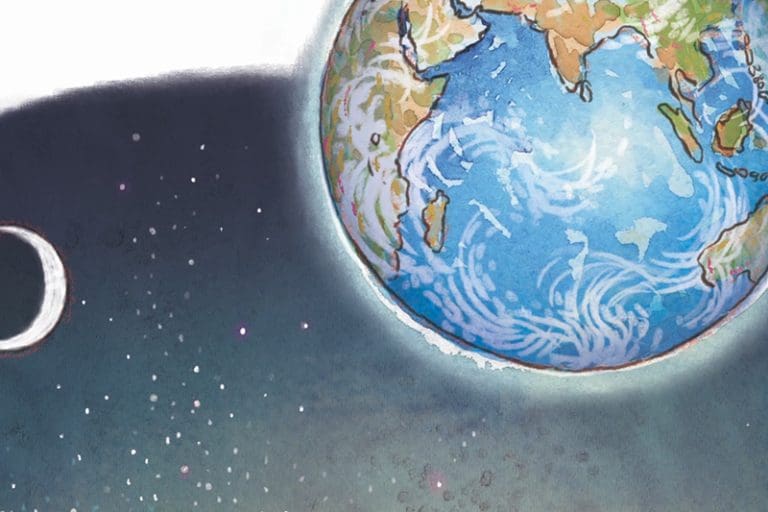


When contemplating the creation as found in Genesis 1-2, Moses 2-3, and Abraham 3-5, it is not uncommon to miss the fact that there were three separate creations, a spirit creation, a spiritual creation, and a natural or mortal, creation”, with Adam and Eve being the only humans to experience the spiritual creation. Using The Joseph Smith Translation, Red-Letter Edition (JST), Old Testament, the books of Moses and Abraham as well as other commentary, we can better understand this three-part aspect of the creation. Joseph Fielding McConkie and Robert L. Millet provide us with some context for this discussion.

“In order to understand fully the nature of the Creation, we must first grasp the reality that there were in fact three creations. The first creation is called the spirit creation and pertains to the birth of our spirits in premortality. The second creation, the spiritual creation, pertains to the nature of life on earth before our first parents were dismissed from Eden. The third creation or organization of things came as a result of the Fall; this, the natural creation, opened the door to mortality and corruption and death.”
(Joseph Fielding McConkie and Robert L. Millet, eds., The Man Adam [Salt Lake City: Bookcraft, 1990], 10 – 12.)
This article correlates with the January 5-11, 2026, lesson of the Come Follow Me curriculum. To more easily follow along with these articles which utilize The Joseph Smith Translation, Red-Letter Edition, Old and New Testament, the reader may obtain an eBook or hard copy at https://jstrle.com. Red text in the verses below are additions made by the JST while blue text are the words of the King James Version (KJV) as they previously read. Black text was unaltered by the JST.
In Genesis 2:4-7 (Moses 3:4-7) God was speaking to Moses, when He said:
Gen 2: 4 And now behold I say unto you that these
Theseare the generations of the Heavenheavensand of the Earthearthwhen they were created, in the day that I the Lord God made the Heaven and the Earth,earth and the heavens,5 And every plant of the field before it was in the Earth,
earth, and every herb of the field before it grew, for I the Lord God created all things of which I have spoken spiritually, before they were naturally upon the face of the Earth. For I the Lord God had not caused it to rain upon the Earth.earth,And I the Lord God had created all the children of men and not yetand there was nota man to till the ground, for in Heaven created I them. And there was not yet flesh upon the Earth neither in the water neither in the air,6 But I the Lord God spake and there went up a mist from the Earth
earth, and watered the whole face of the ground.7 And I the Lord
the LordGod formed man fromofthe dust of the ground, and breathed into his nostrils the breath of life, and man became a living soul the first flesh upon the Earth, the first man also, nevertheless, all things were before created; but spiritually were they created and made according to my word. (italics are mine)
Speaking of the creation, the Lord explained to Moses in verse 4 “these These are the generations of the Heaven heavens and of the Earth earth when they were created”. This verse is preceded by the record of the creative periods found in Genesis 1 and Moses 2. In this context, a generation might refer to each of the creative periods which God called ‘days’. It may also be reasonable to consider the “generations” as a reference to the spirit creation, the spiritual creation, and the natural or mortal creation. Whatever God meant by the descriptor “generations”, it preceded Genesis 2 and Moses 3.
Joseph Smith’s translation of these verses in Genesis, along with Moses and Abraham, help us understand the three creations. First, in a close reading of Abraham 3:21-24 we learn that at some time in our premortal state all intelligences were created as spirits. We have learned further that all things have intelligence, some being more intelligent than others, with man claiming the preeminent spot. Second, the earth, light, flora, fishes, fowls of the air, all living creatures, and every creeping thing, were created spiritually, “…for I the Lord God created all things of which I have spoken spiritually, before they were naturally upon the face of the Earth.” The capstone of that spiritual creation was Adam and Eve who were placed upon a physical-spiritual earth and given physical-spiritual forms. God continued by explaining “…for in Heaven created I them.” As revealed in Genesis 1:8 “Heaven” in this context pertains to the firmament of earth, “And I, God, called the firmament Heaven”. Third, upon the fall of Adam all things entered a mortal creation or state. God’s explanation that things were created “spiritually“ first, is followed by “…before they were naturally upon the face of the Earth.”, providing us with a clearer understanding of the third and final creation or what God referred to as being “naturally upon the face of the Earth”.
Numerous church leaders and scholars have commented on these three creations. I will only cite two more.
“The account of creation in Genesis was not a spirit creation, but it was in a particular sense, a spiritual creation. This, of course, needs some explanation. The account in Genesis, chapters one and two, is the account of the creation of the physical earth. The account of the placing of all life upon the earth, up and until the fall of Adam, is an account, in a sense, of the spiritual creation of all of these, but it was also a physical creation. When the Lord said he would create Adam, he had no reference to the creation of his spirit for that had taken place ages and ages before when he was in the world of spirits and known as Michael.” (Joseph Fielding Smith, Doctrines of Salvation, 3 vols., edited by Bruce R. McConkie [Salt Lake City: Bookcraft, 1954-1956], 1: 76.)
“The scriptural account of the Creation tells us that there was a spirit creation, but it does not give us a detailed record of it. All we know is that there was such a creation. All things, people, animals, plants, existed as spirits before anything existed physically on the earth.
In the garden Adam and Eve had physical bodies to house their eternal spirits, but those physical bodies were living subject to spiritual conditions. They were real bodies with tangible muscle and bone, but they did not contain blood. This was a physical creation under spiritual conditions. It was deathless. D&C 88:27 describes resurrected beings as spiritual. They are physical but also spiritual. Saying they are “spiritual” bodies is different than saying they are “spirit” bodies. This is the same sense in which Paul uses the term spiritual bodies in 1 Cor. 15:44, 1 Cor. 15:45, 1 Cor. 15:46.” (Robert J. Matthews, Professor of Religion, BYU, A Bible! A Bible! [Salt Lake City: Bookcraft, 1990], 172.)
The statement that Adam became “the first flesh upon the Earth the first man also.” may be a bit confusing since in the creation narrative, all animals having flesh and bone were created prior to Adam. However, we are indebted to Hugh Nibley’s explanation of how this can be.
“But when you look up in the big Hebrew lexicon as to what the word “flesh” means (the first flesh, as it says in the Bible), you find that the primary meaning of basar is “flesh” as opposed to bone. Flesh can only belong to an animal which also has bones. We never refer to the flesh of microorganisms. We don’t think of them as flesh. We don’t call them flesh, though they’re made of the same stuff the rest of us are. As it says, flesh has to be an animal that has bones, at least. That’s the first definition.
The second meaning is the figurative, meaning “first, a human being.” Basar is specifically a human being, the first flesh meaning the first human being…
But Moses here in this verse gives us the definition of flesh in which sense it is to be used. He says it is “the first flesh upon the earth, the first man also.” So when I say the first flesh, we mean the first man. That’s what we mean by first flesh. We mean it in that sense.” (Hugh Nibley, Ancient Documents and the Pearl of Great Price, edited by Robert Smith and Robert Smythe [n.p., n.d.], 8.)
As recipients of latter-day revelation, Latter-Day Saints revel in a more expansive and correct view of God’s creations. Moses’s simple query to God was “…Tell me, I pray thee, why these things are so, and by what thou madest them? “ (Moses 1:30) Through the efforts of Joseph Smith, Prophet, Seer, Revelator, and Translator, we are benefactors and recipients of God’s answer to that simple question posed by Moses long ago.
The complete book of Moses does not appear as such in any of the three Joseph Smith Translation, Old Testament manuscripts. However, most of the text found in the book of Moses is also found in the JST book of Genesis. It is plausible that the book of Moses had a least partially been received prior to June 1830, when the work of translation officially began. Pursuant to the Lord’s instructions on March 7, 1831, Joseph’s translation efforts changed to the New Testament (D&C 45:60-62). He did not turn his attention back to the Old Testament until late July or early August 1832. During the period between June 1830 and March 1831, 25 sections of the Doctrine & Covenants were received, a number of which were received as a result of the work of translation that Joseph was engaged in.
2 Brigham Young, Journal of Discourses, 26 vols. [London: Latter-day Saints' Book Depot, 1854-1886], 3: 277. There is life in all matter, throughout the vast extent of all the eternities; it is in the rock, the sand, the dust, in water, air, the gases, and, in short, in every description and organization of matter, whether it be solid, liquid, or gaseous, particle operating with particle.Joseph Smith as Philosopher. by Dr. John A. Widtsoe, Director Department of Agriculture, Brigham Young University, Improvement Era, 1905, Vol. Ix. December, 1905. No. 2.
“It is not quite so well understood that the doctrine of the indestructibility of energy lies also at the foundation of “Mormon” theology, and was taught by Joseph Smith. It was clearly comprehended by the Prophet and his associates that intelligence is the vivifying force of all creation—animate or inanimate—that rock and tree and beast and man, have ascending degrees of intelligence. The intelligence there spoken of by the Prophet corresponds fully with the energy of science.”