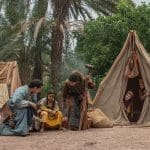






The Feast of Tabernacles is perhaps a lesser-known holiday for some of us, but in the time of Jesus—and for many Jews today—it was one of the biggest annual festivals. The setting for John 7-8 is the Feast of Tabernacles (see ). Seeing Christ’s teachings in the context of the Feast of Tabernacles be illuminating. For example, let’s consider one element of this feast that was established by the time of Christ—water.
The Feast of Tabernacles lasted for eight days, and on the first seven days there was a water-drawing ceremony. Each day, a procession of priests walked from the temple to the Pool of Siloam. There would be music and singing—think of something special, like a holiday parade. This was a big deal. A priest would draw water from the Pool of Siloam and this water would be taken back to the temple for a special ritual. This happened on the first seven days of the Feast of Tabernacles, but not on the final day.
With that context in mind, come with me to John 7. It’s the Feast of Tabernacles and Jesus is in Jerusalem. Note how John 7:37–38 have additional meaning in context of the Feast of Tabernacles. On “the last day of the festival, the great day,” while Jesus was teaching in the temple complex, “he cried out, “Let anyone who is thirsty come to me, and let the one who believes in me drink” (John 7:37–38, NRSV).
On this final day of the feast, when there was no water-drawing ceremony, Jesus said in effect, “You’ve been going to the pool of Siloam to get water all week, but actually you can come to me and freely drink of the waters of salvation. This key part of your religious festival—that’s me!”
For more connections between Jesus Christ and the Feast of Tabernacles, check out this short video: