




First Presidency Views Major Progress Inside Salt Lake Temple Restoration

The First Presidency of The Church of Jesus Christ of Latter-day Saints visited several newly completed rooms in the historic Salt Lake Temple on Friday, May 8, 2026, as the landmark renovation project enters its final phase.
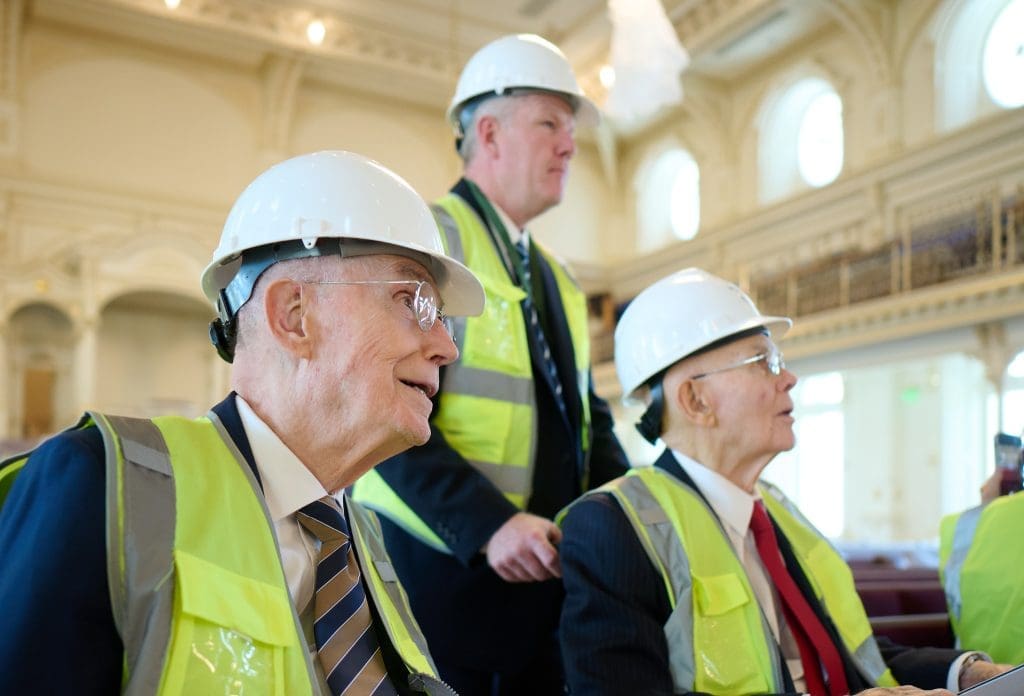
President Dallin H. Oaks was joined by his wife, Kristen Oaks, along with First Counselor Henry B. Eyring and Second Counselor D. Todd Christofferson and his wife, Kathy Christofferson.
The visit marked an important milestone in the extensive restoration and seismic upgrade project that began after the temple closed on December 29, 2019. As of spring 2026, the temple has been closed for more than six years while crews have undertaken one of the most ambitious preservation projects in Church history.
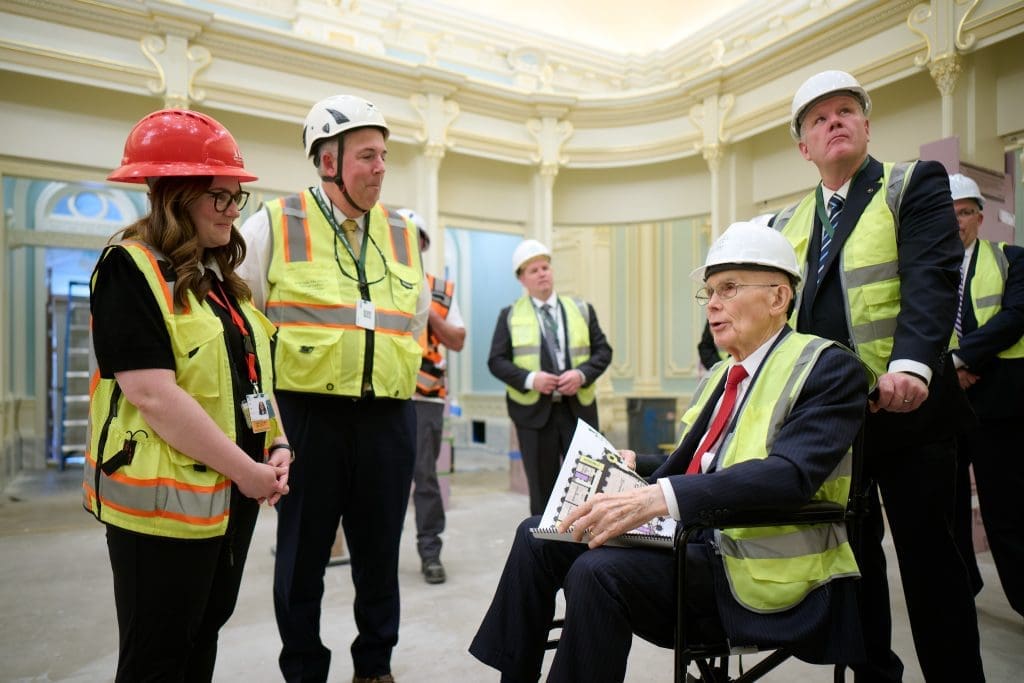
President Oaks noted that the visit was especially meaningful as he continues recovering from hip replacement surgery performed on April 15.
“The opportunity to tour the temple today was a welcome chance to be with my brothers in the First Presidency in a place we cherish,” President Oaks said. “I have been looking forward to this opportunity to see firsthand the progress of this important project.”
President Oaks’ recovery is expected to take approximately three to four months, though he continues to fulfill office and other assignments during that process.
The Salt Lake Temple renovation is now in its concluding stage, with construction expected to be completed by the end of 2026. The project has included extensive seismic strengthening designed to preserve the historic 1893 structure for generations to come. Engineers installed 98 base isolators weighing eight tons each beneath the temple, along with hundreds of kilometers of reinforcing cable, allowing the building to better withstand future earthquakes.
One of the project’s most visible milestones occurred earlier this year when scaffolding surrounding the temple was fully removed between January and mid-March 2026, revealing the restored granite exterior for the first time in years.
Inside the temple, crews are completing detailed restoration work that includes repairing pioneer-era wood paneling and moldings, installing chandeliers in the north addition, and modernizing plumbing, electrical, and mechanical systems while preserving the temple’s historic character.
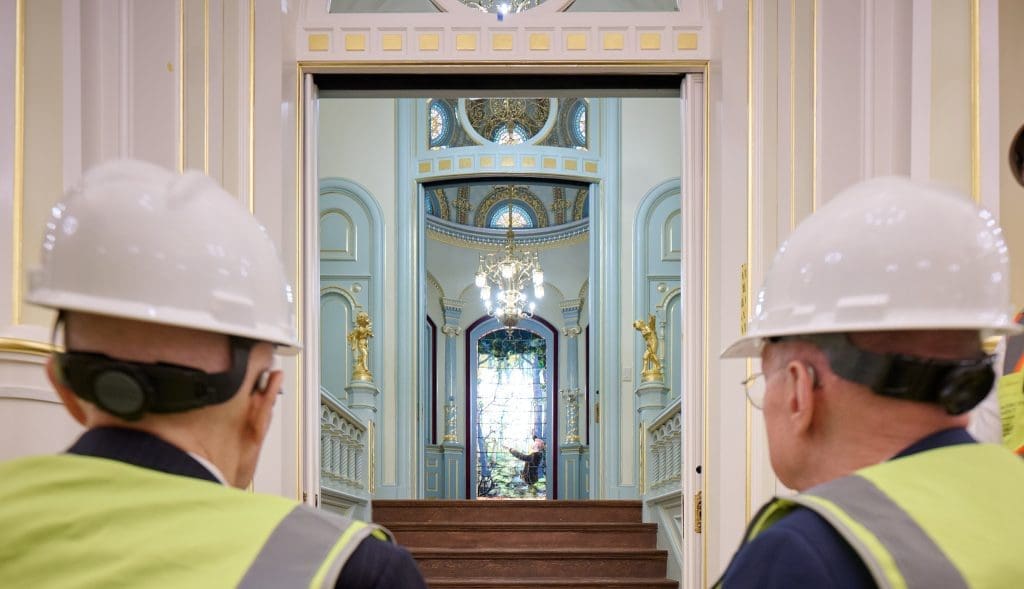
Church leaders have emphasized that the Salt Lake Temple renovation reflects a commitment both to preserving sacred history and preparing the temple to serve future generations.
“Above all,” President Oaks said, “we look forward to teaching about the sacred purposes of temples throughout the world. In the temple, faithful men and women receive divine instruction, sacred responsibilities, and spiritual power. It is in the temple that eternal covenants are made that bind us and our families to our Heavenly Father and to one another for eternity.”
The visit by the First Presidency comes ahead of the planned Salt Lake Temple Open House, scheduled to run from April through October 2027, when the public will have an opportunity to tour the temple before its rededication later that year.

While the temple itself is not yet open to visitors, a new Temple Square Visitors’ Center will begin welcoming guests on May 18, 2026. The center will feature an “Inside a Temple” experience designed to help visitors better understand the purpose of temples and their role in Latter-day Saint worship.
Additional reservations for the “Inside a Temple” experience will be released beginning June 1, with new availability added every other Monday. Guests may reserve tickets online or through the Temple Square app.
Concurrent renovations across Temple Square continue to reshape the surrounding plaza and landscaping, with portions already reopened to the public as work progresses toward the temple’s anticipated completion at the end of 2026.
Hastening Now: A Weekly Church Report
The Young Women of the Church received joyful news of the revelatory changes in the naming of their age groups. This week’s news shows the steady growth of the Lord’s work. Temples are announced and opened ground is broken, youth are guided with new purpose, and sacred music reaches new audiences across 25 nations of Africa—each effort a reminder of the steady moving forward of the Church Jesus Christ.
ONE

New Nauvoo Temple Visitors’ Center Scheduled for Dedication
Tuesday, April 21, 2026
Temples Rising
The next chapter in Latter-day Saint history will be celebrated anew this summer in Nauvoo, Illinois as Gerrit W. Gong of the Quorum of the Twelve dedicates the new Nauvoo Temple Visitors’ Center on June 27, 2026. Timed to coincide with the anniversary of the dedication of the Nauvoo Illinois Temple (2002) and the martyrdom of Joseph and Hyrum Smith, the event highlights Nauvoo’s place as “The City of Joseph.” The new center invites visitors into that legacy through immersive exhibits, sacred art, and interactive experiences centered on temple covenants. At the same time, the restored Brigham and Mary Ann (Angell) Young Home will reopen, offering a poignant glimpse into the faith and sacrifice of early Saints preparing for their westward exodus. READ STORY HERE.
TWO
New Young Women Age-Group Names Emphasize Faith, Hope and Light
Monday, April 20, 2026
The First Presidency
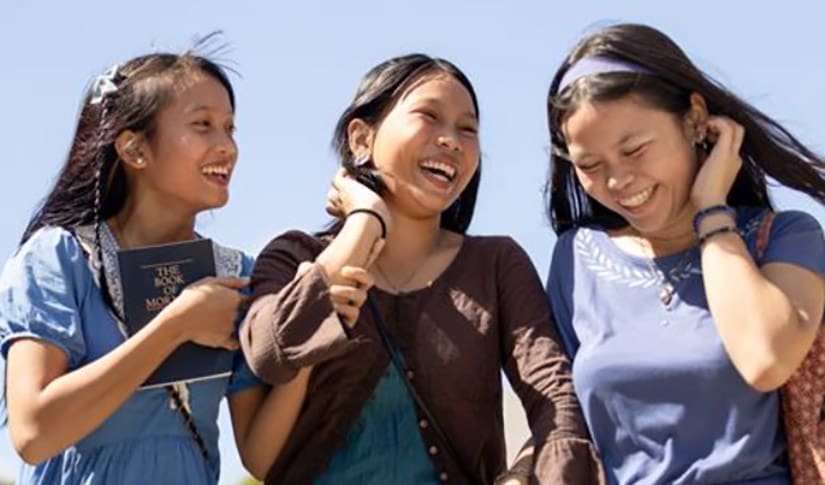
The First Presidency has announced changes to age-group names for young women. The purpose of the new names is to “help young women understand their divine place in God’s work, to represent their spiritual dignity as His beloved daughters, and to highlight their progression.” The new groups—Builders of Faith (ages 12–13), Messengers of Hope (ages 14–15), and Gatherers of Light (ages 16 and older)—emphasize a rising progression of discipleship centered in Jesus Christ. These names invite young women to more fully see themselves as covenant daughters of God, actively engaged in His work. Rooted in scripture and spiritual impression, the change signals a renewed focus on faith, hope, and light as guiding principles for a generation preparing to lead, serve, and bless the world. READ STORY HERE.
THREE
President Oaks, Six Other BYU Presidents Honored in Utah Valley
Friday, April 17, 2026
Church Leadership
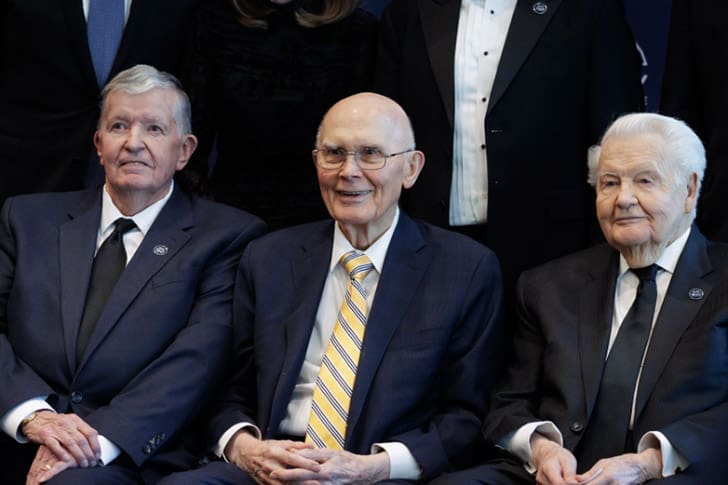
In a moving tribute to faith, leadership, and lasting influence, President Dallin H. Oaks and six other past and present presidents of Brigham Young University were honored at the 2026 Pillar of the Valley Awards in Provo, Utah. Celebrating more than a century of inspired leadership, the recognition highlighted how these men have shaped not only a university but an entire community through their commitment to education grounded in gospel principles. From strengthening academic excellence to fostering faith-centered lives, their collective legacy reflects BYU’s enduring mission to “enter to learn and go forth to serve,” blessing generations of students and extending light far beyond the campus.
FOUR
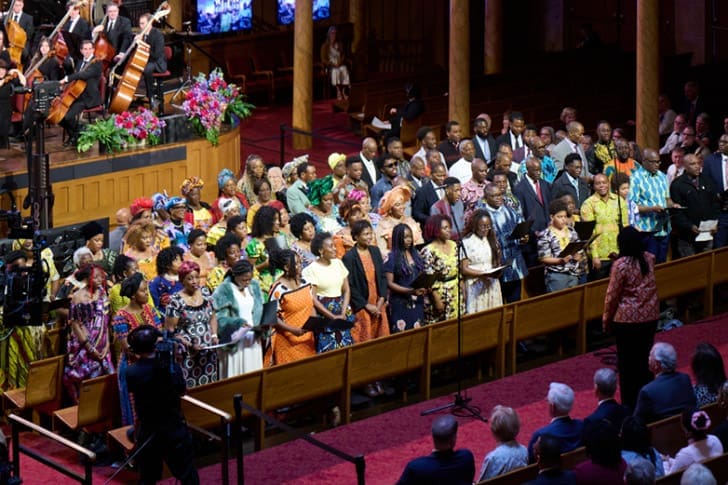
Tabernacle Choir Reaches Millions in 25 African Countries
Sunday, April 19, 2026
To All the World
In a historic expansion of a beloved global broadcast, the Tabernacle Choir at Temple Square has extended its weekly program, Music and the Spoken Word, to millions of viewers across 25 countries in Africa. Airing live in prime time for the first time on the continent, the broadcast marked a significant moment in the nearly century-long mission of sharing sacred music and messages of hope worldwide. Timed with the anniversary of the Church’s first missionary arrival in Africa on April 19, 1853, the milestone reflected both deep historical roots and remarkable growth. For a continent where music is central to worship and culture, this expansion brings a powerful message of joy, faith, and connection through Jesus Christ. READ STORY HERE.
FIVE
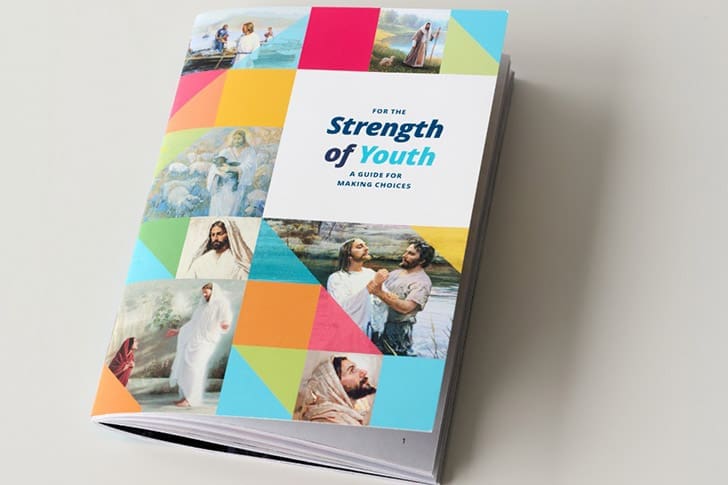
Youth Around the World Invited to Prepare for New Curriculum
Friday, April 17, 2026
Chosen Generation
In a significant step to strengthen the rising generation, The Church of Jesus Christ is inviting youth, parents, and leaders worldwide to prepare for a new, Christ-centered curriculum launching in September 2026. Centered on the updated For the Strength of Youth guide, the effort emphasizes principle-based learning designed to deepen conversion and build lifelong discipleship in Jesus Christ. Through unified study, shared experiences, and practical application, youth across the globe will be encouraged to place the Savior at the center of their choices. This worldwide initiative reflects a growing focus on home-centered gospel learning and preparing young disciples for a lifetime of faith and covenant living. READ STORY HERE.
SIX
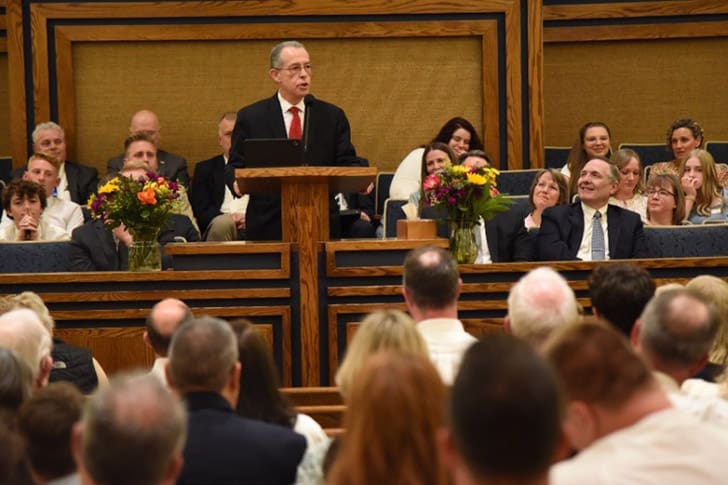
Church Announces Temple to be Built in Marysville, Washington
Sunday, April 19, 2026
Temples Rising
In keeping with the new way of announcing temples, the First Presidency authorized Elder Hugo E. Martinez to share that a new house of the Lord will be built in Marysville, Washington. During a devotional with local members, Elder Martinez gave the exciting news. This marks a significant milestone for Latter-day Saints in the region. The Marysville temple will become the state’s seventh, expanding access to sacred ordinances and covenants central to the Church’s doctrine. For a growing membership across Washington, the announcement stands as both a spiritual blessing and a reminder that temples are coming closer and closer to members throughout the world. READ STORY HERE.
SEVEN

The Church Helps Bring Solar Power to Navajo Nation Families
Wednesday, April 22, 2026
Humanitarian Outreach
In a quiet corner of the Navajo Nation, where thousands of homes still lack electricity, a simple flip of a switch is changing lives. For Colynn Begay, a single mother of five, nights once meant darkness and daily struggle as her children tried to finish homework by dim light. Now, through a partnership between The Church of Jesus Christ and Heart of America, solar systems are bringing reliable power—and new opportunity—into underserved homes. This growing effort is strengthening education, improving health, and restoring stability. For families like Begay’s, the change is immediate, illuminating not only their homes but their futures. READ STORY HERE.
EIGHT
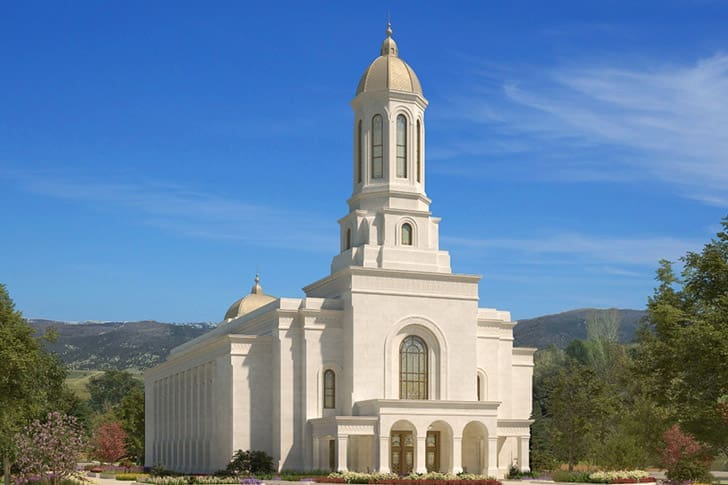
Temple Updates from Ephraim, Utah and Springfield, Missouri
Monday, April 20, 2026
Temples Rising
In the ongoing unfolding of the Restoration, the First Presidency has announced key milestones for two sacred houses of the Lord—inviting members and friends alike to prepare for these sacred opportunities. The Ephraim Utah Temple will soon open its doors for public tours ahead of its October 2026 dedication by Elder Ronald A. Rasband, offering a rare opportunity to experience the beauty and purpose of the temple. Meanwhile, in the historic heartland of Missouri, ground will be broken for the Springfield Missouri Temple—the third in the state—on Saturday, June 6, 2026.READ STORY HERE.
NINE

The Willamette Valley Oregon Temple Opens for Public Tours
Monday, April 20, 2026
Temples Rising
In a beautiful expression of faith and community, the Willamette Valley Oregon Temple of The Church of Jesus Christ of Latter-day Saints is opening its doors to the public for a limited time, inviting all to step inside a House of the Lord. Beginning April 23, visitors throughout Oregon and beyond can experience the peace, purpose, and sacred design of the state’s third temple. Inspired by the region’s rivers and lush landscape, the temple reflects both the beauty of creation and the central role of temples in the Restoration of the gospel of Jesus Christ. The open house offers a rare opportunity to learn, feel, and understand why temples matter so deeply to Latter-day Saints. READ STORY HERE.
TEN

Ground Broken for the Teresina Brazil Temple
Saturday, April 18, 2026
Temples Rising
In a joyful and long-anticipated moment for Latter-day Saints in Teresina, Brazil, ground was broken for a new house of the Lord on April 18, 2026, marking the beginning of a sacred new chapter in the region. Presided over by Elder Ciro Schmeil of the Brazil Area Presidency, the ceremony reflected both gratitude and deep spiritual significance as members gathered on the future temple site. For many, the occasion represents the fulfillment of decades of faith, sacrifice, and steady growth. As the Teresina Brazil Temple rises, it will stand as a symbol of covenant blessings, connecting individuals and families more fully to Jesus Christ and His eternal promises. There are now five houses of the Lord under construction in Brazil. READ STORY HERE.
746 Times: What a Word Cloud Revealed About the April 2026 General Conference
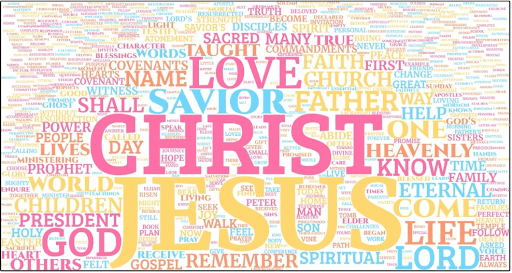
There is a picture on my computer screen that I cannot stop looking at. It is neither portrait nor photograph. It is a word cloud: a square of crowded letters in which large words crouch beside small ones and certain names blaze across the center like lamps at midnight. My friend and colleague Ed Hegeman built it.1 He gathered the full text of every talk given at the April 2026 General Conference, poured all 40,970 words into a generator, and let the program do what programs do. Count. Arithmetic was hired to count and ended by confessing.
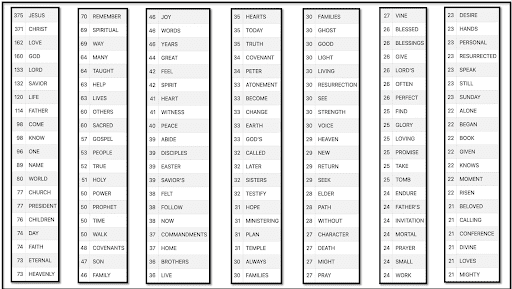
The words the General Authorities and General Officers chose are not surprising to the faithful heart, but they are arresting on paper. JESUS appears 375 times. CHRIST, 371. Together those two names were spoken from the pulpit by living apostles, prophets, and general officers 746 times across two days. LOVE comes next at 162, then GOD, LORD, SAVIOR, LIFE, FATHER, COME, KNOW, ONE, NAME. A child could read the cloud and know what the Church most wants her to remember.
Cynics sometimes say that Latter-day Saints talk about the Lord less than other Christians. Cynics do not count; they assume. But counting, as it turns out, is a kind of confession. A piece of software with no theology at all, given no instructions about what was holy, took one hundred and ninety minutes of recorded worship and returned a single verdict: this Church has a Redeemer and cannot stop saying His name.
Word clouds were invented for marketing. They exist to show a company what it “talks about” so the brand can be adjusted. What happened in Ed’s generator on the afternoon of April 5 was something else entirely. The software adjusted nothing. It simply bore witness. A machine built for marketing had blundered into testimony. It behaved, without meaning to, like a small apparatus of the Holy Ghost, who is also in the habit of testifying of Jesus Christ from unlikely quarters. Balaam’s donkey did not set out to prophesy. A word cloud does not set out to preach. The Spirit, though, will use whatever instrument lies near Him, and on this occasion He used a Python script.
The modern assumption is that truth draws nearest when we strip away warmth, doctrine, and repetition; that we reach the real by becoming cooler, more mechanical. Ed’s data show the reverse. Strip away the music and the cameras and the benedictions, and every raw letter that remains still carries warmth, pressed into the very frequency of the word. The coldest tool in the house has turned itself into a psalm.
Many Saints wondered what kind of prophet President Oaks would be. What would he emphasize?
April 2026 was not an ordinary conference. It was President Dallin H. Oaks’s first general conference as the eighteenth President of the Church, following the passing of our beloved President Russell M. Nelson in September of last year.2 Many Saints wondered, in the quiet months after the Solemn Assembly, what kind of prophet President Oaks would be. What would he emphasize? What would he ask us to put down? What old note would he sound, and what new one? A prophet is never more original than when he remembers what cannot be changed.
The word cloud answers before the new prophet has finished clearing his throat. Ed’s count does not show a Church reshaping itself around a fresh personality. It shows a Church gathered under the same Name it has borne since 1830 and since A.D. 33, the Living Christ at the center of every session. NAME occurs 89 times. SAVIOR, 132. REMEMBER, 70. At the transfer of the keys from one prophet to the next, nothing of the substance has shifted. President Oaks, speaking on Easter Sunday with the word “peacemaker” on his lips, taught that “Jesus Christ is the way to peace in this world and eternal life in the world to come.”3 The new prophet has altered no coordinates. He has only sharpened the beam of the same lamp his predecessors carried.
There is a reason NAME made the top twenty. Every sacrament prayer asks us to take upon us the name of the Son. A family in Kansas kneeling around a card table on Sunday evening speaks the same words as an elderly couple in Tonga and a seminary student in Santiago: that we do always remember Him, and keep His commandments, that we may always have His Spirit to be with us. Multiply that one sentence by millions of households each week. Add the daily prayers. Add the temple ordinances. Add the missionary lessons. You begin to see why our sustained leaders cannot help repeating what the whole Church is already murmuring. The cloud is not a summary. It is an echo.
Pressing. Trusting. Receiving. Following. Ministering. These are not the verbs of spectators.
Particular talks confirm what the aggregate data already knows. Elder David A. Bednar called the patient walk of the covenant Saints “the joyous quest of a lifetime, a pressing forward with faith in Jesus Christ in a gradual process of trusting in and receiving help from our Savior to become more like Him.”4 Sister Kristin M. Yee invited every disciple who longs for meaning: “If you want to feel grounded, get a sense of divine belonging, and make a real difference in the world, follow the Savior and minister in His name.”5 Notice the verbs. Pressing. Trusting. Receiving. Following. Ministering. These are not the verbs of spectators. They are the verbs of people who have been told to move toward Somebody. The restored Church is never content with an adjective when it can give a man a verb.
That Somebody is named openly, not in passing. The conference fell on Easter weekend, and the words EASTER (39), RESURRECTION (30), and TOMB (25) sit near the heart of the cloud like stones rolled away. The Brethren were not merely observing a liturgical date. They were teaching doctrine. A dead Lord cannot command anything. A living Lord commands everything. Every verb on the word list depends on the empty tomb, because every one of them is addressed to Someone who can still be heard.
TEMPLE shows up 31 times. COVENANT and COVENANTS together, 82. The April 2026 apostles did not treat the House of the Lord as a decorative badge of seriousness. They returned to it because nothing else in mortality teaches the disciple how to remember a Savior with the same patience. Repetition is never tedious to love; it is only the pulse by which love stays alive. The generator’s count has caught a doctrine that statistics rarely reach: the Saints who covenant the most have the most to remember, and the Saints who remember the most have the most that has been done for them.
This is why Ed’s project matters for anyone reading. At the close of conference, President Oaks made a promise that is easy to skim and dangerous to ignore:
As the messages from this conference are published, we invite all to study and ponder them prayerfully and to act in faith on the principles they explain. The Lord has promised, “Unto him that receiveth I will give more.” As we treasure up and act upon the teachings of this conference, the Lord will continue to teach and inspire us with personal revelation and guidance.6
That is not speechcraft. It is an oath. The prophet is telling us that the same Lord whose name was said 746 times from the pulpit will speak 746 more times into our own hearts, if we will open the messages and do what they say. Study. Ponder. Act. Three short verbs with no fine print.
There is a common Latter-day Saint habit of watching conference, enjoying it, quoting two or three lines in Relief Society, and returning to the same routine a month later. Ed’s data is an invitation to repent of that habit. We have a curious talent for turning revelation into a souvenir. If the General Authorities, gathered for the first time under a new prophet in an hour of real global anxiety, chose to fill their mouths with one Name more than any other, then a Saint who never reads those words again has declined the gift.
Choose one talk this week and act on one thing inside it.
Open the Liahona. Open the Gospel Library app. Open the printed page, if that is how you read. Choose one talk this week and act on one thing inside it. If JESUS was the most-said word in April 2026, let it be the most-said word in your kitchen in April too. The cloud is only an icon. It points to a Face. The Face looks back.
On my desk the picture has not changed. The letters have not moved. Every color is where it was. A child reading it will still see the same large Word in the middle.
The cloud has quietly become a mirror. Whatever else a Latter-day Saint does this month, one question follows him out of General Conference and into Monday morning: if someone counted the words of my week, what would be large? A man’s creed is rarely what he says he believes, but what he cannot stop saying. The Church has given its answer. A new prophet, who seems incapable of speaking a sentence without reaching for his Master’s hand, has given his. A generator in a friend’s home office has given its own.
The Lord is waiting for ours.
1. Ed Hegemann, “It’s that time of year again. You know how this works . . . ,” Facebook post, April 8, 2026, 12:25 a.m., Facebook post.
2. President Russell M. Nelson died on September 27, 2025. President Dallin H. Oaks was set apart as the eighteenth President of The Church of Jesus Christ of Latter-day Saints on October 14, 2025.
3. Dallin H. Oaks, “Alive in Christ,” General Conference, April 2026; https://www.churchofjesuschrist.org/study/general-conference/2026/04/49oaks?lang=eng.
4. David A. Bednar, “All Who Have Endured Valiantly,” General Conference, April 2026; https://www.churchofjesuschrist.org/study/general-conference/2026/04/16bednar?lang=eng.
5. Kristin M. Yee, “Ministering: ‘That Ye Love One Another; as I Have Loved You,’” General Conference, April 2026; https://www.churchofjesuschrist.org/study/general-conference/2026/04/14yee?lang=eng.
6. Dallin H. Oaks, closing remarks, General Conference, April 2026; https://www.churchofjesuschrist.org/study/general-conference/2026/04/59oaks?lang=eng
Hastening Now: A Weekly Church Report
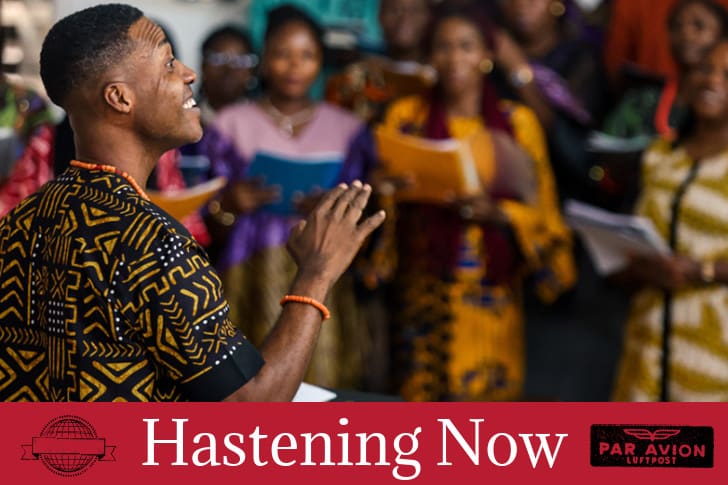
Exciting things are happening as the Tabernacle Choir joins with African choirs in Utah and Nigeria for a special broadcast on April 19 to go to millions in Africa. A most unique group of men, the Black 14, once protesters against the Church, helped coordinate large donations from the Church to the Food Bank in Atlanta. Humanitarian projects across Africa and reviews of General Conference will make your day. Enjoy this week’s report.
ONE
The Tabernacle Choir’s ‘Music and the Spoken Word’ Expands Reach to Millions Across Africa
Monday, April 6, 2026
To All the World
The Tabernacle Choir and Orchestra at Temple Square will present a special broadcast of “Music and the Spoken Word” on Sunday, April 19, 2026, marking a significant expansion of the weekly broadcast’s reach across Africa.
The special episode, titled “The Joy We Share,” will air live on television networks in more than a dozen African countries, with additional distribution internationally. This will expand the reach of the program to an anticipated African audience of approximately 8 million people across the continent. READ ENTIRE RELEASE HERE.
TWO
Children have ‘intrinsic worth and dignity,’ President Porter teaches at International Society Conference
Tuesday, April 7, 2026
Church Leadership
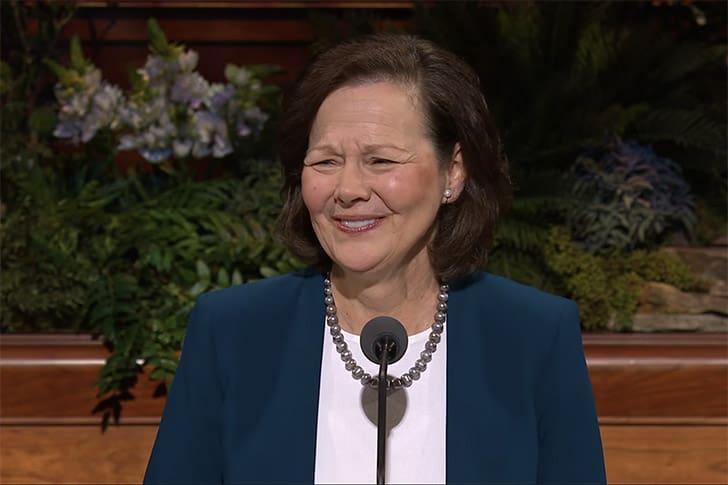
President Susan H. Porter spoke at the 36th annual International Society Conference on the inherent dignity of God’s children. President Porter, a keynote speaker at the event, centered her remarks on ways adults can treat children with dignity and help them understand their worth. She began by sharing the doctrine of The Church of Jesus Christ of Latter-day Saints regarding the worth of souls. Each of us is a spirit child of heavenly parents, she taught, and therefore has “intrinsic worth and dignity.” READ ENTIRE ARTICLE HERE.
THREE
Church Purchase Ad and Article in Philippines News Source about General Conference to be Rebroadcast
Tuesday, April 7, 2026
To All the World
During Holy Week, many honor the Savior Jesus Christ through worship, prayer, scripture study, and time with family. The Church of Jesus Christ of Latter-day Saints joins Christians worldwide in celebrating Easter as a season of renewal and a reminder of Christ’s love. Central to this celebration is Christ’s “greater love,” as expressed in John 15:13: “Greater love has no one than this, that a person lay down their life for their friends.” All are invited to experience Christ’s perfect love by listening to messages from the April 2026 General Conference. READ ENTIRE ARTICLE HERE.
FOUR

Bringing Hope Through Water: The Church Delivers Boreholes, Public Toilets, and a New Medical Clinic to Ghana’s Central Region
Tuesday, April 7, 2026
Humanitarian Outreach
Without adequate toilets, clean drinking water, and convenient health services, living and staying healthy have been challenging for many of the most underserved residents in the Mfantseman Constituency, located in the Central Region of Ghana. Thanks to donations from the Church, however, basic health and sanitation needs are now receiving significant support. On 20 March 2026, Elder Isaac K. Morrison formalized the donation as local residents gathered to celebrate their relief and express gratitude for the blessings provided. READ ENTIRE RELEASE HERE.
FIVE

The Church Donates Borehole and Water Tank to Sierre Leone Community
Tuesday, April 7, 2026
Humanitarian Outreach
The small community of New England Ville in western Freetown, Sierra Leone, celebrated the donation of a sustainable solution to a long-standing need for clean and accessible water. On April 3, 2026, The Church of Jesus Christ joined with local residents at the Bethel Hope Academy Preparatory School to officially hand over a new borehole and water tank to the eager residents there. The stored water will serve both the school and the surrounding neighborhood, improving daily living conditions and supporting better health and sanitation. READ ENTIRE RELEASE HERE.
SIX
The Church Donates Early Education Facility in Liberia
Friday, April 3, 2026
Humanitarian Outreach
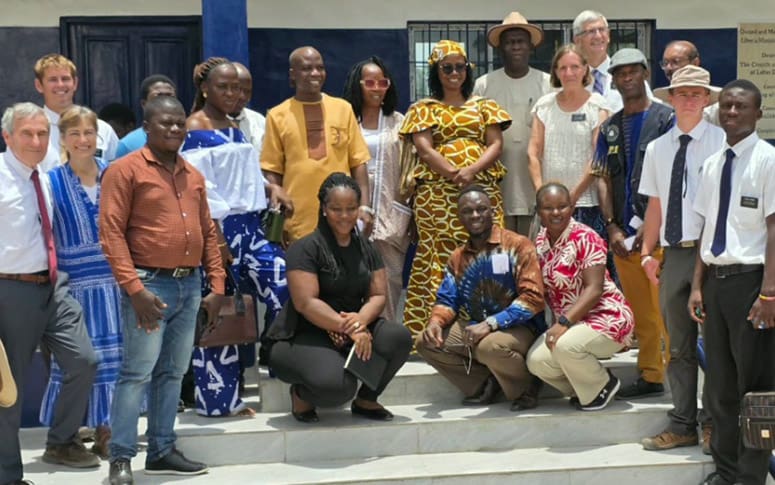
In a significant step toward strengthening early childhood education in Central Liberia, The Church has officially turned over a newly constructed Early Childhood Education (ECE) facility to the Ministry of Education in Bong County. The facility is designed to foster a safe, engaging, and inclusive learning environment. The campus includes six modern classrooms, each brightly decorated to create a welcoming atmosphere for young children. The handover was facilitated by a senior missionary couple. READ ENTIRE RELEASE HERE.
SEVEN
Hospital in Côte d’Ivoire Receives Equipment from the Church
Reported Tuesday, April 7, 2026
Church Newsroom
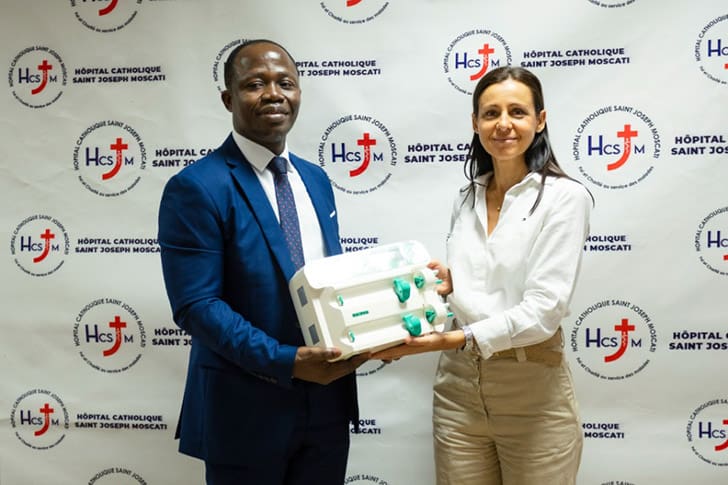
The Church donated needed medical equipment to the Saint Giuseppe Moscati Catholic Hospital in Yamoussoukro, Côte d’Ivoire. The donation marked another step in the Church’s commitment to improving healthcare in West Africa. Upon learning of the hospital’s needs, The Church donated an electric intensive care bed, an intensive care patient monitor, and five state-of-the-art electric syringe pumps—tools that are crucial for treating cardiac emergencies. READ ENTIRE RELEASE HERE.
EIGHT
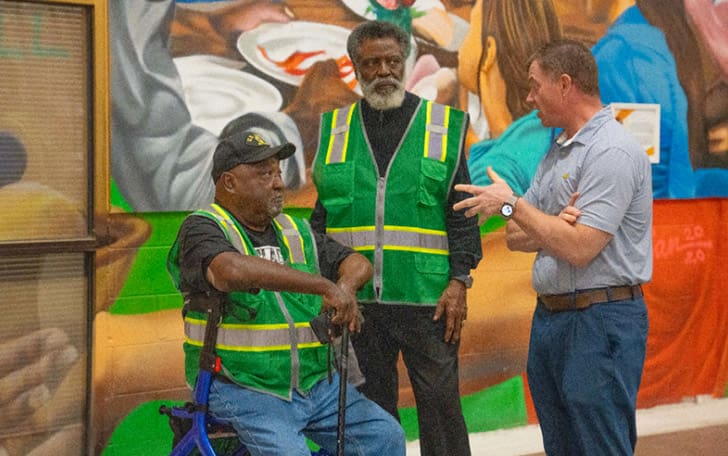
The Church Donated 36,000 Pounds of Food to Atlanta Food Bank
Tuesday, April 7, 2026
Humanitarian Outreach
In collaboration with The Church, the Black 14 Philanthropy and College Football Hall of Fame donated 36,000 pounds of food to the Atlanta Community Food Bank. Mel Hamilton and his former teammate, Tony McGee, represented the Black 14 at the donation event. Hamilton and McGee were two of the 14 Black players dismissed from the University of Wyoming football team in 1969 after asking to participate in a peaceful racial protest prior to a game against Brigham Young University. At the time, Black men were not allowed priesthood ordination in The Church. READ ENTIRE RELEASE
HERE.
NINE
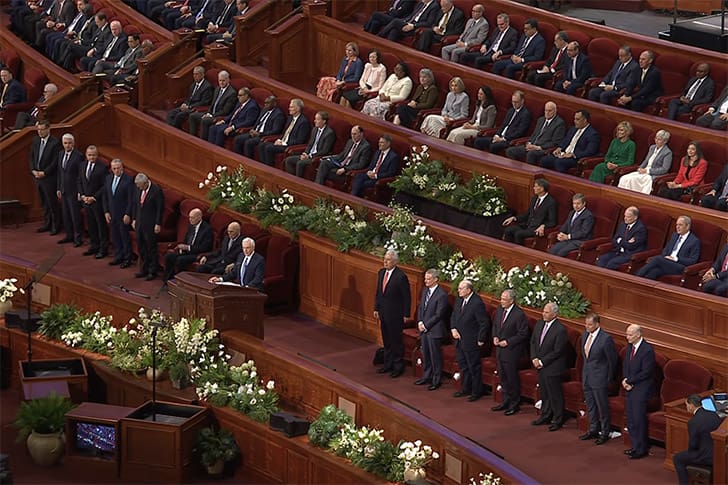
Rejoicing in Christ: Sunday General Conference Talk Excerpts
Sunday, April 5, 2026
Church Leadership
“Living worthy to meet Christ is no easy task,” taught President Dallin H. Oaks. “Many current writers characterize the time in which we live as ‘toxic,’ a time of ‘contempt’ or ‘hostility’ toward adversaries. This hostility affects many different relationships in society, involving many whose Christian beliefs should orient them otherwise. Our Savior Jesus Christ taught us how to relate to one another. The great commandments in the law, He taught, were to love—God and neighbor. READ ENTIRE REPORT HERE.
TEN
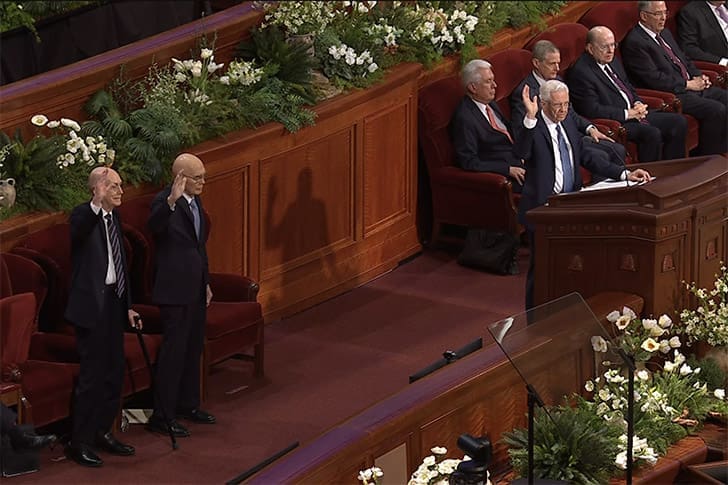
A Solemn Assembly, A Prophet Sustained, A Glorious Easter General Conference
Saturday, April 4, 2026
Church Leadership
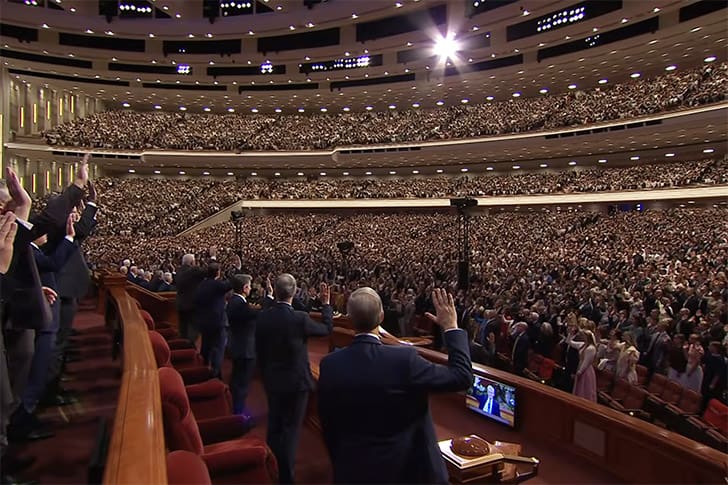
Members of The Church of Jesus Christ of Latter-day Saints gathered on the Saturday morning of this 196th annual General Conference for a Solemn Assembly. This is a rare event that only happens when a new president of the church is being sustained, and it gave members a unique opportunity. President Dallin H. Oaks reminded us that the sustaining is done in quorums and groups, so it gave some of us the opportunity more than once to stand and raise our right hand to sustain the prophet. READ ENTIRE STORY HERE.
ELEVEN
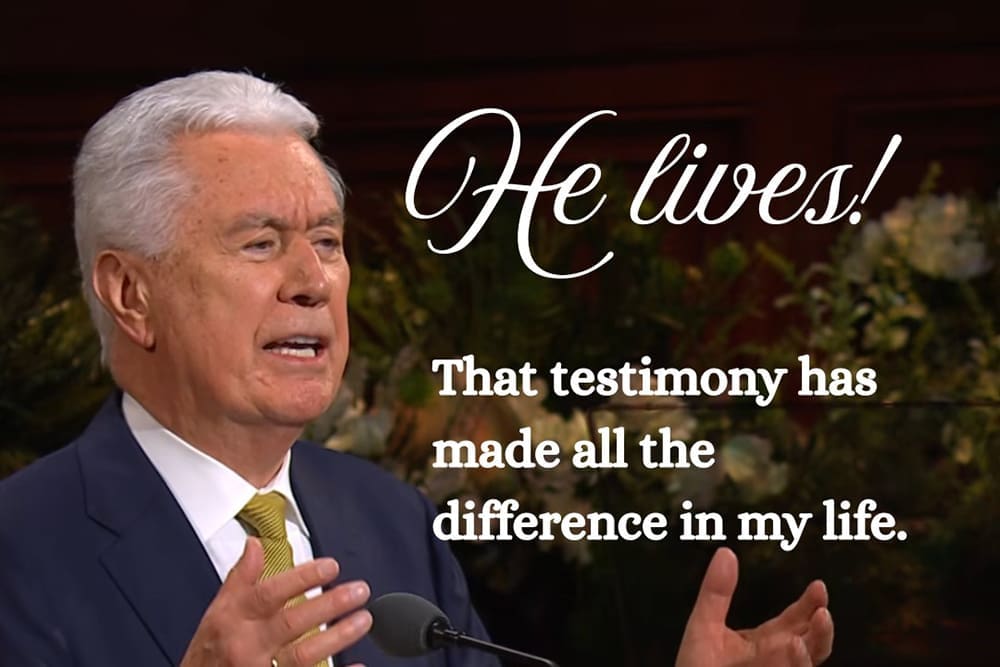
General Conference Highlights to Share
Sunday, April 5, 2026
To All the World
We’d love for you to share these posts of conference with friends and family! Each share or like helps Meridian Magazine and helps to spread the wonderful messages shared from general conference! CLICK HERE TO SEE 32 DIFFERENT MEMES TO SHARE.
TWELVE
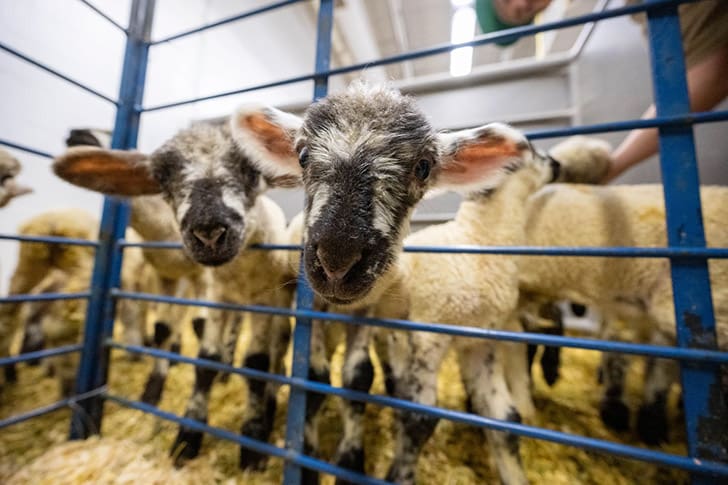
Shepherds in Training: How BYU-Idaho Students Find Christ in Caring for Lambs
Friday, April 3, 2026
Chosen Generation
Spring has arrived at BYU-Idaho, and along with it, baby lambs. For the past four years, Aaron Stalker, a BYU-Idaho faculty member in the Department of Agriculture and Food Science, has partnered with a local ranch, Siddoway Sheep Company, to give students hands-on experience caring for these animals. The lambs that end up at the BYU-Idaho Agriculture Science Center are commonly referred to as “bum lambs.” When a ewe has too many babies, or when the lambs are not healthy, they require around-the-clock, labor-intensive care. That is where BYU-Idaho students step in to help. READ ENTIRE RELEASE HERE.
Screenshot
A Solemn Assembly, A Prophet Sustained, A Glorious Easter General Conference

Members of The Church of Jesus Christ of Latter-day Saints gathered on the Saturday morning of this 196th annual General Conference for a Solemn Assembly. This is a rare event that only happens when a new president of the church is being sustained, and it gave members a unique opportunity.

President Dallin H. Oaks reminded us that the sustaining is done in quorums and groups, so it gave some of us the opportunity more than once to stand and raise our right hand to sustain the prophet. While those who watched it on a screen could see people in the audience rise and raise their hands, it was not hard to imagine that across the globe, everywhere, millions of church members were doing the same, standing on their feet and raising hands of support and love, both in unity and love. We could feel our sense of community across many nations.
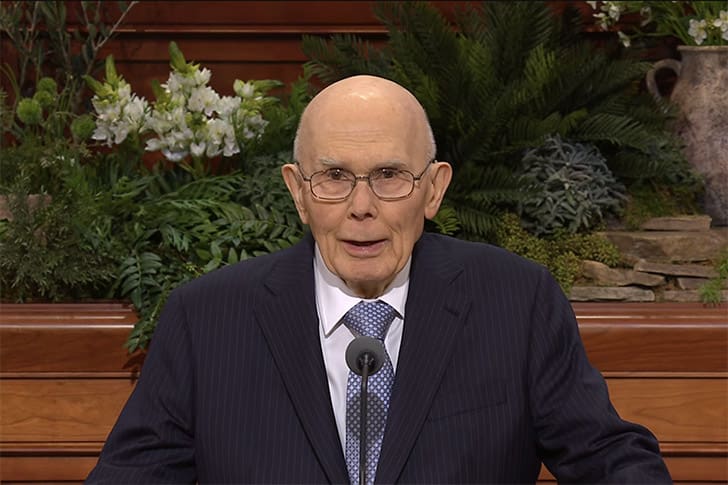
President Oaks said, “I express our gratitude as leaders of the Church for our members’ sustaining vote, prayers, and support.”
Following the sustaining, Elder Patrick Kearon talked about sustaining:
“We have had the sacred opportunity to come together to raise our hands in support of President Dallin H. Oaks, to sustain him as the Lord’s prophet, seer, and revelator. I’m sure that if he were to review his Church service in his twenties and thirties in the way that I just have my own, nothing would have been further from the realms of possibility in his mind than becoming the President of the Church. This is a call he didn’t seek nor aspire to. The weight of this responsibility is colossal and sobering. I can’t help but think of his daddy who died when young Dallin was only seven, and his faithfully resolute mother, who raised a resilient, hard-working son.”
Elder Kearon noted, “While today is certainly solemn in purpose, it is also a day full of gratitude and rejoicing at the opportunity for the whole Church to come together and exercise common consent. We have signified our willingness to uphold President Oaks with our confidence, faith, and prayers.
We have had the sacred opportunity to come together to raise our hands in support of President Dallin H. Oaks, to sustain him as the Lord’s prophet, seer, and revelator. I’m sure that if he were to review his Church service in his twenties and thirties in the way that I just have my own, nothing would have been further from the realms of possibility in his mind than becoming the president of the church. This is a call he didn’t seek nor aspire to. The weight of this responsibility is colossal and sobering. I can’t help but think of his daddy who died19 when young
Dallin was only seven, and his faithfully resolute mother, who raised a resilient, hard-working son.”
Elder Kearon said, “While today is certainly solemn in purpose, it is also a day full of gratitude and rejoicing at the opportunity for the whole Church to come together and exercise common consent. We have signified our willingness to uphold President Oaks with our confidence, faith, and prayers.”
Talks Concentrated and Focused on Christ
Since General Conference and Easter converged this year, it was not surprising that all the talks were completely Christ-centered. Those who were watching to see if there were other topics, such as how to raise a family or family history or even temple worship, noted that “without me ye can do nothing” became a theme. We were called to walk with Christ, to center on Christ, to let him lead, guide and sustain us. The result was a really powerful testimony of so many trusted and knowledgeable voices that carried the authority of witness. Multiple voices speaking to a global audience that Christ not only spoke, but he speaks, not only lived, but he lives.
President Oak’s last words at conference were, “The Spirit of the Lord has inspired all of us to concentrate our worship, focus our learning and unite our testimonies on the teachings of the Lord Jesus Christ and His Father’s Plan for our eternal increase and joy.” That was the inspiration and that was delivered.
A people living in the latter days, when Jesus Christ will come again, must be prepared by knowing him now.
Below are talk excerpts from Saturday’s General Conference. An accompanying article will feature Sunday’s conference talks.
Saturday Morning
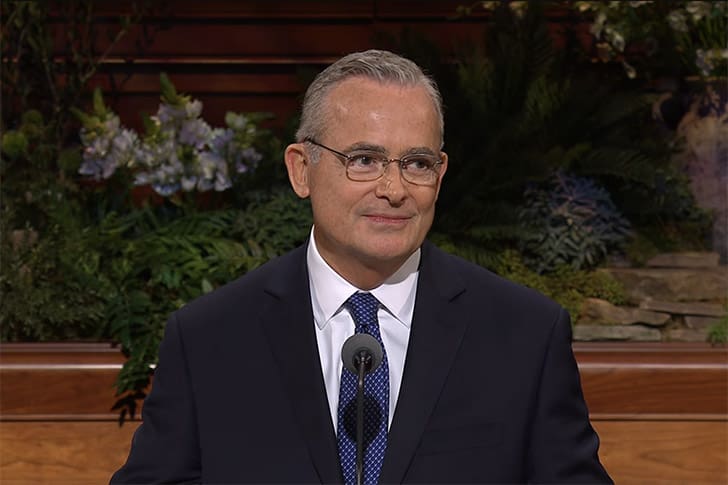
About His Business
By Elder Patrick Kearon
Quorum of the Twelve Apostles
Some callings are highly stretching, while others may leave us wondering, “Isn’t there more I could be asked to do?” You might serve in a very visible role for a time, only later to becalled to quiet, unseen service—or to support those with less experience.10 When callings change
in ways that deeply impact you or your family, it can require great faith and trust in the Lord while you adjust.
Our service is a choice, an offering to God, and a blessing. We all know that prayer, study of scripture, and worship at church and in the temple are critical to the development of our faith. Have we also come to see our callings as having a foundational role in the expansion of our faith? Callings from the Lord16 are tailor-made for our growth,17 as we humble ourselves, look outward, and learn that, indeed, when we are in the service of our fellow beings, we are in fact in the service of our God.18 It really isn’t where we serve, but how, that matters to the Lord.

Ministering––That Ye Love One Another; as I Have Loved You
By Sister Kristin M. Yee
Second Counselor in the Relief Society General Presidency
We may not be able to fix difficult or heartbreaking circumstances as we hope; some changes are not ours to make. But we can choose to love and minister as the Savior would. Ministering by the Spirit invites the Savior’s healing into our lives and the lives of those we minister to. I often find peace, clarity, healing, and purpose when I minister. I find the Savior when I minister. This is by divine design.
Ministering is truly loving and caring for others as the Savior would. It is a way of being; It is the way of our Savior Jesus Christ. It is not a program or a checklist; ministering is the essence of who God is and who we can become as we follow Him.
We are not called to or released from ministering. It is part of fulfilling the covenants wemade at baptism and in the temple. We covenanted to take upon us the Savior’s name, becoming as He is9 as we sacrifice and consecrate our lives to Him.10 When we minister as He would, we begin to think, feel, and love as He would.

Come Home
By Elder Clark G. Gilbert
Of the Quorum of the Twelve Apostles
Feeling we don’t belong, struggling with doubts, or being limited by traditions are just afew of the reasons we don’t immediately find our way home. But even as societal pressures pullpeople away from faith, life’s deeper questions don’t go away.President Nelson taught: “The truth is that it is much more exhausting to seek happiness where you can never find it!” President Oaks declared that the journey home starts by re-anchoring on the Savior.
Only Jesus Christ can fully restore that light and joy into your life. We all struggle and need patience, service, and love from each other.To those who are trying to help, hold on to truth and keep your covenants. To those who are struggling, know you are loved and the Savior is calling you home. But in the end, everyone must make their own choice to come home.
In President Dallin H. Oaks’ recent historic address at BYU, the Marriott Center initially looked completely full. But if you looked closely, there were still hundreds of unfilled seats and the ushers struggled to find space for those who still wanted to join the devotional. Then something remarkable happened. Students who had already found their seats began to turn on their phone flashlights to signal to the late arriving students that there was still space. It was as if they were holding up a light to say, “Please come sit with me, we saved a seat just for you.”

All Who Have Endured Valiantly (Doctrine and Covenants 121:29)
Elder David A. Bednar
Of the Quorum of the Twelve
Mormon testified that “charity is the pure love of Christ” and “the greatest of all” spiritual gifts. Significantly, the word endure is used in the scriptures to define and describe charity. For example, “[charity] endureth forever,” “suffereth long, … seeketh not her own, …beareth all things, … endureth all things.” And, as you sisters know well, “charity never faileth.”
Mormon also taught that “whoso is found possessed of [the spiritual gift of charity] at thelast day, it shall be well with him.” Note the double meaning of the word “of” in this verse. We can possess charity, but ultimately charity should possess us.
As we are blessed to receive this supernal gift, a transformation occurs in our spiritual nature and character. Being “possessed” of the spiritual gift of charity refers in part to the spiritual development and progress that are the overarching purposes of the Savior’s gospel.

Follow the Prophet, He Knows the Way
By Elder Michael John U. Teh
Of the Seventy
A few weeks ago, a stake president in Japan felt that we should visit a man diagnosed with cancer. Despite going through treatment, the cancer continued to spread. In these situations, I struggle to find the words to say. So, for days I pleaded for the Lord’s help. I pictured the man to be downtrodden and devastated. I anticipated that he would ask us why the Lord gave him this trial. I imagined that he would be hopeless and perhaps even a little angry. The day of the visit arrived and I was still at a loss. When we finally met I was completely astonished. What stood before me was not at all the man I had imagined. His countenance was bright and happy. There was no bitterness and he never asked why.
Just recently, I had a very similar experiences with members living in Korea. My intention was to minister to others. However, at the end of my visits, it felt like I was the one being ministered to. Jesus Christ strengthened each of these individuals to endure their trails. As President Oaks has taught: “Our Savior experienced and suffered the fulness of all mortal challenges… He therefore knows our struggles, our heartaches, our temptations, and our suffering, for He willingly experienced them all as an essential part of His Atonement. And because of this, His Atonement empowers Him to succor us—to give us the strength to bear it all.”

Tithing – Putting God First
By Elder Jorge T. Becerra
Of the Seventy
I recall a powerful experience I had many years ago that taught me how to put God first in my life. As a young married father, I was called to serve in a branch presidency. Elder Clinton L. Cutler of the Seventy came to speak to our branch. After the meeting I had an opportunity to talk with him. Sensing that I had something on my mind he asked, “is there something bothering you?” “Yes, I replied. I am having financial difficulties in my business, and I have fallen behind in my payment of tithes and offerings.” He then asked, “do you have anything of value?”
I don’t recall what else he said. I pondered his question for many days. The only thing I had of value was a car that I needed in my efforts to grow my business. However, I concluded that I should at least make the effort to sell my car, so I cleaned and polished it and placed an ad to sell it.
I want to be clear that Elder Cutler did not ask me to sell my car. This came to me after pondering and my desire to put God first.
A few days later a man came to the house to see the car. He seemed interested, he drove it and came back to discuss the details. He gave me his business card, and I realized he represented a car dealership. I was nervous about what would surely happen next– the haggling back and forth over the price. He asked me, “How much do you want for the car?” I told him I needed a preciseamount. I had calculated what I needed to pay off the loan on the car and pay my tithing. He then said very calmly, “Okay, I will come back in a few days with a check.” He thanked me and left. I couldn’t believe it. No haggling, no arguing, no negotiating.
A few days later he came back with the check for the amount I requested. I was surprised and amazed as he drove off with the car. I deposited the check and paid my tithing.

Prayers for Peace
By President Henry B. Eyring
Of the First Presidency
I testify the Lord hears and answers the prayers of our hearts, just as he did for Alma and
his people. We can follow His commandment to “pray always” by having a continual prayer in our hearts. As prophets have taught many times in the past, we may not feel like praying or we may not know what to say, but God hears the secret prayers of our hearts. The feelings of your heart and the love for our Heavenly Father and for His Beloved Son can be so constant that your prayers will ascend always.
As we pray continually, no matter the circumstances of life, the Lord will offer us His
peace and abiding support…
I bear my testimony that the Savior’s promise is true, and that humble prayer for peace in your heart will be honored. I felt it at the funeral of my wife of 61 years. I was surprised at the feeling of peace, and almost joy. The people at the funeral must have wondered why I was smiling. It was because the Lord had answered my prayer for peace, with an assurance from the Holy Ghost which allowed me to envision the happy reunion ahead with her. The Lord gave me the peace and hope that he had promised His disciples.
Saturday Afternoon

Lost Luggage, Redeemed Souls
By Elder Gary E. Stevenson
Of the Quorum of the Twelve Apostles
In a reverent way, I wonder what it is like for a loving Father to send His most precious belongings, His children, away from their heavenly home, knowing they must pass through the challenges of mortality. I suppose His great comfort is knowing that they do not travel alone.
Parents, family, leaders, friends, ministering brothers and sisters, you and me, serve as stewards of His most precious possessions.
How beloved and precious His children are to Him.
And how beloved and blessed are those who care for and nurture others. And yet, the feeling is recognizable: entrusting what is precious into the care of others— and longing for its safe return. This evokes memories of familiar scenes: a mother—father—at a curb or platform, bidding farewell to their student, soldier, or missionary.
Years of teaching, preparation, and prayer culminate in a moment of placing their cherished possession into the care of others—trusting conscientious stewards to care for their son or daughter through the duration of their journey until they are reunited.
In a much holier way, our Heavenly Father also places a claim upon us. Not as a label on
a handle, but as a divine truth written on the heart: “You are Mine. I know you. You are not alone. I have not forgotten you. I intend to bring you home”
This is more than logistics.
This is redemption.

Christ, Author and Finisher of Our Faith
By Elder Eduardo F. Ortega
Of the Seventy
The invitation to seek, to come to know and to do, and then to endure on the covenant
path is the same for ALL of us, regardless of whether the gospel has been in our families forgenerations or we were baptized just last week. And it is received individually as we seekdiligently and are “nourished by the good word of God, to keep [us] on the right way, to keep [us] continually watchful unto prayer, relying alone upon the merits of Christ, who [is] the author and the finisher of [our] faith”…
Becoming a lifelong disciple of Christ is a process; the sum of multiple small daily personal and spiritual events. President Dallin H. Oaks taught, “We need to be patient […], even
with ourselves. Overcoming doubt […] can be a lengthy process, as with building faith”. Thus, we must choose the firm and safe path, even if it is sometimes the longest and mostdemanding one. Jesus Christ and His restored gospel constitute that safe path that leads us to the true summit.

“I Will Give Away All My Sins to Know Thee”
By Elder Wan-Liang Wu
Of the Quorum of the Seventy
If we have a sincere desire, being meek and lowly in heart, we can come to know the true God the Father and gain eternal life through His Son, Jesus Christ; for the power is in us, in choosing to believe and deciding to act accordingly.
The Savior declared, “And this is life eternal, that they might know thee the only true God, and Jesus Christ, whom thou hast sent.”
How can we come to know the only true God and obtain eternal life? The Savior responds, “I am the way, the truth, and the life: no man cometh unto the Father, but by me.” The only way we can come to know our Heavenly Father and gain eternal life is by coming unto Christ and following Him.
Coming unto Christ is much more than just learning of Christ. It includes faith andworks; it means to be converted to Him and to His restored gospel. As we do so, we will have greater happiness, hope, peace, and purpose in this life.

Jesus Christ Is Not Our Burden; He Is Our Relief
By Brother David J. Wunderli
First Counselor, Young Men General Presidency
Dear amazing young men, and young women, as you continue your journey from baptism forward, through your teenage years and on to adulthood, committed to becoming a lifelong disciple of Jesus Christ, know that rocks found along the way will begin to collect in your backpack. Some by choice and some by the very nature of your journey in this life. As the weight increases, please remember that taking Jesus Christ out of your life, is not the answer. Removing Him will not lighten your load.
The enemy of happiness wants to separate you from Jesus Christ. He will tempt you toremove the Savior from your life, enticing you to think that the road would be easier without Him, that the weight of His commandments is too great, that the path back is too long, that repentance is too hard. Know this: Satan is a liar. Jesus Christ is not the weight; He is the relief.

Love All, Love Each
By Elder Gérald Caussé
Of the Quorum of the Twelve Apostles
This is the miracle of God’s relationship with us: The universe is vast beyond comprehension, yet every soul carries infinite worth in the eyes of our Creator. Though we may seem small in a physical sense, each of us is personally known, remembered, and loved by our Eternal Father and by His Son Jesus Christ…
While studying scriptures in English, I noticed dozens of verses in which the words all and each (or every) appear together. For example, we learn in Mosiah: “… he (speaking of theLord) remembereth every creature of [His] creating, [and He] will make [Himself] manifest to all.”
The word all speaks to the universal reach of God’s love. The word each (or every) testifies of His power to care for each individual soul.
This dual reality is most clearly manifested in Jesus Christ’s Atonement. All sons and daughters of God, without exception, will receive a full opportunity to access its supernal blessings. Yet it is a remarkably intimate gift, tailored to each individual’s needs and applied to one person at a time.
As disciples of Jesus Christ, we bear witness of Him whenever we share His love with all around us—and help it take root in each person we meet.

Jesus Christ is the Way
By Elder Brian J. Holmes
Of the Quorum of the Seventy
Once we bind ourselves to our Savior through covenant, only we can sever the tie. Jesus never will. As we remain tightly bound to Him, He is bound to us. We can expect His power to bless us with strength and joy even when we are experiencing a steep stretch of life. But if we turn away, we have no such promise. Covenant blessings flow from ongoing faithfulness, not merely from past participation.
When our path gets hard—and it will—we can remember the Apostle Peter. When the
road of discipleship became steep and many “walked no more with Jesus,” He turned to the Twelve and asked, “Will ye also go away?”14 It was a searching question, one that reaches through time to each of us.
Peter answered: “Lord, to whom shall we go? Thou hast the words of eternal life. And we believe and are sure that thou art that Christ, the Son of the Living God.”When we have doubts, when discipleship feels demanding, when others turn back, that is the moment to stay bound to Christ just as Peter did. There is nowhere else to go; only Christ has the words of eternal life.
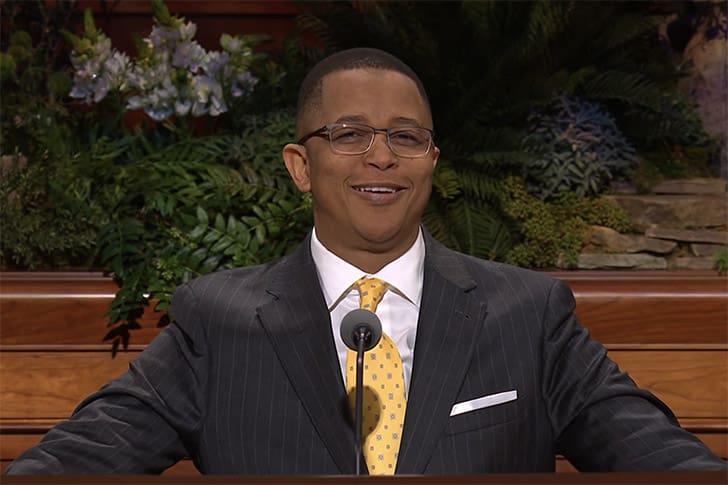
He Knows You by Name
By Elder Clement M. Matswagothata
Of the Seventy
My surname, Matswagothata, is from Botswana. In my home language it means “getting out of a difficult situation” or someone who can do hard things…
As much as my surname has brought hope and resilience to my family, I rejoice even more in the name of Jesus Christ, for in and through His name all who come unto Him can be saved. Even as Jesus Christ invites us to always remember Him and take upon ourselves His name, He also remembers us and knows each of us by name.
In the Old Testament, the Lord taught Moses this assuring truth: “I know thee by name.”
In Eden’s garden, He called Adam.
At the empty tomb, He called Mary.
On the road to Damascus, He called Saul.
And in the Sacred Grove, He called Joseph.
All by name.
And He knows you and calls you by name too—from crowded cities to quiet villages, in whatever language you speak. He hears, sees, and knows you.

Jesus Christ— the True Vine
Elder Ulisses Soares
Of the Quorum of the Twelve Apostles
Throughout His ministry, the Savior spoke on several occasions the sacred words “I am,” using sublime metaphors, to bear witness of who He eternally is—the great Jehovah of the Old Testament, the Son of God, the promised Messiah. Among these declarations is one of the most solemn and tender teachings of His ministry, spoken on the night preceding His suffering and death: “I am the true vine… ye are the branches: he that abideth in [Me], and I in him, the same bringeth forth much fruit: for without [Me] ye can do nothing”.
Through this beautiful and moving metaphor, the Savior teaches that He is the true, trusted, and essential source of spiritual nourishment for our souls. Through Him, we receive strength beyond our own to not only survive the challenges of life, but to grow and thrive. Through Him life becomes more hopeful and more joyful, and the fruits of the Spirit are manifested in us. Therefore, just as branches cannot bear fruit of themselves unless they remain connected to the vine, neither can we reach our full spiritual measure unless we abide in Him and His gospel.
Abiding in Christ is not an occasional or casual act; it is a constant, conscious, and sacred choice. It is allowing His holy teachings to abide in us, elevating our thoughts and governing our words in every setting—including the digital spaces where we so often interact—and purifying and consecrating our actions unto Him. It is letting our daily choices be guided by the covenants we have made with Him and allowing our lives to be directed by His loving and constant influence through the Holy Ghost. It is choosing to listen to His voice, and the voice of His servants, and follow what they teach, above all the enticing voices of the world.
Abiding in Christ does not remove the burdens of life, but through His grace they are made lighter, and our hearts are strengthened by the comfort and peace He promises. As we place ourselves in His loving care and take upon us His yoke, we receive the spiritual power to endure and overcome the trials, weaknesses, and sorrows of mortality—burdens often too heavy to bear without His redeeming help and healing influence.
One Million Strong: Seminary and Institute Reach Global Milestone

Photos courtesy of the Church Newsroom.
The Seminary and Institute program celebrated its 100 year anniversary at the beginning of this year. And just a few months later, they are celebrating another historic milestone, perhaps even more impressive. Worldwide enrollment in these programs has now reached more than 1 million students.
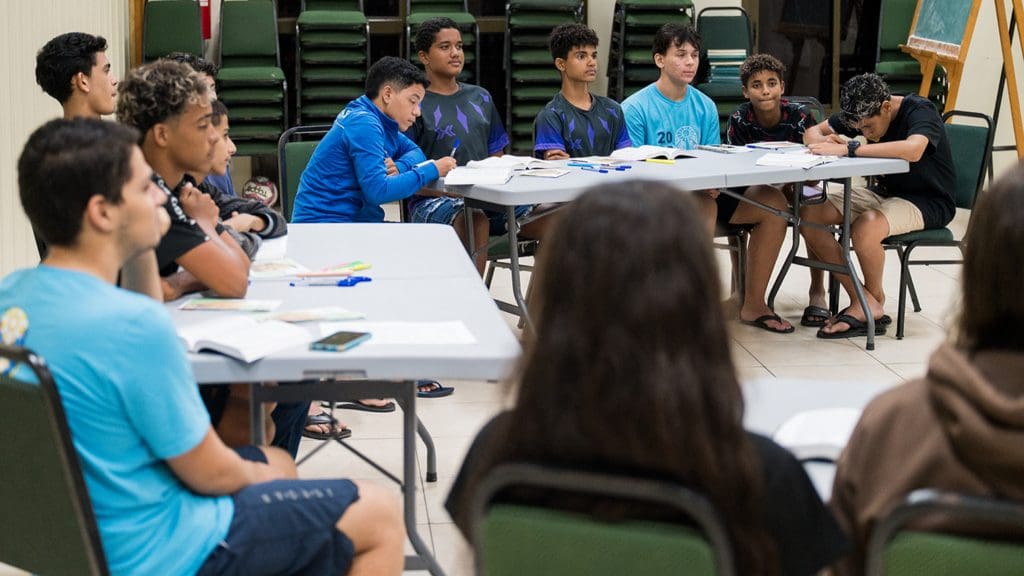
The most explosive enrollment growth occurred during the last two years, during which Seminary and Institute welcomed nearly 200,000 new students. And members of other faiths currently attending total around 75,000, a testament to the outreach of the vibrant young members.
During a recent devotional, Brother Chad H. Webb, administrator of Seminaries and Institutes of Religion, shared that “We are deeply grateful for parents, leaders, instructors, and especially our youth and young adults who are inviting others to learn about Jesus Christ.”
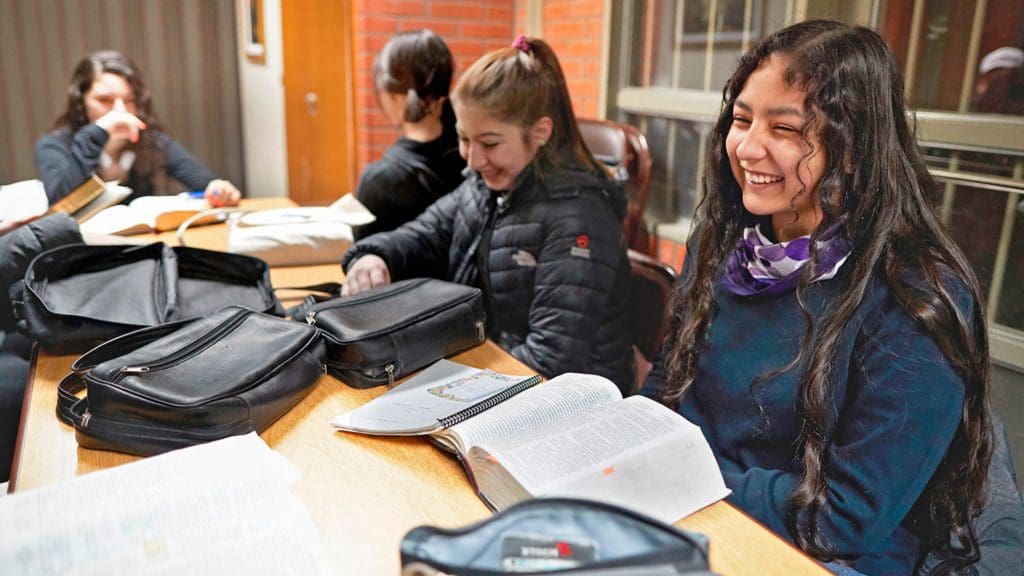
He continued, “We express our sincere gratitude to the Lord and to devoted disciples around the world for their love, their invitations, and their ministering efforts that are helping to gather and teach His children.”

Youth and young adults around the world are answering the call to “love, share, and invite” and their efforts are strengthening the Lord’s work in all parts of His vineyard.

During a devotional which aired in February, President Dallin H. Oaks promised six blessings to youth who choose to attend institute classes:
- Learn to distinguish truth from error,
- Build their relationship with Heavenly Father and His Son, Jesus Christ,
- Find direction and discover answers to life’s questions,
- Meet others to help them along the covenant path,
- Meet people to date and marry, and
- Prepare to love and lead like the Savior.
The Prophet also encouraged young adults to invite their friends to enjoy these same blessings.

Resources to Experience, Share Jesus Christ’s ‘Greater Love’ This Easter
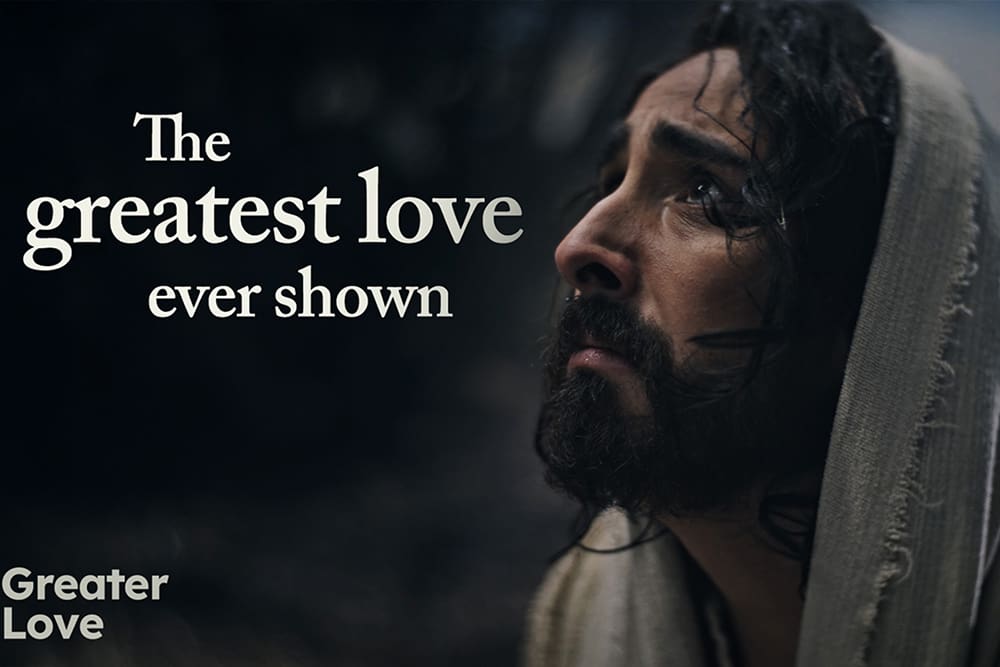
This spring, members of The Church of Jesus Christ of Latter-day Saints are invited to lean into a deeper, more intentional celebration of the Savior. The First Presidency has highlighted Palm Sunday, Easter, and General Conference as pivotal moments to reflect on the Atonement and Resurrection of Jesus Christ.
In a unique alignment of the calendar, Easter Sunday falls on the same weekend as General Conference—April 4-5—offering a rare opportunity to bridge the ancient miracle of the empty tomb with the modern guidance of living prophets.
Expanding Our Easter Focus
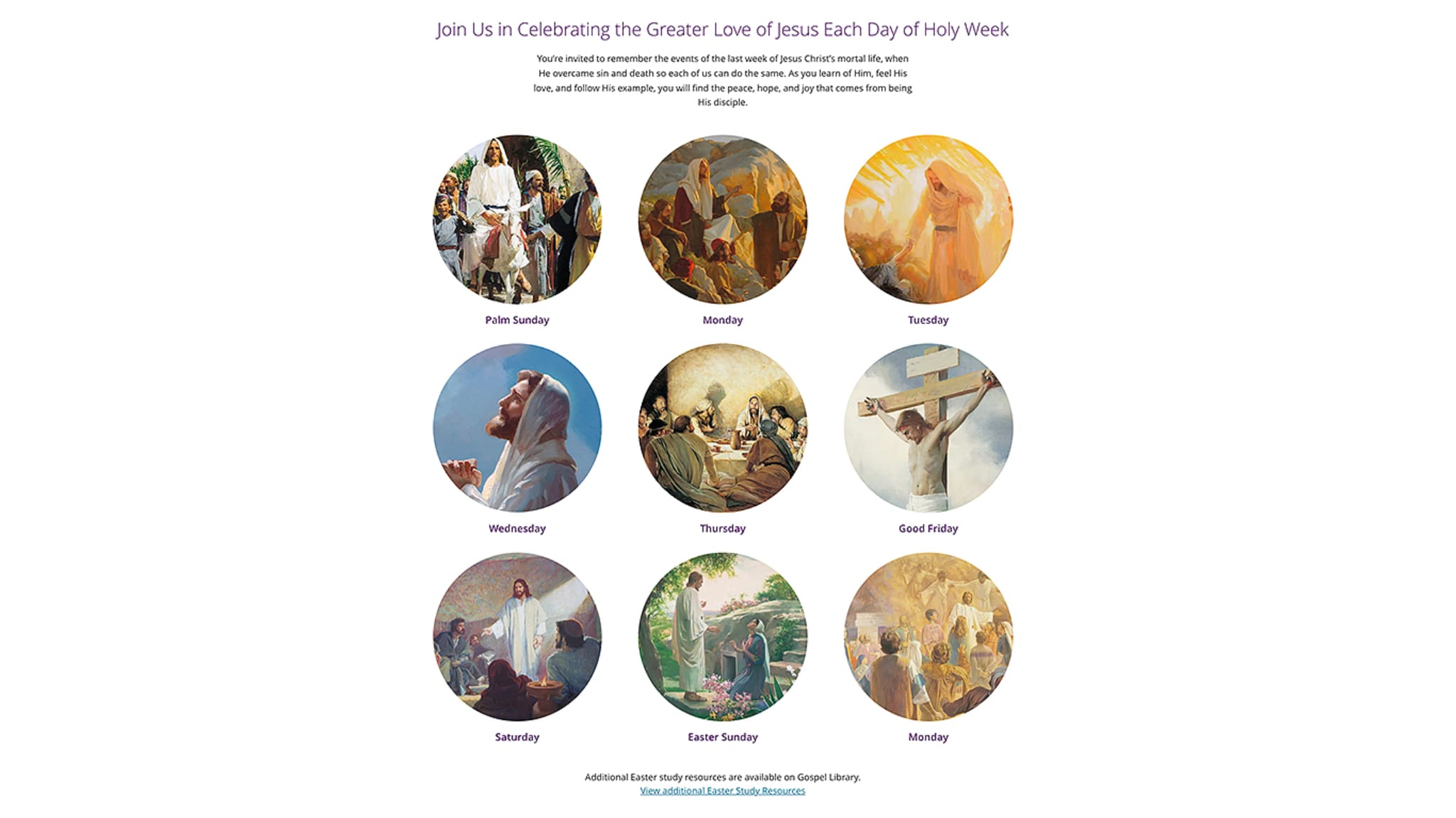
Much like the Christmas season, there is a growing movement within the Church to treat Easter as more than just a single Sunday. By extending our focus across a “Holy Week,” we can better emulate the “Greater Love” described in John 15:13.
The 2026 Easter initiative centers on the promise that through Christ, “all will live again.” Whether through the new “Greater Love for You” video (released March 1) or personal study, the goal is clear: to ensure no one feels forgotten and that everyone has the chance to experience a fullness of joy.
First Presidency’s Easter Message
In their recent Easter message, the First Presidency extended an invitation to “seek this Jesus of whom the prophets and apostles have written” (Ether 12:41) during the Easter season.
Key Dates for Your Calendar
The journey through this sacred season follows a beautiful arc of worship and study:
-
Palm Sunday (March 29): Wards worldwide will host a special one-hour worship service focused entirely on the Savior. This is designed as a “visitor-friendly” event, perfect for inviting friends and neighbors to join in a Christ-centered meeting.
- Holy Week (March 29 – April 5): A time for deep immersion into the Savior’s final teachings during His mortal ministry.

Holy Week study experience available on Easter.ChurchofJesusChrist.org focuses on the Savior’s teachings during the last week of His mortal ministry. This resource is also highlighted in Gospel Library and linked in “Come, Follow Me.”
-
General Conference (April 4–5): This year’s conference marks a historic milestone. We will participate in a solemn assembly to sustain a new First Presidency and two new members of the Quorum of the Twelve Apostles: Elder Gerard Caussé and Elder Clark Gilbert. We will also hear the first conference address from President Dallin H. Oaks as President of the Church.
Note: Per the November 2025 announcement, starting this April 2026, General Conference will no longer include a Saturday evening session.
Resources for Sharing and Study
As requested, here are the official resources provided by the Church to help you enhance your personal experience and invite others to learn more:
-
Easter.ChurchofJesusChrist.org: Launched February 22 in 10 languages, this site is the hub for Christ-centered Easter content, including music, videos, FAQs, and children’s resources.
-
Seasonal Resources for Leaders: Accessible via the main Easter site, leaders can find Palm Sunday service ideas, invitation templates, and tools for customized meetinghouse banners.
-
Social Media: Look for the “Greater Love for You” video on official Church channels to resharing on your personal or organizational pages.
-
Meetinghouse Signage: To help visitors understand why buildings may be empty during the April 4-5 weekend, councils can download a specific poster (available on the resource site) to display on chapel doors.
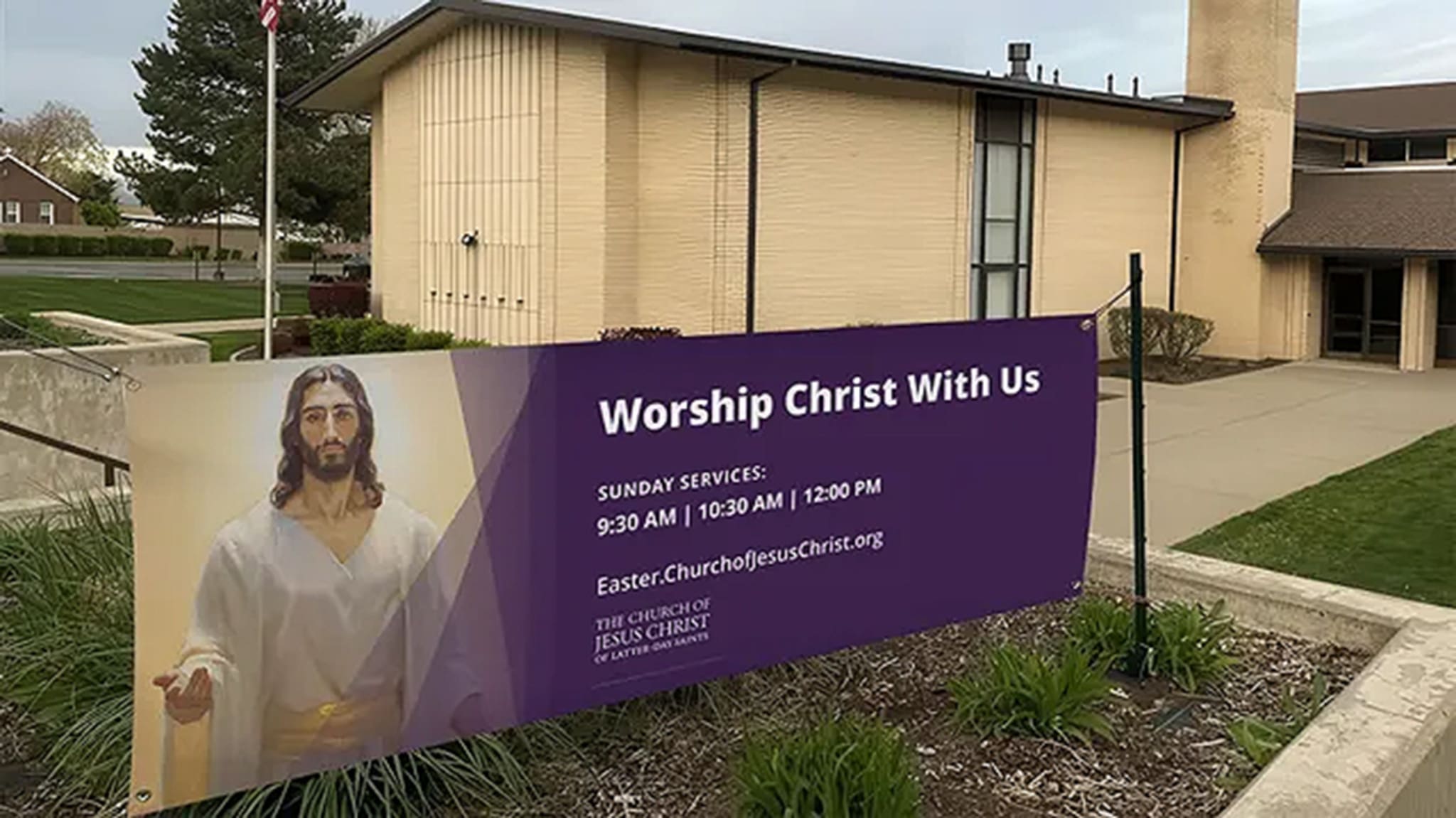
An example of a meetinghouse banner used to invite community participation with local worship services.
-
Outdoor Banners: The online tool allows wards to create customizable outdoor signage with specific meeting times and languages to welcome the local community.
-
Activity Sharing: Stake and ward leaders can use the Activity Sharing tile in the Member Tools app to update their public-facing ward web pages with local Easter activities.
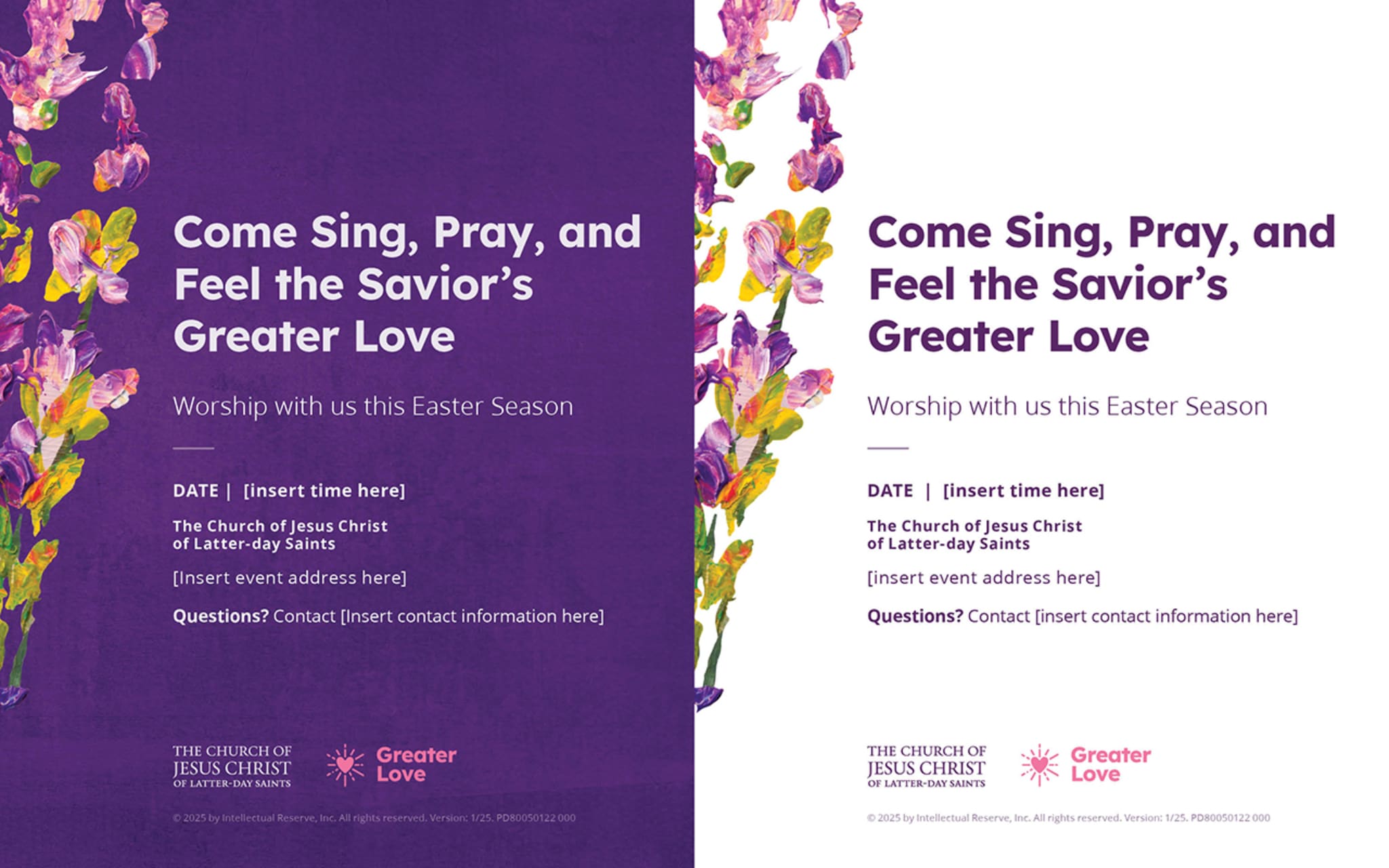
An example of a fillable Easter invitation available to local leaders for inviting others to participate in various Easter activities.
Elder Cook Counsels BYU Students to Follow the Prophets to Navigate the World of AI
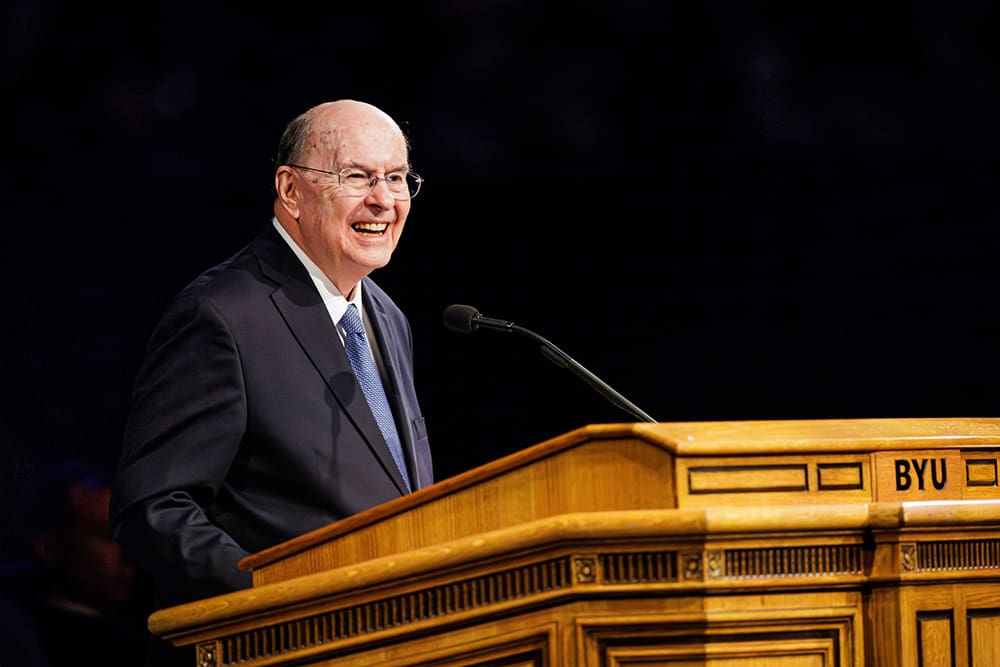
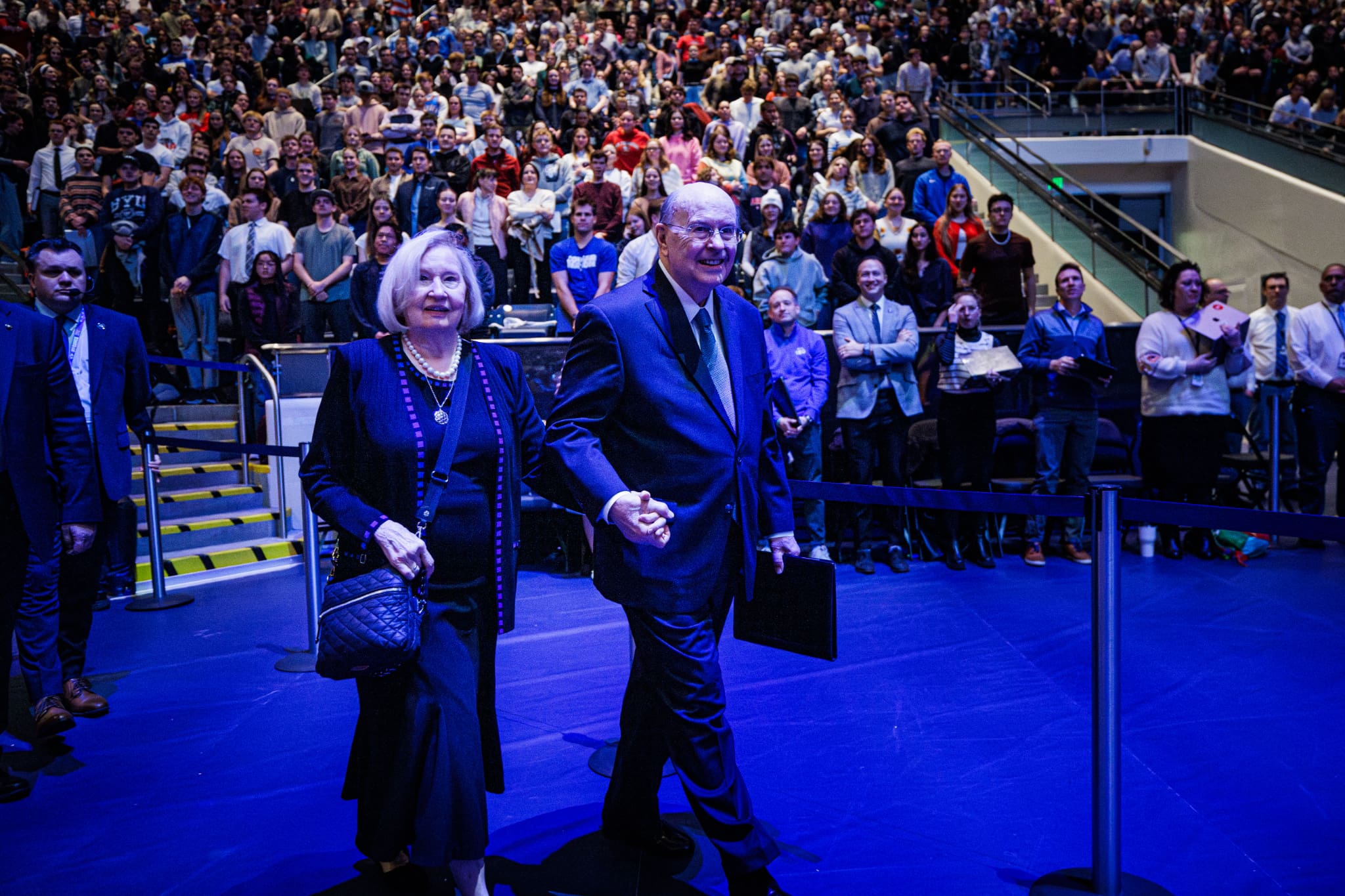
Elder Quentin L. Cook challenged Brigham Young University students on Tuesday to increase their spirituality to better navigate the world of artificial intelligence.
“Choose truth when deception is easy,” the Apostle of The Church of Jesus Christ of Latter-day Saints told students gathered in the Marriott Center in Provo, Utah, on Tuesday, March 3, 2026. “Slow down enough to listen to the Spirit and allow Him to direct you. We must all learn to use technology as a servant, not a master. The future of the Church and our very civilization depend on members and individuals who have deep faith, moral courage, and the ability to navigate an increasingly complex world.”
Elder Cook emphasized a 2018 teaching from President Russell M. Nelson that was reaffirmed last month at the same BYU pulpit by his successor, President Dallin H. Oaks: “In coming days, it will not be possible to survive spiritually without the guiding, directing, comforting, and constant influence of the Holy Ghost.”
“Listen to and follow the prophet, filter out the loud and confusing noise, and follow the Spirit,” Elder Cook said. “In this uniquely challenging time as we enter the artificial intelligence world, you would be wise to study the scriptures and follow the Lord’s prophet.”
Elder Cook placed his counsel in the broader context of the accelerating shift now underway in society. He noted that BYU’s 150‑year history has spanned the agricultural, industrial, and information ages — and that today’s students are now stepping squarely into what he called the “artificial intelligence age.” This new era, he explained, is marked not just by advanced computing power but by systems and algorithms capable of influencing attention, belief, and behavior.
These conditions, he said, heighten the need for discipleship rooted in spiritual clarity and moral agency.
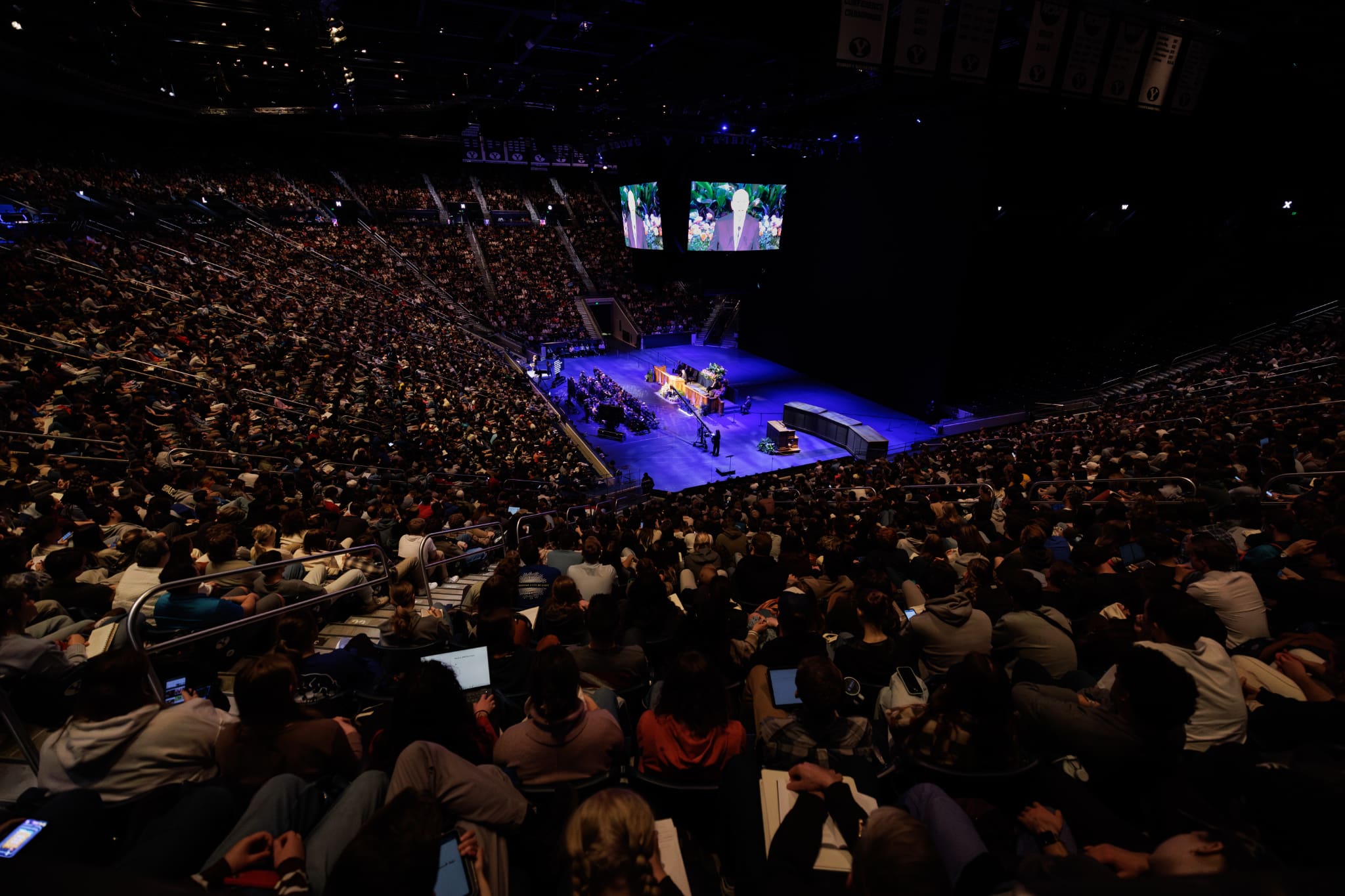
He also spoke of the opportunities that come when disciples use technology to advance the Lord’s work. Missionary efforts and temple work, he said, have grown at an “almost exponential” pace as digital tools have made it easier to share the gospel and to gather Israel among the living and the dead. Elder Cook emphasized that innovations in information technology — when used under the influence of the Spirit — can strengthen faith, expand service, and help fulfill divinely appointed responsibilities.
Elder Cook warned, however, that the same technologies that amplify good can also magnify confusion or compromise spiritual sensitivity. He pointed to past examples, such as early film depictions of alcohol and cigarette use, to illustrate how cultural messaging can subtly normalize behaviors contrary to revealed doctrine.
Prophetic guidance, he taught, has consistently helped the Saints recognize those dangers early. In the AI age, he added, disciples will likewise need to cultivate discernment to identify voices and influences that obscure eternal truth.
Elder Cook said this moment calls for deliberate, Spirit-led discipleship. He encouraged students to deepen their character and accountability to God.
“Let me be clear,” he emphasized. “We want you to be successful in all aspects of your life — but not at the expense of faith and family.”
The Apostle’s message echoes the Church’s recent counsel on artificial intelligence, including updates in the “General Handbook” that encourage responsible, transparent use of AI and caution against tools or practices that could mislead or erode trust. Elder Cook’s invitation to “choose truth when deception is easy” and to let technology remain a servant rather than a master reinforces that guidance.
Elder Cook concluded by encouraging students to persevere through difficulty, deepen their discipleship, build character, and rely on the Spirit so they can contribute to the Lord’s work with confidence in an increasingly complex world.
“Please do not be discouraged as we all face these unique times,” he said. “I often contemplate the challenges that our early members in this dispensation faced in Kirtland, Missouri, Nauvoo, and crossing the plains. More importantly, let us never forget that it was not easy for the Savior in the volatile world during His mortal sojourn — especially in His final hours as He accomplished the Atonement.”
Bowling for a Strike at BYU and Beyond
This article was first published by Public Square Magazine. Visit their site here.
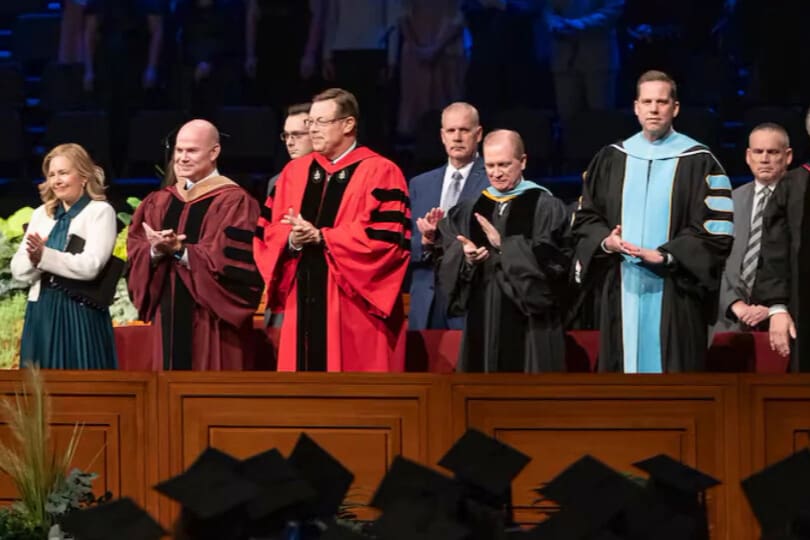
Attack dog. Enforcer. Culture warrior. These labels and more have been used to describe Elder Clark G. Gilbert, newly called apostle of The Church of Jesus Christ of Latter-day Saints. He has also been described as a “high-profile defender of doctrinal orthodoxy” and a proponent of “retrenchment.”
What’s all the fuss about? As Commissioner of Church Education, Elder Gilbert is accused of instituting a variety of measures to ensure that professors at BYU support the doctrine of the Church that pays their salaries—specifically on issues related to marriage, family, and gender. According to some, these measures have ushered in a culture of fear among faculty who have reservations about Church doctrine or policy. Other concerns have been mentioned, but this seems to be the heart of the issue.
Before I say a few words in defense of Elder Gilbert, I want to take a moment and recognize the difficult space that many Latter-day Saint scholars inhabit. The Church’s views on family, sexuality, and gender are (to put it gently) not popular in academia. Despite stated aspirations to diversity and inclusivity, there isn’t much room in academia for researchers who vocally promote the Church’s positions on family life. I have seen this first-hand in my nearly two decades in academic life. Those who support marriage as the union of a man and a woman and claim that sexual relations should only happen in such marriages are castigated as out of touch, prudish, ignorant, hateful, and bigoted. It’s hard to get along in your profession when your colleagues view you as little better than a racist.
The implicit and explicit pressure to fall in line with the prevailing orthodoxy can be suffocating.
There are intellectual resources to defend the Church’s positions on these matters (more on this below), but the opposition to such arguments is so loud, so confident, and so strident that often it’s easier to just keep quiet. Latter-day Saint scholars are generally trained in the same graduate programs, go to the same academic conferences, and are under the same pressure to publish in top journals as scholars who don’t belong to the Church. It’s hard to not imbibe the norms, expectations, assumptions, and conclusions of the culture, including revisionist views about gender, sexuality, and family. The implicit and explicit pressure to fall in line with the prevailing orthodoxy can be suffocating. Even Latter-day Saint scholars who want to resist the prevailing academic culture on these issues can feel bewildered about how to do so.
In an environment where so much of your professional success is influenced or determined by people who are hostile to the Church’s views, I can see why many people would feel concerned about Elder Gilbert’s efforts to align the faculty with the doctrine of the Church.
At the same time, I, like many other faculty and students, choose to study at BYU precisely because of its doctrine. I want to be at a university where I can “seek learning, by study and also by faith” (D&C 88:118). As Elder Gilbert has emphasized many times, institutional drift in academia is real, and many universities that start with religious aspirations end up abandoning them later. It’s tempting to say that this is the standard arc for religious universities in the United States. Believing that BYU’s distinctive religious heritage can be maintained without intentional efforts to preserve it is naive.
But perhaps it is not possible to run a quality university that is committed to religious beliefs? Indeed, many of the criticisms of Elder Gilbert presuppose that it is inherently wrong to try to get professors to align with Church teachings. The critique takes two forms: first, that any attempt to align (or more darkly, “impose”) views about any topic at a university is wrong; and second, that it is wrong for BYU to expect faculty to support the Church’s doctrine on marriage, family, and gender.
The first view is widespread but breaks down upon inspection. As I have explained in detail, it is neither possible nor desirable for a university to be completely devoid of commitments. Without well-known and agreed-upon standards, university life would descend into a cacophony of competing claims, none of which could be evaluated as better than any of the others. The scholarly practice of peer review presupposes that practitioners in the discipline know what counts as “legitimate” scholarship and can reject submissions that do not meet disciplinary standards. (A more blatant example of institutional gatekeeping would be difficult to imagine.) As I wrote in the previously mentioned article:
The point of academic study is to produce knowledge. This search is a winnowing process, as academic ‘disciplines’ (note the word) seek to separate the wheat of truth from the chaff of unsupported opinion and bias. Good scholars are committed to getting it right, which presupposes that truth is real and knowledge is possible, which in turn is premised on a host of philosophical and other presuppositions. Academic freedom cannot mean the freedom to be supported in whatever one believes; rather, it is the freedom to seek truth, which means being accountable to reality.
It may come as a surprise to some readers, but some people actually want to go to a university that includes religious beliefs among its commitments (see Elder Gilbert’s recent article on this in The Chronicle of Higher Education). A recent essay by prominent Catholic sociologist Christian Smith explains that he chose to teach and research at Notre Dame because he wanted more direct engagement with the Catholic intellectual tradition. But after 20 years at Notre Dame, Smith decided to leave because (in his view) the university was not living up to its potential. He writes: “When I came to Notre Dame, I believed the university was serious about its Catholic mission. I tried to make my contribution, I think with some success. But I also saw much of the institution absorbed by other interests that, in my view, were often irrelevant to or at odds with the Catholic mission.” I don’t have enough information to know if he is right about Notre Dame, but many people want something other than the standard secular university experience. In general, the world is enriched, not diminished, by religious universities that pursue truth in a distinctive way.
The second critique—that it is wrong to expect BYU faculty to support the Church’s doctrine on marriage, family, and gender—is in my view the occasion for most of the angst directed at Elder Gilbert. There would be a lot less complaining if he had, for example, taken steps to ensure that faculty at BYU had a certain view about environmental stewardship. But marriage, family, and gender? Who does Elder Gilbert think he is?
To be clear, as Commissioner of Church Education, Elder Gilbert wasn’t some rogue actor trying to sneak something past Church headquarters. The family proclamation may be controversial in some quarters, but it is firmly established as Church doctrine. It would be hard to make this point more emphatically than President Dallin H. Oaks recently did: “Those who do not fully understand the Father’s loving plan for His children may consider this family proclamation no more than a changeable statement of policy. In contrast, we affirm that the family proclamation, founded on irrevocable doctrine, defines the mortal family relationship where the most important part of our eternal development can occur.”
Some people actually want to go to a university that includes religious beliefs among its commitments.
Some critics might be concerned that Elder Gilbert’s efforts to align the faculty with the Church’s teachings diminish academic freedom. In my view, this gets it exactly wrong. There are hundreds of universities in the United States where revisionist scholarship about marriage, family, and gender is welcome and rewarded. The orthodoxy on these issues is clear and intolerant. There is a much smaller number of universities where one can pursue scholarship that is aligned with the family proclamation. If BYU became just like other universities, there would be less academic freedom than there currently is. (Attentive readers will realize that I’m using “academic freedom” in two senses here, individual and institutional, both of which are explained in detail in BYU’s Academic Freedom Policy.)
Though debates over marriage, sexuality, and gender are often framed as conflicts between “rigid defenders of orthodoxy” and proponents of love and authenticity, the reality is not so simple. At the heart of these conflicts are deep disagreements over personal identity, sexual morality, the meaning of human life, and the common good. There are many resources available to Latter-day Saints and others to think through these issues carefully. In my view, these are not issues on which one has to “blindly accept” Church teachings; the assumptions that lead to revisionist conclusions about marriage, gender, and sexuality are highly contestable.
Which brings us back to the idea of Elder Gilbert as a “culture warrior” or an “attack dog.” It’s strange that people on only one side of these controversies get called names like this—even when the university in question is clearly owned and operated by the Church. As my former teacher Robert P. George writes in a related context, “There is a culture war, alright, but supporters of the sanctity of human life and the conjugal conception of marriage are not the aggressors in it. It was people on the other side–those who reject sanctity of life principles and the idea of marriage as a conjugal union–who wanted to change longstanding legal and cultural norms.” In my view, Elder Gilbert took reasonable steps to ensure that BYU students get the education that is advertised in the BYU mission and aims, and I’m grateful for his efforts.
In a recent interview, Elder Gilbert recounts an important conversation he had with President Holland. Both the mandate from President Holland and his ultimate hope for BYU seem like a good way to conclude:
I remember I was talking to President Holland, and he was bemoaning that he could feel this drift happening to the university. And he’s like, ‘What have they done with our school that we love so much?’ And I felt awkward. I wasn’t even the commissioner yet. And I felt like I needed to defend them. And I said, ‘Well, President Holland, you know, we have the honor code, we have devotionals, we have religion classes, we have the academic freedom policy.’ And I said, ‘They’re like bumper lanes protecting us from bowling into the gutter.’ And he didn’t even let me finish. And he said, ‘That’s very different than bowling for a strike.’ And he said, ‘We need to bowl for a strike at BYU.’
Elder Clark G. Gilbert Called as Newest Apostle

Videos and photos courtesy the Church Newsroom. To visit their site, CLICK HERE.
The Church of Jesus Christ of Latter-day Saints announced on Wednesday, February 11, 2026, that Elder Clark G. Gilbert has been called as the newest member of the Quorum of the Twelve Apostles. He was ordained on Thursday, February 12, by President Dallin H. Oaks, assisted by the other members of the First Presidency and the Quorum of the Twelve Apostles.
Elder Gilbert’s call marks a sacred new chapter in a lifetime of discipleship, leadership, and devotion to helping others recognize their divine worth and eternal potential.
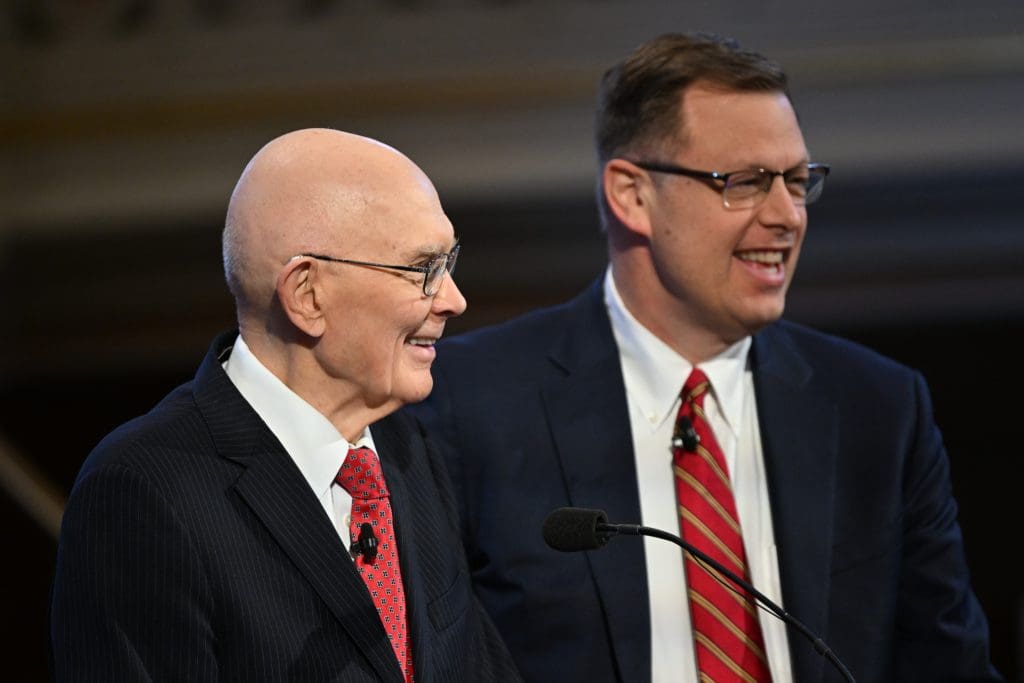 Born on June 18, 1970, in Oakland, California, Clark Gilbert grew up with a love of learning and faith. He married Christine Calder in 1994, and together they are the parents of eight children. Family life has long been central to his ministry and message—a living expression of his belief in eternal identity and purpose.
Elder Gilbert received his undergraduate degree from Brigham Young University before pursuing advanced degrees from Stanford University and Harvard University. His academic path eventually led him back to Harvard, where he served as a professor of entrepreneurial management.
His professional experience later expanded into media leadership when he became the chief executive officer of the Deseret News and Deseret Digital Media. In that role, he advocated for journalism and digital communication that strengthened families, faith, and civic understanding.
In 2015, Elder Gilbert was appointed president of BYU–Idaho, where he emphasized both spiritual development and innovative educational models designed to serve students from diverse circumstances. He was subsequently named the inaugural president of BYU–Pathway Worldwide, an organization created to expand access to higher education across the globe. Under his leadership, BYU–Pathway grew rapidly, providing flexible, faith-based educational opportunities to tens of thousands of students in more than 180 countries around the world.
 On April 3, 2021, he was sustained as a General Authority Seventy of The Church of Jesus Christ of Latter-day Saints. In that calling, he later served as Commissioner of the Church Educational System, overseeing the Church’s vast network of universities, seminaries, and institutes. In each of these roles, his focus remained remarkably consistent: helping individuals discover who they truly are as children of God.
That theme resonated powerfully in his October 2021 general conference address titled “Becoming More in Christ: The Parable of the Slope.” In recounting a conversation with a nationally recognized educator, Elder Gilbert described explaining the success of BYU–Pathway Worldwide. He initially outlined the organization’s retention programs and mentoring efforts—proven educational practices that support student achievement. But then he offered something deeper.
“These are all good practices,” Elder Gilbert explained to the educator, “but the real reason our students are progressing is because we teach them their divine potential. Imagine if your whole life, you were told you could never succeed. Then consider the impact of being taught that you are an actual son or daughter of God with divine possibility.”
He recalled that the educator paused before replying simply, “That’s powerful.”
Those two words capture much of what has characterized Elder Gilbert’s life and ministry. In classrooms, boardrooms, devotionals, and conference pulpits, he has testified that true transformation begins with identity—an understanding that every son and daughter of God carries divine capacity within.
FEATURES