




Updated Church Handbook Expands Leadership Opportunities for Women in Sunday School
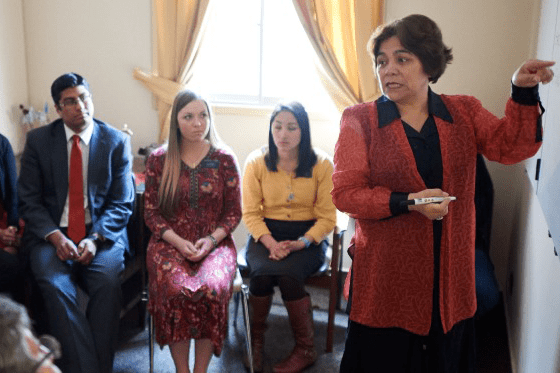
A recent update to the General Handbook of The Church of Jesus Christ of Latter-day Saints has opened new leadership opportunities for women at the ward level, allowing bishops to call either a man or a woman to serve as ward Sunday School president.
In a letter sent to Church leaders worldwide on March 18, 2026, the First Presidency and Quorum of the Twelve Apostles explained the change.
“The First Presidency and Quorum of the Twelve Apostles have determined that, effective immediately, the bishop may call a man or a woman to serve as ward Sunday School president.”
Under the updated guidelines, if a man is called as Sunday School president, he must hold the Melchizedek Priesthood and his counselors and secretary must be male members of the ward. If a woman is called as Sunday School president, her counselors and secretary will be female members of the ward.
Church leaders emphasized that local leaders should seek inspiration when extending such callings.
“Local leaders should seek the guidance of the Spirit in determining whom to call.”
New Possibilities in Wards Worldwide
With nearly 32,000 congregations worldwide, the change means that thousands of women could potentially serve in Sunday School presidencies for the first time.
“In any given ward, Sunday School presidencies may at times be composed of men and at other times of women, based on circumstances in the unit and the inspiration of leaders,” the First Presidency stated.
The change is reflected in the March 18 update to the Church’s General Handbook. The revised material is now available online and will appear in the Gospel Library app within the next several days.
Strengthening Gospel Teaching
Sunday School General President Paul V. Johnson noted that the adjustment expands the options bishops have when considering who can best strengthen gospel learning in their congregations.
“This important change gives bishoprics additional options as they prayerfully consider who should lead the effort of teaching and learning in their wards,” Johnson said.
He added that when the current Sunday School general presidency was called in 2024, the First Presidency invited them to help improve teaching and learning throughout the Church.
“There are many capable women and men who can help strengthen gospel instruction and foster spiritual growth,” he said.
Part of a Broader Pattern
The change comes during a period of continuing adjustments designed to strengthen home-centered gospel learning and ward participation.
In 2018, the Church shifted to a two-hour Sunday meeting schedule, with Sunday School classes now held twice a month in conjunction with the Come, Follow Me curriculum. That adjustment emphasized gospel study both in the home and in church.
Over the past decade, women have also been given expanded opportunities to participate in Church service and leadership in various ways. These include serving as official witnesses for baptisms and temple sealings, participating in Church executive councils, and serving as chaplains and sister training leaders in missionary work.
Church leaders have consistently emphasized the importance of women’s voices in ward councils, where they counsel with bishops and priesthood leaders to help guide the work of the ward.
Continuing Roles of Service
Women already lead the worldwide organizations of Relief Society, Young Women, and Primary at ward, stake, and general levels. The new handbook adjustment provides an additional way for women to contribute their leadership and teaching gifts in ward Sunday School.
Stake Sunday School presidencies and the general Sunday School presidency will continue to be filled by men who hold the priesthood.
Still, the new option for ward Sunday School presidencies reflects a growing recognition of the many faithful women and men who help strengthen teaching, learning, and spiritual growth in congregations across the Church.
As bishops seek guidance from the Spirit, the updated handbook provides additional flexibility to place capable leaders where they can best bless the members of their wards.
2026 Youth Theme: “Walk with Me”

The Church has announced that the youth theme for 2026 is “Walk with Me” (see Moses 6:34).
Corresponding resources (including the theme song, additional music, sheet music, and downloadable artwork) will begin publishing at youth.ChurchofJesusChrist.org in some languages on October 28, 2025. Additional languages will become available after October 28.
Additional resources will be available in the January 2026 issue of the For the Strength of Youth magazine.
Parents and youth leaders are encouraged to teach principles from the theme at home and at church throughout the year. In addition, youth can use the theme as a topic for sacrament meeting talks. The theme can also provide a focus for youth activities, including camps, youth conferences, and devotionals. The theme will be emphasized during For the Strength of Youth (FSY) conferences worldwide.
Each year’s youth theme comes from the book of scripture studied with that year’s Come, Follow Me—For Home and Church curriculum. In 2026, it will focus on study of the Old Testament.
Here is a list of the scriptures that have been used as themes over the years:
2026
“Walk with Me” (Moses 6:34).
2025
“Look unto Christ” (Doctrine and Covenants 6:36)
2024
“I am a disciple of Jesus Christ.” (3 Nephi 5:13)
2023
“I can do all things through Christ which strengtheneth me.” (Philippians 4:13)
2022
“Trust in the Lord with all thine heart; and lean not unto thine own understanding. In all thy ways acknowledge him, and he shall direct thy paths.” (Proverbs 3:5–6)
2021
“Wherefore, be not weary in well-doing, for ye are laying the foundation of a great work. And out of small things proceedeth that which is great. Behold, the Lord requireth the heart and a willing mind” (Doctrine and Covenants 64:33–34).
2020
“And it came to pass that I, Nephi, said unto my father: I will go and do the things which the Lord hath commanded, for I know that the Lord giveth no commandments unto the children of men, save he shall prepare a way for them that they may accomplish the thing which he commandeth them” (1 Nephi 3:7; emphasis added).
2019
“If ye love me, keep my commandments.” (John 14:15)
2018
“Learn of me, and listen to my words; walk in the meekness of my Spirit, and you shall have peace in me.” (Doctrine and Covenants 19:23)
2017
“If any of you lack wisdom, let him ask of God, that giveth to all men liberally, and upbraideth not; and it shall be given him. But let him ask in faith, nothing wavering. For he that wavereth is like a wave of the sea driven with the wind and tossed” (James 1:5–6, emphasis added)
2016
“Wherefore, ye must press forward with a steadfastness in Christ, having a perfect brightness of hope, and a love of God and of all men. Wherefore, if ye shall press forward, feasting upon the word of Christ, and endure to the end, behold, thus saith the Father: Ye shall have eternal life.” (2 Nephi 31:20, emphasis added)
2015
“O ye that embark in the service of God, see that ye serve him with all your heart, might, mind and strength, that ye may stand blameless before God at the last day” (D&C 4:2).
2014
“Yea, come unto Christ, and be perfected in him, and deny yourselves of all ungodliness; and if ye shall deny yourselves of all ungodliness, then is his grace sufficient for you, that by his grace ye may be perfect in Christ; and if by the grace of God ye are perfect in Christ, ye can in nowise deny the power of God” (Moroni 10:32).
2013
“Wherefore, stand ye in holy places, and be not moved, until the day of the Lord come; for behold, it cometh quickly, saith the Lord” (D&C 87:8).
2012
“Arise and shine forth, that thy light may be a standard for the nations” (D&C 115:5).
2011
“We believe in being honest, true, chaste, benevolent, virtuous, and in doing good to all men; indeed, we may say that we follow the admonition of Paul—We believe all things, we hope all things, we have endured many things, and hope to be able to endure all things. If there is anything virtuous, lovely, or of good report or praiseworthy, we seek after these things” (Articles of Faith 1:13).
2010
“Be strong and of a good courage; be not afraid, neither be thou dismayed: for the Lord thy God is with thee whithersoever thou goest” (Joshua 1:9).
2009
“Be thou an example of the believers, in word, in conversation, in charity, in spirit, in faith, in purity” (1 Timothy 4:12).
2008
“Be Steadfast and Immovable” (Mosiah 5:15)
2007
“Let Virtue Garnish Thy Thoughts” (D&C 121:45)
2006
“Arise and Shine Forth” (D&C 115:5) Repeated in 2012
2005
“A Great and a Marvelous Work” (1 Nephi 14:7)
2004
“Search, Pray, Believe” (D&C 90:24)
2003
“Be Steadfast in Christ” (2 Nephi 31:20) Repeated in 2016
2002 (first year for a global theme)
“Stand Ye in Holy Places” (D&C 87:8) Repeated in 2013
What impresses you as common threads through these scriptures?
Come Follow Me Podcast #8: “The Worth of Souls is Great”, Doctrine and Covenants 18

Scot
The Doctrine and Covenants is a book full of affirmations that individuals count—that each of us is important in the sight of God. Message after message is to individuals. Some we have heard of like Oliver Cowdery or Hyrum Smith, and some to less familiar people like Leman Copley or Northrop Sweet, but then the Lord often adds this note: What I say unto one, I say unto all (see for example D&C 1:2; D&C 11:27; D&C 25:16; D&C 61:18). But if that is not enough to let us know WE count; He gives us these 12 words in our lesson this week—and I memorized this scripture 45 years ago: “Remember the worth of souls is great in the sight of God.” (D&C 18:10)
Maurine
Welcome to Meridian Magazine’s Come Follow Me Podcast. We are Scot and Maurine Proctor and are so happy to be with you again. Today we are studying Section 18 of the Doctrine and Covenants.
Scot
It helps to know the setting and context of the things we are studying. As we both taught institute for so many years we discovered that many members of the Church do not know the Doctrine and Covenants and fewer knew the details of the history of the Church. Isn’t it wonderful we get to talk about these things each week together?
Remember, the translation of the Book of Mormon is now being completed in Peter and Mary Whitmer’s home in Fayette, Seneca County, New York. About 70 percent of the book had been translated in Joseph and Emma’s home in Harmony, Pennsylvania and the final 30 percent was done in the Whitmer home in Fayette.
Maurine
That’s right—and as Joseph and Oliver are completing the translation, they continue to have questions and come upon things they don’t understand. You have to remember, Joseph is the head of the dispensation of the fulness of times, but he is also in training. He had at least 22 visits from the angel Moroni—that we know of—and Joseph “received instruction and intelligence from [Moroni] at each of [their] interviews, respecting what the Lord was going to do, and how and in what manner his kingdom was to be conducted in the last days.” (see Joseph Smith History 1: 54) We don’t have transcripts of those interviews, but just imagine all that must have been transmitted from Moroni and other angels to train Joseph and school him in how to establish the kingdom of God on the earth in these last days, because this kingdom is a kingdom of order and precision and it had to be set up properly.
Scot
It’s very exciting. We do have record of every head of all the dispensations coming to Joseph during the Restoration—surely bringing their specific keys and bestowing them upon him. That means Michael, who is Adam, and Enoch and Noah and Abraham and Moses and John the Baptist and, of course, the Savior Himself came many times. In fact, we have documented at least 56 different heavenly beings coming to Joseph in no less than 85 or 86 visits. This is serious business—setting up THE kingdom of God upon the earth again after it was lost. And I love how President Nelson has reminded us that the Restoration is ongoing—it continues to unfold. Revelations continue to come. The Lord continues to do His work.
Maurine
President Nelson has quoted D&C 42:61 a number of times recently which says, “If thou shalt ask, thou shalt receive revelation upon revelation, knowledge upon knowledge, that thou mayest know the mysteries and peaceable things—that which bringeth joy, that which bringeth life eternal.” And, clearly President Nelson has been asking and receiving continuing revelation.
Now, among those revelations a major assignment was given to Oliver Cowdery and David Whitmer—they are to seek out and find the twelve apostles! Now, mind you, the quorum would not be organized until February 14, 1835—still more than 5 ½ years from the assignment. But with Martin Harris joining in the search—thus, the Three Witnesses of the Book of Mormon—these brethren were watching for these special 12 men.
Scot
Here’s a spoiler alert from a future podcast in September of this year—the initial search for the twelve began after the reception of what we now call section 18 of the Doctrine and Covenants, but the final decision for the members of that very first quorum of the twelve and for the quorum of the seventy was made after Zion’s Camp March—which took place in May and June of 1834. Nine of the twelve came from that group of 205 men, and ALL of the Seventy came from that group. The Prophet Joseph said, “[God] could not organize his kingdom with twelve men to open the gospel door to the nations of the earth, and with seventy men under their direction to follow their tracks, unless he took them from a body of men who had offered their lives, and who had made as great a sacrifice as did Abraham. Now, the Lord has got his Twelve and his Seventy.” (History of the Church 2:182)
Maurine
The Twelve Apostles are not ordinary men. Yes, they were born in normal circumstances and raised by regular families and looked pretty ordinary in those early days, but there is something about them that is different—and they came with it from the pre-mortal realms. The Lord Himself gave instructions to Oliver Cowdery and David Whitmer as to how to recognize these men.
…and the Twelve shall be my disciples, and they shall take upon them my name; and the Twelve are they who shall desire to take upon them my name with full purpose of heart.
28 And if they desire to take upon them my name with full purpose of heart, they are called to go into all the world to preach my gospel unto every creature.
29 And they are they who are ordained of me to baptize in my name…
38 And by their desires and their works you shall know them. (D&C 18: 27-29; 38)
Scot
These are some of their qualities and attributes but there are more. Maurine, you had the privilege of associating with a number of the Twelve before they were called. Henry B. Eyring was your bishop when you lived in Palo Alto. L. Tom Perry was your stake president in Boston. Jeffrey R. Holland was your institute teacher when you were at Harvard and Neal A. Maxwell mentored you when you were at the University of Utah. What did you observe about these men long before they were apostles?
Maurine
I don’t know why it is, but in my young life I just happened to have interaction with these four men, years before they became apostles, and yet all four captured my attention because of the love and spirit that they carried that were truly remarkable. Of course, I didn’t know that they would be called to be apostles, (I didn’t know that it was the Jeffrey Holland or the Neal A. Maxwell) but I knew there was something about each of them that helped me feel the Spirit. Henry B. Eyring was my bishop, only for a short time, but his warmth and love of the gospel was radiant. I felt it. I thought I had never met anyone like him.
Then when I was in graduate school, L. Tom Perry was my stake president, and I was in awe as I watched him enter the chapel at stake conference. He took a very long time making his way from the chapel door to the pulpit because he had a personal greeting of love for each person. I watched him across the chapel, greet each one as if they were the most special person in the world to him, and I remember wondering, “Who is this person with such a gift of love?
I heard Jeffrey R. Holland speak for the first time when I was a volunteer at a Latter-day Saint girls’ camp in New England and he was attending Yale. As he spoke, I felt the Spirit so keenly I wished to just pull myself aside and bask in it for a while. Later he became my Institute teacher, and my mind was alive and expanded as he taught the gospel. He was the Jeffrey R. Holland then that we have come to know as Elder Holland.
Finally, Neal A. Maxwell. As the vice-president of the University of Utah, he gave an institute fireside and after, among a horde of students, I went up to
ask him a question. He told me that was a good question and asked if I’d like to read some more books about it. He invited me to his home, lent me books, and talked with me about them, acting as a mentor. Can you even imagine being so kind to just one person, who was only a member of a crowd—especially when you are a very busy university executive?
When each of these men were called, it was no surprise to me. I’d already seen who they were—and they had been that way for a very long time.
Scot
I love your personal witnesses of these men. They have certainly played an important role in our lives.
One of the things I have done over the years is carefully study the now 102 men who have been called as apostles in this last dispensation. I never cease to be impressed, so much so, that every time we are in Israel, leading a tour, I always give my lecture called, “To Live Like the Apostles” on top of Mt. Arbel high above the western shore of the Sea of Galilee. I have made a list of the qualities I have observed about these men, including some from the scriptures. I won’t give the entire lecture but we would like to share these 24 attributes of the apostles—and there are certainly many more:
1. They attend the temple once a week including joining the prayer circle
- They have daily and careful scripture study3. They have deep and thoughtful personal prayersMaurine
- They each have a very personal ministry and service (“Minister unto you, and be your servants” 3 Nephi 12:1)
- They are constantly exercising the power of the priesthood
- They are always bearing witness of and being a witness of the resurrected Jesus Christ at all times and in all places. Every time we have been with Elder David A. Bednar, for example, in a non-conference setting, and he is asked to say a few words—he ALWAYS bears witness of the reality of Jesus Christ.Scot
- They live their lives so that they have the constant companionship of the Holy Ghost.
- They take upon themselves the name of Christ with full purpose of heart.
- They are willing to go into all the world to preach the gospel to every creature.
Maurine
10. They walk uprightly before the Lord.
- They testify that they have heard the voice of the Lord and they know His words.
- They have tried to get to the point where they respond immediately to the promptings of the Spirit.
Scot
13. They always tell the truth, unvaryingly so, or pursue truth by heeding the words of Christ.
- They are always ready to exercise priesthood power.
- President Monson often said: “Is my work all up to date?” This is how he lived. Do we keep up with all we have to do?
Maurine
16. They have come to minister not to be ministered unto. (See Mark 10:45)
- They heal the sick. “Freely ye have received; freely give.”Dallin Oaks said: I gave my life to Jesus a long time ago.Scot
- This is from Elder Neil Andersen: They have a spirit void of any desire for personal attention, willing to go anywhere and do anything the Lord’s prophets would have me do, applying my full consecration in testifying of the Savior and building the kingdom of God until my final breath. (Neil Andersen). My sister-in-law, Virginia Jensen, who served in the Relief Society General Presidency, said to me once when I asked her about the apostles: “I remember coming home from a very long international trip once with a number of Church leaders, including Elder Neil Andersen, and he got his suitcase and literally ran with it and then had the driver stop downtown so he could run up to his office to see what he could do to further the work.”
- Pray like Enos of old. Elder Neil L. Andersen told this story: One time I went to President Faust with a piercing problem I didn’t know how to solve. He said to me, “Neil, have you prayed about it? Have you prayed all night like Enos did?” and then he sat back in his chair and said, “I’ve prayed all night many times to receive answer to difficult challenges. That is how you will get your answer as well.” He was right.
- This is from Wilford Woodruff: Let us lay aside all evil practices, all those habits which will prevent our communing with God…Maurine
21.This is from Elder Neil Andersen about L. Tom Perry and Boyd K. Packer: Elder Andersen spoke of the last moments he spent with Elder Perry, less than 24 hours before his passing. He told Elder Perry, when his own time came to pass through the veil, that they would meet. “I hoped he would be there to greet me. He promised that if given permission, he would. He told us he would do all that he could to bless our work from the other side of the veil. Less than 24 hours later, he stepped through the veil. Thirty-four days later President Packer followed him. I with you revere these two disciples of Christ. I confirm to you that they were honest men, holy men, devoted to their callings…I testify that we will yet see them again.”
22.They are full of the pure love of Christ.
- From M. Russell Ballard: There is one clear, unpolluted, unbiased voice that you can always count on. And that is the voice of the living prophet and the apostles. Their only motive is ‘the everlasting welfare of your souls.
Scot
So, keep your eyes on the apostles. Follow them. Pattern your lives after them. Read and study their words and they will bring you closer to Jesus Christ. Their mission is “For the perfecting of the saints, for the work of the ministry, for the edifying of the body [that’s the members of the Church] of Christ.
And listen to this: “Till we all come in the unity of the faith, and of the knowledge of the Son of God, unto a perfect man, unto the measure of the stature of the fulness of Christ.
And here’s this great blessing in our topsy-turvy world:
That we henceforth be no more children tossed to and fro, and carried about with every wind of doctrine, by the sleight of men, and cunning craftiness, whereby they lie in wait to deceive.” (Ephesians 4: 12-14)
That is powerful.
Maurine
Let’s talk about the heart of the lesson today, the worth of souls. You’re probably familiar with this part of the 18th section of the Doctrine and Covenants. “Remember, the worth of souls is great in the sight of God.” (D&C 18:10) And verses 15 and 16 are familiar to many because they have been set to music:
15 And if it so be that you should labor all your days in crying repentance unto this people, and bring, save it be one soul unto me, how great shall be your joy with him in the kingdom of my Father!
16 And now, if your joy will be great with one soul that you have brought unto me into the kingdom of my Father, how great will be your joy if you should bring many souls unto me!
Isn’t this true? How many untold thousands of returned missionaries could testify of the joy of bringing souls unto Christ? And remember, to bring a soul unto Christ is not just to find them, teach them the missionary lessons, set a date of baptism, baptism them and see them receive the gift of the Holy Ghost. Sometimes it’s literally that you bring them to Christ—and He begins to do His work.
Scot
That’s right. And I am so taken by this God we worship who loves each one of us with a love that is so pure, so real and so powerful that some have described that it would seem to melt the very marrow of their bones.
One of my favorite stories about the worth of a soul from the early days here in Utah’s history is the one of Joseph Millett. Elder Boyd K. Packer first told this in the April 1980 General Conference of the Church.
Maurine
“Let me quote from the diary of Joseph Millett, a little-known missionary of an earlier time. Called on a mission to Canada, he went alone and on foot. In Canada, during the wintertime, he said:
“I felt my weakness. A poor, ill-clothed, ignorant boy in my teens, thousands of miles from home among strangers.
“The promise in my blessing and the encouraging words of President Young to me, with the faith I had in the gospel, kept me up.
“Many times I would turn into the woods … in some desolate place with a heart full, wet eyes, to call on my master for strength or aid.
“I believed the Gospel of Christ. I had never preached it. I knew not where to find it in the scriptures.”
That didn’t matter so much, for, “I had to give my Bible to the boatman at Digby for passage across the sound.”
Scot
Years later, Joseph Millett, with his large family, was suffering through very, very difficult times. He wrote in his journal:
“One of my children came in and said that Brother Newton Hall’s folks was out of bread, had none that day.
“I divided our flour in a sack to send up to Brother Hall. Just then Brother Hall came.
“Says I, ‘Brother Hall, are you out of flour?’
“‘Brother Millett, we have none.’
“‘Well, Brother Hall, there is some in that sack. I have divided and was going to send it to you. Your children told mine that you was out.’
“Brother Hall began to cry. He said he had tried others, but could not get any. He went to the cedars and prayed to the Lord, and the Lord told him to go to Joseph Millett.
“‘Well Brother Hall, you needn’t bring this back. If the Lord sent you for it you don’t owe me for it.’”
That night Joseph Millett recorded a remarkable sentence in his journal:
“You can’t tell me how good it made me feel to know that the Lord knew there was such a person as Joseph Millett” (Diary of Joseph Millett, holograph, Archives of The Church of Jesus Christ of Latter-day Saints, Salt Lake City).
“The Lord knew Joseph Millett. And He knows all those men and women like him, and they are many. Theirs are the lives that are most worth recording.” (Packer, Boyd K., A Tribute to the Rank and File of the Church, General Conference, April 1980)
Maurine
Both Joseph Millett and Newton Hall were precious to the Lord. “Remember the worth of souls is great in the sight of God.
Elder D. Todd Christopherson relates this story:
“In 1918 Brother George Goates was a farmer who raised sugar beets in Lehi, Utah. Winter came early that year and froze much of his beet crop in the ground. For George and his young son Francis, the harvest was slow and difficult. Meanwhile, an influenza epidemic was raging. The dreaded disease claimed the lives of George’s son Charles and three of Charles’s small children—two little girls and a boy. In the course of only six days, a grieving George Goates made three separate trips to Ogden, Utah, to bring the bodies home for burial. At the end of this terrible interlude, George and Francis hitched up their wagon and headed back to the beet field.
Scot
“[On the way] they passed wagon after wagon-load of beets being hauled to the factory and driven by neighborhood farmers. As they passed by, each driver would wave a greeting: ‘Hi ya, Uncle George,’ ‘Sure sorry, George,’ ‘Tough break, George,’ ‘You’ve got a lot of friends, George.’
“On the last wagon was … freckled-faced Jasper Rolfe. He waved a cheery greeting and called out: ‘That’s all of ’em, Uncle George.’
“[Brother Goates] turned to Francis and said: ‘I wish it was all of ours.’
“When they arrived at the farm gate, Francis jumped down off the big red beet wagon and opened the gate as [his father] drove onto the field. [George] pulled up, stopped the team, … and scanned the field. … There wasn’t a sugar beet on the whole field. Then it dawned upon him what Jasper Rolfe meant when he called out: ‘That’s all of ’em, Uncle George!’
“[George] got down off the wagon, picked up a handful of the rich, brown soil he loved so much, and then … a beet top, and he looked for a moment at these symbols of his labor, as if he couldn’t believe his eyes.
“Then [he] sat down on a pile of beet tops—this man who brought four of his loved ones home for burial in the course of only six days; made caskets, dug graves, and even helped with the burial clothing—this amazing man who never faltered, nor flinched, nor wavered throughout this agonizing ordeal—sat down on a pile of beet tops and sobbed like a little child.
“Then he arose, wiped his eyes, … looked up at the sky, and said: ‘Thanks, Father, for the elders of our ward.’” (Christopherson, D. Todd, D., The Elders Quorum, General Conference, April 2018)
I love the depth of that story, Maurine, how precious George was to all those neighbors and how each person in that story was known of and loved by and cherished by the Lord.
Maurine
“Remember the worth of souls is great in the sight of God.” We learned the truthfulness of this scripture many years ago in our travels.
We had been in the Middle East for some time leading tours and were quite exhausted from all our work there. We had planned a break for a few days in Switzerland before we went home. The only way we could do this was to plan a round trip within a round trip. Scot is a bargain flight shopper and he found a way for us to do this. We flew from Tel Aviv to Istanbul then caught a Ukrainian Airlines flight to Kiev and on to Zurich.
But our flight from Istanbul left an hour late, so when we arrived in Kiev, our connecting flight to Zurich had left and they had to rebook us on Swiss Air. So far, so good.
Scot
We arrived in Switzerland and headed, bagless, to our refuge village of Lauterbrunnen. Within a few days the bags did arrive and we found ourselves quite relaxed and enjoyed our time in the Alps. We read and hiked and gazed at the breathtaking waterfalls and took the gondola to the top of the Schilthorn and caught a glimpse on this clear day of 15,777-foot Mt. Blanc, the tallest mountain in Europe, far off in the distance. Save the baggage debacle and the delay in Ukraine, this could not have been more relaxing—just what we needed.
Our time finally ended and we headed back to the Zurich airport to make our return flights in our round trip within the round trip to finally make our way home. We did not know what lay ahead.
Maurine
When we got to the counter of Swiss Air, we gave them our tickets and our passports to get onto our flight just like any normal situation when you go to the ticket counter. The woman carefully looked at all our documents and our tickets and she said, “One moment please.” She left with our papers and came back and she said, “I’m sorry but you don’t have any tickets to fly today. You are welcome to purchase new tickets and that will be, let me see, two thousand five-hundred US dollars each.” We were shocked. But we both felt the Spirit whisper to us to stay calm.
We said, “How can this be? We paid for these tickets months ago. Can you check the flight manifest to see if we are listed on this flight?” She did so and there we were, both listed on the manifest. We thought we had just asked a pretty smart thing and all would be well. It was not to be. Stay calm the Spirit whispered, even though we were now without tickets in a foreign airport with no way to get home.
Scot
We kindly asked, “May we speak with your supervisor?” The woman said, “Yes, but she will not be able to help you any more than I can.” Remember, the clock is ticking and we are now under two hours before this flight is to depart. In a few minutes, the supervisor came and we explained the situation and the missed flight in Kiev and their booking us on Swiss Air and here are all the flight documents and we found our names on the flight manifest, etc. The supervisor looked over everything and said, “I’m sorry but you do not have tickets for this flight. When the people booked you on Swiss Air in Ukraine they used up all your flight credits and basically erased all your other flights. You are welcome to buy new tickets. That will be, let me see, two-thousand five-hundred dollars each.” I could feel pockets or pools of my blood beginning to boil. The Spirit whispered again, Stay calm. We didn’t get any message beyond that–just: Stay calm.
Maurine
We went through one more supervisor with all the exact same results and we felt completely stuck. At that moment, out of the corner of our eyes, to our right, another man walked into the scene behind the counter. He had been observing us and he said, “You’re Mormons aren’t you?” We said, “Yes, we are.” “I could tell you were. Where are you from?”
We said, “We are from Utah.” “What do you do for a living?” We said, “We run an online magazine called Meridian Magazine.” This man, whom we will call Michael, said, “You’re kidding me! I just found Meridian Magazine this morning for the first time. Come with me.” We thought we were going to solve the problem of our flight, but he took us to his office to show us that when he wiggled his mouse to awaken his screen, there was Meridian Magazine and a picture of the temple. He said, “I love the temple with all my heart. I am a member of the Church too, but I am gay and I have a partner and I have felt rejected by my branch and all my former friend in the Church. I love the Church so much and I love the temple, but I feel alone.
The moment felt so orchestrated. That he should have just been looking at our magazine for the first time and that we should meet that day. We knew that down to this very detail that there was nothing accidental about our encounter or this moment.
You know how remarkable it is when you feel the Lord’s love personally directed at you. You just feel awash with light and joy. But this was one of those moments when we felt the Lord’s very specific love for Michael. It just burned in us and we told him. We told him that we knew how much the Lord cherished him and that he was never forgotten to the Lord. We told him that we knew all the hassle with our flight had been for this purpose—that we could deliver this message to him. We knew that no matter who rejected him, he was tenderly and lovingly regarded by the Savior. We all felt the Spirit convey this truth. Michael was known and loved in the heavens and the Lord remembered him.
Michael said, “I can fix this problem with your tickets—it will take a bit, but I’m sure we can do this. Follow me.” We went to some other airline counters. We went back to his office, we went back to the counter. Mean time we were now under 45 minutes before the flight was to leave. The clock was ticking, and while we were eager to solve our problem, we knew that something much larger was happening.
Scot
Michael did fix everything and get us the valid tickets that we needed to make our long journey home. But at that point, we stopped and we put our arms around Michael and said, “Michael, we know that this whole thing happened in Ukraine and here in Zurich so that we might meet you and give you this message: Our Heavenly Father loves you. He knows you. You are of great worth to Him. He has never forgotten or forsaken you. You are of infinite worth to Him. And He sent us here to Zurich to tell you that.” Tears were streaming down his face and ours. And we said, “And you know that is true, don’t you?” He said, “I really do. I know that He is aware of me and I have not known that for a long, long time.”
We had to run to the gate at this point and so Michael ordered an electric cart and a driver and we put all our bags on the cart and gave Michael a hug and a ton of thanks and headed to the gate.
Maurine
When we got to the gate, no one was there except for the gate agents and they said, “Mr. and Mrs. Proctor?” “Yes! That’s us.” “Good. All is well, you’re all taken care of. Let’s get your bags on the plane. And one last note: Michael just called and just wanted to say, ‘Thank you.’”
You remember, Scot, we got on that flight and just cried and cried and marvelled that the Lord had used us as an instrument to deliver a message to one person—and the message was, “Michael, you are known of your Heavenly Father and He loves you so much.” Truly, that whole flight that’s all we could think about and we felt so regarded by the Lord, too, that he would use us as instruments in his hands. And we stayed in touch with Michael for many years afterwards. Remember the worth of souls is great in the sight of God.”
Scot
That’s all for today. We have loved being with you—you are very dear to us. Next week we will be studying Section 19 with the lesson entitled: “Learn of Me.” As always, thanks to Paul Cardall for the music that begins and ends this podcast and thanks to our producer, Michaela Proctor Hutchins for the great work she does. Have a great week and see you next time.
Come Follow Me Podcast #4: Doctrine and Covenants 3-5 “My Work Shall Go Forth”

Scot
Joseph does not shy away from humbly including Section 3 in the Doctrine and Covenants, where he is severely chastened by the Lord for a failing. He could have hid it or polished it up to preserve his image, but because he is so honest, we not only get to see firsthand, the spiritual development of a prophet, but he also gives us all a deep teaching: “You should not have feared man more than God” (Doctrine and Covenants 3:7).
Maurine
Welcome to Meridian Magazine’s Come Follow Me podcast. This is Scot and Maurine Proctor, and today we will look at Doctrine and Covenants Sections 3-5 called “My Work Shall Go Forth”. Please tell your friends about this podcast or post it on Facebook so they can come and study with us. The transcripts and show are available at latterdaysaintmag.com/podcast, plus you can find the podcast on most platforms—like Spotify and Apple Podcasts. So, let’s get started and study together.
Scot
Section 3 has an intriguing back story, made even more interesting when you drill down to the context and details, which we will do today. We have mentioned that once Joseph said he had seen a light, persecution became his life. After Sept. 22, 1827, when he got the plates, he was hounded by those hoping to steal them, in the form of passionate, emotional mobs.
One night, Joseph learned that a mob was coming, and they took up a portion of the hearth to hide the plates there. Lucy Mack Smith said “the hearth was scarcely relaid when a large company of armed men came rushing up to the house. Joseph threw the door open and…hallooed as if had a legion at hand, giving the word of command with great importance. At the same time, the males that belonged to the house, from the father down to little Carlos, ran out with such vehemence upon the mob that it struck them with terror and dismay, and they fled before our little Spartan band away into the woods, where they dispersed themselves to their several homes.” (Smith, Lucy Mack; edited by Scot Facer Proctor and Maurine Jensen Proctor, Revised and Enhanced History of Joseph Smith by His Mother).
Maurine
Only a few days later, according to Lucy, “Joseph received another intimation of the approach of a mob and the necessity of removing the record and breastplate again from their hiding place. Consequently, Joseph took them out of the box in which they had been placed, wrapped them in clothes, carried them across the road to a cooper’s shop, and laid them in a quantity of flax which was stowed in the shop loft. He then nailed up the box as before and tore up the floor and put the box under it.
“As soon as it was dark, the mob came and ransacked the place, but did not come into the house. After making a satisfactory search, they went away.
“The next morning we found the floor of the cooper’s shop taken up and the wooden box which was put under it split to pieces.”
Scot
So, in a world with so much hostility, you can imagine how important it was to have a friend, and this, an important man in the town. This was Martin Harris, a respected and reasonably well-off farmer, who had hired the Smiths to work on his land and held them in high regard. Unfortunately he had a very great liability—his wife, Lucy Harris, who was also his first cousin. Lucy Mack Smith said Lucy Harris was hard of hearing, and consequently a bit paranoid, often believing that people were talking about her behind her back. She also apparently had a very great need to be important, because as soon as she learned about the plates and their need for translation, she wanted to be a part of it financially, but she had her condition. She insisted that she should see the plates.
Of course, Joseph told her that he could show them to no one, except those whom the Lord should appoint to testify of them, and she went away fuming with an ire that never wavered.
Maurine
Not long after, with all these pressures upon them, Joseph and Emma decided to move down by her family in Harmony, Pennsylvania.
Let’s put their situation in context. This is 1827, and Joseph and Emma had just gotten married earlier that year on January 18. They are young and have all the stress and poverty upon them of young marrieds. Unless her baby came prematurely the following June, she was probably suffering the discomfort and exhaustion of the very first trimester of pregnancy.
Scot
Add to that having the very heavy responsibility of translating the record, and you can imagine how much this next moment would have meant to Joseph just before he left for Harmony. Lucy Mack Smith said that one day, Joseph was “at a public house doing some business with the landlord, when Mr. Harris entered the room. Many strangers were present. When he came in, he walked up to my son, gave him his hand, and said, ‘How do you do, Mr. Smith?’ Then, taking a bag of silver from his pocket, he said, ‘Here, Mr. Smith, is fifty dollars. I give it to you to do the Lord’s work with. No,’ said he, ‘I give it to the Lord for his own work.’ Martin also discharged Joseph’s debts. An equivalent amount of money in our day would be between $1500 and $2500!
Maurine
In the winter of 1828, Martin and Lucy Harris traveled to Harmony, Pennsylvania to visit Joseph and Emma. Unfortunately, Lucy Harris was still dogged about seeing the plates.
Lucy Mack Smith said, “As soon as she arrived there, she said she had come to see the plates and would never leave until she had accomplished it. Without delay she began ransacking every nook and corner of the house-chest, cupboard, trunk, etc.; consequently, Joseph was compelled to take both the breastplate and the record out of the house and secrete them elsewhere. Not finding them in the house, she concluded that Joseph had buried them, and the next day she went out and hunted the ground over, adjacent to the house. She kept up the search till two o’clock in the afternoon, when she came in very ill-natured and, after warming herself a little, enquired of Emma if they had snakes there in the wintertime. ‘I was walking around in the woods,’ said she, ‘to look at the situation of your place, and as I turned round to come home, a tremendous, great black snake stuck up its head before me and commenced hissing at me.’
Scot
Of course, this is unusual because in the winter, black snakes are hibernating. Lucy Mack Smith continues, “The woman was so disappointed and perplexed in everything she undertook that she left the house and took lodgings at the house of a near neighbor…
“While this woman remained in the neighborhood, she did all that her ingenuity could contrive to injure Joseph in the estimation of his neighbors. She told them that he was a grand imposter, that he had deceived her husband with his specious pretensions and was exerting all his deceptive powers in order to induce Mr. Harris to give his property into Joseph’s hands, that he might, by robbing her husband, make himself rich. When she returned home, which was about two weeks from the time she arrived in Harmony, she endeavored to dissuade Mr. Harris from having anything further to do with the writing or translating of the record.”
Maurine
Also in early 1828, Martin Harris took a copy that Joseph had made of some of the characters from the plates and made the trip to New York that Joseph interpreted to fulfill the scripture in Isaiah 29:11 of “a book that is sealed which men deliver to one that is learned, saying, Read this, I pray thee, and he saith, I cannot, for it is sealed.”
Martin visited both Samuel L. Mitchell, a linguist and a scholar on ancient American culture and Charles Anthon, a professor of linguistics at Columbia College to show them the characters, and according to Martin’s own account, when Anthon saw the manuscript he wrote a note certifying that the characters were true.
Scot
But Martin reported that when told the plates came from an angel, the professor promptly tore up the certificate, denied the possibility of such a manifestation, and said Martin should bring the record to him. Martin said part of the plates were sealed, and Anthon replied, “I cannot read a sealed book.”
Anthon, however, though he was accomplished in the classic languages of Greek and Latin, likely knew little about Egyptian, Hebrew, or any other Middle Eastern language, One scholar observed, “By force of his own brusque personality, he claimed to know more in this area than he really did.”
Maurine
At any rate, after Martin’s New York trip he came back to Harmony, convinced and ready to help with the translation. Their work started April 12, 1828 and ended June 14. During that period they translated what we call the 116 pages of the Book of Lehi.
With the background we’ve given you on Lucy Harris, you can understand the extraordinary pressure Martin is under to bring proof to his wife that what he was spending time and resources on was legitimate. He started pleading with Joseph Smith to allow him to take that translation up to Palmyra to show his wife. Joseph took it to the Lord, and was turned down twice, but the third time, the Lord granted permission for Martin to take the translation under the covenant that he would show it to his wife, his sister-in-law, his brother and two others—and no one else.
Scot
You might wonder why Joseph would have not listened to the Lord’s answer after the first prayer, let alone the second, but again, remember who Martin was to him. He was 22 years Joseph’s senior. He had liquidated his debts. He had put his considerable reputation on the line for this project. In fact, if you read the Palmyra newspapers of the time, they go from referring to Martin with respect to calling him the equivalent of foolish or zealous or delusional.
Martin was pressured. Joseph was pressured. They made an error in judgement.
Maurine
Martin left on June 14 and within hours, Emma went into labor and gave birth to their first son whom they named Alvin after Joseph’s older brother, who had died about five years before. That baby only lived for a short time and then passed away. Emma was at death’s door for two or three weeks. It may be that it was a hard delivery and she had continued hemorrhaging, but it might be that she was dealing with something more.
Reports suggest that there was a cholera epidemic in that area of Susquehanna County, and it may be that she had contracted this dreaded disease. Joseph felt to stay with her until he was assured that she could recover completely.
Scot
Emma was worried about the manuscript and begged Joseph to travel to Palmyra to check on its safety. About three weeks had passed, and now Joseph would have another three-day journey to Palmyra. At least twenty-four days: That’s a long time to be separated from this very sacred series of papers.
Lucy Mack Smith describes her son’s journey: “Only one other passenger was in the stage besides himself, and since this individual did not seem inclined to urge conversation, Joseph was left to the solitude of his own imagination. But the sensations which he experienced when he found himself well seated in the stagecoach cannot be imagined by anyone who reads this, for they have not been in like circumstances, and, of course, they cannot be correctly described…
“In the first place was the consideration of the calling which he had received at the hand of God, many years previous, to do a thing unlooked for by the generation in which he lived. He cast his eyes abroad upon the age now present upon the earth, and reflected that he stood alone, an unlearned youth, opposed to all the casuistry and learning and ingenuity of the combined world. He considered that he had been called to extend his search up to the throne of God and bring down the precious things of heaven above into the midst of the sons of men, despite all their preconceived opinions and prejudices. These were so great that in order to gratify a pride of popularity and sustain a fashionable religion, they would and did strive, and even before this had used all their ingenuity, to take away his life to prevent the truth from coming forth-that their own opinions would not receive injury.
Maurine
“…Should the manuscript be endangered, the consequence which must ensue was inevitable, which was that he would not be permitted to retain the plates until he should be able to translate them-and perhaps that he might never have the privilege of touching a finger to the work, which until now he had been the blessed instrument in the hands of God to bring to the knowledge of mankind.
“Consequently, Joseph neither ate nor slept while on the route.
Scot
“This was observed by his fellow traveler, insomuch that when Joseph remarked, as he descended from the stage, that he had still twenty miles to travel on foot, the stranger objected, saying, “I have watched you since you first entered the stage, and I know that you have not slept nor eaten since you commenced your journey…for I fear that your constitution, which is evidently not strong, will be insufficient to support you. You will be in danger of falling asleep in the forest, and some accident befall you.”
“Joseph thanked him for his kindness, and they proceeded together. When they arrived at our house, it was nearly daylight. The last four miles of the distance, the stranger was under the necessity of leading Joseph by his arm, for nature was too much exhausted to support him any longer, and he would fall asleep as he stood upon his feet every few minutes.
“Joseph requested us to send with all possible speed for Martin Harris. We did so, and after the stranger left (whose name we never knew), we prepared breakfast for the family, as soon as we conveniently could-for Martin Harris always came in such haste, when sent for, that we supposed he would be there and ready to take breakfast with us before we were ready.
Maurine
“It was now nearly six o’clock, and he lived three miles distant. At eight o’clock, we set the victuals on the table, looking for him every moment. We waited till nine, and he came not; till ten, and he was not there; till eleven, still he did not make his appearance. At half past twelve we saw him walking with a slow and measured tread toward the house, his eyes fixed thoughtfully upon the ground. When he came to the gate, he did not open it but got upon the fence and sat some time with his hat drawn over his eyes. At last he entered the house. After we sat down and were ready to commence eating, Martin took up his knife and fork as if to use them but dropped them from his hands. Hyrum said, ‘Martin, why do you not eat? Are you sick?’ Martin pressed his hands upon his temples and cried out in a tone of anguish, ‘Oh! I have lost my soul. I have lost my soul.’
“Joseph, who had smothered his fears till now, sprang from the table, exclaiming, ‘Oh! Martin, have you lost that manuscript? Have you broken your oath and brought down condemnation upon my head as well as your own?
“’Yes,’ replied Martin, ‘it is gone and I know not where.’
Scot
“’Oh, my God, my God,’ said Joseph, clinching his hands together. ‘All is lost, is lost! What shall I do? I have sinned. It is I who tempted the wrath of God by asking him for that which I had no right to ask, as I was differently instructed by the angel.’ And he wept and groaned, walking the floor continually.
“At last he told Martin to go back to his house and search again. ‘No,’ said Mr. Harris, ‘it is all in vain, for I have looked in every place in the house. I have even ripped open beds and pillows, and I know it is not there.’
Maurine
Martin had covenanted to show the manuscript only to five, but he broke his covenant and showed it to others. Lucy Mack Smith was convinced that Lucy Harris had taken it, and to this day, of course, we have never recovered it.
This story, told in more detail than we usually hear it, lays the context for Doctrine and Covenants, Section 3.
1 The works, and the designs, and the purposes of God cannot be frustrated, neither can they come to naught.
2 For God doth not walk in crooked paths, neither doth he turn to the right hand nor to the left, neither doth he vary from that which he hath said, therefore his paths are straight, and his course is one eternal round.
3 Remember, remember that it is not the work of God that is frustrated, but the work of men.
Scot
The Lord was not surprised at the loss of this manuscript. He knew millennia before that it would happen and had already prepared for it. We will talk about those details in a future podcast. It can give us security to know that God’s purposes will absolutely roll forth, and He is not surprised, nor thrown off course by any turn of events here on this earth. No person, no movement, however devious, can thwart his purposes from rolling forth according to their prescribed course.
This doesn’t mean that everything that happens on this earth is God’s will or that He is the author of the terrible events or disappointments or tragedies of our lives. We live in a world where people have their agency. We ourselves have bodies that are frail and characters that are flawed. He knows how to allow people their agency and still accomplish His purposes. He knows how to use the hardest things to prepare His children for exaltation.
Scot
God had prepared a book to take the place of the lost Book of Lehi. It was the small plates of Nephi. How arrogant it is for us to believe we can in any way stop God from fulfilling His purposes.
Isn’t that a comfort for us personally? It means in our personal lives that the Lord will fulfill His promises to us. If we keep our covenants, we will be blessed in ways that we have no capacity here to comprehend. We have something to count on. We know His word is absolutely good and true. He knows what will happen, and if evil designing men or women sought to discredit the prophet by stealing the manuscript, the Lord had prepared long in advance for it.
God says, “Remember, remember that it is not the awork of God that is frustrated, but the work of men.” When you see a word repeated twice, it is for added emphasis. This is something to remember.
Maurine
We are to remember also that His timing is perfect. Our idea of the perfect timing for a blessing and His may not be the same. It is a big step toward spiritual maturity to be able to trust His timing. We take verse 8 in Section 3 as a guideline. “You should have been faithful; and he would have extended his arm and supported you against all the fiery darts of the cadversary; and he would have been with you in every time of dtrouble.”
We saw this so clearly when we moved our family from Virginia to Utah. We needed to move within a certain time frame both because we had a child getting married in Utah and because the house we purchased in Utah closed sooner than we anticipated. How long can you carry two house payments. We felt we needed to have sold our house by the end of May, and prayed for help to find the right buyer by that deadline.
Sure enough, a buyer came along from California, and put a satisfactory offer on our home, and with gratitude we noted that it was to close on the very day we had hoped we could sell by. Unfortunately, within 48 hours that offer fell through and we were left looking for a buyer. One did not materialize for the next two months, and we could see we weren’t going to have sold by that date we thought was so necessary.
Scot
At the same time, we had been asked to be a Ma and Pa for our stake trek for the youth. It happened to be that very same week, we were hoping to move, and so we said we couldn’t. We imagined that we’d be in a moving truck heading back to Utah at that time. But as the weeks passed, it was clear that this particular prayer we had been asking to move by that date the last of May was not going to be answered the way we hoped. We thought our timing on the sale was so perfect, but apparently the Lord’s timing was different. We called up our stake leaders and told them we could be a Ma and Pa for trek after all, and they still kindly accepted us.
I’ll never forget the morning we arrived at the cultural hall and they handed us the list of kids who would be in our family. One of the names was Megan Cathro, and it said she was in the Fairfax Ward. I had been in the bishopric there for many years, and knew all the youth, and I can tell you that I had never heard of Megan Cathro. It had to be a typo or some kind of mistake or it listed the wrong ward. I was wrong. She was the daughter of a less active single mother whose last name was different so I didn’t recognize it.
Maurine
When she came in the door that morning, we threw our arms around her and said “Welcome, Megan! We’re so glad to have you in our family!” Little did we know that we would change each other’s lives so deeply. The trek was hard. The women’s pull was grueling up a very rocky hill. We taught at night, and Scot, I remember you taught a lesson on the importance of making a commitment with the Lord that we read the scriptures every day the rest of our lives. You mentioned that you started that when you were 15 years old and it had completely changed your life.
We had thought the sale of our home by a certain date was really, really important, but the Lord knew that someone else was more important. He had a better idea about what mattered. Megan was a sponge for spiritual things. She loved trek and it wasn’t long before she made her own commitment to read the scriptures every day.
Scot
Every time we saw Megan in the next years, she would say things like, “Hey Pa,” for she continued to call us both Ma and Pa, “it has been two years, tens months and five days and never missed.” We knew what that meant. That it had been that long since she had been consecutively reading the scriptures.
We watched her go on her mission. We watched her fall in love and be sealed in the temple. These people are family to us. We rejoice together and mourn together the events of our lives.
Maurine
If our prayer had been answered with the timing we hoped for the sale of our home, this blessing would have never come to us. I love the knowledge that we learn in this verse, “You should have been faithful; and he would have extended his arm and supported you against all the fiery darts of the cadversary; and he would have been with you in every time of dtrouble.” What’s more, his timing is perfect.
I love what the Lord told Joseph, who deeply learned this lesson: “You should not have afeared man more than God. Although men set at naught the counsels of God, and bdespise his words—Yet you should have been faithful.”
Scot
These may be some of the most important words in scripture to remember as we move forward through these tumultuous times. Certainly Joseph learned not to fear man more than God, and you can see how deeply that lesson permeated his being. Joseph lived with calumny, hatred, persecution, arrest and finally martyrdom, standing always for the truth.
Maurine
President Russell M. Nelson has told us we may face our own times when we will be tested whether we fear man more than God. He said, “Why do we need such resilient faith? Because difficult days are ahead. Rarely in the future will it be easy or popular to be a faithful Latter-day Saint. Each of us will be tested. The Apostle Paul warned that in the latter days, those who diligently follow the Lord “shall suffer persecution” (2 Timothy 3:12). That very persecution can either crush you into silent weakness or motivate you to be more exemplary and courageous in your daily lives.” (“The Future of the Church: Preparing the World for the Savior’s Second Coming” https://www.churchofjesuschrist.org/study/ensign/2020/04/the-future-of-the-church-preparing-the-world-for-the-saviors-second-coming?lang=eng
We don’t know specifically what lies ahead, but we can see that our freedoms are atrophying to say and believe what we want. Not fearing man will certainly be one of our big tests. Our jobs may be on the line, our friendships, our reputations. It may seem like the expedient thing to do to deny the things that God has taught us and we will have to say to ourselves, “You should not fear man more than God.”
Scot
When our daughter, Mariah, was very little, she was playing at a friend’s house and several of the children in the neighborhood saw an old trailer parked in the grass. Somebody thought it would be a fun idea to throw rocks at the trailer, and they continued to do it until the glass in the windows was broken. Our daughter Mariah did not throw rocks, but stood all alone while others did. She didn’t tell us about it when she came home from her friend’s. A neighborhood mother told us about it later, but it has always been an image that stood out to us.
We look around in the world and we are told by the shouting crowd and the constant barrage of messaging, what to believe, what is cool and acceptable to believe. The gospel probably will not fall into that category. It might seem more acceptable to throw rocks at the trailer—and by that, I mean, of course, the gospel– than to stand alone. The Lord tells us in words that are good to put in our hearts that we should not fear man more than God.
Maurine
We often refer to Section 4 of the Doctrine and Covenants as the missionary scripture. Missionaries use it; they memorize it. It helps give them vision for their work. I remember tenderly when our oldest daughter, Melissa, was called on her mission, she was studying at the Jerusalem Center. When she went to open her call, she phoned long distance and many of the students at the center were surrounding her. They had this section memorized and they said it together before she opened her call. That’s a moment I will not forget.
It’s good to get some context for this. It is now February 1829. Joseph Smith’s parents, Lucy and Joseph, are concerned for his welfare. Though it has been several months since Martin lost the manuscript, he has not been given a new scribe. In that visit to Harmony to see Joseph, his father wants to know what more he can do to help in the work, and this revelation follows. This means it is not just a missionary scripture, but a message for all of us who want to serve the Lord.
Scot
“Therefore, if ye have desires to serve God ye are acalled to the work.” That means we all are called. We don’t have to have a specific church calling to thrust in our sickle.
The Lord says: “For behold the afield is white already to bharvest; and lo, he that thrusteth in his sickle with his might, the same layeth up in cstore that he perisheth not, but bringeth salvation to his soul (Section 4: 3,4).
That image of white reminds us of a field, filled with plants whose heads are heavy with grain. The Lord is saying that even though missionary work is hard, many souls, whom you may not suspect, are ready for his gospel. The work and reward is bounteous.
Maurine
We are qualified for the work if we develop faith, hope, charity, love and an eye single to the glory of God. “Remember faith, avirtue, knowledge, btemperance, cpatience, dbrotherly ekindness, fgodliness, charity, ghumility, hdiligence. The beauty is that these qualities qualify us for the work, but they also are developed doing the work. We want to know how to be this kind of person. We do the work and these qualities follow.
Scot
In Section 5, we learn something that is both critical for the work, and will be tested again and again, as the church is restored. Joseph is told, “This generation shall have my word through you.” The Lord works through a prophet no matter how many have what they think are better ideas or claim their own contrary inspiration. We will talk about this often in the weeks to come as this idea is challenged again and again in the early development of the church. The Lord says, “I have reserved those things which I have entrusted unto you, my servant Joseph, for a wise purpose in me, and it shall be made known unto future generations” (Doctrine and Covenants 5:9).
Maurine
So much to study. So much ahead. Thanks for being with us today. This is Scot and Maurine Proctor with Meridian Magazine’s Come Follow Me podcast. Please tell a friend about this podcast and subscribe to the daily emails that come from Meridian Magazine at latterdaysaintmag.com/signup. Thanks to Paul Cardall for the music and to Michaela Proctor Hutchins who produces this show. Next week we’ll discuss Doctrine and Covenants 6-9 “This is the Spirit of Revelation”. See you then.
Come Follow Me Book of Mormon Podcast #41: “Behold, My Joy Is Full,” 3 Nephi 17–19

Scot
Can you imagine the joy that would fill your souls if you were witnesses to the visitation of the Lord Jesus Christ? How could you possibly describe your feelings? How could you even handle the happiness that would overwhelm your whole being? The faithful who had gathered at the ancient temple in Bountiful had spent a number of hours with the Lord Jesus Christ and now it was time for Him to go. Carefully searching the record, we have some sense of how the people felt, but even more importantly we have an amazing view of the Savior’s joy, His compassion and His love for His people.
Maurine
Welcome to Meridian Magazine’s Come Follow Me Podcast. We are Scot and Maurine Proctor and we are delighted to be with you for these few minutes together each week. This week we will be talking about three of the most beautiful chapters in all of Holy Writ—3 Nephi 17-19 where the Lord Himself says, “Behold, My Joy is Full.”
Scot
You know, I wish that we could take you with us on one of our photographic shoots. I especially love to take pictures of the sacred Church History sites, and I have been doing this for most of my life. We see the most beautiful light and the most, striking images and it’s such a thrill when the sun first rises on these beautiful places. We had one of those magical shoots at the Joseph and Lucy Mack Smith Farm in Manchester, New York one particular morning. I have taken some of those stunning images and put them into this year’s Come follow me Wall calendar. You really will be so excited to have this in your home to go along with the curriculum this coming year. This is truly my favorite calendar I’ve ever done. You can order them now at.Latterdaysaintmag.com/2025 that’s latterdaysaintmag.com/2025
Maurine
Scot, these first few verses of 3 Nephi chapter 17 are so incredibly tender. Let’s read a few of them together and then talk about a special experience we had together.
Starting in verse 1.
1 Behold, now it came to pass that when Jesus had spoken these words he looked round about again on the multitude, and he said unto them: Behold, my time is at hand.
This is the last thing you would want to hear from Jesus—He’s saying, “I have to go now. I have other things I have to do. I have other people to visit. I have to return to my Father.”
He continues in verse 2:
2 I perceive that ye are weak, that ye cannot understand all my words which I am commanded of the Father to speak unto you at this time.
Remember, we have just a very small portion of the record. Don’t think that all He did was come to them, show His body, give the Sermon on the Mount talk and then leave—He had given them numerous other teachings and had interacted with them all that day—and we have only an equivalent of about 32 minutes of text.
Scot
That’s right, Maurine. I’m always pondering, “What things are we missing from the record? What else might He have said to them? How can I learn more?
The Savior told the people:
3 Therefore, go ye unto your homes, and ponder upon the things which I have said, and ask of the Father, in my name, that ye may understand, and prepare your minds for the morrow, and I come unto you again.
This is a great pattern for us in our daily studies and spiritual devotions.
- Go to our homes
- Ponder the words of the Lord
- Ask the Father, in the name of Christ, to understand
- Prepare our minds for further light and knowledge that He promises to give (and in this case—the promise is for the very next day)
I like that pattern. As I was studying these verses, too, I was thinking about all the personal experiences the people had with the Lord and hopefully, all the journal accounts or at least oral histories that were passed down through the families of these eyewitnesses. How wonderful this was for all of them. And again, I love that pattern the Lord gave us of pondering and asking for confirmation of the truths we are given.
Maurine
And it’s the real thing. As we ponder the words of the Lord we receive, whether from the scriptures or from our living apostles and prophets or from our own personal revelation, we must ask the Father in the name of Christ to help us understand them—and new vistas will be open to our view.
Now, let’s read further, starting in verse 5 of 3 Nephi 17:
5 And it came to pass that when Jesus had thus spoken, he cast his eyes round about again on the multitude, and beheld they were in tears, and did look steadfastly upon him as if they would ask him to tarry a little longer with them.
6 And he said unto them: Behold, my bowels are filled with compassion towards you.
7 Have ye any that are sick among you? Bring them hither. Have ye any that are lame, or blind, or halt, or maimed, or leprous, or that are withered, or that are deaf, or that are afflicted in any manner? Bring them hither and I will heal them, for I have compassion upon you; my bowels are filled with mercy.
Scot
This is such an intimate view of the attributes of the Savior, how He really feels about each one of us. For, are we not all afflicted in some manner? Are we not all lame in some manner? Do we not each one have some blindness? Have we not all been maimed by the experiences of life? You see the pattern—and He, the Savior and Creator of the world, looks upon us with compassion and with mercy. That truly fills me with joy.
Now, Maurine, this scene is so powerful, and at this point, we have to tell you, our listeners, about a time that was like this for us in our lifetime.
You all remember the amazing announcement on the 4th of April 1999 at the very end of conference. President Hinckley gave this in his second-to-the-last paragraph of his closing remarks and, as you well remember, he said this:
“In closing now, I feel impressed to announce that among all of the temples we are constructing, we plan to rebuild the Nauvoo Temple. A member of the Church and his family have provided a very substantial contribution to make this possible. We are grateful to him. It will be a while before it happens, but the architects have begun their work. This temple will not be busy much of the time; it will be somewhat isolated. But during the summer months, we anticipate it will be very busy. And the new building will stand as a memorial to those who built the first such structure there on the banks of the Mississippi.”
Maurine
An audible gasp went through the entire Church at that moment—a feeling of joy and wonder and amazement.
Just a little over three years later, Scot, you and I were privileged to attend that dedication. The Nauvoo Temple was placed on fast-track construction, that means the workers only had a portion of the plans given to them at a time and they would move forward on that while the next part of the plans would be sent to them. We attended the press conference the day of the dedication.
Scot
And, Maurine, you asked President Hinckley a question at that press gathering on the west side of the Nauvoo Temple.
Maurine
I did. I asked, “Why the hurry, why this fast-track construction?” President Hinckley held up his walking cane and he said, “Do you see this cane? I use it for more than walking!” And then he went on to explain that he wanted the temple dedicated on June 27, the day of the Martyrdom of the Prophet Joseph and his brother Hyrum. Then another of the press said, “Do you think Joseph and Hyrum will be with us today?” And President Hinckley said, “I’m sure there will be many with us today from the other side of the veil.”
Scot
That’s not something you hear in most press conferences! Well, then we all went into the Temple for that first dedicatory session. We were able to be in the Priesthood Assembly Room, not far from the Prophet and the other leaders of the Church. It was an awesome gathering. The Spirit was there so powerfully. They divided the Tabernacle Choir into 4 different 90-voice choirs, just for sheer logistics. And when the Choir started to sing, “Come, Come Ye Saints” our spiritual ears were opened and we could hear the angels join with the choir—this was not wishful thinking or pure emotion, this was a gift to all of us there. We heard the hosts of angels joining in singing.
Maurine
I will never forget it. And then when President Hinckley stood up to speak he said, “I feel today, the presence of…” and then he did that little cough that he did when he would try to control his emotions—and we thought he was going to say: “Joseph and Hyrum,” but he paused and went on, “I feel today, the presence of the Father and the Son.” The Spirit rushed through the room and through our hearts as a mighty wind. We all felt it. And we were filled with joy. That whole meeting was so full of the Spirit we could hardly breath. It will always stand as one of the highlights of my entire life.
Scot
And for me as well. There wasn’t a person there who did not feel the power of the Spirit and the presence of Deity. Afterwards, we all went outside and some five or six hundred of us were gathered on the west side of the Temple. All of us were so happy. That feeling and presence of the Spirit continued. It was a Zion feeling—we were truly of one heart. We felt a rich outpouring of love among us. Most of us were in tears and we did not want this feeling to end. At that moment we looked up and there was someone in the window high above the entrance of the temple. It looked like he was waving—then we all realized it was President Hinckley and he was waving at us. We all waved back at him and we were filled even more with the Spirit of the Lord and the spirit of love.
Maurine
It was another tender moment and an amazing feeling of oneness we all experienced. It lasted the rest of that day and no matter who we ran into on the streets of Nauvoo, friend and stranger alike, we all had that Zion “of one heart” feeling and we did not want it to end. It felt like we were part of the family of the Lord.
We talked to some of the construction workers whose jobs were now completed and asked how they felt. They said, through many tears, that they were so sad to leave this temple. They felt like the early saints who had built this temple and then turned their faces west to leave it. They did not want to leave. They wanted to tarry a little longer.
All of us felt to stay as long as possible. And it brought to our minds the visit of the Lord to the Nephites and how they were all in tears and they would that the Lord would tarry a little longer. It was that same kind of feeling in Nauvoo—Oh! Can this please just go on and on forever? Why does this have to end? Can the Spirit tarry with us? I will never forget that day, June 27, 2002.
Scot
It truly was glorious. Now back to our setting in the Book of Mormon.
9 And it came to pass that when he had thus spoken, [We are in verse 9] all the multitude, with one accord, did go forth with their sick and their afflicted, and their lame, and with their blind, and with their dumb, and with all them that were afflicted in any manner; and he did heal them every one as they were brought forth unto him.
10 And they did all, both they who had been healed and they who were whole, bow down at his feet, and did worship him; and as many as could come for the multitude did kiss his feet, insomuch that they did bathe his feet with their tears. (3 Nephi 17:9-10 emphasis added)
I think we can scarcely imagine what it would be like to be in His presence again—but this account gives us some sense of that wondrous experience for the Nephites and the Lamanites.
Maurine
And it reminds me of the experience of Elder George F. Richards of the Twelve:
President Kimball reported this in the April 1974 general conference:
“‘The Lord has revealed to men by dreams something more than I ever understood or felt before.’ I heard this more than once in quorum meetings of the Council of the Twelve when George F. Richards was president. . . . He said, ‘I believe in dreams, brethren. The Lord has given me dreams which to me are just as real and as much from God as was the dream of King Nebuchadnezzar . . . or the dream of Lehi who through a dream led his colony out of the old country across the mighty deep to this promised land, or any other dreams that we might read in the scriptures.
“‘It is not out of place for us to have important dreams,’ he said. ‘And then more than 40 years ago I had a dream which I am sure was from the Lord. In this dream I was in the presence of my Savior as he stood mid-air. He spoke no word to me, but my love for him was such that I have not words to explain. I know that no mortal man can love the Lord as I experienced that love for the Savior unless God reveals it to him. I would have remained in his presence, but there was a power drawing me away from him.
Scot
He continued:
“‘As a result of that dream, I had this feeling that no matter what might be required of my hands, what the gospel might entail unto me, I would do what I should be asked to do even to the laying down of my life. . . .
“‘If only I can be with my Savior and have that same sense of love that I had in that dream, it will be the goal of my existence, the desire of my life’” (Spencer W. Kimball, “The Cause Is Just and Worthy,” General Conference, April 1974). End of quote.
And I am sure all the people who stood in the presence of the Lord at the temple in Bountiful had that same feeling all the days of their lives.
After the Lord had healed all that needed healing…
… he commanded that their little children should be brought.
12 So they brought their little children and set them down upon the ground round about him, and Jesus stood in the midst; and the multitude gave way till they had all been brought unto him.
Maurine
I’m sure we all have our own image of this scene in our minds. Jesus is in the center and He is now closely surrounded by the children of the multitude. What a joy and privilege this was for these families—and for these children. Now, you know how little children are. Think about the natural curiosity of little ones as they got close to Jesus Christ. They would have innocently and fearlessly run up to him, or crawled to Him and touched His robes and wanted to hold Him. All the parents would have been weeping for joy to have their sons and their daughters have this privilege to be invited to be right there with the Savior and Redeemer of all.
13 And it came to pass that when they had all been brought, and Jesus stood in the midst, he commanded the multitude that they should kneel down upon the ground.
How could you do anything but kneel? There you are, surrounding the most glorious Being in the universe Who is just like Heavenly Father in every way, and your children are right there with Him. It is a scene beyond compare.
Scot
14 And it came to pass that when they had knelt upon the ground, Jesus groaned within himself, and said: Father, I am troubled because of the wickedness of the people of the house of Israel.
15 And when he had said these words, he himself also knelt upon the earth; and behold he prayed unto the Father, and the things which he prayed cannot be written, and the multitude did bear record who heard him.
Now, this is the first of 11 times that He prays with the people in His time with them. There certainly is a message in that—the Savior asks us to pray always and He Himself is praying to the Father as He is with His people. And I love the description the eyewitnesses try to give of this prayer—and notice how this goes from commentary to first person accounting:
Maurine
16 And after this manner do they bear record: The eye hath never seen, neither hath the ear heard, before, so great and marvelous things as we saw and heard Jesus speak unto the Father;
17 And no tongue can speak, neither can there be written by any man, neither can the hearts of men conceive so great and marvelous things as we both saw and heard Jesus speak; and no one can conceive of the joy which filled our souls at the time we heard him pray for us unto the Father.
18 And it came to pass that when Jesus had made an end of praying unto the Father, he arose; but so great was the joy of the multitude that they were overcome.
They are overcome by joy and adoration and feelings they had never had before. They were certainly filled with great wonder, with bliss, with elation—even our English language cannot produce the words necessary to describe their feelings.
Scot
Now the Lord asked them to arise.
20 And they arose from the earth, and he said unto them: Blessed are ye because of your faith. And now behold, my joy is full.
21 And when he had said these words, he wept, and the multitude bare record of it, and he took their little children, one by one, and blessed them, and prayed unto the Father for them.
22 And when he had done this he wept again;
So, now, even Jesus declares that His joy is full and He weeps. We have to stop here and make sure we don’t miss one point that Jesus took their little children—one by one—and blessed them, and prayed unto the Father for them. This is so incredibly personal.
Maurine
It really is. Wouldn’t you love to know about the lives of each of these children who got a personal blessing from Jesus Christ?
And yet we have been blessed with the power and authority of the Holy Priesthood, after the Order of the Son of God. (See D&C 107:3-4) This means that when righteous priesthood holders give blessings, and they are in-tune with the Spirit, they can speak words that are what the Savior would say if He were there giving the blessing. Of course, that is such a humbling thought, but it is also true!
And remember in this setting—all the people who needed to be made whole from various maladies had already been made whole. These blessings from Jesus to the children were an extension of His overflowing love and generous nature of giving blessings.
Scot
And I think at this point, as we see in the record, even the angels in heaven could not restrain themselves, as the Savior says:
Behold your little ones.
24 And as they looked to behold they cast their eyes towards heaven, and they saw the heavens open, and they saw angels descending out of heaven as it were in the midst of fire; and they came down and encircled those little ones about, and they were encircled about with fire; and the angels did minister unto them.
Remember, the eyewitness here, who gives us this record, is Nephi and he tries to describe this scene. Nephi is not unfamiliar with angels—we know from chapter 7 of 3 Nephi that “so great was his faith on the Lord Jesus Christ that angels did minister unto him daily.” (See 3 Nephi 7:18)
Maurine
That’s right. And this same faithful Nephi had raised his own brother, Timothy, from the dead after he had been stoned to death by the people. And yet Nephi says, the people “saw angels descending out of heaven as it were in the midst of fire.” There are not sufficient words, at least in their language or ours, to describe this heavenly scene. It’s like the Prophet Joseph Smith trying to describe Jesus Christ in the Kirtland Temple:
3 His eyes were as a flame of fire; the hair of his head was white like the pure snow; his countenance shone above the brightness of the sun; and his voice was as the sound of the rushing of great waters… (See D&C 110:3, emphasis added). This is a mortal trying to describe a heavenly thing.
Scot
It reminds me of a statement Elder Bruce R. McConkie wrote in the preface to his Messiah series:
No mortal man, no matter how gifted he may be in literary craftsmanship, and no matter how highly endowed he may be with that spiritual insight which puts the words and acts of men into a true eternal perspective—no mortal, I say, can write the biography of a God. (McConkie, Bruce R., Mortal Messiah: From Bethlehem to Calvary, Vol 1., Deseret Book Company, Salt Lake City, 1979, p. xvi)
Paul the apostle wrote:
“Eye hath not seen, nor ear heard, neither have entered into the heart of man, the things which God hath prepared for them that love him.” (1 Cor 2:9)
Though we just don’t have the language to describe all these things, in our readings this week, we see a lot of these kind of attempts and we get a glimpse into the generosity and giving nature of the Lord.
Maurine
In chapter 18 of 3 Nephi the Lord institutes the sacrament among His people here in the ancient Americas. There are some things hidden from us in the record. Let’s look at the logistics.
The Lord tasks the 12 Disciples to go and get some bread and wine. They are to get enough for 2,500 people. This means approximately 156 – 300 pounds of bread and likely be no less than 40 gallons of wine and, depending on the amount each person drinks, it could be much more. Is this something the twelve could readily obtain? It’s possible that it is, but it is also possible that we are looking at another miracle here.
You remember the feeding of the 5,000 and the feeding of the 4,000 during the Lord’s ministry? Remember for the 5,000 they had 5 small barley loaves and two fishes? (see Matthew 14:16-18) And for the 4,000 they had seven loaves and a few little fishes (see Matthew 15:34) And you remember that the Lord had said to the Nephites and Lamanites:
“I perceive that ye desire that I should show unto you what I have done unto your brethren at Jerusalem…” (See 3 Nephi 17:8)
We may have “the feeding of the 2,500” here.
Scot
And yes, this is the sacrament, but let’s look at the similar language between the accounts.
Here’s the Nephite account:
2 And while they were gone for bread and wine, he commanded the multitude that they should sit themselves down upon the earth.
Here’s the feeding of the 5,000 account:
And he commanded the multitude to sit down on the grass…(Matthew 14:19)
And the feeding of the 4,000 account:
35 And he commanded the multitude to sit down on the ground. (Matthew 15:35)
Maurine
But then we have this wonderful pattern that we see in each of the accounts:
Here’s the 3 Nephi account:
And when the disciples had come with bread and wine, he took of the bread and brake and blessed it; and he gave unto the disciples and commanded that they should eat.
So he brake it, blessed it and gave it.
And the 5,000 account:
…and took the five loaves, and the two fishes, and looking up to heaven, he blessed, and brake, and gave the loaves to his disciples, and the disciples to the multitude.
He blessed and brake and gave.
Scot
And the 4,000 account:
And he took the seven loaves and the fishes, and gave thanks, and brake them, and gave to his disciples, and the disciples to the multitude.
He gave thanks or blessed it, brake and gave.
And in all three instances He gave to the disciples first and then they gave to the multitude.
Now, we know that the multitudes in the Galilee were physically famished—they were hungry. It appears in the ancient Americas they were receiving the sacrament—but note the three accounts say this:
And when the multitude had eaten and were filled…
And they did all eat, and were filled…
And they did all eat, and were filled…
Maurine
It sounds like they are not only satiated as to the needs of the body, but they are filled with that which only Jesus can give to them—filled with His Spirit, filled with His love, filled with His care and His generous giving.
Scot
And I do love the pattern of the disciples receiving the sustenance directly from the Lord and then they are tasked to distribute it to the multitudes. It kind of sounds like the pattern of General Conference. And we see the extremely generous, giving nature of the Lord Jesus Christ in all four instances: the 3rd Nephi account, the feeding of the 5,000, the feeding of the 4,000 and the feeding of the multitudes at General Conference.
And in the Greek the word for ‘blessed’ yoo-log-eh’-o means: to cause to prosper, to make happy, to bestow blessings upon, to celebrate with praises.
Maurine
And the Greek work for ‘gave’ did’-o-mee is equivalent with “to furnish or endue” and it denotes strength, faculty, power and virtue.
We see, then, that in all cases the Lord generously bestows the Bread of Life or the sacrament upon His people to prosper them with the Spirit, to make them happy, to endue them with strength and power and virtue. And those who receive His gifts are filled—filled both physically and spiritually.
Jesus is the great Giver of all that is good.
Scot
He certainly is.
And I love the last verse of the sacramental story, verse 12, of 3 Nephi 18:
12 And I give unto you a commandment that ye shall do these things. And if ye shall always do these things blessed are ye, for ye are built upon my rock.
Elder McConkie talked about this Rock and his teaching here is worth noting:
“Shall the gates of hell prevail against us?
“If we build our house of salvation on the rock of personal revelation, if we build it on the revealed reality that Jesus is the Lord, if we build it on him who is the Eternal Rock–it will stand forever.
Maurine
“If we are guided by the spirit of inspiration while here in mortality, we will be able to withstand all of the floods and storms that beat upon us.
“If we are founded upon a rock, we worship the Father in the name of the Son by the power of the Holy Ghost.
“If we are founded upon a rock, we know that salvation comes by the grace of God to those who believe the gospel and keep the commandments.
“If we are founded upon a rock, we forsake the world, flee from carnal things, and live upright and godly lives.
Scot
“If we are founded upon a rock, the gates of hell shall not prevail against us. As long as we remain in our house of faith, we shall be preserved when the rains of evil fall, when the winds of false doctrine blow, and when the floods of carnality beat upon us.
“Thanks be to God that we, as Latter-day Saints, are founded upon a rock.” (McConkie, Bruce R., Upon This Rock, General Conference, April 1981) End of quote.
I am so deeply grateful that we are founded upon the Rock of our Redeemer, even Jesus Christ. He gives me strength. He gives me power. He gives me perspective.
I have to just mention one of my favorite verses as we come to a close—it’s concerning those who have lost their way and are not worthy to partake of the sacrament for a season. Here’s what the Lord says in 3 Nephi 18:32:
32 Nevertheless, ye shall not cast him out of your synagogues, or your places of worship, for unto such shall ye continue to minister; for ye know not but what they will return and repent, and come unto me with full purpose of heart, and I shall heal them; and ye shall be the means of bringing salvation unto them.
What a hopeful approach for each of us, whether we are the wayward or the faithful.
Maurine
Don’t miss studying 3 Nephi 19 as an individual, a couple, a family or a study group. The patterns of prayer that the Lord shows to us here are some of the most enlightening and beautiful in all the scriptures. We see intimations of the intercessory prayer here in verse 23:
23 And now Father, I pray unto thee for them, and also for all those who shall believe on their words, that they may believe in me, that I may be in them as thou, Father, art in me, that we may be one.
And when the Savior prayed and the people were praying, they did become as one.
Scot
We see it in verse 25:
25 And it came to pass that Jesus blessed them as they did pray unto him; and his countenance did smile upon them, and the light of his countenance did shine upon them, and behold they were as white as the countenance and also the garments of Jesus; and behold the whiteness thereof did exceed all the whiteness, yea, even there could be nothing upon earth so white as the whiteness thereof.
Perhaps this is the type of receiving His image in our countenances and that when we see Him some day, we will know Him and He will know us because we shall be like Him.
Maurine
That’s all for today. Thank you so much for joining us. We’ve love being with you and we send our love to each one of you. Don’t forget to order your 2025 Come Follow Me calendar featuring Scot’s photography of the Smith family farm. These photos were all taken in one stunning morning where the low lying mist and the rising sun made spectacular photography. But what really matters is that here is the place of the First Vision, of Moroni’s visit, of finding the plates, of first translation efforts. Because this is so affordable it makes the perfect Christmas gift for your ward members, your family, your class members. And it has the Come Follow Me reading schedule for the year at a glance.
Thanks to Paul Cardall for the music for this podcast and to Michaela Proctor Hutchins, our producer.
FEATURES