


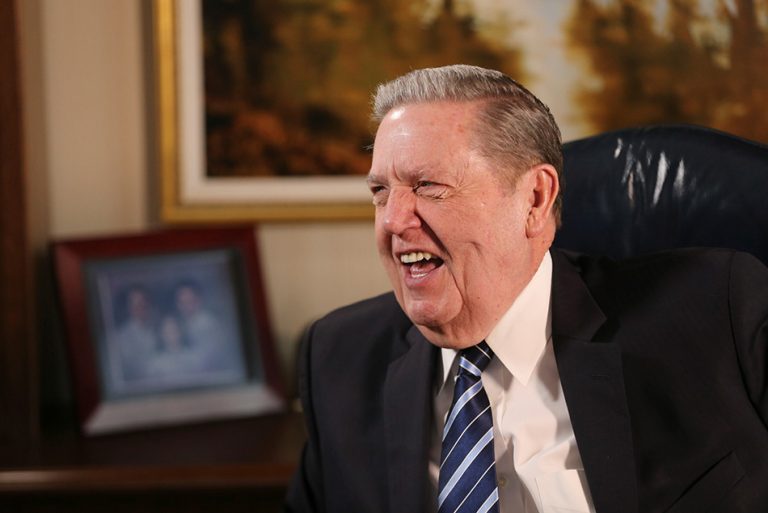


Our eyes are teary and hearts heavy, as we contemplate the passing of President Jeffrey R. Holland, President of the Quorum of the Twelve Apostles of The Church of Jesus Christ of Latter-Day Saints, December 27, 2005, at approximately 3:15 a.m. MST from complications arising from kidney disease. He was 85.
Yet, it is not just a public figure that we mourn, someone who was distant and removed, someone we knew in name or rank only. Instead it feels like we grieve the loss of a best friend, whose words have encouraged, stirred and fortified us not only for his 31 years as an apostle, but also for years before when he served as a General Authority Seventy (1989-1994), Commissioner of Education (1976-1980) and President of Brigham Young University (1980-1989).
We’ve been hearing his voice for a long time, and it has furnished the chambers of our hearts. With his wit and unsurpassed eloquence, his broad knowledge of literature and ideas, and his deep knowledge of the scriptures, he has been a consummate teacher. His unswerving faith in the Lord, Jesus Christ, his love of the Book of Mormon, and his convincing and enthusiastic oratory have moved us, shaped us, and made us joyful, all at once. We have become wrapped in his great smile and ebullient spirit.
“Meeting President Holland for the first time was like meeting someone you had known all your life,” the church press release noted. President James E. Faust (1920-2007) once said, President Holland “has a deep spirituality coupled with an exceptional sensitivity…[he is] always building people and lifting people and drawing people to him. He has the marvelous capacity to make people feel that they are his best friends.”
This is because his capacity for love is nearly unmatched. His goodwill, his personal compassion, and embracing of all of us, no matter how lowly or small our state, reminded us of the Master he served.
He is one of a kind, irreplaceable, and the world will be less for us not hearing him teach.
Yet, his words will linger still. When we are sad, when we need encouragement, when we lose confidence, we will hear Elder Holland’s pleading words to us to believe and keep hope alive.
Some Blessings Come Soon, Some Come Late
In the Oct. 1999 General Conference, he told the story of the young father he once was, without much money to his name, trying to move his young family to the East coast for school in an old car that unceremoniously broke down. Slumping a little and fearful, he walked back to the nearest town for help and “in the scriptural phrase, his hands did seem to ‘hang down’.”
He said that he wished he could call out to that younger self, “Don’t give up, boy. Don’t you quit. You keep walking. You keep trying. There is help and happiness ahead—you keep your chin up. It will be all right in the end. Trust God and believe in good things to come.”
This vulnerability and personal sharing made him approachable, while his depth took us new places spiritually. He never stopped reaching out to us, wherever we were in our spiritual journeys.
In the April 2012 General Conference he said, “However late you think you are, however many chances you think you have missed, however many mistakes you feel you have made or talents you think you don’t have, or however far from home and family and God you feel you have traveled, I testify that you have not traveled beyond the reach of divine love. It is not possible for you to sink lower than the infinite light of Christ’s Atonement shines.”
He reminded us that “The opportunity to respond to trouble and turmoil with ever-greater faith is documented over and over in scripture…”.
“Come as you are, a loving Father says to each of us, but he adds, don’t plan to stay as you are.”
“If for a while, the harder you try, the harder it gets, take heart. So it has been with the best people who have ever lived.”
His Inspiring Words on the Atonement
Speaking on Easter in 2015, President Holland said of Jesus Christ, “Today we celebrate the gift of victory over every fall we have ever experienced, every sorrow we have ever known, every discouragement we have ever had, every fear we have ever faced—to say nothing of our resurrection from death and forgiveness for our sins. That victory is available to us because of events that transpired on a weekend precisely like this nearly two millennia ago in Jerusalem.
He added, “That first Easter sequence of Atonement and Resurrection constitutes the most consequential moment, the most generous gift, the most excruciating pain, and the most majestic manifestation of pure love ever to be demonstrated in the history of this world. Jesus Christ, the Only Begotten Son of God, suffered, died, and rose from death in order that He could, like lightning in a summer storm, grasp us as we fall, hold us with His might, and through our obedience to His commandments, lift us to eternal life.”

Elder Bruce C. Hafen told the Deseret News, “He was, like the scripture said of Christ, ‘a teacher sent from God,’ I think the church and others came to know that, but that’s been in him all along. He developed it, and was given opportunities to develop it, and he had this extraordinary gift to connect with people and to give encouragement and to give empathy and understanding with his delightful sense of humor.”
His Humor
In a sense, we’ve had President Holland with us on borrowed time. In April 2023, he missed General Conference, and only days later, the church announced that he would temporarily step away from his responsibilities due to health complications. He was struggling with kidney disease and was on dialysis. Two months later, he came back.
Then, in July 2023, Sister Holland died. Her funeral was on the 28th, and the graveside service occurred the next day. Only five days later, on Aug. 3, President Holland had an acute health crisis, was again hospitalized, spent nearly four weeks of a six-week stay in and out of consciousness, sometimes near death.
Again, he recovered, in what he referred to as a miracle. He shared in the April 2024 conference his plight with that sense of humor that always marked him, and then continued telling us of his vision that took him right to the edge of eternity.
“Brothers and sisters, I have learned a painful lesson since I last occupied this pulpit in October of 2022. That lesson is: if you don’t give an acceptable talk, you can be banned for the next several conferences.
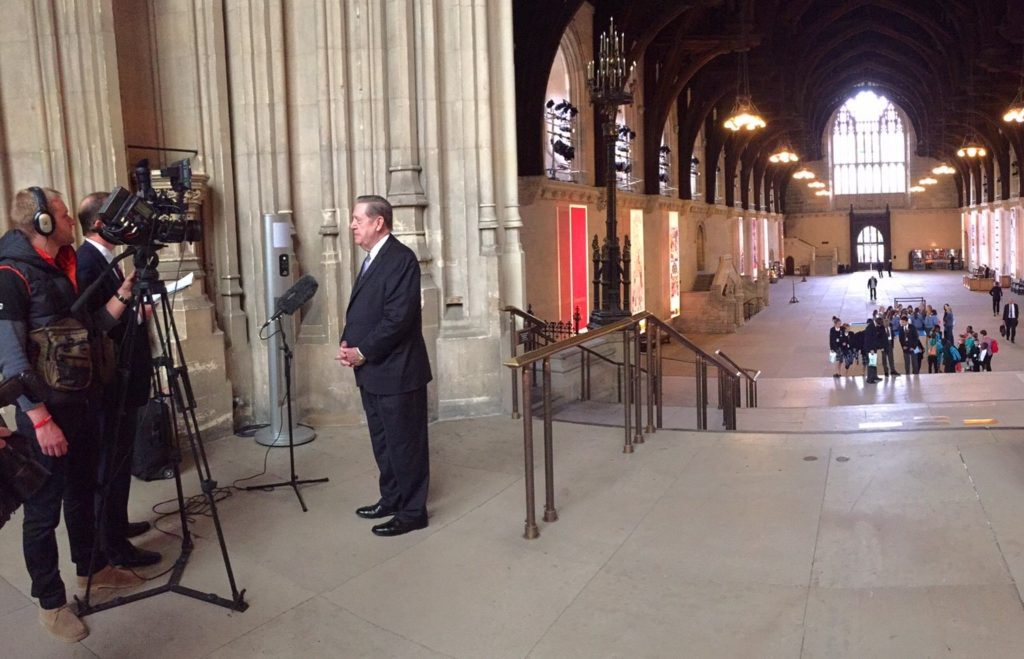
“What you can’t see is that I am positioned on a trapdoor with a very delicate latch. If this talk doesn’t go well, I won’t see you for another few conferences.”
“What is not lost is my memory of a journey outside the hospital, out to what seemed the edge of eternity. I cannot speak fully of that experience here, but I can say that part of what I received was an admonition to return to my ministry with more urgency, more consecration, more focus on the Savior, more faith in His word.”
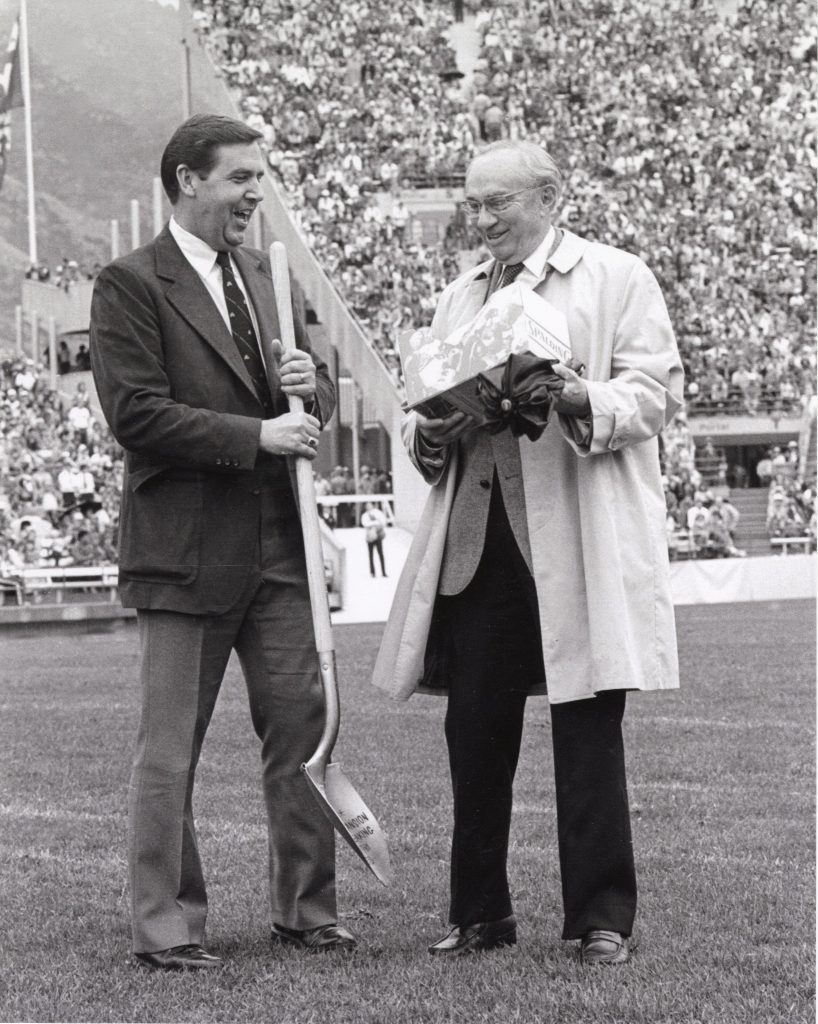
What Does the Life of a Consecrated Man Look Like?
The idea that President Holland could be invited to “more consecration” was staggering since everything about his life has been about consecration.
He was born Dec. 3, in St. George, Utah, to Frank D. and Alice Bentley Holland, and joked that “I couldn’t have gotten in trouble in that town if I’d wanted to. My mother would have known before I ever got home.”
He was an athlete in high school, lettering in football, basketball, track, and baseball, and was a member of Dixie High School’s state championship football and baseball teams.
The unwavering, fervent devotion to God grew deep on his mission to England, where he began an intense study of the Book of Mormon. He said that his mission “either substantiated or dramatically changed—in a good way—every goal, feeling or aspiration that I ever had”—among them, the decision later on to pursue a career in teaching instead of studying medicine when he returned home to Utah.
One of his mission presidents, Elder Marion D. Hanks (1921-2011), said, “Jeffrey Holand is by nature a teacher. He is a gentleman, a scholar, and a diplomat—but in all those things he is a teacher.”
His brother Dennis once said, “All Jeff ever wanted to do was teach the gospel to students in a classroom. I was always sure that the Lord had the same goal in mind for him, but that the size of the classroom and the number of students were on a much grander scale than he was envisioning.”
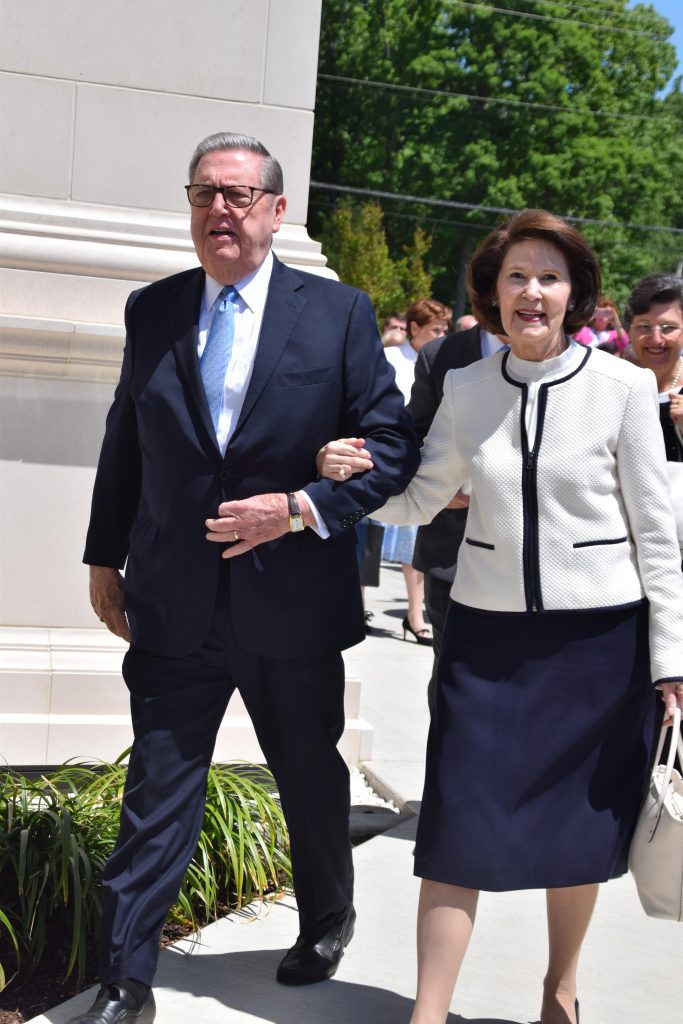
Marriage and Family
President Holland married Patricia Terry, his high school sweetheart, on June 7, 1963.
When he was president of BYU, he once told the students about when he and Pat were young married students there. “We had absolutely no money. Zero…. We had a small apartment just south of campus—the smallest we could find: two rooms and a half bath. We were both working too many hours trying to stay afloat financially, but we had no other choice.
“I remember one fall day—I think it was in the first semester after our marriage in 1963—we were walking together…[and] somewhere on that path we stopped and wondered what we had gotten ourselves into. Life that day seemed so overwhelming, and the undergraduate plus graduate years that we still anticipated before us seemed monumental, nearly insurmountable.
I turned to Pat and said something like this: “Honey, should we give up? I can get a good job and carve out a good living for us.” He said she turned that day in the sunlight, held him by the lapels, and gave him “a real talk,” “a living demonstration of faith. “We are not going back. We are not going home.” They pressed on.
President Holland subsequently received master’s and doctorate degrees in American studies from Yale University. Though many lucrative jobs were available, President Holland opted to join the Church Educational system and do what he loved best—teach the gospel of Jesus Christ.
Together, they had three children, Matthew, Mary Alice, and David.
“I give Pat all the credit on the home front,” said President Holland, who authored more than a dozen books — including two with Pat. “We were pretty busy, pretty early in our lives, and always felt we were getting asked to do things quite a few years before we were old enough or smart enough or wise enough to do it. … She really worked at making [life] normal [for our children and] worked very hard at underscoring what families ought to do and what families ought to have and what parents ought to be for their children. … I stand in slack-jawed, wide-eyed admiration that she would just march off the end of any diving board for me, for the Church, for the Lord, for her kids. She’s always done that.”
Matt said, “My fondest memories from childhood are the dinner table. Every night was a kind of family home evening filled with laughter, compliments, encouragement, interesting conversation, testimony, teaching, and expressions of love. You always knew Dad was happiest when he was at home with his family.”
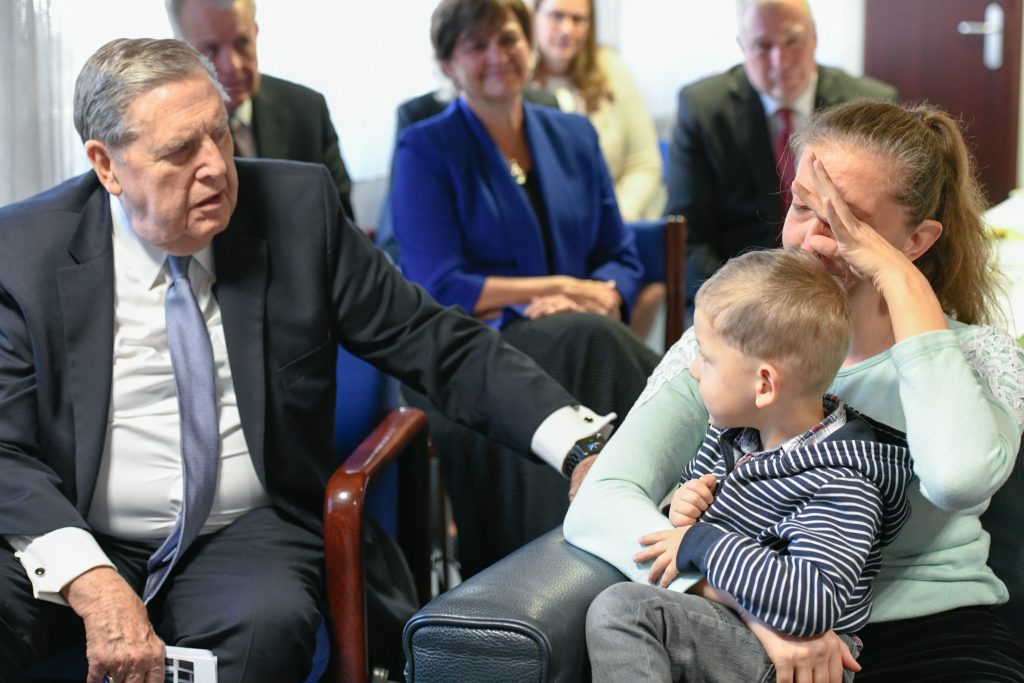
Elder Holland and Pat were the consummate sweethearts as well as a remarkable team.
He is much quoted for saying: “I don’t know how to speak about heaven in the traditional, lovely, paradisiacal beauty that we speak of heaven; I wouldn’t know how to speak of heaven, without my wife or my children,” President Holland said. “It would not be heaven for me.”
In his funeral tribute to Pat, he wrote, “She was everything a companion could be in this world, and I thank God that we will have each other in the next.”
President of BYU and the Jerusalem Center
When BYU sought to build the Jerusalem Center, a center of learning and study, in Israel, opponents came out in full force to fight the building permit. The center was to be built on Mt. Scopus, an extension of the Mt. of Olives, with sweeping views of the Old City and the Kidron Valley.
The protest was not a small one, but reverberated right to the Knesset, who were divided on it 60 to 60 out of the 120 votes. The brunt of the pressure landed squarely on the BYU President, Jeffrey R. Holland.
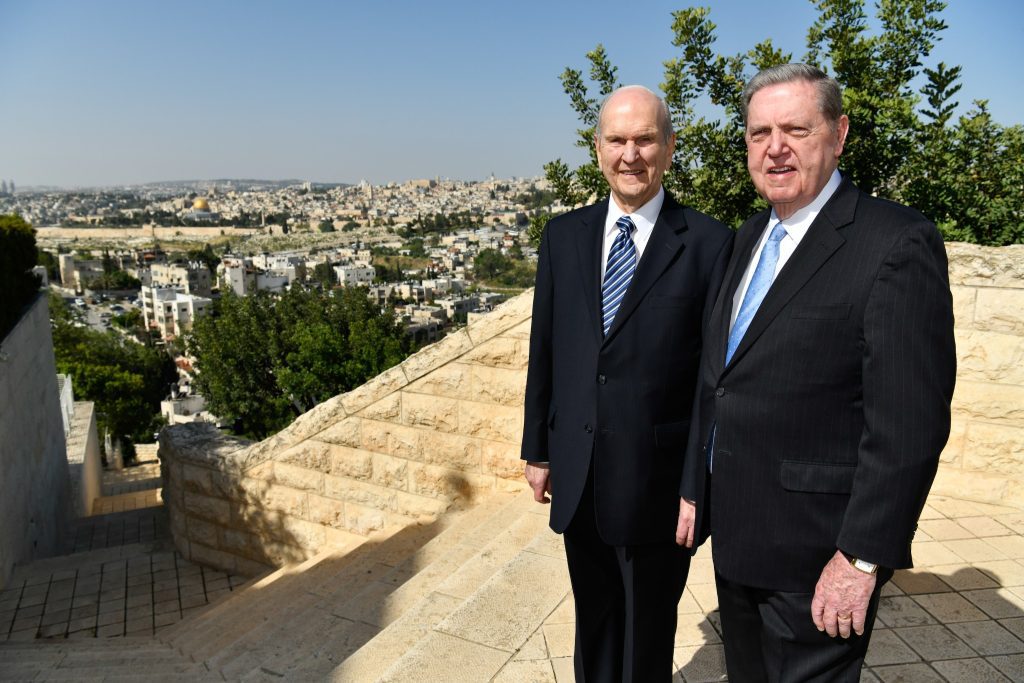
In his trips to Israel to build support and convince the heatedly concerned that this new center would not be for missionary work, once he was whisked off the plane by military guards to avoid the protestors who held signs like this:
JEFFREY HOLLAND, DO NOT DESECRATE OUR FAITH
J.H. WE WILL NOT SELL OUR LAND TO MORMON MISSIONARIES
JEFFREY, STOP YOUR MISSIONARY WORK BEFORE WE RETALIATE.
Later, Elder Holland would describe the many miracles that turned the tide so that the Jerusalem Center could be built. “I do not use the word ‘miracle’ lightly,” I am in a calling, and I’m in a quorum that does not use the word lightly, but knows what it means, and knows the significance of when we see one.”
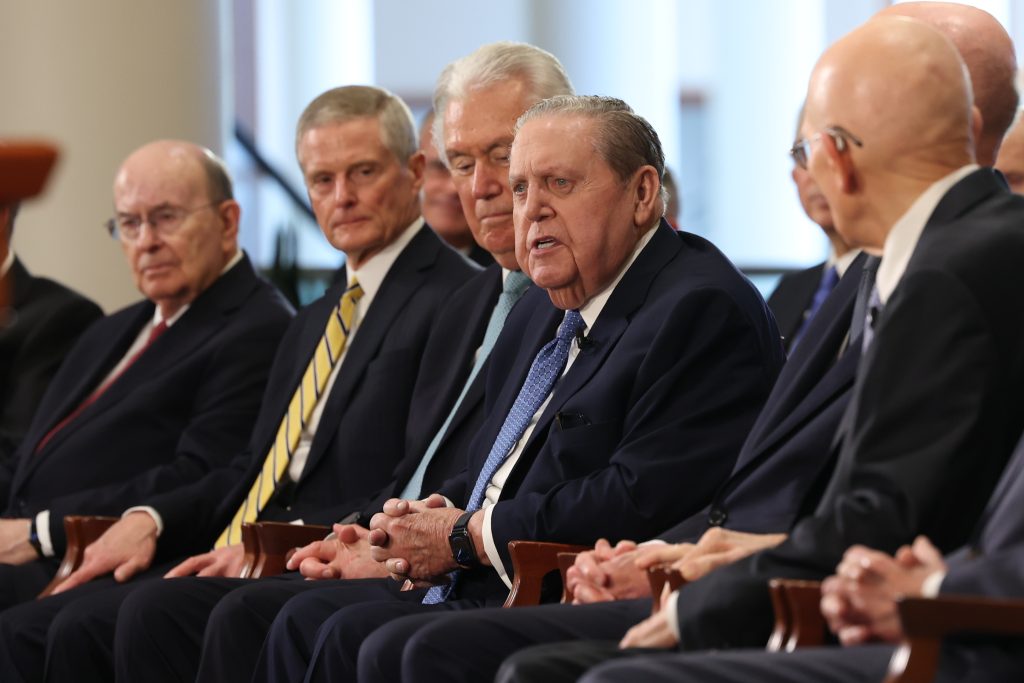
Yet, as a measure of how difficult the entire process was, he said he would have written on his tombstone these words, ‘He never pulled a handcart, he did not fight at Hawn’s Mill. He was never incarcerated at Liberty Jail, but he did work on the BYU Jerusalem Center.’”
His Calling to the Twelve
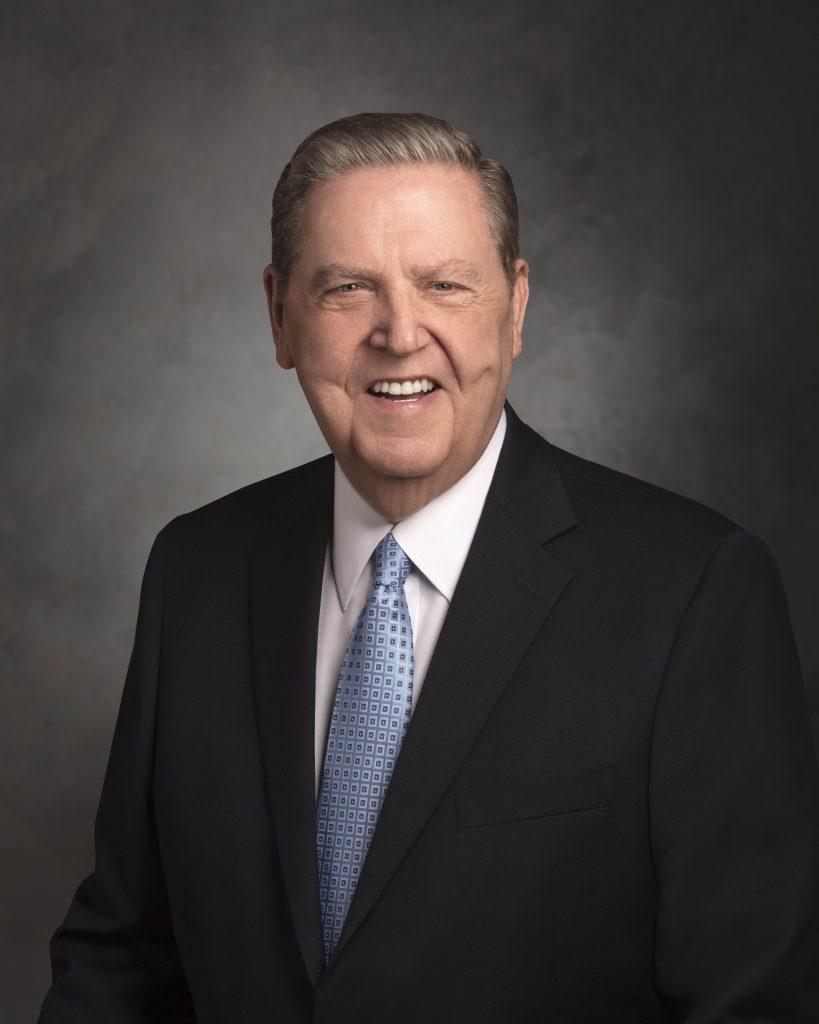
When he was called as an apostle in June 1994, he came with great awe to the responsibility. “The last few hours have been nearly unbearable. I received this call at 7:30 this morning. … President [Howard W.] Hunter issued the call, he conducted the business at the temple, he gave me my instructions, and he gave me my blessing. He did it all. How deeply moving his counsel, guidance, and blessing to me were. … My chief responsibility now, and my primary responsibility — in a sense, my total responsibility — is to bear witness of the Lord Jesus Christ. As inadequate as I feel, it is the most pleasant, most rewarding, and most thrilling assignment a man can have in this world. I pledge my life to this effort.”
When he gave his first talk as an apostle in General Conference, he reiterated that promise. “Obviously, my greatest thrill and the most joyful of all realizations is that I have the opportunity, as Nephi phrased it, to “talk of Christ, … rejoice in Christ, … preach of Christ, [and] prophesy of Christ” wherever I may be and with whomever I may find myself until the last breath of my life is gone.”
Now, the last breath of his life has gone, and his pledge is true. It has been faithfully and powerfully kept. Goodbye, President Holland. We will always love you.