






iStockphoto.com/Duncan1890
By Andrew C. Skinner
On September 11, 2007, Brigham Young University President Cecil Samuelson announced that this was, “The Year of the Constitution.” In keeping with the spirit of that noble goal, BYU has planned numerous events to promote that “Title of Liberty” on campus, including the free distribution of pocket-Constitutions and free DVDs of “A More Perfect Union” during this week – Patriots’ Week – to each and every student who would like one.
Also, Meridian Magazine has elected to support their effort by publishing three articles, by three BYU professors, over three days (November 7th, 8th, and 9th), highlighting the sacrifices made by those who have stepped onto the battlefields in defense of the God-given freedoms guaranteed by the Constitution of the United States of America. All three articles will be accessible at www.SaintsAtWar.com, where additional information about Saints at War books and documentary films, and video clips are available. This will also include a teaser video from the newest documentary in the exciting series, by acclaimed Director Ken Cromar, titled “Saints at War – Faithful Heroes” (anticipated release is early 2008).
Additionally, on Monday, November 12th, we will celebrate Veterans’ Day with an article by Ken Cromar, based on insights gained from over 80 video-taped interviews for the “Saints at War -Faithful Heroes” documentary, with LDS soldiers from around the world, including Germany, Japan, England, Korea, Vietnam, Kuwait, and Israel.
We can never pay the debt we owe our humble patriots, but we can attempt to honor them by highlighting their selfless sacrifices in our behalf, and in the cause of freedom.
War is a complex issue – socially, politically, economically, and religiously. However, members of the Church of Jesus Christ of Latter-day Saints are able to rely on clearly articulated doctrines and principles as they seek to formulate their own stance toward armed conflict in general and toward specific wars in particular.
These inspired and inspiring principles issue from the Lord Himself through the standard works and the published words of prophets and apostles in this last dispensation.
Origin and Nature of War
War has taken many lives and caused much misery in this fallen world. As President Thomas S. Monson lamented, “The cruelty of war seems to bring forth hatred toward others and disregard for human life.”
But, significantly, war is not unique to mortality. It existed in our pre-mortal life. Its author was Lucifer or Satan, an angel in authority in the presence of God who rebelled against Deity (D&C 76:25). As a result of his arrogant obstinacy,
There was war in heaven: Michael and his angels fought against the dragon; and the dragon fought and his angels …
And the great dragon was cast out [of heaven], that old serpent, called the Devil, and Satan, which deceiveth the whole world: he was cast out into the earth, and his angels were cast out with him (Revelation 12:7, 9).
The war in heaven was fought over the foundational issues of eternity: who would be the earthly Savior of humankind, how salvation would be gained, and whether or not agency would be preserved. Lucifer sought to destroy the agency of humankind and to usurp the kingdom of the Father and the Son. He and a third part of our Heavenly Father’s spirit children rejected Jesus Christ and His atonement. They were thrust out of the Father’s presence, cast down to earth without the possibility of gaining mortal bodies, and so became the devil and his angels (see D&C 76:25-28; 29:37; Moses 4:1-4).
Latter-day revelation given through the Prophet Joseph Smith unequivocally declares that Satan transferred to this earth the war he began in heaven, causing great misery. “Wherefore, he maketh war with the saints of God, and encompasseth them round about. And we saw a vision of the sufferings of those with whom he made war and overcame, for thus came the voice of the Lord unto us” (D&C 76: 29-30).
Closer to our day, President Gordon B. Hinckley, speaking after the terrorist attacks of September 11, 2001, said:
Now all of us know that war, contention, hatred, suffering of the worst kind are not new. The conflict we see today is but another expression of the conflict that began with the War in Heaven.
Thus, warfare in mortality is actually the earthly manifestation of the war inaugurated in our pre-mortal existence, with all of its ensuing misery, sorrow, and destruction – horrendous destruction. In fact, for his rebellion and unrelenting prosecution of war against agency, Satan himself was called “Perdition” (D&C 76:26), meaning “utter destruction, complete ruin or loss.” He is the personification of complete ruin. He is the personification of war.
Therefore, how can we expect that war will produce anything but destruction? And it should come as no surprise that the fundamental principle of agency is almost always at the heart of earthly armed conflict between those who support its expansion and those who press for its contraction.
Again, President Hinckley said, “War, of course, is not new. The weapons change. The ability to kill and destroy is constantly refined. But there has been conflict throughout the ages over essentially the same issues.”
Warfare, then, is endemic among mortals. It has been with us as long as Satan. And, of course, the culminating event preparatory to the Second Coming of Jesus Christ to this earth is Armageddon – a battle so sweeping and horrendous that “all nations” will be gathered together to fight against Jerusalem (Zechariah 11-14; Revelation 16:14-21).
But even the Second Coming does not end the horror of war once and for all. After the Millennium, Satan
. shall be loosed for a little season, that he may gather together his armies.
… And then cometh the battle of the great God; and the devil and his armies shall be cast away into their own place, that they shall not have power over the saints any more at all.
For Michael shall fight their battles, and shall overcome him who seeketh the throne of him who sitteth upon the throne, even the Lamb” (D&C 88:111-15).
Hence we see that, ironically, warfare and the plan of salvation (or great plan of happiness as it is called) are inextricably tied together. This does not mean, however, that Deity relishes or even approves of war. But, He does possess a particular view about it.
The Lord’s View
On August 6, 1833, the Lord revealed anew His overarching perspective on war. Known as Doctrine and Covenants 98, the revelation came to Joseph Smith in Kirtland, Ohio, as a result of the persecution being heaped upon the Saints in Missouri.
Having suffered physically and emotionally, and having lost property as a consequence of the adversary’s war against the Church of Jesus Christ, it was only natural that the Missouri members “should feel an inclination toward retaliation and revenge.” But the Lord asked for, and outlined something different. The Lord called these principles “an ensample unto all people” (D&C 98:38).
First, the Lord declared that His Saints are to “renounce war and proclaim peace” (D&C 98:16). Instead of seeking war, they are to “seek diligently to turn the hearts of the children to their fathers, and the hearts of the fathers to the children” (D&C 98:16).
In other words, true Saints of the Lord’s kingdom are asked to search first for peaceful solutions to challenging problems. They are to counter the destructive forces of war by living the gospel covenant and establishing eternal links and bonds between generations through priesthood ordinances that can seal together the entire human family – the family of God. God asks that His children be bound together rather than torn apart.
It is doubtful that as much effort has ever been expended in proclaiming peace as it has been in promoting war. President Spencer W. Kimball rebuked the world when he stated:
We are a warlike people, easily distracted from our assignment of preparing for the coming of the Lord. When enemies rise up, we commit vast resources to the fabrication of gods of stone and steel – ships, planes, missiles, fortifications – and depend on them for protection and deliverance.
When threatened, we become anti-enemy instead of pro-kingdom of God; we train a man in the art of war and call him a patriot, thus, in the manner of Satan’s counterfeit of true patriotism, perverting the Savior’s teaching: “Love your enemies, bless them that curse you, do good to them that hate you, and pray for them which despitefully use you, and persecute you. That ye may be the children of your Father which is in heaven” (Matthew 5:44-45).
Warfare is fundamentally incongruous with the Lord’s nature and personality. For example, in ancient Israel, King David was forbidden to build a permanent temple of the Lord in Jerusalem because of his involvement in much warfare (1 Chronicles 22:8). War and bloodshed take their toll on individuals and on nations. Warriors who survive armed conflict are often those who bear the deepest wounds and scars of war.
President David O. McKay stated what others have said, namely, that “war is incompatible with Christ’s teachings,” and that “it is vain to attempt to reconcile war with true Christianity.”
The ancient seer, Enoch, beheld wondrous visions of the first and second comings of the Prince of Peace. He taught the gospel of Jesus Christ, walked with God, and “was before his face continually” (D&C 107:49, emphasis added).
But perhaps most touching and telling is his personal witness of God’s weeping over man’s horrible treatment of his fellowman:
And it came to pass that the God of heaven looked upon the residue of the people, and he wept; and Enoch bore record of it, saying: How is it that the heavens weep, and shed forth their tears as the rain upon the mountains? And Enoch said unto the Lord: How is it that thou canst weep seeing thou art holy, and from all eternity to all eternity? … And unto thy brethren have I said, and also given commandment, that they should love one another, and that they should choose me, their Father; but behold, they are without affection, and they hate their own blood (Moses 7:28-29, 33).
War is a manifestation of that hatred and malice. It pains God deeply, and He has counseled against war in very strong terms.
Defensive War
Thus, a second part of the Lord’s doctrine of war that has broad application comprises a policy of what might be termed “defensive war.” The Lord exhorts His covenant peoples to bear patiently the attacks inflicted upon them by their enemies (D&C 98:23-27), and “not go out into battle against any nation, kindred, tongue, or people” unless He (the Lord) commands it (D&C 98:33).
“There are times and circumstances,” said President Hinckley, “when nations are justified, in fact have an obligation, to fight for family, for liberty, and against tyranny, threat, and oppression.”
Throughout the ages, God has commanded and inspired righteous people to resist tyranny and oppression and fight for family and liberty. Who can doubt that Captain Moroni was so inspired. He scrupulously adhered to the Lord’s doctrine of defensive warfare, believing,
. that God would make it known unto them whither they should go to defend themselves against their enemies, and by so doing, the Lord would deliver them; and this was the faith of Moroni, and his heart did glory in it; not in the shedding of blood but in doing good, in preserving his people, yea, in keeping the commandments of God, yea, and resisting iniquity (Alma 48:16).
Moroni is the model – the personification – of President Hinckley’s teachings on the nature of divinely approved warfare. He did not glory in the shedding of blood. Nevertheless, there came a time when Moroni
. rent his coat; and he took a piece thereof, and wrote upon it – In memory of our God, our religion, and freedom, and our peace, our wives, and our children – and he fastened it upon the end of a pole. And he fastened on his head-plate, and his breastplate and his shields, and girded on his armor about his loins; and he took the pole, which had on the end thereof his rent coat, (and he called it the title of liberty) and he bowed himself to the earth, and he prayed mightily unto his God for the blessings of liberty to rest upon his brethren, so long as there should a band of Christians remain to possess the land (Alma 46:12-13).
Conclusion
The Prince of Peace wants peace! He wants His disciples to hold up the standard of peace even in, especially in, the face of war. Perhaps that is the greatest legacy left to us by the New York, Ohio, Missouri, and Illinois Saints. Their sacrifices and their responses to conflict show that it is possible to live as the Lord bids us – renounce war and proclaim peace and seek, instead, to turn the hearts of the children and the fathers to one another.
They avoided conflict at great cost to themselves and their families, leaving areas in the dead of winter, and, at times, sacrificing all of their material possessions. Unfortunately, these are lessons that come hard to those not so willing to follow the Lord’s requests at all hazards – the proud, the impatient, the self-centered, and the short-sighted – in other words, those focused only on mortality. But obedience to the Lord’s will in this matter brings nothing less than the approbation of heaven and the blessings of a Godlike personality.
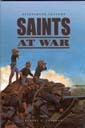
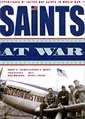
The above is an edited version of the introductory chapter from Nineteenth Century Saints at War, published by Brigham Young University. For the complete article, including an insightful segment titled, “God as Divine Warrior,” please see www.SaintsAtWar.com.