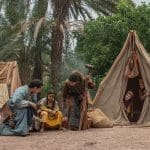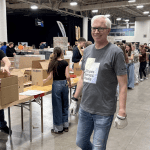





As work is essential to growth, it is vital that individuals, young or old, know how to work. The Lord instructed Adam, “In the sweat of thy face thou shalt eat bread” (Gen. 3:19).
Work sustains life, benefits others, develops one’s abilities, and builds a sense of self-worth:
The labour of the righteous tendeth to life (Proverbs 10:16).
Work is even a joy as described by Alma:
The Lord doth give me exceedingly great joy in the fruit of my labors (Alma 36:25).
“Church work” is an appropriate expression, for moving the kingdom forward requires diligence, perseverance, and one’s best efforts. Included here are details of some of our former hardworking Relief Society, Young Women, and Primary presidents.
Bathsheba W. Smith , fourth general Relief Society president (1901-10), was a devoted homemaker. Wherever she lived, she worked hard to make her home a pleasant place — often in challenging circumstances (especially during the early Nauvoo years when her house was cold, smoky, and leaked). In a letter Bathsheba wrote to her husband, Elder George A. Smith of the Quorum of the Twelve Apostles, she recounted some of her domestic efforts:
Now my dear, I do not want you to think I cannot work yet, so I believe I will tell you what I have been doing this winter. I did nearly all Father’s folks housework nine in the family most of the time with the exception of washing, made father two fine shirts, mother two dresses, three caps, made her some pillow cases, made John two fine bosoms, helped quilt two quilts, wrote thirty-odd [patriarchal] blessings, recorded several.
Father gave me about seven dollars and a half in money. I made my carpet, made George [her son] a pair of pants and coat and siss some clothing, sewed some for Melissa (two dollars and a half worth) made me a nice hearth rug, made some nice soap, made a cushion for my rocking chair, sewed some for myself also knit for the children … I have made my window curtains have three white ones in the best room … made my valances, sewed and fitted down my carpet, made some pillowcases and sheets, quilted two comforters … made me a dress and bonnet, Bathsheba [her daughter] an apron and various other things besides cooking, washing, mending, churning, feeding my cow, pigs, chicks and visiting the sick as well.” 1
George’s seventh wife, Susan West Smith, and Bathsheba lived in the same home (a duplex that housed the Historian’s Office and the Smith home as Elder Smith served as the Church Historian). The two women enjoyed a close friendship and spent time together in “home manufactory,” as Bathsheba wrote in her autobiography:
Sister Susan and myself for about ten or twelve years have spun, colored and wove full cloth, flannel, linsey janes, kerseys, blankets, coverlids, shawls, wove fringe, wool carpets, stair carpets, rag carpets, and have spun flax and tow, and wove table linen towels, bed ticks, and made sewing thread. We also carded, spun, and wove cotton, made cotton cloth for diapers, dresses, bedspreads, bed ticks, bags, spun candle wicking, spun and wove table cloths, towels, we knit our own stockings, socks, hoods neckwraps mittens, made netting, embroidery … and have done all to encourage home manufactory. We have exhibited many of our homemade goods at our territorial fairs and they always received favorable attention.” 2
Emmeline B. Wells , who served after Bathsheba W. Smith, was 82 years old when she was called as president. A tiny, but dynamic woman, Emmeline provided much of the support for her family of five daughters by writing, teaching, and editing the Woman’s Exponent for many years. In all, she served in Relief Society for 54 years, until her release in 1921, just a few weeks before her death at age 93.
President Brigham Young had asked Emmeline to supervise a wheat project, in which women gathered wheat from grain fields to store for future needs. The Relief Society gave wheat to the poor, farmers for planting, and the hungry in drought-stricken areas and victims of the 1906 San Francisco earthquake and fire. During World War I, the U.S. government purchased 100,000 bushels of this wheat, which fed thousands of people.
Emmeline was also a leader in the woman’s suffrage movement, for the antipolygamy Edmunds Tucker Act in 1887 took away Utah women’s right to vote. As president of the Utah Woman’s Suffrage Association, she helped campaign for Utah statehood and the return of voting rights to women.
Emmeline wrote, “Work is not done by looking on and really I do as much work as seven other women I firmly believe.” 3
Bertha S. Reeder served as the fifth general president of the Young Women’s Mutual Improvement Association from 1948 to 1961. Her presidency instituted the Individual Award program, realigned the age groups for Beehive, Mia Maid, Junior Gleaners (later Laurels) and Gleaners, and created a series of posters “Be Honest with Yourself.” Bertha, who loved the outdoors, emphasized the camping program.
Prior to her service as general president, Bertha had served on the Primary general board. In 1941, her husband , William H. Reeder Jr. (known as Judge), was called to preside over the New England Mission, and the Reeders moved to Cambridge, Massachusetts. Their mission lasted six and a half years. Because housing in the Boston area was scarce during World War II, all the missionaries lived in the seventeen-room mission home on Brattle Street.
As mission mother, Bertha cooked three meals a day for the missionaries and her husband. The Reeders frequently had guests, such as General Authorities and the general Relief Society president, Belle S. Spafford. Though at times meal preparation was a challenge because of wartime food rationing, their meals were “always superbly delicious,” according to one missionary, Kenneth W. Porter. He remembered Bertha as a “prodigious worker” who kept up the large mission home with little outside help and who collected, cleaned, and mended clothing for the welfare program.
“I have seen her so tired she almost dropped, but she never complained,” he said. “This was all in addition to heading the Primary, Relief Society, and YWMIA programs.” 4
LaVern W. Parmley presided over the Primary Association for 23 years, from 1951 to 1974. From the time LaVern was in her teens, she held responsible positions in the Church. At age 14, she taught a Sunday School class, and within the next few years, Primary and YWMIA. She served as principal of the religion class, the program initiated in 1890 to supplement children’s Sunday religious instruction.
When called to her stake Primary board, LaVern was assigned the boys’ program, which she said was “her specialty.” Throughout her Primary service as a general board member, counselor, and general president, she took particular interest in the boys’ program.
LaVern was an “incredible administrator,” according to her granddaughter Vickie Stewart. “One time I asked her how she got everything done. She said, ‘I get up every morning and I do what there is to be done. Then I go to bed at night. The next day I do it again.’ I learned from her that it’s the willingness to do the day-to-day labor that eventually results in big things.” 5
“Mother was an executive, who was focused, goal-driven, and accomplished a lot,” said her daughter Frannie Parmley Muir.
“She knew what it took to make something happen. She could figure out where she was, where she wanted to be, and how to get there. That was her greatest strength. She spent little time or energy worrying about inconsequential things.” 6
Dwan J. Young served eight years as general Primary president, from 1980-1988. Dwan’s Church work has included serving in Cub Scouts, Young Women, Relief Society, and Primary — as a counselor in a stake Primary presidency and on the general board.
Shortly after she became general president, the Church implemented the consolidated meeting schedule, which meant that Primary, previously held on a weekday afternoon, would be part of the three-hour block schedule. It was her administration’s challenge to prepare a curriculum for Sunday Primary. Part of the new program included Sharing Time. Dwan traveled to Primaries on many continents, sharing her love with Primary children and helping leaders to catch the vision of the new Primary format. She received the Silver Buffalo award for her many years of service to Scouting.
As a young girl, Dwan learned to work by helping out at her father’s grocery store on Saturdays, first by stocking shelves and then checking at the cash register. She also became an accomplished pianist, through long hours of practice. As a teenager, she played the piano for a dance teacher and then taught piano lessons herself.
Family members have been amazed by Dwan’s boundless energy. “She tackles anything that confronts her,” stated her daughter Suzanne Y. Jones. “She’s so active she wears me out.” 7
Paul, her second son, said, “She is the hardest worker I know — in church work or anything else.” 8
Jeff Young, who was in high school part of the time Dwan served as president, added, “My mother is a very positive, energetic person. She was bent on taking care of the house in spite of her responsibilities downtown. There were very few days that she didn’t have breakfast on the table for me. She went out of her way to make sure the family was cared for.” 9
Bonnie Dansie Parkin , fourteenth general Relief Society president, served for five years from 2002-2007. She particularly focused on helping young single adults from 18 to 30 feel that they had an important place in Relief Society. Her presidency introduced the Good News Minute and implemented an activities portion of home, family, and personal enrichment meetings. In 2006, the remodeled Relief Society Building was reopened on March 17, the 164 th anniversary of the organization of Relief Society.
Bonnie grew up in Herriman, Utah, where her grandparents owned a 500-acre farm that provided ample opportunities for work Bonnie is grateful to her parents for teaching their five children how to work. Bonnie and her siblings each worked at the store, tended the garden, harvested corn, hauled hay, and did numerous other chores that rural living required. Nevertheless, Joyce D. Taylor, the oldest in the family, recalled, “We had fun doing it.” 10
Learning to work was a value Bonnie and her husband, Jim, also wanted to firmly instill in their four sons and required them to find jobs. Each of the boys had his turn at a paper route. On cold winter mornings, Bonnie often volunteered to drive them to deliver the newspapers. As teenagers, the boys earned spending money with summer and after-school jobs. When one son announced he didn’t have time to work because he was going to attend football camps all summer, his parents assured him that he’d be a better football player by hauling hay and secured employment for him at Grandpa Dansie’s farm.
Brett Parkin said, “There’s no harder worker than my mom. She really taught us how to work. We would play games like ‘Beat the Clock.’ We had a certain amount of time to do a job and we would try to beat the clock.” Brett also remembered going out to his grandfather’s farm on Friday afternoons to work, commenting, “There’s no shortage of work on the farm.” Still, there was lots of fun to be had on the farm for the boys in building forts and riding horses. 11
Daughter-in-law Jana Parkin noted, “Bonnie is tireless. She has taken in countless meals to families and is constantly doing things for others. When her parents were alive and out on the farm in Herriman, she was out there helping them.” 12
That work ethic is being passed on to the Parkin grandchildren. “Bonnie is so good at teaching children how to work by working side by side with them. It’s a wonderful gift of hers. They all work together in the yard or cut fruit or set the table for dinner. Meaningful conversation takes place while she works with her grandchildren.“ 13
Anne C. Pingree, who served as a counselor to Bonnie in the general presidency remarked, “She is a capable administrator, is very organized, and is an extremely hard worker.” 14
Information for this article has been drawn from personal interviews and books co-authored by Janet Peterson and LaRene Gaunt: Elect Ladies: Presidents of the Relief Society; Keepers of the Flame: Presidents of Young Women; The Children’s Friends: Primary Presidents and Their Lives of Service; and the updated Relief Society presidents’ book, Hope, Faith, and Charity: Inspiration from the Lives of the Relief Society Presidents.
Notes
1 Bathsheba W. Smith to George A. Smith, August 1851, holograph, George A. Smith Collection, LDS Church Archives.
2 Bathsheba W. Autobiography, typescript, LDS Church Archives, 29-30.
3 Emmeline B. Wells, Diary, August 1, 1895, Special Collections, Harold B. Lee Library, Brigham Young University, Provo, Utah.
4 Letter from Kenneth W. Porter to Oertel A. Hoit, December 31, 1982.
5 Telephone interview with Vickie Muir Stewart, May 18, 1993.
6 Telephone interview with Frances Parmley Muir, May 19, 1993.
7 Telephone interview with Suzanne Y. Jones, March 1994.
8 Telephone interview with Paul Jones, March 1994.
9 Telephone interview with Jeffrey Young, March 1, 1994.
10 Telephone interview with Joyce D. Taylor, December 28, 2006.
11 Telephone interview with Brett Parkin, October 3, 2006.
12 Telephone interview with Jana Parkin, February 21, 2007.
13 Telephone interview with Angie Parkin, February 27, 2007.
14 Interview with Anne C. Pingree, October 24, 2006.