




Is the fight for religious liberty about to make a national resurgence?
Ever since the Pilgrims left their homes in England and Holland and came to the New World in the name of religious freedom, the fight over whose beliefs should be held above the others has been in place. From the Salem witch trials, to the persecution of Irish Catholics, to the Mormon Exodus, and now “Islamophobia,” the First Amendment to the U.S. Constitution has caused a divide as wide as the ocean that was crossed to establish it.
Americans firmly believe that “Congress shall make no law respecting an establishment of religion, or prohibiting the free exercise thereof.” This basic tenet of American democracy is often interpreted in two competing ways- those who fear religious encroachment into the government, and those who want free and open exercise of religion, without government meddling.
In recent years many political groups have felt that the right to free speech has won them many victories (such as the right to gay marriage), while other organizations have felt that their religious liberties have been suffocated. But there is a turning of the tide across the nation, as more and more people begin to speak up in defense of religious liberty and note its demise.
A notable landmark in the defense of religious liberty is the establishment of the Becket Fund at Stanford Law School. The Becket Fund is the nation’s only clinic devoted to religious liberty. It operates as a non-profit, public-interest legal and educational institute that protects the free expression of all faiths. The Becket Fund exists to vindicate a simple but frequently neglected principle: that because the religious impulse is natural to human beings, religious expression is natural to human culture.
The small legal clinic’s mission is to advance that principle in three arenas-the courts of law, the court of public opinion, and the academy-both in the United States and abroad. According to their website, “In defending these ideas, in theory and in practice, we find ourselves at the crossroads of church and state.”
The clinic’s students take cases focused on free expression of religion. Cases have included representing Seventh-day Adventists who were fired by FedEx for refusing to work on Saturdays, a Jewish convert in prison whose request to be circumcised was rejected, and a Muslim group that was told its plan to build a mosque violated land-use laws.
The students will avoid the other side of the religious expression issue – the perceived government endorsement of faith. This includes nativities put up in public squares, prayers at public events, and cases tied to believers’ rejection of gay rights (a Christian photographer refusing to shoot a same-sex wedding) and elements of the new health care law that requires employers to pay for contraceptives for employees.
The first four students at the clinic include a Mormon, a Methodist, a Catholic and someone brought up as a Seventh-day Adventist. The student say they were drawn to the clinic by the profound questions it raises and the real lawyering it offers, from meeting a potential client to appellate review.
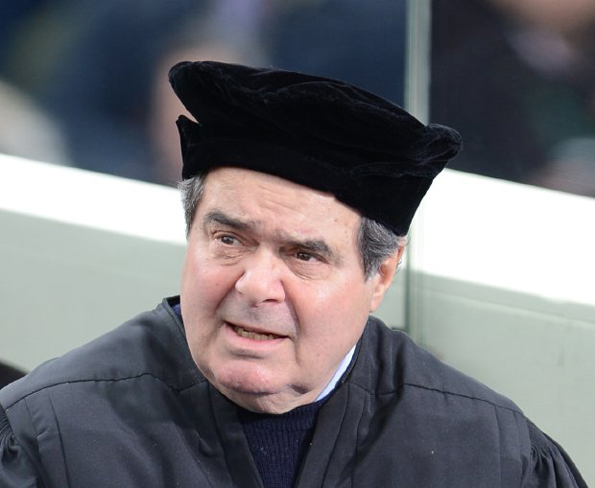
Another notable moment in the fight to defend religious liberty occurred at the Presidential Inauguration of Barack Obama, Supreme Court Justice Anthonin Scalia wore a peculiar hat. The head wear turned heads as a strange fashion choice for a man who would no doubt be shown on television screens and captured in photographs for posterity to ponder in years to come. The hat was a custom-made replica of the hat depicted in Holbein’s famous portrait of Saint Thomas More. It was a gift from the St. Thomas More Society of Richmond, Virginia, presented to him in November 2010 as a memento of his participation in the 27th annual Red Mass and dinner.
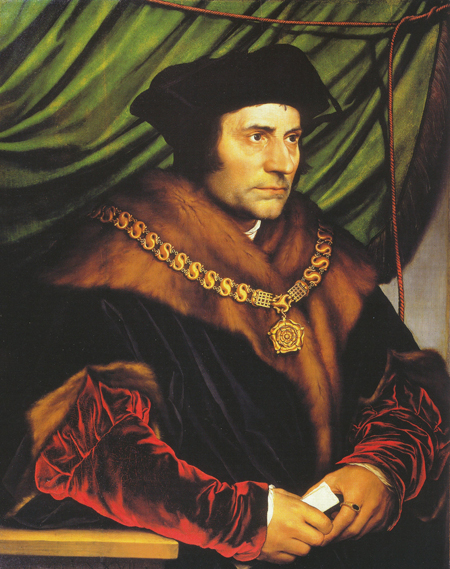
It is, without question, a fascinating statement to so publicly wear a tribute to a statesman who defended liberty of church and integrity of Christian conscience to the inauguration of a president who has shown no sympathy for religious freedoms.
A Nation Becomes More Aware
America is becoming more religiously diverse. Christianity is still the majority, but within it are hundreds of splintered sects, each with their own perspective and beliefs. There is also the growth of non-Christian beliefs within the country, and the new trend of the “religiously unaffiliated.” These sociological changes and inherent differences emphasize the belief in the freedom of religion, and yet the difficulties of real world application. (We want to say we support the right for each person to practice what they believe, but often, we really just want everyone to do it our way.)
A new study conducted by the Barna Group indicates that many adults (in particular, active Protestants) are concerned that religious liberties are under threat. The research, conducted in partnership with Clapham Group, included 1,008 adults from across the religious spectrum, representing the nation’s population from the most active to the most skeptical. Here are five observations about the findings:
First, Americans have a relatively gloomy view of religious freedom in the U.S.
Many Americans express significant angst over the state of religious freedom in the U.S. Slightly more than half of adults say they are very (29%) or somewhat (22%) concerned that religious freedom in the U.S. will become more restricted in the next five years. As might be expected, those who are religious are more concerned than those who aren’t-particularly Christians more so than those adherents to other faiths. Practicing Protestants (46% very concerned) are more worried about this prospect than others; yet, 30% of practicing Catholics are also concerned.
Not only are most Americans worried about the future of religious freedom, many feel the restraints have already started. One-third of adults believe religious freedoms have grown worse in the last decade. Among practicing Protestants, nearly half (48%) say they perceive freedom of religion to have grown worse in recent years. Three out of five evangelicals (60%) perceive religious freedoms to have grown worse.
Second, there seems to be widespread agreement on what “religious freedom” means, in principle.
While there may not be total agreement on how or when to apply religious freedoms, there does seem to be a commonly accepted definition for the term. Nine out of 10 Americans (90%) agreed with the statement, “True religious freedom means all citizens must have freedom of conscience, which means being able to believe and practice the core commitments and values of your faith.” Practicing Protestants are (97%) are most likely to express strong agreement, followed by practicing Catholics (90%) and adherents of other faiths (89%). Even among religiously unaffiliated Americans, or skeptics, among half agreed (91%) with this description of religious freedom.
Yet, many controversial aspects of religious liberty are bubbling over, with most Americans subscribing to us-versus-them narratives.
If most Americans agree religious liberties are being restricted, there is much less consensus on why that shift is taking place. More than half of Americans (57%) believe “religious freedom has become more restricted in the U.S. because some groups have actively tried to move society away from traditional Christian values.” As might be expected, this opinion is again more common among practicing Catholics (62%) and Protestants (76%) and is nearly a universal perception among evangelicals (97%).
Specifically, about three in 10 Americans (31%) say, “the gay and lesbian community is the most active group trying to remove Christian values from the country.” This perception is embraced by half of practicing Protestants (42%), one-third of practicing Catholics (32%), and three-quarters of evangelicals (72%). By comparison, people of a faith other than Christianity (16%) and religiously unaffiliated adults (11%) were much less likely to embrace this viewpoint.
Fourth, there is a substantial difference of opinion about which values should dominate the nation’s vision for the future. Though most Americans agree religious freedoms should be granted to people of all faiths, there are still a significant number of people (23%) who believe traditional Judeo-Christian values should be given preference in the public square. The majority, though, would disagree: two-thirds of Americans (66%) say there’s no one set of values that should dominate the country and another 11% of adults declined or gave another response. Practicing Catholics (24%) are about on par with the national average, while practicing Protestants (35%) and evangelicals (54%) are above average in selecting traditional Judeo-Christian values.
To further explore this, the research asked respondents what type of organization they would be most likely to support. The most common preference was one that protects the religious liberties of all religions (65%). This is the predominant choice of all faith segments, from Catholics (69%), Protestants (68%), adherents to other faiths (56%) and religiously unaffiliated (58%).
One-third of evangelicals say they would support an organization that protects the rights of those who practice the same religion (33%)-and they are the group most likely to select this alternative. Still, half of evangelicals (48%) prefer an organization that protects the rights of all religions. Interestingly, 15% of evangelicals said they would support neither type of organization, perhaps reflecting an inherent skepticism among evangelicals about these kinds of issues.
The third option provided to respondents was an organization that keeps America secular. In total, 16% of Americans selected this option as the likely beneficiary of their support. Interestingly, religiously unaffiliated adults (29%) are less likely to select this option than are those who affiliate with a non-Christian religion (39%). As expected, this is not a popular alternative among practicing Protestants (8%) or Catholics (14%).
 SOURCE: Barna Group
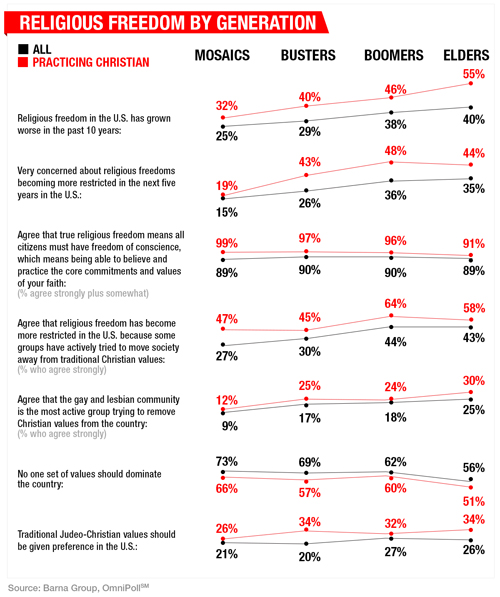
Fifth, younger Americans, in general, are much less concerned about religious liberty issues. The younger you are, the less it would seem you worry about your religious freedoms. The Boomer and Elder generations are much more pessimistic about religious liberty in America when compared to the Buster and Mosaic generations (often referred to as Gen X and Millennials, respectively). Younger adults are less likely to believe religious freedom has gotten worse in recent years; less likely to think some groups have actively tried to move society away from religious freedom; less likely to assert gays and lesbians have been part of this effort; and more likely to believe no one set of values should dominate the country.
Among practicing Christians, the major differences emerge among the Millennials. This younger cohort of Christians, ages 18- to 28-years-old, similar to their peers, is less concerned about issues of religious liberty than are older Christians. Only 19% of younger Christians are very concerned about religious freedoms becoming more restricted and just 12% firmly contend that gay and lesbian advocates have been the most active group trying to remove Christian values. These proportions are half the level of that among older Christians. Further, only one-quarter of Christian Millennials believe that Judeo-Christian values should be given preference, which compares to one-third of older believers.
By any measure, matters of religious freedom are likely to be an area of significant struggle in the years to come. The recent findings of the poll, the establishment of a legal clinic, and the fashion choices of Justice Scalia, are promising (in that they show awareness), but are not silver bullet solutions. The fight for religious liberty will extend for many more years, if not generations. It is a cause we cannot give up. This country was founded on the need for religious liberty, and has continued to evolve and develop around this same issue. The fight for religious liberty is the mark of a true patriot.
Erin Ann McBride is the author of “,” and “,” both available on and Barnes and Noble. You can also find her at The Story of a Nice Mormon Girl. She has recently launched a new website to help self-published and commercially published LDS authors reach their audiences directly. Check out www.mormonbooksandauthors.com to find the latest books from your favorite writers!