



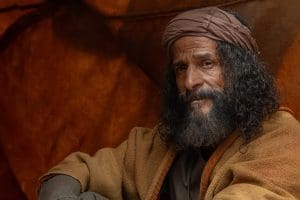






Shakespeare wrote:
“What’s in a name? That which we call a rose by any other name would smell just as sweet.”
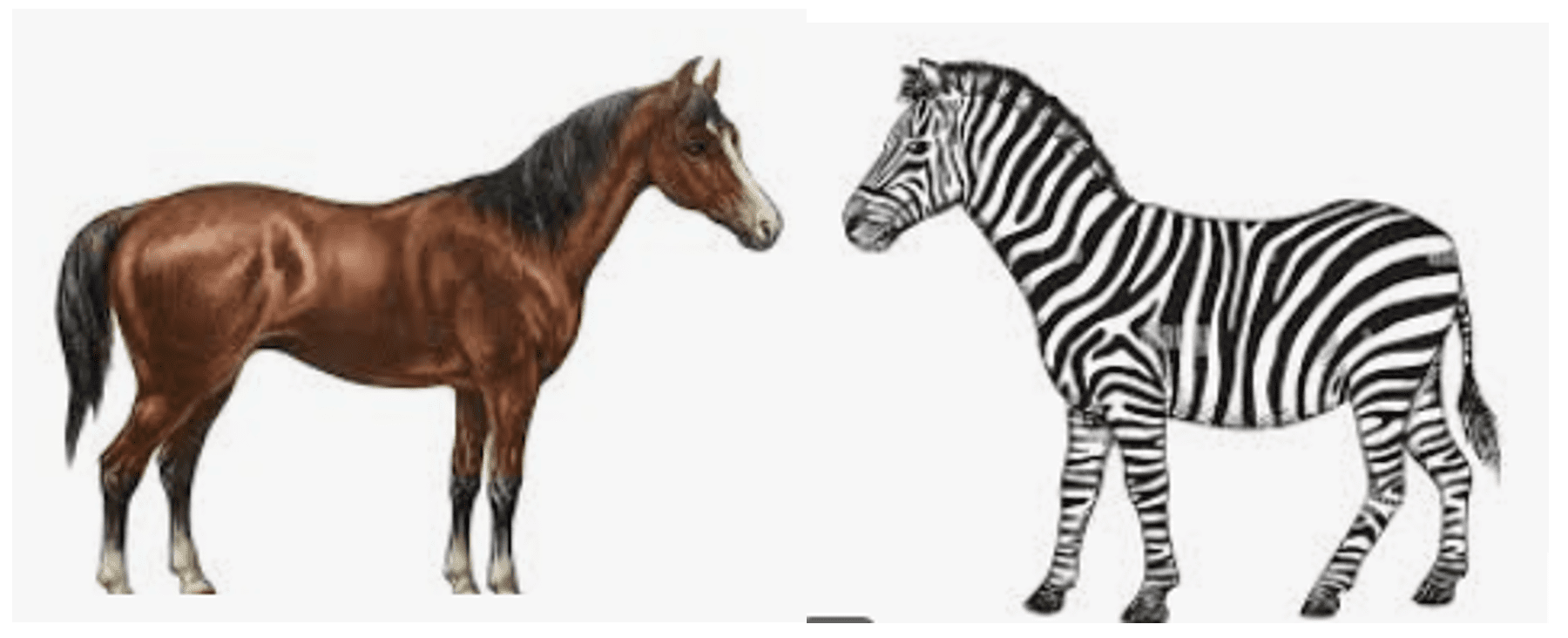
What is a horse? A zebra looks similar, and is in the same genus family as horses, Equus.
What is a car? It is also called an “auto-mobile”, or formerly a “horseless carriage”.

Must it have four wheels, or are three sufficient?
Is a flying car or a floating car still a “car”?

What’s in a name? What is a “Christian”?
People living in the land of Israel (which the Romans named “Palestine”) who came to believe that Yeshua of Nazareth was the promised Messiah of the Jews, the divine Son of God, were first called followers of “The Way”. Some may have called them “Way-ists”. The New Testament says that they were first called “Christians” in the city of Antioch (Acts 11:26). At first it was a derogatory term, but later they acquiesced to it and accepted it as a badge of honor. Among themselves, these original New Testament believers often self-identified as “saints”.
But even during the mortal ministry of Jesus, there were differences among believers. When John reported to Christ that a man who “followeth not us” was casting out demons in the name of Jesus, John “forbade” him. (Luke 9:49, Mark 9:38) But the Savior corrected him, saying: “he that is not against us is on our part”. (v. 40)
In New Testament times and for centuries thereafter, “Christians” were persecuted for their beliefs by both Jews (the religious majority in “Palestine”) and “Gentiles” or Romans. Those who would not renounce their identity as “Christians” were often crucified or fed to lions, or suffered some other horrible treatment. Some were even sewn into the skins of dead animals and placed on poles, soaked with oil, and used as human torches to illuminate Roman nocturnal parties.
Within a few hundred years of the close of the New Testament, “Christians” began to separate into different “clans” or “tribes” based on differences in beliefs. The majority believers in the “universal” church required adherence to a specific set of beliefs about God the Father, God the Son, and God the Holy Ghost. Those who would not subscribe to a profession of faith that agreed with the majority or “orthodox” church were declared “anathema” or “heretic”, and were often tortured and killed by the “orthodox” Christians, via burning at the stake or by other horrible means.
Beginning in the 15th century, larger numbers of “Christians” began to separate from the “universal” church in “protest” of what they viewed as corrupt beliefs and practices. They became known as “Protestant” Christians. They were often persecuted mercilessly by the “universal” church for translating the Bible into their own languages and interpreting scripture for themselves. They rejected many of the books in the Biblical canon that had been accepted for over a thousand years as scripture by the “universal” church.
In the 16th century, a major divide occurred among Protestants over doctrinal issues. Thousands of “Anabaptist” believers in Christ were slaughtered by other “Christians” because of their belief in a “baptism of believers” as opposed to infant baptism.
In 1789 the new Constitution of the United States of America declared that the government of this “land of the free” should not establish any state-sponsored religion, nor “prohibit the free exercise” of any faith.
Yet when a new church arose in 1830 claiming to be a “restoration” of the original New Testament organization formed by Jesus himself, it almost immediately began to face opposition from other “Christians”. This group of believers called themselves The Church of Jesus Christ, but like the faithful “Way-ists” in Antioch, they soon became known at times by a different pejorative term. They were called “Mormons”, and their particular belief in New Testament Christianity was called “Mormonism”. But like the Biblical believers, they preferred the term “Saints”, and since they believed we are living in the “last days”, they call themselves “Latter-day Saints”.
This particular “brand” or “flavor” of Christians had many beliefs and practices in common with other followers of Jesus. But there were differences as well, just as the Protestants had differences with the “universal” church, and indeed there were many differences among Protestants themselves (as the Anabaptists could sadly attest).
So are the Latter-day Saints “Christians”? Well, we are certainly not Protestant or Evangelical or Catholic Christians. And like Martin Luther and other Reformers, we have many different beliefs from the “orthodox” or “traditional” Christians.
But I believe a significant case can be made for the claim that Latter-day Saints are Biblical or New Testament Christians, or as I term it “pre-Nicene” or “Latter-day Christians”.
In his marvelous book Mere Christianity, C.S. Lewis defines the “mere” Christians as “those who accepted the teachings of the apostles”.
Joseph Smith described the beliefs of the Latter-day Saints thusly:
“The fundamental principles of our religion are the testimony of the Apostles and Prophets, concerning Jesus Christ, that He died, was buried, and rose again the third day, and ascended into heaven: and all other things which pertain to our religion are only appendages to it.
C.S. Lewis also said that “if we once allow people to start spiritualizing and refining or as they might say ‘deepening’ the word Christian, it … will speedily become a useless word.”
The beliefs and practices of the Latter-day Saints are wholly in accord with those of the New Testament Saints who were “first called Christians” at Antioch. So if we avoid any “deepening” or adding baggage to that definition, then YES.
Latter-day Saints ARE definitely New Testament Christians.
Robert Starling has been a writer and producer for the NBC Television Network, and has worked at Schick Sunn Classic Pictures, Osmond Productions, and the media production department of The Church of Jesus Christ of Latter-day Saints. He has served in various writing and producing capacities on feature films such as: “Jack Weyland’s Charly”, “In Search of Historic Jesus”, “Tears of a King”, “Scout Camp: The Movie”, and “Abandoned Mine”. His book “A Case for Latter-day Christianity” is available in many bookstores, on Barnes and Noble, and on Amazon.com in printed and e-book versions. A free .pdf version is available upon request at [email protected] . He lives in Riverton, Utah with his wife Sharon. They have four adult children and eleven grandchildren.





Gordon HensleyJune 9, 2025
We may not have the pedigree that Catholics and Orthodox claim, but we are believers in Christ. That is the baseline for being defined as a Christian. We can all agree that there is only one man who is called, in our language, Jesus Christ, the Son of God, the Messiah. Who gets to decide who is a Christian? Does it matter that other churches won't let you have a golden ticket embossed with the word Christian? The Jews are not Christian, yet they are still considered to be The Chosen People.
Gary LawrenceMay 29, 2025
Nice trip down the history of names. We are indeed the re-established original.