



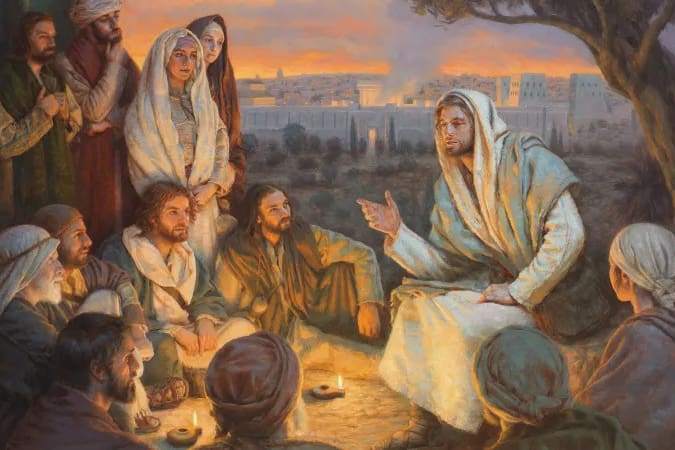


Lent is a forty day journey toward Easter – a pathway lined with preparation and introspection to bring us closer to Jesus. This past Sunday marked the fourth Sunday of Lent, also known in the greater Christian world as Laetare Sunday or Rose Sunday. Did you know that both Advent and Lent have mid-point Sabbaths called Refreshment Sundays? These Sundays are designed to shift the more penitential tone to one of rejoicing. Laetare in Latin means “rejoice!” and comes from Isaiah’s call to joy, which encouraged the Jews who were returning to a ruined Jerusalem after their exile, to rebuild not just their city but their spiritual lives.
“Rejoice with Jerusalem and be glad for her, all you who love her; rejoice greatly with her, all you who mourn over her.” – Isaiah 66:10 (NIV)
Understanding Lent
Every liturgical season has colors associated with it and the color for Lent is purple because it represents the suffering and kingship of Christ. You will remember that the gospel of Mark tells us a purple robe was placed on Jesus in mockery before His crucifixion (Mark 15:17-18). Purple is a deep color which signals a period of solemnity and highlights our need for self-examination and repentance. During Lent, I love that a more violet color is used to remind us of the tiny violet flowers that bow their head in a posture of humility.

This fourth Lenten Sunday is also called Rose Sunday because most Christians introduce a new color on this day – the color of rose pink.

This is usually the time of year when the spring’s first flowers are beginning to peek out of the soil. Right now in our garden beds, crocuses are currently blooming, some daffodils are in full splendor, and the small triangles of our tulip leaves are just starting to make their way heavenward. Rose Sunday acts as a dash of hope – a reminder that we are more than half way through Lent and Easter is coming!

The forty days of Lent, which do not include Sundays, mirror the forty days Jesus spent in the wilderness fasting, praying, and preparing for His ministry. It is a time for almsgiving, for adding something new and positive into our lives, and for going without something that will require a sense of letting go and sacrifice. I like to think of it as a wilderness of our own choosing – a personal act of observance just between us and the Lord. It is this part of Lent that I love most – the fact that I can decide what I will change during these weeks, why I want to make these changes, and how they will bring me into a deeper relationship with my Jesus.
A close friend told me once that for Lent she was giving up worrying about her kids, since worrying (surprise) wasn’t proving to be a productive use of her time. Her heartfelt prayer to God was, “I surrender my kids to you,” repeated as often as necessary.
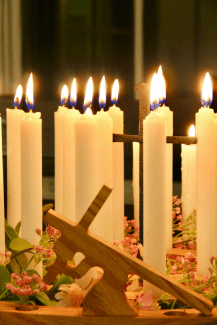
On Sundays, we light our Lenten candles and discuss as a family how our Lent is going. We read from the scriptures about Jesus’ time in the wilderness and other wildernesses traveled by prophets and believers. As the lengthening days of Lent grow longer and brighter, in unique counterpoise, we extinguish one candle a day until the last candle is snuffed out on Good Friday, symbolic of the death of Jesus Christ.
In a sense, Lent offers us a chance to walk with Jesus along a sobering road, for at the end of the road is Holy Week with its wonders, miracles, horrific suffering, and eventual victory over death and sin. There is so much about Lent that helps me feel more awake, more attuned, more disciplined, and the effort of it creates a new spirit within me. I have found that the wilderness of Lent makes the glory and triumph of Easter all the more profound. It acts as a powerful reminder of our absolute dependence upon a Savior and the truth that because of Him, we can count on promised lands beyond our own personal wildernesses.
Pope Francis said, “Lent comes providentially to awaken us, to shake us from our lethargy.”
I believe a discussion of Lent is helpful when wanting to make Easter meaningful because it is one of two seasons that frame the most sacred week of the Christian year – Holy Week. Lent prepares us for Easter. After Easter, most of Christendom observes a fifty day celebration of joy and changed living because of what was experienced or witnessed during Holy Week. This season is known as Eastertide. Both help us see Holy Week with brighter eyes and new purpose.
What is Eastertide?
During the early centuries after the apostles died, it was determined that the wonder and miracle of Easter was so grand it couldn’t be celebrated in just one day. Early Christians created a season called Eastertide by designating fifty days to assimilate the gift of resurrection and Atonement into their lives. It lasts from Easter Sunday to Pentecost Sunday when the Lord’s Spirit was poured out upon His apostles and they spoke in tongues and all who heard them understood.
These fifty days are an opportunity to live with lingering gladness as we assess our lives and determine how we have changed or where we may still want to make changes. It’s a time for remembering our baptism, taking the sacrament with more intention, and looking for ways to share the joy of knowing Christ with others.
Preparing for Holy Week
This framing of Holy Week with these two unique periods before and after Easter provides us time to view Easter not just as a day, but as a season. It helps us prepare for the days of Holy Week and decide how we want to make them meaningful. It encourages us not to put away the Easter decor too quickly, but to consider how we are changed by the unmatched gift of the Lord’s resurrection and atonement. It causes us to ask how we have seen the Lord in our own intimate and personal spaces.
The practice of Holy Week is meant to change us, to bind us more tightly to Jesus – not just the Jesus of scripture, but the Jesus of now, today. Our Lord, alive and at work in our hearts.
Our family has been celebrating Holy Week for fifteen years now, which includes most of the growing up years of our five children. Our experience has been that having an awareness of the Christian calendar slows our hearts to a different rhythm. It moves us into a place where we pay closer attention to God’s spirit and this attention fills us with more love for Jesus and each other.
Maybe this seems obvious, but making time to worship during Holy Week invites holiness into our lives. Holiness is an awareness of what is sacred. It may manifest itself as pure light or knowledge flowing into our minds, it might be an answer to prayer, a relationship healed, a baby in the grocery store who locks eyes with you and smiles, or the bright green moss on a mountain trail – the color so bold and bright against the brown trees and melting snow it feels like a gift.

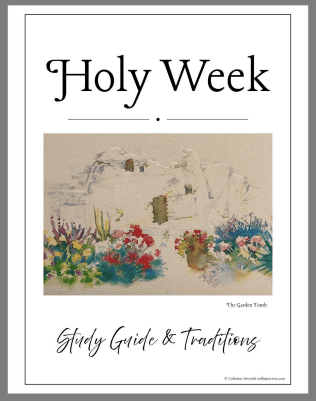
For years I have been sharing iterations of our Holy Week study guide and traditions. It has changed slightly as we’ve tried new things, learned more about Easter, and experienced Easter more broadly. A link to our PDF is below, with readings for each day of Holy Week, ideas for traditions you can do with your family or on your own, and questions you can discuss or consider.
Holy Week Study Guide and Traditions
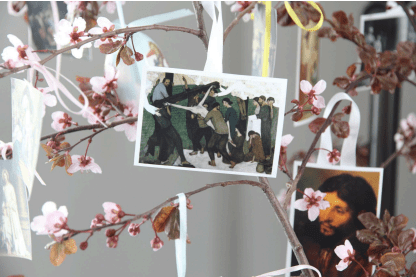
Our favorite family traditions include creating our Easter Tree, doing an Easter Walk, attending the temple, serving our Passover Meal, and lighting our Easter Vigil Lanterns.



Some Holy Week practices we established seem to be more effective when done on a personal and private level, like certain readings, study topics, prayer, and time alone to consider the Lord’s great sacrifice and what it means to us.

I love that most of the traditions surrounding Easter began as grass roots efforts. They were established by followers of Jesus Christ who simply wanted to find ways to express their adoration for and remembrance of Jesus’ great sacrifice for them. Even Easter baskets, eggs, bunnies, and bonnets all stem from religious beginnings and the simple joy of believers who wanted to reverence and worship their Lord.
Tips to Remember
If the thought of doing more for Easter has you feeling overwhelmed, remember that first and foremost, it is always the state of our heart that matters most to God. An outward display without truly loving Him means nothing. We can also do none of these traditions and still have Jesus etched deeply in our hearts. We each have different amounts of bandwidth, skill sets, family structures, time, and desires. Be selective about what works for you. I am positive the Lord does not want us to feel like celebratingEaster is one more thing we have to squeeze in. He wants this season to bring us joy, to inform our spirits and hearts, and to invite holiness into our lives. So here are my tips for making Holy Week meaningful.
- Prayerfully determine how you or your family wants to practice Holy Week. Gather resources, look for ideas and tools. I am loving all the inspiration coming to our church members in light of Easter worship. It’s beautiful to witness and I am cheering it all on! I also believe there are ideas that will come to you directly from God, who is the great Creator, that won’t be on any blog or instagram post. They will be ideas unique to you or your family that will make your Easter season special. Follow those impressions.
- Prepare ahead of time. Some traditions require more preparation than others. Certain meals or recipes will necessitate shopping at the grocery store. Some traditions involve purchasing a few supplies and formulating a plan. Use the weeks of Lent to determine what you want to do during Holy Week and what you will need.
- Leave Holy Week open. I try to leave the days of Holy Week as open as possible. I schedule appointments and things that could be moved to another week before or after Holy Week so we can make room for the traditions we love.
- Simplify and let go of perfection. This tip is for all of us, but especially for families with young children. When our children were small I had grand ideas that sometimes crashed and burned, but it was okay. Teaching was still happening, truth was still filtering into my children’s hearts. When necessary, simplify things. Light one candle rather than making Easter lanterns and talk about the Light of the World. Prepare a couple items from the Hebrew Passover meal for your kids to try and explain their symbolism, rather than trying to get your small children to sit for an entire meal and listen to the Haggadah script. You get the idea. Traditions will change and evolve over the years with your children. Be flexible, not frustrated. All your efforts are accepted and loved by the Lord.
- It’s never too late to start. If your children are teenagers, determine with them what would be meaningful for their Holy Week. If you have grandchildren, begin some traditions with them. If you live alone, invite others to join you for a new tradition, or start some personal practices of your own. I am so grateful to see our church striving to give Easter its needed celebration and recognition by encouraging us, as Elder Stevenson said, to step into “higher and holier Easter worship.”
Below are a few additional resources I’ve seen popping up that might be helpful to you.
Holy Week Overview and LDS Bible Videos – It is difficult to know from the gospels the exact day every event of Holy Week occurred, but here is a link to the church’s synopsis of events and videos that are great for families to watch.
Holy Week Study Companion – My friends at Multiply Goodness created this beautiful stand alone flip guide/study companion with eight punch-out pieces that create a banner.
Deseret Book Resources – Here are a number of books and items for celebrating Easter, from decor, to teaching ideas, to puzzles.
Holy Week Cards – We handed out these lovely Holy Week cards at our Stake Relief Society Holy Week event a few weeks ago.
Easter Tree – This olive wood Easter Tree is a 12-day countdown to Easter with ornaments and a guidebook.
Easter Creche – This Easter scene is interactive and has lights and music that may help with storytelling for young children.
The Chosen – If you haven’t gotten on board with this incredible depiction of the Savior’s life, directed by Dallas Jenkins, it’s time. It’s viewable on Amazon. For episodes specific to Holy week, watch the last episode of Season 4 and all of Season 5.
Our family also loves attending different church’s services during this season like Ash Wednesday services, special events around the Stations of the Cross, and Easter Vigils. Do some looking online to see what services are available in your area that might be of interest to you. There is so much we can learn from our Christian neighbors about how to celebrate Easter.

Just a couple days ago I was outside in our yard with my daughter Sami. We were surveying the new blooms rising out of our garden, the abundant ground cover flowers exploding on a rock wall, and smelling the light pink blossoms already blooming on our wild cherry tree. Sami said, “I love spring so much.” I smiled because I do too. It is the accompanying symbolism of all this new life, occurring at the same time we are offered new life through our Savior Jesus Christ, that makes the patterns of spring so breathtaking and magnificent.

I love Paul’s words to the Galatians about the new life He found with Jesus. If anyone knew a new life and grace undeserved, it was Paul. He wrote,
“I have been crucified with Christ. It is no longer I who live, but Christ who lives in me. And the life I now live in the flesh, I live by faith in the Son of God, who loved me and gave himself for me.” – Galatians 2:20 (ESV)
It’s so beautiful to think about Jesus alive in us – His sacrifice changing us so deeply we cannot help but live differently.
So as we prepare for Easter during this special season, I wish you every bit of inspiration and joy as you determine how to worship during Holy Week. I really believe that those who go slowly
see the sacred, and those who linger, find the holy. Take time to be with Jesus in your own ways. Let His holiness and spirit find you.
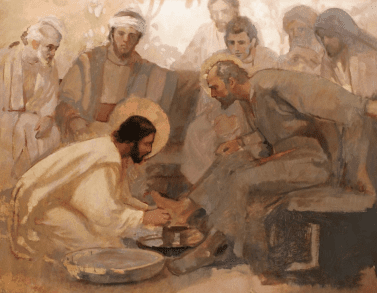
Greatest in the Kingdom by J. Kirk Richards
“As he which hath called you is holy, so be ye holy in all manner of conversation; Because it is written, Be ye holy; for I am holy.” – 1 Peter 1: 16 (KJV)
Catherine Arveseth has a book that will be coming out next year with readings and traditions for Lent, Holy Week, and Eastertide – an invitation to find belonging with Jesus through more meaningful Easter worship.