









To read part 1, “Truths of Restoration and the Bible Verses that Support Them,” CLICK HERE.
In Part 1 of this article, we considered doctrine and history in which the Bible excels. Here in Part 2, we’ll look at areas in which the Book of Mormon excels.
Here are a few doctrines that, in my reading, are either not taught or not taught clearly in the Bible, but this list is not necessarily exhaustive.
God has a Plan
Although the Christian world generally recognizes that God has a plan for his children (and Christians do discuss the “plan of salvation”), neither the word “plan” nor a well-developed concept that God has a plan exists in either the Old or New Testaments.
However, the Book of Mormon liberally teaches that God has a plan, and it is variously called the Plan of Salvation, Plan of Happiness, Plan of Redemption, Merciful Plan of the Great Creator, Plan of our God, Plan of the Eternal God, Plan of Restoration, Plan of Mercy, and Plan of Deliverance from death. (See for example 2 Nephi 9:6,13; 2 Nephi 11:5; Jacob 6:8; Jarom 1:2; Alma 12: 25,33; 17:16; 22:13; 34:9,16; and 42:5,8,15. This list is not exhaustive.)
The Fall and Opposition
While most of the Christian world laments the fact that Adam and Eve ate the forbidden fruit, the Book of Mormon teaches that if they had not eaten, we would not even be here! In 2 Nephi 2, Lehi teaches the precious knowledge that the fall was not only foreseen by God, but that it was a necessary part of God’s plan, providing the essential mortal experience that we must pass through, and allowing Adam and Eve to have children.
Related to that, Lehi explains why there must be an opposition in all things. Alma further explains (Alma 12) the role of opposition, including the purpose for two opposing trees in the garden of Eden—one of life, and one of death—and how God in his mercy prolonged our mortal state, so that we can repent. An understanding of the fall, such as was restored to the earth by the Book of Mormon, is essential for a complete understanding of the plan of salvation and the role of the Savior.
Knowledge of Christ as Son of God Before His Birth
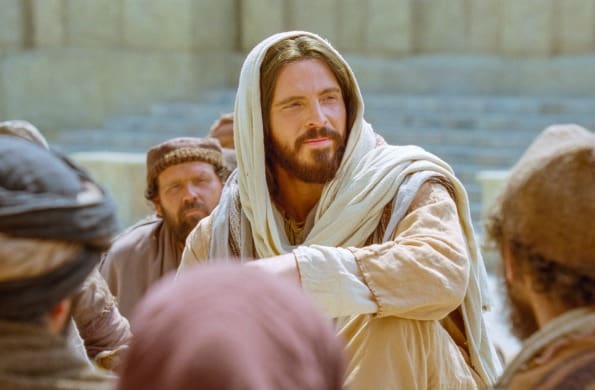
From the Book of Mormon, we know that before Christ was born, people knew that God had a Son, who would be the Savior, and His name would be Christ. However, the Old Testament is not clear on this—probably due to “plain and precious” things taken out and/or lost from it (see 1 Nephi 13:29).
As Joseph F. McConkie states, “We depend on the testimony of Book of Mormon Prophets for our understanding of the doctrine of the divine Sonship of Christ. As we presently have it, the Old Testament makes no reference to the Messiah’s being the Son of God; the Book of Mormon, from the writings of Nephi to those of Moroni, does so consistently.”1
The closest the Old Testament comes are scriptures such as Psalms 2:7 (“I will declare the decree: the Lord hath said unto me, Thou art my Son; this day have I begotten thee”), Isaiah 7:14 (“Behold, a virgin shall conceive, and bear a son, and shall call his name Immanuel.”), Isaiah 9:6 (“For unto us a child is born, unto us a son is given: and the government shall be upon his shoulder: and his name shall be called Wonderful, Counsellor, The mighty God, The everlasting Father, The Prince of Peace.”) Also, Daniel 3:25 refers to the Son of God, but this is spoken by a heathen non-believer, who was unaware of the significance of what he said.
The Old Testament also includes historic events that foreshadow Christ, such as Abraham’s near-sacrifice of Isaac, and Moses lifting up the brazen serpent, symbolic of the crucifixion. In fact, the Old Testament is full of types, symbols, Messianic scriptures, and prophecies of Christ, but these are not plainly stated and often do not imply that Christ is the Son of God.
In contrast, the Book of Mormon is full of explicit and plain prophecies and statements about Christ made before He was born.
- Christ is the Son of God: 2 Nephi 25:16,19 [worship the Father in his name]; Mosiah 3:8 and 4:2; Alma 6:8 and 36:17-18; Helaman 3:28; 5:12 and 14:12.
- Be baptized in the name of the Son: 2 Nephi 31:11-12.
- Father, Son, and Holy Ghost: 2 Nephi 31:21; Mosiah 15:1-3 and 7-8; Alma 11:44.
- The premortal Jehovah looked like he would later look as a mortal: Ether 3:15-16.
- Only Begotten Son: Jacob 4:5,11; Alma 5:48; 9:26; 12:32-34; 13:5-9.
- Book of Mormon prophets quote other prophets regarding God’s Son: Alma 33:13-19 and Helaman 8:13-22.
- More on the Son of God: Alma 5:50; 7:13;11:38-40; 24:13; 34:2,10-14; Helaman 14:2,8.
In the first edition of the Book of Mormon (1830), 1 Nephi chapter 11 verses 18, 21, and 32 read “God,” “Eternal Father,” and “Everlasting God” rather than “Son of God,” “Son of the Eternal Father,” and “Son of the Everlasting God,” as they read today.
Joseph Smith changed the text for clarification, but it stands correct either way, since one of the Book of Mormon’s main messages is that Christ is God (Title page). Note that other nearby verses, namely 1 Nephi 10:17 and 11:6,7 and 24, have always read “Son of God,” and that throughout these chapters, the “Lamb of God” phrase is original to the 1830 edition.
How Jesus is Both the Father and the Son
Speaking of the Savior, Isaiah says that “he shall be called…The everlasting Father” (Isaiah 9:6). But the Book of Mormon teaches us why2: First, Jesus is the “Father of Heaven and Earth,” meaning that He created them (see Mosiah 3:8, Alma 11:38-39, Helaman 14:12, Ether 4:7).
Second, Jesus is the Father through spiritual rebirth (Alma 5:14) of those who come unto him through the principles and ordinances of the Gospel. These people are called His “sons and daughters” (Mosiah 5:7; Mosiah 27:25; 3 Nephi 9:17; Ether 3:14), or His “seed” (Mosiah 15:11-12). (See also the biblical scriptures 2 Corinthians 6:18 and Ephesians 1:5). This is a natural extension of the idea discussed below that by baptism we take upon ourselves Christ’s name.
Third, He is the Father by divine investiture of authority. Mosiah 15:1-5 explains that Christ is called both the Father and the Son—the Father because He was conceived by the power of God, giving Him the power and divine attributes of God. The same idea is expressed in 3 Nephi 1:14, and Ether 4:12.3
Perhaps the closest Bible scripture that hints at the divine investiture of authority concept is John 14:9: “…he that hath seen me hath seen the Father,” but it isn’t as explicit, and has actually caused some confusion in the Christian world, which often misinterprets the verse to mean that the Father and Son are the same being.
The Holy Ghost as a Member of the Godhead and Known in Old Testament Times
The Old Testament does not contain the term Holy Ghost, although a very few references about God’s spirit imply the Holy Ghost. (There are three Old Testament references to “holy spirit”: two in Isaiah 63, and one in Psalms 51, and neither is very plain.) However, even in those cases, not enough information is given to show that the Holy Ghost is a separate individual, let alone a member of the Godhead.4
The Bible never explicitly states that the Holy Ghost is a God or a member of the Godhead. There are, of course, several New Testament references about the power and roles of the Holy Ghost, and His effect on people, all of which combined are used by the Christian world to show that He is a God. Two of these references are: Matthew 28:19 “Go ye therefore, and teach all nations, baptizing them in the name of the Father, and of the Son, and of the Holy Ghost” and 1 John 5:7 “For there are three that bear record in heaven, the Father, the Word, and the Holy Ghost: and these three are one.”
While being one with the Father and the Son as this scripture strongly implies, the Holy Ghost is God. Jesus prayed that believers may also be one with the Father and Son (John 17:21). Therefore, the Bible lacks specific evidence that being one with the Father and Son makes the Holy Ghost God.
In contrast, the Book of Mormon makes it clear that the Holy Ghost was operative and known in Old Testament times, and that He is a member of the Godhead.
Here are a few of a multitude of examples: 2 Nephi 31:13 “then shall ye receive the Holy Ghost; yea, then cometh the baptism of fire and the Holy Ghost; and then can ye speak with the tongue of angels.” verse 18: “and ye have received the Holy Ghost, which witnesses of the Father and the Son, unto the fulfilling of the promise which he hath made.” verse 21: “and now, behold, this is the doctrine of Christ, and the only true doctrine of the Father, and of the Son, and of the Holy Ghost, which is one God, without end. Amen.” Alma 11:44 “before the bar of Christ the Son, and God the Father, and the Holy Spirit, which is one Eternal God.”

Several Items on Baptism
First, the Book of Mormon explains why Jesus was baptized (2 Nephi 31). While the New Testament informs us that Jesus was baptized to “fulfill all righteousness” (Matthew 3:15), the Book of Mormon is much more explicit on how Jesus’ baptism “fulfills all righteousness.” Nephi tells us that Jesus was baptized first as an example for us, and second to show His humility and obedience before the Father.
This second reason requires some explanation, which the Book of Mormon gives us in the phrase, “according to the flesh”: “But notwithstanding he being holy, he showeth unto the children of men that, according to the flesh he humbleth himself before the Father, and witnesseth unto the Father that he would be obedient unto him in keeping his commandments.” (2 Nephi 31:7, italics mine). Jesus’ situation was unlike any other: He was innocent, like little children are, but He was accountable, and temptable of the devil, like we are.
In contrast, little children are unaccountable, because they don’t yet understand good and evil, and cannot be tempted by the devil; and all accountable individuals besides Jesus are not entirely innocent. So, it was important that even sinless Jesus show, by baptism, that according to the flesh, He was humble and obedient to the Father. In other words, even though He was subject to temptations of the devil, as well as the passions and feelings of the human body, He would use his agency and His knowledge of good and evil to be completely obedient.
Second, the Book of Mormon shows that baptism was a necessary ordinance from the beginning and was practiced before the time of Christ. Scriptures throughout the Book of Mormon command water baptism, but of most interest here are those from the BC era, showing that baptism was practiced before Christ’s time, and that it was done looking forward to Him. Some relevant scriptures from before Christ’s birth are 2 Nephi 9:23; 2 Nephi 31; Mosiah 18; Alma 5:3,62; 7:15; 8:10; and 48:19; Helaman 5:19.
Third, the Book of Mormon teaches that infant baptism is wrong, because “little children are alive in Christ” (Moroni 8), meaning that Christ’s atonement has paid for Adam’s fall—the effects of which we all inherit—so that we are punished only for own transgressions. Christian churches today are divided on the issue of baptism for children, some prohibiting and others encouraging it. The Book of Mormon provides exactly what they need: an authoritative statement on the issue.
Fourth, the Book of Mormon teaches that, at baptism, we take upon us the name of Christ. The phrase “take upon the name of Christ” or similar phrases are absent from the Bible, as is the connection between our taking on ourselves Christ’s name, and our baptism (although Paul says that we “put on Christ” by baptism, Galatians 3:27). Some of the Book of Mormon scriptures addressing this topic are: 2 Nephi 31:13; Mosiah 5:8, 6:2; Alma 34:38; 46:18, 21; 3 Nephi 27:5-6; and Moroni 6:3.
Furthermore, not only do individual saints take upon themselves Christ’s name, but the name of the church itself is to be “called in [Christ’s] name” (3 Nephi 27:8). Thus, the fact that The Church of Jesus Christ of Latter-day Saints is called in His name points to its authenticity.
Fifth, the covenant of baptism is clearly spelled out in Mosiah 18:8-10 (cf. D&C 20:37). God’s part of the covenant includes giving us the Holy Ghost (2 Nephi 31:13; Mosiah 18:10). Although baptism is associated with repentance in the New Testament, it is not clearly put into a covenant context. In fact, many Christians today think that water baptism is optional, not part of any covenant, and not a prerequisite for the gift of the Holy Ghost.
Sixth, despite many biblical evidences that baptism must be performed by immersion, many Christians today practice other methods. The Book of Mormon, however, is very clear on the proper method of baptism (3 Nephi 11:25-26). Thus, in many ways, the Book of Mormon teaches the true doctrine of baptism.
Grace and Works
The Book of Mormon is very clear that we are saved only through God’s grace, and it is also clear that we cannot access that grace without faith in Christ, repentance, baptism, and the gift of the Holy Ghost. While many today are confused about man’s role in his salvation, especially from a misunderstanding of Paul’s writings, a study of the Book of Mormon scriptures will clear up the confusion. The relationship between grace and works is taught with special clarity in the Book of Mormon—especially for me in Alma chapters 12, 34, 41, and 42, but in many other places as well.
These chapters explain how God is both just and merciful, and how, through the atonement, “only the penitent are saved” (Alma 42:12-24). No other passage in all of scripture explains so well the relationship between justice and mercy and how Christ’s atonement has made Him full of both. Much of the Christian community fails to understand the profound distinction in being saved from our sins and being saved in our sins, which Amulek and Helaman taught so clearly (Alma 11: 34-37; Helaman 5:10-11)!
Nephi’s Vision
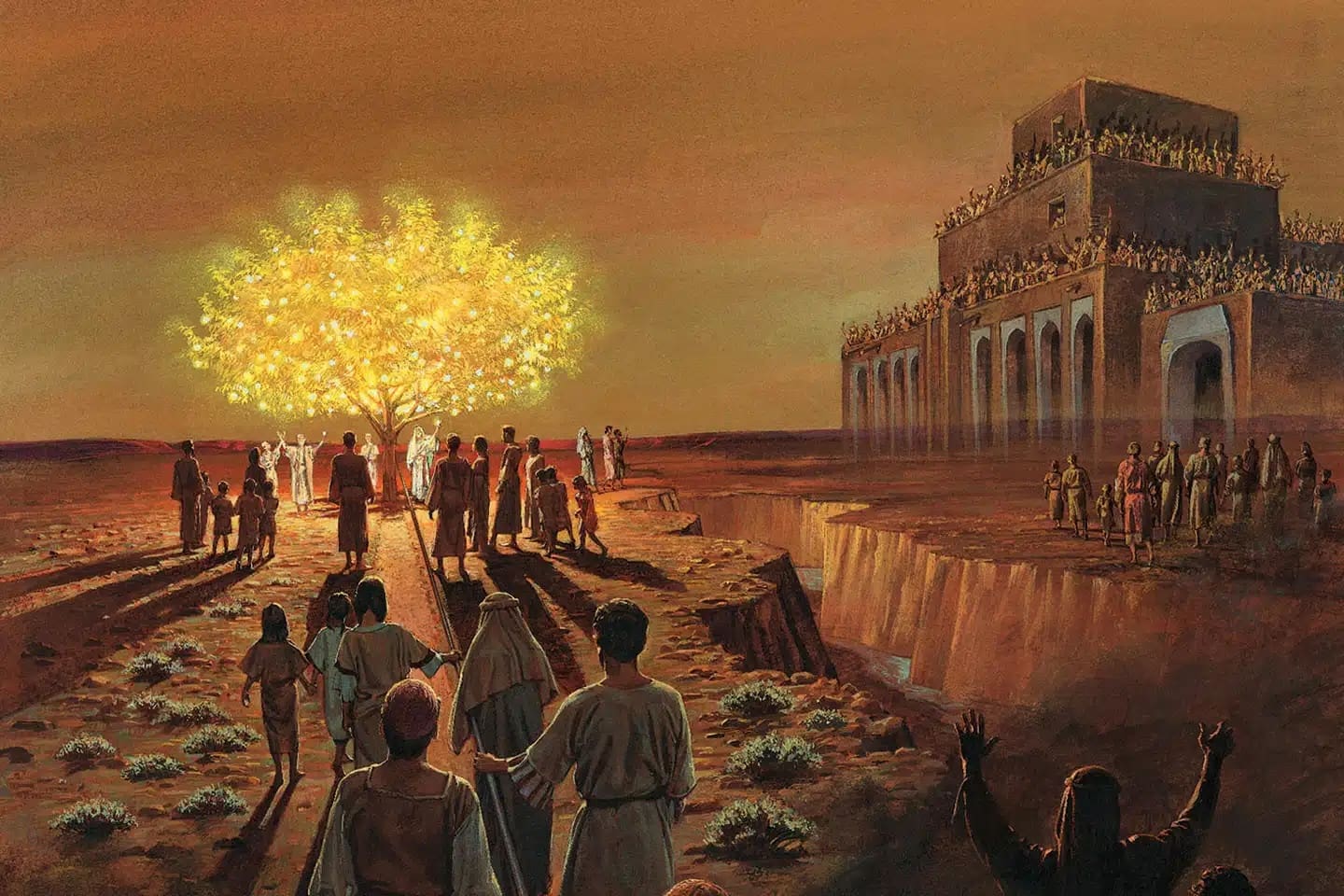
Earlier, we briefly considered the biblical treasure that is the Revelation of St. John, and how the first part of that vision was recorded by Nephi. Nephi’s vision contains the unique doctrines of the Great and Abominable Church, explains the loss of “plain and precious truths” during the apostasy, of the divine inspiration of Columbus, the Lord’s hand in the establishment of the USA, the restoration of the gospel, and the idea of the “condescension of God” (see 1 Nephi chapters 11-14). It also contains the beautiful and motivating imagery of the tree of life, the iron rod, and the warnings of the great and spacious building.
The Resurrection
The New Testament, and to a lesser degree, the Old Testament, does teach about the resurrection. Some notable passages are:
- Matthew 27:52-53 “And the graves were opened; and many bodies of the Saints which slept arose, and came out of the graves after his resurrection, and went into the holy city, and appeared unto many.”
- Luke 24:39/John 20:19, 26 Christ’s resurrection story in which He demonstrates that resurrected bodies can eat, be felt, and enter locked rooms.
- 1 Corinthians 15:20-23 How Christ is the “firstfruits” of the resurrection, implying our resurrection will be similar to His.
- Job 19:26 “Yet in my flesh shall I see God.”
However, these can be and are subject to various interpretations, and thus, the Christian world does not have a uniform concept of the resurrection.
In fact, Joseph F. McConkie points out that
One may search the Bible from cover to cover in hopes of finding a definition of the word resurrection, but the effort will be in vain. The Old Testament does not even mention the word, and the closest we can come in the New Testament is Paul’s statement in 1 Corinthians 15:44 that we are ‘raised a spiritual body,’ which has led many to conclude that the resurrection is not corporeal. The Book of Mormon, by contrast, plainly teaches the nature of the resurrection5. (McConkie goes on to cite Alma 11:43-45 and Alma 40:23.)
There is more: Only the Book of Mormon contains the teaching that the physical resurrection is necessary to avoid being subject to Satan in the hereafter (2 Nephi 9:8-9).
First and Second Spiritual Deaths
Spiritual death is being cut off from the Lord. The first spiritual death occurred through the transgression of Adam in the Garden of Eden. Adam and Eve, previously able to walk and talk with God, were shut out of His presence. All of us inherit this death through Adam, and thus we are born into the world away from God’s presence.
However, since Christ has atoned for Adam’s transgression, the first spiritual death will be overcome for each of us, and we will all be brought back into Christ’s presence to be judged. The second spiritual death is the one caused by our own sins (but is only complete for those who become sons of Perdition—see D&C 76:37).
The Book of Mormon clearly teaches the concept of the two spiritual deaths in Helaman 14:15-18. (See also Alma 12:16 and Mormon 9:13-14). The only mentions of “second death” in the Bible are four references in Revelation, but these give no concept of the two different spiritual deaths described in the Book of Mormon. The phrase “spiritual death” occurs five times in the Book of Mormon and is not found in the Bible.
Infinite Atonement
Christ’s atonement/sacrifice was infinite. This term is not used to describe the atonement in the Bible, but is used several times in the Book of Mormon (2 Nephi 9:7; 2 Nephi 25:16; and Alma 34:10, 12, 14). Although the Book of Mormon authors who used this term do not explain it, its mere use prompts us to ponder its meaning, and as we do so, our understanding of the atonement increases.
Some of the many ways in which the atonement is infinite are6: 1) The Infinite of the divineness of the one sacrificed. 2) Infinite in power. 3) Infinite in time, applying retroactively and into the future. 4) Infinite in coverage, applying not only to humans but to all of creation. 5) Infinite in depth – covers everything. 6) Infinite in degree of suffering. 7) Infinite in love. 8) Infinite in blessings it bestows, including the fact that through the atonement, persons can be exalted, thus making them infinite beings. Each of the items in this list is an entire topic of study.

Christ Visited the New World; His Revelations to the Branches of Israel
The Book of Mormon makes clear that Christ is concerned with the entire house of Israel, not only the branch that was in Jerusalem during His mortal life. He visited the New World branch of Israel (3 Nephi 11-28), thus fulfilling His “other sheep” promise to His disciples (compare John 10:16 with 3 Nephi 15:12-18).
Furthermore, He promised to visit the lost ten tribes as well. We are informed by Nephi (2 Nephi 29:12-13) that the lost tribes also have scriptures which we expect to receive someday. Jesus taught the Nephites about the gathering of Israel in the last days, which will commence with the dissemination of the Book of Mormon (3 Nephi 21). Thus, while many Christians today find little relevance in the Old Testament, the Book of Mormon reminds us that God still remembers the covenants He made with Israel in Old Testament times and is now fulfilling them.
Sacrament Prayers
Just as baptism must be performed in the way Jesus has commanded if it is to be acceptable by God, so too the sacrament must be administered properly, and thus it is important that the Book of Mormon teaches that there are proper words that must be said in the sacrament prayer, and teaches what these words are (Moroni 4 and 5; these were repeated in 1830 in a revelation at the organization of the Church—see D&C 20:77,79).
Furthermore, the wording of the prayers make it clear that the sacrament puts us under covenant, a concept that is not found in the New Testament (as predicted by Nephi’s vision, in which he learned that “many of the covenants have they taken away”—1 Nephi 13:26.) The content of these prayers yields further insights, which is beyond the scope of this discussion, except to point out that once again, as noted in the baptism section above, the sacrament prayers teach that we are to “take upon us the name of [God’s] Son.”
Information on Melchizedek and the Melchizedek Priesthood
Paul’s discussion of the correlation in the change in laws from the lower law of Moses to the higher law, with the change in priesthood from Aaronic to Melchizedek, is profound (Hebrews 7). Yet information is lacking in both the Old and New Testaments about just who Melchizedek was, and what it means to hold the Melchizedek priesthood.
This information has been restored in many ways in this dispensation: through Joseph Smith’s translation of the Bible, through revelations such as D&C 84 and 107, and through Alma chapter 13. From this Book of Mormon chapter, we learn that Melchizedek was king of the wicked city of Salem, but that he successfully persuaded his people to repent. Furthermore, we learn that those who receive the Melchizedek priesthood were foreordained to such in the premortal existence.
The New Jerusalem to Be Built on the American Continent
Twice in the Book of Mormon, we are taught about the New Jerusalem. The Savior teaches His New World people that those on their land will establish the New Jerusalem (3 Nephi 20:22). Later, Moroni teaches that the New Jerusalem will be built on the American continent and will be a separate place from the Old Jerusalem, which will be rebuilt as a holy city (Ether chapter 13). The Bible speaks of the New Jerusalem only in the Revelation of St. John, and the references there are not clear as to its location, nor are they clear that it would be distinct from the Old Jerusalem.
Conclusion
I have found that I appreciate each volume of scripture more if I search for its special contributions as I read it and ponder on how each volume has affected my total understanding of the gospel. The lists I have presented are a result of my own study and reflect what is important to me; others may have differing lists. I have limited the scope of this discussion to the Bible and the Book of Mormon, but one could also list the veritable flood of new information from the Lord on a variety of topics contained in the Doctrine and Covenants or Pearl of Great Price.
The fact that the Book of Mormon can, in a coherent way, add so much to our understanding of complex gospel topics, clarify ambiguous biblical passages, and yet remain in agreement with the Bible—as well as motivate us to live the gospel—is to me profound evidence of the truth of the book and the divine call of Joseph Smith. This is in addition to direct spiritual confirmation of the book and its translator.
Ultimately, the different volumes of scripture contain more similarities to each other than differences, as each testifies of Jesus Christ, His atonement, His gospel, and teaches us how to apply the atonement in our lives. Truly, both the Bible and the Book of Mormon contain the fullness of the gospel. As we study the gospel by topics, it is most helpful to read all that the Lord has to say on a particular subject throughout the standard works and in the teachings of the living prophets.
Footnotes
1 This is a slightly edited version of a chapter by the same name in Richard D. Gardner, Beneficiaries of the Restoration: Our Privileges, Responsibilities and Attitude Regarding Scripture, History, Truth and Zion (Salt Lake City: Eborn Books, 2018). Used by permission.
2 On November 28, 1841, Joseph Smith said, “I told the brethren that the Book of Mormon was the most correct of any book on earth, and the keystone of our religion, and a man would get nearer to God by abiding by its precepts, than by any other book.” See Teachings of the Prophet Joseph Smith (compiled by Joseph Fielding Smith) (Salt Lake City: Deseret Book, 1976), p. 194. Or, History, 1838–1856, volume C-1 [2 November 1838–31 July 1842], p. 1255, The Joseph Smith Papers, accessed July 15, 2025, https://www.josephsmithpapers.org/paper-summary/history-1838-1856-volume-c-1-2-november-1838-31-july-1842/427?highlight=\
3 Latter-day Saint scholar and teacher Robert L. Millet provides a list of 87 important teachings of the Book of Mormon (many unique to it) in Appendix 1: Powerful Precepts from the Book of Mormon in Remember, Remember: Life Changing Truths from the Book of Mormon (Salt Lake City: Deseret Book, 2023), pp. 229-234.
1 Joseph Fielding McConkie, “A Comparison of Book of Mormon, Bible, and Traditional Teachings on the Doctrines of Salvation,” a chapter in Paul R. Cheesman, ed., The Book of Mormon: The Keystone Scripture (Prove, Utah: BYU Religious Studies Center, 1988), p. 74.
2 The doctrine of Jesus as the Father was formally explained in The Father and the Son: A Doctrinal Exposition by the First Presidency and the Twelve, in 1916. (This is available in the April 2002 Ensign, or in the Encyclopedia of Mormonism Appendix 4: Doctrinal Expositions of the First Presidency, pp. 1670-1677.) A beautiful discussion of this doctrine as contained in the Book of Mormon is given by Robert L. Millet in “The Ministry of the Father and the Son,” a chapter in The Book of Mormon: The Keystone Scripture (see complete citation above). The scriptures I have chosen to illustrate the Fatherhood of Jesus, are not part of the First Presidency proclamation; I found them for myself.
3 See also D&C 93:14. I have discussed at length several of these scriptures in which Christ is called the Father, in The Heart of the Gospel: Explorations into the Workings of the Atonement (Salt Lake City: Eborn Books, 2013), pp. 145-148.
4 I discuss some of the history of the Latter-day Saint understanding of the Holy Ghost in my essay “Who is the Holy Ghost?” in Who is the Holy Ghost? (Salt Lake City: Eborn Books, 2024). In another essay in the same book, “The Holy Ghost’s Roles in the Godhead, and in our Sanctification and Sealing” I discuss why the Holy Ghost and His gift are essential for our salvation.
5 Joseph Fielding McConkie, “A Comparison of Book of Mormon, Bible, and Traditional Teachings on the Doctrines of Salvation” (complete citation above), pp. 80-81.
6 I am indebted to Tad R. Callister for pointing out and discussing the first seven of these in his book, Infinite Atonement (Salt Lake City: Deseret Book, 2000).
7 The one minor exception to the word-for-word agreement of the sacrament prayers as contained in D&C 20 and Moroni 4 and 5 is that the D&C 20:77 version of the bread prayer uses “has” whereas the Moroni 4:3 version uses “hath.”





GTOOctober 28, 2025
This is excellent and totally worth the effort you put into it. At the Latter-day Believers YouTube channel, we just published an interview with a former Episcopalian priest who converted. Her husband was a Lutheran minister. They both had master's degrees in divinity and have studied all the greatest theologians. She says the theology in the Book of Mormon is impossible for any of these great religious teachers to achieve. When critics try to match the Book of Mormon with the Spaulding manuscript or View of the Hebrews, etc., they are forced to look at language and style. They can't touch theology.