


Editor’s note: During this Old Testament study year, we are going to run several excerpts from E. Douglas Clark‘s classic book The Blessigs of Abraham: Becoming a Zion People. Based on 35 years of research and fascination with Abraham, it opens the door to see Abraham and the covenant blessings in a new and expanded way.
Foreword
When the BYU Jerusalem Center for Near Eastern Studies was near completion, a discussion was held on what to name it. One proposal was Beit Abraham, meaning “house of Abraham.”
Why so?
Because in Jerusalem all three monotheistic religions, Judaism, Christianity and Islam – and more inclusively still, the Latter-day Saints – identify with Abraham. Members of each tradition trace crucial elements of their faith, their sense of mission, their aspirations, their mode of life, and even their rituals to him.
The name, it was thought, would suggest that the Center was focused on reconciling the family of Abraham. At the core would be the Messiah. We soon found that many segments of the religious world tend to claim Abraham unto themselves and only themselves. And those divisions run deep. So the name idea was dropped.
Yet common roots go deeper. DNA analysis suggests that 95 percent of the present population of the earth have a genetic connection to Abraham. He has become not only the father of nations but the father of virtually all nations. For these and other reasons, Abraham has been described as the most pivotal man in human history[1]
In the Encyclopedia of Mormonism, Douglas Clark has written a concise and coherent summary of all this. Now in lively detail he has distilled decades of exhaustive study into this book.
The task required that he become adept in Hebrew and related languages, compass the entire spectrum of documents, some only recently recovered, including canonical books, legends, inscriptions, iconography, and apocryphal and pseudepigraphal works. And much else. At the heart of his study are much-neglected insights in the Book of Abraham, the Doctrine and Covenants, and the teachings of the Prophet Joseph Smith.
There is a Biblical and Talmudic admonition never to speak of God as “the God of Abraham, Isaac, and Jacob.” But rather as “the God of Abraham, the God of Isaac, and the God of Jacob” – thus to underline that each patriarch and matriarch came directly to God. Each found him in the same way and at the same sacrificial cost.
Our own Book of Abraham describes how Abraham’s eyes were opened to wondrous visions of the cosmos and his place in it. He was touched by the hand of God. And then he began to see.
Then what superlative promises and fulfillments came to him and to his? And how do they relate to our destiny in the cause of Christ, which will culminate in the redemption of Zion?
This book is a definitive answer. It enables one to see, with 20-20 clarity, the legacy of Abraham and Sarah and what it means – or can mean – to all the human family. Read on.
Truman G. Madsen
Preface
One cannot grow up in the Church, attending seminary and Sunday school, without learning something about the greatness of Abraham. For me, however, he seemed merely one of many such prophets and patriarchs of ages past – until one day as a senior in high school I opened our monthly Church magazine and began to read an article by Dr. Hugh Nibley.
The subject was Abraham, whose life was depicted from numerous ancient traditions and sources of which I had never heard. I still cannot adequately express what I experienced, except to say that as I read, I felt irresistibly drawn to this uniquely remarkable man and felt utterly compelled to find out everything possible about him.
This book, completed some thirty-five years later, is the result.
The years following high school afforded me increasing opportunities to learn of the great Patriarch. As a student at Brigham Young University, I sat on the front row of Dr. Nibley’s Pearl of Great Price class, attended all his lectures on campus, collected all his publications, asked him questions about Abraham, and bought his book Abraham in Egypt the day it first appeared in the campus bookstore. Years later I felt honored to be asked to write the foreword to the expanded edition of that book.
Other BYU professors also taught me about Abraham – men like Dr. Truman Madsen, whose stories in our Book of Mormon class about his tour of the Holy Land with President Hugh B. Brown remain vivid in my memory. But it was a research paper assignment in an Old Testament class that allowed me to discover for myself some of the sources that Nibley had quoted. For a week I practically lived in the library, missing all my classes while mining newly found treasures telling of Abraham.
So why hadn’t someone, I began to ask myself, woven all this information into a comprehensive biography? I was sure that such a book must have been written, and I continued to search for it long after I completed my research paper. Only when I concluded that the book did not exist did I determine to try and write it myself.
Doors seemed to open as I pursued the project. During law school at BYU, Professor John (“Jack”) Welch’s biblical law seminar afforded me an opportunity to plumb the depths of the story of Isaac’s offering in ways I had not done before. Since then I have been a beneficiary of Jack’s friendship and significant scholarly contributions.
It was also during law school that I came to feel stymied because I could not read the Genesis story of Abraham in its original Hebrew. Weeks later in a casual conversation with a friend, I happened to learn of a beginning Hebrew seminar to be taught on campus the following summer by David Noel Freedman, renowned biblical scholar and editor-in-chief of Doubleday’s prestigious Anchor Bible series.
I immediately registered for one of the few remaining slots.
On the first day of class, Dr. Freedman announced that he had chosen Genesis 22, the story of Abraham’s offering of Isaac, as the text from which to teach us Hebrew.
Our daily classes lasted all morning, and in the afternoons Dr. Freedman kept visiting hours, of which I took full advantage. To my surprise, I was usually the only one there, asking a question after question in what turned into personal tutoring sessions on Abraham by Dr. Freedman. The next summer I was fortunate to be a part of his follow-up course.
From Dr. Freedman I learned of the Society of Biblical Literature and its annual meeting, a four-day event held every November that attracts thousands of biblical scholars who present papers, exchange ideas, and discuss research. My attendance at these meetings over the next two decades provided significant opportunities to learn from numerous scholars.
Those same years saw an unprecedented emergence of ancient Abrahamic texts that had been lost or forgotten for many centuries. Much of this material is part of that body of Bible-related literature known as the pseudepigrapha – the word literally means “false writings” or “writings with false superscriptions” – so called because it is generally assumed that these texts could not possibly have been written by the purported authors, namely prophets and patriarchs going all the way back to Abraham and Enoch and even Adam. We Latter-day Saints, with our restored scriptures containing actual words of those very men, have a different view of what is possible.
While some of those recently emerged ancient texts have been available for a century or more, many more became available for the first time in the 1980s, with the publication of a massive two-volume set edited by James H. Charlesworth of Princeton. A few years later, thanks to an aggressive media campaign waged by Hershel Shanks, editor of Biblical Archeology Review, the remaining unreleased Dead Sea Scrolls, first discovered in the late 1940s, were finally made available. Meanwhile, other ancient documents and traditions have continued to come to light in what might well be called an explosion of biblical texts, greatly expanding our knowledge of the Abraham story. It was an unusually propitious time to be seeking information about him.
During my initial years of law practice in Salt Lake City, I was fortunate to take an evening Hebrew class from John Tvedtnes, and then arranged for private tutoring by him in the Abraham portion of the Hebrew Bible. In the ensuing years, John has magnanimously shared from his extensive knowledge, answering numerous questions I have posed to him about Abraham and other subjects.
I was also fortunate to be part of a guest seminar taught at BYU by visiting lecturer Rabbi Aron Siegman, who read the book of Genesis with us in Hebrew and shared with us his lifetime of rabbinical learning. He kindly discussed with me various aspects of the Abraham story and deepened my understanding of the rich rabbinical heritage that preserved so much of that story.
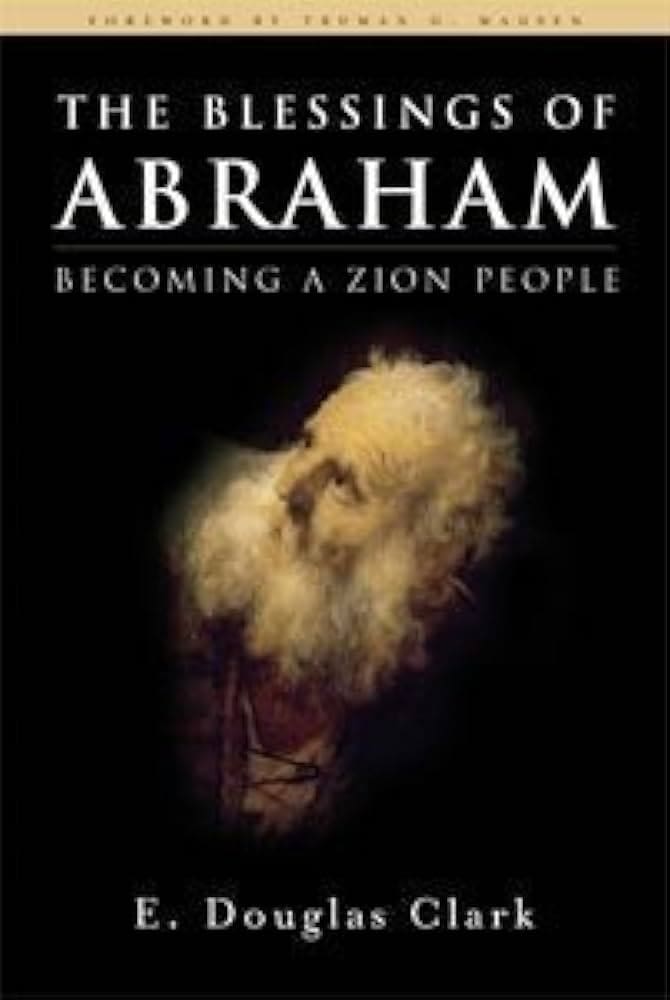
As a young lawyer, I participated in a two-week legal study tour of the Soviet Union. There I saw what I still believe to be the greatest work of Abrahamic art ever produced. It is Rembrandt’s immortal masterpiece of Abraham’s sacrifice of Isaac, and it hangs in the Hermitage in St. Petersburg (called Leningrad when I was there). The cover of this book is adorned by Abraham’s face from that painting. On the day I first saw it, I wrote the following in my journal.
In late afternoon I went into the Hermitage and, after a long and brisk walk, guided by the responses to my repeated question “Where’s Rembrandt?,” my own eyes beheld Rembrandt’s beautiful original canvas The Sacrifice of Abraham. I was awed, and remained there for approximately an hour as I studied the painting intensely and reflected on this most graphic and moving depiction. The areas of greatest light on the canvas are Abraham’s face and Isaac’s youthful body. The knife is in midair, just dropped from Abraham’s strong hand. Abraham’s face, and particularly the eyes, tell the real story. His brow is wrinkled with intensity. Tears are visible. But the eyes show a resolute submission, a look of having already made the sacrifice. They represent resignation to and trust in the wisdom of Him who ordered the deed; they show a total lack of understanding of why the deed is necessary, combined with a total resolve to do it; they reveal ultimate obedience, submission; and startled by the voice from heaven, Abraham appears almost in a trance, but ever ready to hear and obey. My eyes were fixed on his eyes for a long while as I tried to contemplate the greatness of the soul of Abraham. My soul was touched, as I realized that I am a descendant of these men, inheritor, through faithfulness, of the blessings of Abraham. I also contemplated the fact that as Abraham did not withhold his son, so God did not withhold a later Son of both Abraham and God so that all of God’s children might be blessed. Standing before that work of art, I vowed to God to finish my book.
Back home as I worked toward my goal, I came to believe that there were important things about Abraham I would not understand until I walked where he had walked. After substantial planning, I traveled for a month to the Mediterranean and the Middle East, where I retraced Abraham’s route in the spring of 1987, fortuitously just months before the Intifada closed much of the West Bank that contains key Abrahamic sites.
My journey began with a flight from Salt Lake to New York, and then to Rome, where I walked through the Christian catacombs and saw the frescoes of the Bible stories, including the sacrifice of Isaac. Athens was my next stop, where I visited the Agora, where the Apostle Paul had preached the gospel, as he said, in fulfillment of God’s covenant to Abraham.
Continuing to Istanbul, I encountered a gracious university professor who liberally imparted from his wealth of knowledge about the area of Urfa (or SanliUrfa, “famous Urfa”), Turkey – my destination as the probable place of Abraham’s birth and then generously shared a disproportionate share of his family’s evening meal. From Istanbul I flew west to Ankara, and from there still west to Diyarbakir, where I hired a taxi for the long ride to Urfa. When I explained to the Kurdish driver that I was there to explore the route of Abraham, or Ibrahim, he corrected me with a smile: “Ibrahim Khalil,” he emphasized – “Abraham the Friend.” The ancient Patriarch’s friendship with the Almighty is still a living reality for many of his descendants.
In fact, their friendship seemed to shelter me as I traveled through the land of our mutual forefather, the land “whose hills and valleys echo with the footsteps of the Patriarchs.” [2] For two days in Urfa and Haran a young Turkish guide cheerfully guided me with no expectation of reward, recounting the local traditions about the birth and early life of the prophet Abraham.
When I left Turkey for Syria, a fellow traveler from Lybia took it upon himself to watch over me and assure my safety as he included me in his small circle of travelers, which included a student from Lebanon and a sheik from Saudi Arabia. Not long before, the United States had bombed Libya, but my Libyan friend assured me earnestly: “Reagan, Qaddafi – enemies. You, me – friends.” It seemed remarkable that traveling in Arab lands, where many Americans feared to tread, I felt shielded by the legendary Muslim hospitality that remains part of the living heritage of Abraham.
In Egypt I joined a BYU travel study group for an unforgettable tour of Giza, Luxor, and the Valley of the Kings, where our Book of Abraham, as Parley Pratt described, “slumbered in the bosom of the dead” for over three millennia, “in the sacred archives of Egypt’s moldering ruins.”<[3] Slumbering with it in the Valley of the Kings were many of the once mighty pharaohs who had falsely claimed the patriarchal authority possessed by Abraham.
And as Abraham came out of Egypt to Canaan, so did we. Dann and Shirley Hone graciously put me up in their Jerusalem home and made sure that I got to see every place I desired. I walked around one of Abraham’s wells near Beersheba; stood between Bethel and Ai, where Abraham had camped; visited Nablus near where Abraham may have met Melchizedek; looked with wonder on the great stone in Jerusalem’s Dome of the Rock, where Abraham nearly offered his son; and went to Hebron, where Abraham entertained the three mysterious strangers and where he was later buried. Even more memorable were my visits to the places where Abraham’s preeminent Descendant, the Son of God himself, walked in the flesh, worked his miracles, wrought the Atonement, and rose from the dead – all in fulfillment of the Abrahamic covenant.
Not long after returning home, I was asked to write the article on Abraham for the Encyclopedia of Mormonism, a task that required me to stop and crystallize what I had learned about the great Patriarch so far. My expert editor, Dr. Kent Brown of BYU, helped immensely in compressing what I wanted to say into the short space allotted.
As I had left Israel, I was told that visiting Jerusalem would change my life forever. It did, for I soon met the wonderful woman who would become my wife, Mila. We were married in the Salt Lake Temple, where I heard the same phrase that had been spoken many years earlier by an inspired patriarch: “the blessings of Abraham.”
Within a couple of years, our growing family moved to Mesa, Arizona, settling in a family neighborhood that at first seemed nothing out of the ordinary. We soon discovered, however, that we had landed among a group of extraordinary saints whose lives were Abrahamic in every important way. They were building Zion by raising a righteous posterity, magnifying their callings, serving in the temple, teaching the gospel, and graciously reaching out in love to bless mankind. I found that I was learning things about Abraham and Sarah that I could not learn in books.
Perhaps it was this experiential convergence of the themes of Zion and Abraham that prepared me to discover a new dimension to the Abraham story that I had somehow missed. One day I was reading for the first time a New Testament apocryphal text called the Revelation of Stephen, which included Stephen’s description of the Savior’s Second Coming. It was as if I were hearing a familiar melody, but one that I could not quite recognize, and my mind raced to grasp it.
It took a few minutes before it dawned on me that I was hearing echoes of the Book of Abraham passage (which is much more detailed than the corresponding biblical passage) in which the Lord covenants with Abraham and calls him to go forth to bless the world (Abr. 2:6-11). The parallels between the two passages seemed so striking as to defy coincidence. For the first time, I considered the possibility that the Lord’s covenant to Abraham to begin his momentous mission may have intentionally been couched in language looking forward to the latter-day fulfillment of that covenant. The beginning of the process encompassed the end.
“I thought I knew this story” [4] admitted one modern writer of his “aha” experience with the Abraham story, and so it happened with me as I began to see things I had never noticed in the story I thought I knew so well. What I came to see was not only a closer connection between Abraham and the latter-day Zion than I had imagined, but also that Abraham’s mission and accomplishments were in fact all about Zion. More than merely one additional fact or source among so many, this was proving to be a key to understanding Abraham, the unifying theme running throughout his long and eventful life. It is not for nothing that Isaiah’s words – “great words,” the Savior called them – urging the righteous to look to Abraham, also tell why we should do so: “For the Lord shall comfort Zion.” Abraham provides the pattern for his posterity to build Zion.
The global significance of the Abrahamic covenant in our day has come home to me in an expanded way in the last several years in my work for a pro-family organization accredited in the United Nations. Attending meetings in New York and various parts of the world, I have felt continually awed to see the Kingdom of God rolling forth in direct fulfillment of God’s covenant with Abraham to bless all nations. This is the day to which Abraham and numerous other prophets looked forward with joy, explained the Prophet Joseph, and it is our privilege to participate in the fulfillment of the covenant to Abraham as we extend his blessings to our brothers and sisters across the globe.
In reconstructing the life of Abraham and its significance, I begin with the certainties known to us through the Restoration, with its revelations and restored scripture about Abraham. “Rich treasures” [5] is what Wilford Woodruff called these, and with good reason, for besides their striking corroboration by the voluminous ancient texts that have come to light since, their most important information and insights remain unmatched among any of those additional texts. What these sources do offer is rich supporting detail consistent with the Restoration’s portrait of Abraham. To the extent feasible, I have tried to let the sources speak in their own voice.
That these texts hail from such a diversity of places and times is, I have come to believe, a stunning reflection of the promise made to Abraham that through him and his posterity, all nations would be blessed. His admiring descendants through the ages and around the globe carefully preserved their traditions about him. And despite the inevitable speculations and embellishments that accrued along the way, the common core remains a remarkable witness to the antiquity and authenticity of those traditions. It was Nibley who observed that “after viewing many texts from many times and places, all telling the same story, one emerges with the conviction that there was indeed one Abraham story.
And what a story! Studying the life of Abraham is eye-opening, exhilarating, and ultimately transforming. One begins to see what matters and what the Lord cares about. One begins also to appreciate as never before the majesty and wisdom of God’s great plan, at the center of which is the life and atoning sacrifice of Abraham’s unique Descendant, Jesus the Christ, as so poignantly foreshadowed by Abraham.
The conclusions reached in the book are mine, and do not necessarily reflect the position or belief of any other person or of the publisher or of The Church of Jesus Christ of Latter-day Saints. I alone accept full responsibility for any errors. I also look forward to what I am convinced will be a continuing crescendo of yet additional Abrahamic texts brought forth from antiquity to tell us more about the man whose works we are commanded to do.
Meanwhile, as his descendants and heirs to his blessings, we can indeed rise up and bless him as our forefather as we follow his lead in seeking to bring forth and establish the cause of Zion, offering to all the blessings of Abraham made available through his Descendant and God’s Beloved Son, Jesus the Christ.
Notes to Foreword
[1] .So writes Middle East historian Cyrus Gordon.
Notes to Preface
[2]. Scherman and Zlotowitz, Bereishis: Genesis 1(a):402
3] Parley P. Pratt, “Editorial Remarks,” Millennial Star 3/4 (August 1842): 70.
[4]. James Carroll, “The Story of Abraham,” in Rosenberg, Genesis: As It Is Written, 71.
[5] . Kenney, Wilford Woodruff’s Journal 2:155.
[6] . Nibley, Abraham in Egypt, 30.