



Becoming Brigham: The Video Series Premieres

For well over a year now, Redbrick Filmworks and the Interpreter Foundation have been working on a series of mini-documentaries bearing the title “Becoming Brigham.” The first episode goes live today, Monday, 26 January, at noon. (And one of the places where it will be accessible is right here at “Meridian Magazine.”). Further installments will appear on successive Mondays. Each episode—of which there will eventually be about 70 or 75—will run approximately fifteen minutes.
They’re hosted by Camrey Bagley Fox, who portrayed Emma Smith in the Interpreter Foundation’s 2021 dramatic film “Witnesses” and its 2024 film “Six Days in August”; by John Donovan Wilson, who played Brigham Young in the latter film; and by a retired Brigham Young University professor of Islamic studies and Arabic who shall remain nameless lest potential audiences be dissuaded from watching. Each episode features footage shot on location in New York, Ohio, Illinois, Iowa, Nebraska, and Utah, as well as extensive interviews with numerous Latter-day Saint historians who are experts on the subjects being discussed.
In fact, one of the most pleasant aspects of the project has been the wonderful support that it’s received from the Church History Department in Salt Lake City and from the overseers of the historical sites where filming has been done. The creators of “Becoming Brigham” have worked closely with Brent Rogers,
Managing Historian of the Church History Department, and have thus far completed interviews with such scholars as Thomas G. Alexander, James B. Allen, Susan Easton Black, LaJean Carruth, Gerrit Dirkmaat, Brett Dowdle, Ron Esplin, Matt Godfrey, Casey Griffiths, Brittany Chapman Nash, Reid Neilson, John Peterson, Paul Reeve, and Lisa Olsen Tait.
What’s behind the project? A significant factor behind it comes from my disappointment, over the past two or three years, at encountering active members of the Church of Jesus Christ of Latter-day Saints who disparage Brigham Young, the Church’s second president.
Some seem compelled to open any discussion of Brigham by describing him as “flawed.” And in an important sense, of course, this is surely true: Jesus Christ excepted, we’re all flawed—including Brigham’s critics. He certainly didn’t claim perfection for himself. “There are weaknesses manifested in men that I am bound to forgive,” he said on one occasion in 1860. “I am right there myself. I am liable to mistakes,” he continued, acknowledging that he was just as set in his feelings as any man alive, but, he said, “I am where I can see the light. I try to keep in the light.”
Often, the clear insinuation of describing Brigham as flawed seems to be that he was somehow uniquely flawed. Trying to reassure me that, despite his imperfections, they still accept him as the Lord’s instrument in his day, some people have explained to me that, well, God can work through wicked men. But I object to such statements. While he surely had his limitations and his flaws, Brigham Young wasn’t a wicked man. He was a good man.
Some go beyond merely talking him down. There are those who say that Brigham Young and the Quorum of the Twelve engineered an “apostolic coup” to usurp leadership of the Church. One active Church member told me that Sidney Rigdon should have assumed the presidency (or, as Sidney liked to call it, the “guardianship”) instead, but was tragically cast aside by the machinations of Brigham and the apostles. A few former members even assert that it was Brigham Young, using John Taylor and Willard Richards as his “hit men,” who planned the death of Joseph and Hyrum Smith at Carthage Jail—perhaps so they could forge Doctrine and Covenants 132 and impose plural marriage upon the Church. This would be mere laughable nonsense—no serious historian of whom I’m aware accepts it—if it weren’t so repugnant, slanderous, and evil. (The mob and the Carthage Greys must have been surprised and baffled when, having arrived to murder Joseph and Hyrum, they found that Elders Taylor and Richards had already done the killing. But they kept the secret throughout their lives, even when some of them were on trial for the crime. Amazing? No, ludicrous.)
The real historical Brigham Young was the last man who would ever have raised his hand against Joseph Smith. He was absolutely dedicated to the Prophet, both before and after the martyrdom in 1844.
An important scene in the Interpreter Foundation’s 2024 feature film “Six Days in August,” solidly rooted in history, beautifully illustrates his dedication. It depicts Brigham and Heber and others traveling secretly to Far West, Missouri, in obedience to Doctrine and Covenants 115:11 and 118:5, which directed them to depart for their mission to England from the temple site there on 26 April 1839. Such direction made perfect sense when the Saints were still located in Missouri. On 27 October 1838, however, Missouri’s governor, Lilburn W. Boggs, had issued his infamous “extermination order” against the Latter-day Saints and, by April 1839, the Church was gathering to western Illinois. Thus, returning to Far West for a departure to England made little earthly sense—it was in the wrong direction, for one thing—and, in fact, being there as a Latter-day Saint was extraordinarily dangerous. For Brigham and Heber and their companions, though, if Joseph Smith said to depart from Far West, they would do it.
In the early days of the Church, many once-faithful Saints fell away because they would no longer sustain Joseph as the Lord’s anointed prophet. In fact, Joseph said of the leaders in Kirtland that there were only two who had never “lifted their heel” against him—”namely Brigham Young and Heber C. Kimball.” (Heber C. Kimball, of course, was Brigham’s closest friend, even before their joining the Church, and eventually served as Brigham’s first counselor in the Church’s First Presidency.)
Another famous story illustrates Brigham’s deference to the Prophet Joseph. On one occasion, Joseph severely rebuked Brigham—who, you may recall, eventually came (for good reason) to be known as “the Lion of the Lord.” After the Prophet’s chastisement, everyone in the room waited for Brigham’s response, perhaps expecting an eruption. But his reply was, sincerely and simply, “Joseph, what do you want me to do?”
“I felt in those days,” Brigham later recalled of the time before he encountered the Book of Mormon and the Church, “that if I could see the face of a prophet, such as had lived on the earth in former times, a man that had revelations, to whom the heavens were opened, who knew God and his character, I would freely circumscribe the earth on my hands and knees.” And, in Joseph, he knew that he had found such a man.
“I know how I received the knowledge that I have got,” Brigham reflected in 1866. Remembering his early years with Joseph, he said “I had but one prayer, and I offered that all the time. And that was that I might be permitted to hear Joseph speak on doctrine, and see his mind reach out untrammeled to grasp the deep things of God.” Of his own relationship to Joseph, Brigham said that “an angel never watched him closer” and that he “would constantly watch him and if possible learn doctrine and principle beyond that which he expressed.” It required several years of this close attention to the Prophet, he declared with a bit of exaggeration, “before I pretended to open my mouth to speak at all.” Brigham Young took care never to “let an opportunity pass of getting with the Prophet Joseph and of hearing him speak in public or in private, so that I might draw understanding from the fountain from which he spoke.” “This,” he insisted, “is the secret of the success of your humble servant.”
Brigham Young often spoke of Joseph and his work: “I honor and revere the name of Joseph Smith,” he said in 1870. “I delight to hear it; I love it. I love his doctrine.” “I feel like shouting hallelujah, all the time,” he said in 1855, “when I think that I ever knew Joseph Smith, the Prophet whom the Lord raised up and ordained.” “I am bold to say,” he testified in 1862, “that, Jesus Christ excepted, no better man ever lived or does live upon this earth. I am his witness.”
On his deathbed, according to reports, the last words uttered by Brigham Young were “Joseph! Joseph! Joseph! Joseph!” If this is true, it wouldn’t surprise me to learn that the Prophet personally came to welcome his great successor and faithful disciple into the next world. Intriguingly, in this context, it’s reported that Emma Smith’s last words, spoken in Nauvoo on 30 April 1879, were, “Joseph! Joseph! Joseph!” and “Joseph, I am coming!” Just days before her death, she said that she had seen him in a dream, along with their deceased son Don Carlos and the Savior. Joseph, she said, took her to a beautiful mansion and promised her that she would have all of her children in the world to come.
One of the themes that have emerged from the making of “Becoming Brigham” is that, as the historian Ronald K. Esplin says in an interview for the series, among all the claimants to Church leadership who emerged after the murders of Joseph and Hyrum in mid-1844, it was only Brigham and the Twelve who wanted to carry out the full program and carry on the teachings that Joseph had laid out in Nauvoo. Prominent elements of Joseph’s agenda were the completion of the temple and, somewhat paradoxically, forsaking it for the Great Basin West. No other claimant to the succession—including Sidney Rigdon—was so committed to moving forward with those goals. And (no small point!) it was with the Twelve that the keys of priesthood authority resided after the deaths of Joseph and Hyrum.
On 8 August 1844, in the dark days following the martyrdom of the Prophet and the Patriarch, Brigham made this clear to the Saints, “You cannot appoint a prophet,” he said, “but if you let the Twelve remain and act in their place, the keys of the kingdom are with them and they can manage the affairs of the church and direct all things aright.”
Brigham Young and his fellow apostles understood the importance of completing the Nauvoo Temple, as many other would-be leaders (including, apparently, Sidney Rigdon) did not. But it wasn’t only a legacy project for them, an inheritance from their departed friend, Joseph Smith. And the challenges and threats from enemies of the Saints continued, while the pressure on them mounted to abandon Nauvoo and to leave. As the chief apostle, Brigham sought and received revelation. Having inquired of the Lord whether they should stay and finish the temple, he recorded simply in his diary for 24 January 1845: “The answer was we should.”
As President James E. Faust observed, Brigham Young had unwavering confidence in what he was doing because he knew that the plan was not his own. As he told the Saints nearly a decade after their arrival in the Valley of the Great Salt Lake, “I did not devise the great scheme of the Lord’s opening the way to send this people to these mountains.” Well then, who did? “It was the power of God that wrought out salvation for this people,” he insisted. “I never could have devised such a plan.” As one nineteenth-century non-Latter-day Saint visitor to his office recorded (and as others also noted), Brigham had remarkable self-confidence and “absolute certainty of himself and his own opinions.”
“Becoming Brigham” is an attempt to portray Brigham’s earliest encounter with the Restoration, his conversion, his training as an apostle for eventual leadership of the Church, the rise of the Twelve from their initial role as an outwardly-oriented missionary quorum to their eventual leadership of the overall Church. It will discuss Brigham Young’s presidency of the Church, including unvarnished examinations of controversial issues such as violence in Utah Territory (e.g., the notorious Mountain Meadows Massacre), race and slavery, relations with Native Americans, and plural marriage.
It relies upon the best available research concerning Brigham Young and the Twelve to provide a picture of the man that differs from the image in many minds. When I was growing up, I knew of Brigham as the great colonizer, a practical man, an organizational genius. But there was much more to him than that. As the late historian D. Michael Quinn pointed out, “One of the recurring themes in non-Mormon biographies of President Brigham Young is the idea that he was not a very spiritual man. Such interpretations, however, not only misrepresent his character, they also totally disregard the evidence, both published and unpublished, that refutes such a stereotype.”
Nor is the image of Brigham as harsh, callous, and autocratic true to the historical record. “Those of us who have worked with Brigham Young’s words,” says LaJean Carruth in an interview for “Becoming Brigham,” “we see a completely different man, a kinder man. A caring man. A loving man. . . . He wanted to serve God, and he strove with everything he had to lead the Saints.”
“I came to know a man,” says Ron Esplin, “whose heart was with the Lord from the very beginning. . . . He believed in Jesus. He believed enough to follow a disciple of Jesus named Joseph Smith.” As Lisa Olsen Tait puts it, “I do think that Brigham Young, fundamentally at the core of his soul, wanted people to flourish . . . and the way that would happen was by embracing the gospel of Jesus Christ . . . . I kind of like Brigham Young, actually. I think he’s very down-to-earth. I think he’s very human.” “And the people who knew these people best,” says Gerrit Dirkmaat, “like the people who knew Joseph, the people who knew Brigham, well, they’re the ones who are certain that they’re prophets.”
Members of the Church of Jesus Christ of Latter-day Saints today who disparage Brigham Young’s character and divinely-ordained leadership, whether they realize it or not, are sawing away at the branch of the tree on which they themselves sit, the line through which modern priesthood authority and temple ordinances come.
Modern prophets and apostles know better: President Gordon B. Hinckley, for example, kept a portrait of Brigham directly behind his desk, finding strength and inspiration in contemplating it. He often referred to the portrait, commenting that Brigham seemed to “watch over” the work of the Church.
But those who disdain Brigham Young aren’t wrong because accepting their opinions would have bad implications for the Church. They’re wrong because they’re wrong.
**
Several of the quotations used above may be found, with supporting references, in an excellent speech by President James E. Faust, entitled “Brigham Young: A Bold Prophet” (https://speeches.byu.edu/talks/james-e-faust/brigham-young-bold-prophet/).
Come Follow Me Podcast #26: “No Weapon That Is Formed Against You Shall Prosper”, Doctrine & Covenants 71-75
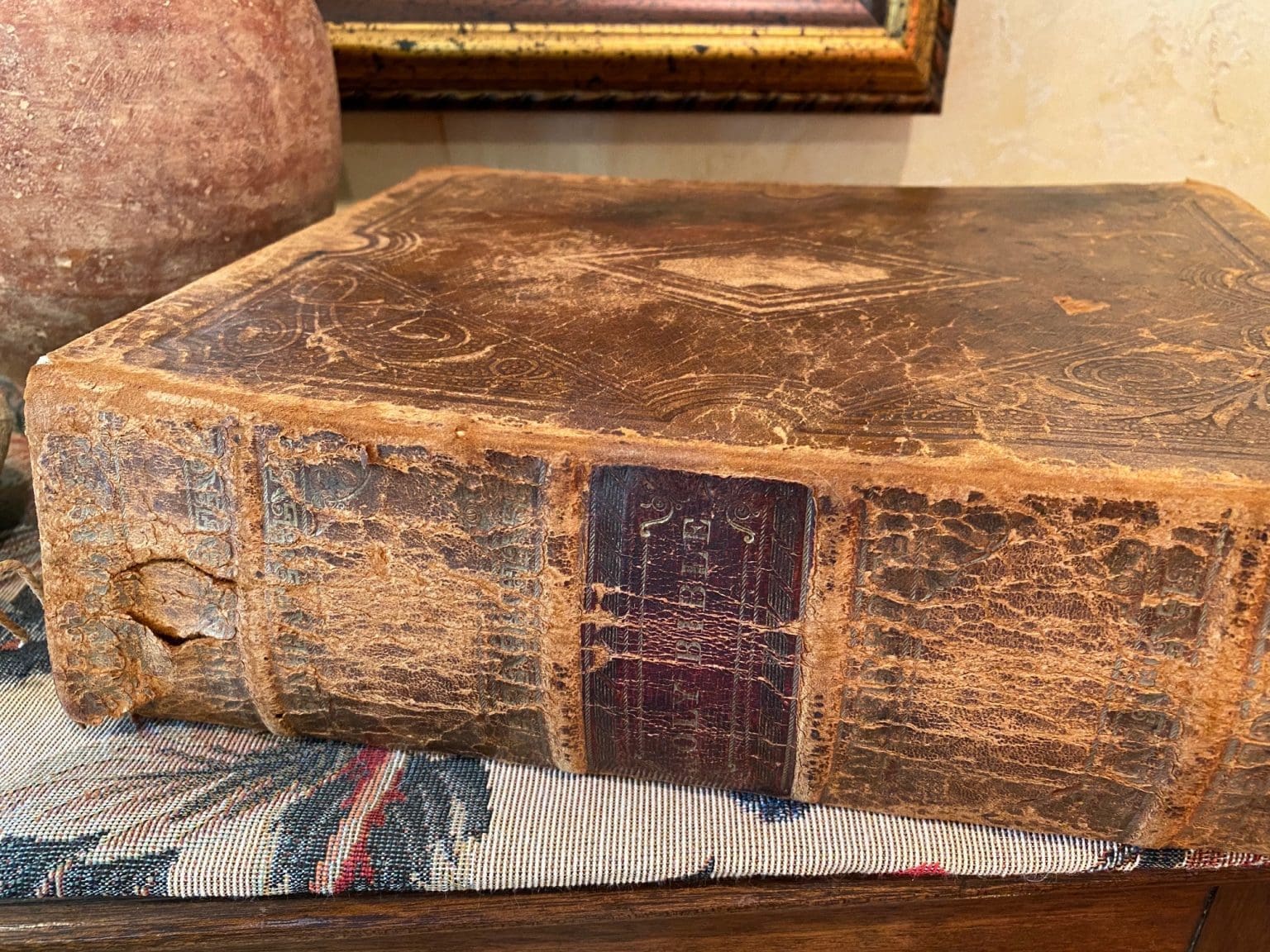
Joseph Smith was tasked by the Lord to do something rather unique for a backwoods, upstate New York farmer now living in Northern Ohio. The Prophet Nephi had seen a vision some two thousand four hundred years before that many of the plain and precious things which were in the Bible had been taken out by the great and abominable Church, and because those plain and precious things were taken away, “an exceedingly great many do stumble, yea, insomuch that Satan hath great power over them.” (See 1 Nephi 13: 26-29) This commandment from the Lord and branch of Joseph’s calling would be to carefully go through the Bible and begin to restore many of those plain and precious things that were lost. He was commanded to translate the Bible. And the results would be astounding. We’ll talk about this in detail today.
Maurine
Hello dear friends, we are Scot and Maurine Proctor and this is Meridian Magazine’s Come Follow Me podcast where today we will be talking about Doctrine and Covenants Sections 71 through 75 in a lesson entitled: “No Weapon That Is Formed against You Shall Prosper.” Remember, you can find the transcripts for these podcasts and share these podcasts with your family and friends at: latterdaysaintmag.com/podcast. That’s latterdaysaintmag.com/podcast.
Now let’s talk for a moment about the process of the translation of the Bible by the Prophet Joseph Smith. First, you have to picture Egbert Bratt Grandin’s Building in Palmyra. On the top floor is where the press was that printed the Book of Mormon. On the middle floor, or second floor as we would call it in the United States, was the bindery, the place where copies of the Book of Mormon were cut, sewn and bound together with leather bindings. And on the ground floor, or first floor as we call it, was the Palmyra Bookstore where people could buy copies of the Book of Mormon and other significant books and items.
Scot
During the printing of the Book of Mormon in Palmyra, on Thursday, October 8, 1829, Oliver Cowdery purchased a H. & E. Phinney Quarto Bible, the 1828 edition, for $3.75 which included the Apocrypha, by the way. This plays into the story. This Bible was printed in Cooperstown, New York. Some of you may recognize that town as the home of the Baseball Hall of Fame. Just so you know, that wasn’t there in Joseph’s day.
Now, three dollars and 75 cents sounds like a bargain for a large, leather-bound, family Bible. That 1829 amount is equivalent to $108.55 in today’s money so that was quite an expenditure. This very Bible was signed in the front and it read:
The Book of the Jews and the property of
Joseph Smith, Junior and Oliver Cowdery
Bought October the 8th, 1829. at Egbert B. Grandin’s
Book Store Palmyra Wayne County New York.
Price: $3.75
Then, obscured by age and wear and tear at the bottom is handwritten: Holiness to the Lord.
Little did Oliver and Joseph know that not only would this very Bible become THE Bible they used in the translation process, but it would become one of the most valuable artifacts of the ongoing Restoration of the Gospel of Jesus Christ.
Maurine
And Joseph and Oliver and Sidney Rigdon used this Bible throughout the course of the translation process. And this intense study of the Bible and translation took place from June 1830 until July 1833, a period of about 37 months.
And, Scot, there is a direct correlation between these three years of extreme focus on the scriptures and the receipt of revelation. As Joseph worked by commandment of the Lord on the translation of the Bible, to restore many of the plain and precious things that had been lost, Joseph was prompted to ask questions, to seek guidance and to pray for revelation—and it came in rich abundance. In fact, that 37-month period of the Bible translation is the time period when the most revelations were received in Joseph’s life—more than 70 of the sections of the Doctrine and Covenants—more than any other similar period of time. Study the scriptures very, very consistently and very, very prayerfully, and daily ponder, meditate, reflect and pour over the scriptures and, for Joseph, revelation came—and it came often and in abundance. There’s certainly a pattern for us personally there.
Scot
Maurine, I have to insert a footnote here. I’ve always loved that H. and E. Phinney Bible that Joseph used for the translation. Oftentimes it has been displayed in the Community of Christ (formerly Reorganized Church of Jesus Christ of Latter-day Saints) museum in Independence, Missouri. That is, as we said, a treasure.
I wanted to have a Phinney Bible just like that one in our home and I always kept my eye open for one. At the end of a particular Church History research trip into western New York and Northern Pennsylvania, I was stopping at every antique store along the way just hoping that I would find one of these from near the area where it was first published. I saw a little sign nailed to a tree in a rural area of Upstate New York. I followed the gravel road for about two and half miles and finally came to an old barn with a hand-painted sign that said, “Antiques” on it. I pictured the whole barn being full of the most delicious items and surely a whole section of antiquarian books. Well, I walked in and there wasn’t much there, a few antique tools and farm implements, some old, red Coca Cola signs, some boxes of junk and really nothing else. But I looked over in the corner on a crossbeam of the barn structure and laying there was what looked like an old family Bible. I went over to see it. It was not in the best condition but it was certainly a beautiful, big, leather-bound, heritage-type Bible. I carefully picked it up and opened to the title page: It was an H. and E. Phinney Bible, the very same edition that Joseph used in the translation! I couldn’t believe it. I had no idea how much the woman wanted, but I had a ridiculously small budget for such items, and I said in my heart, “If I can get this for $30 dollars, I will buy it.” I asked the woman across the barn, “How much do you want for this old Bible?” She said, “Oh, I don’t know. How about twenty-five dollars?” I said, holding back my enthusiasm, “I think I would like to buy this.” Well, that has become a treasure in our home, and it reminds us daily of the process that Joseph and Oliver and Sidney went through to translate the Bible.
And by the way, sometimes you can find these on eBay for reasonable prices. I just looked as I was preparing this podcast and there is an 1828 edition, the exact year and edition of Joseph’s Bible, for $1,800. It’s in excellent condition (ours is not in great condition).
Maurine
We do love our Phinney Bible. And Scot, you took classes from Robert J. Matthews on the Joseph Smith Translation of the Bible at BYU. Brother Matthews was the world expert on the translation, and it was through him that we gained the trust of our cousins in The Community of Christ so that we could look at all the source documents and see if the Inspired Version of the Bible that was published in Independence, Missouri in 1867 was accurate and true to Joseph’s changes and modifications. And sure enough, it is! And because of Robert J. Matthews, over many years of building those relationships, the Church was able to incorporate JST references into our current editions of the Bible.
What was the process of Joseph’s translation of the Bible?
The Prophet used the Phinney Bible, as we described, the pages are 10 ½ inches high and 8 ½ wide with some small margins around the body of the biblical text and he would read from this, verse by verse and mark certain passages and then dictate the revisions, corrections and additions to a scribe, like Oliver Cowdery, Emma, Frederick G. Williams and Newel K. Whitney who wrote these down on paper. Now these were the minor scribes in this 37-month project. The main scribe of the whole translation was Sidney Rigdon. Sometimes they would write down an entire verse and sometimes only the part to be revised. The “translation” was done by divine revelation to the mind of the Prophet Joseph.
Scot
Some have asked, “Why is this called a translation when Joseph is dealing with a book in English and giving the revisions in English?” Robert J. Matthews gives this answer: “Joseph himself called his work a ‘translation.’ This is apparently in the sense in which he understood the work he was doing with the Bible. Since in part he was effecting a restoration of lost meaning and material, and since the Bible did not originate in English, the work to some degree would amount to an inspired, or revelatory, ‘translation’ into English of that which the ancient prophets and apostles had written in Hebrew, Aramaic, and/or Greek.” (Matthews, Robert J., “A Plainer Translation” Joseph Smith’s Translation of the Bible A History and Commentary, Brigham Young University Press, Provo, Utah, 1985, p. xxx.)
And did Joseph finish the work? Well, he did look at every book from Genesis to Revelation, and although he did not make marks or revisions in every book, he did state in a letter dated 2 July 1833 that he had that day “finished” the translation of the Bible.
Maurine
And do we have the entire translation now as a part of our newest editions of our Bibles published by The Church of Jesus Christ of Latter-day Saints? No, we do not. We do have the 8 chapters of Moses in the Pearl of Great Price which is all from the Joseph Smith Translation. That work alone comprises 356 verses. We have Joseph Smith Matthew in the Pearl of Great Price and that is all directly from the Joseph Smith Translation. That gives us another 55 verses. We have around 750 verses that have been footnoted in our current editions of the Bible including a section in the back for selections too long to include in footnotes. With all that, just over 1,160 verses. It’s important to note that Joseph effected changes, revisions or additions to 3,410 verses.
To give you a sense of scale, there are 1,292 verses in the 66 chapters of Isaiah which comprises about 80 pages of the Old Testament. Many people have felt like the Joseph Smith Translation was really not a big deal—but it’s really a big deal!
Scot
Many people do not access the wonderful footnotes and revisions we have readily available to us in our editions of the Bible. Some don’t think it’s important. These changes are all part of the doctrinal restoration of the plain and precious truths that have been lost through the centuries.
Here’s what Elder Bruce R. McConkie had to say about this:
“…the doctrinal restoration. It is the restoration of the principles of the gospel. It is the restoration of the truths of salvation. It is the restoration of that knowledge without which men could not have faith like the ancients and thus prepare themselves to receive and be participants in the other restored events of which we speak.
“Unless and until men believe the doctrines of the restoration they can never—never, never, never—worlds without end, prepare themselves to abide the day of our Lord’s return; to dwell with Enoch and his fellows in the returning Zion; to stand with the elect of Israel in building up their ancient homeland; to perform miracles; to glory in the gifts of the Spirit; and to find full fellowship with the Saints of that God who has bought us with his blood…
“Let me speak plainly. Satan hates and spurns the scriptures. The less scripture there is, and the more it is twisted and perverted, the greater the rejoicing in the courts of hell.”
Maurine
Elder McConkie continues:
“May I be pardoned if I say that negative attitudes and feelings about the Joseph Smith Translation [or even apathy towards it] are simply part of the devil’s program to keep the word of truth from the children of men.
“Of course the revealed changes made by Joseph Smith are true—as much so as anything in the Book of Mormon or the Doctrine and Covenants.
“Of course we have adequate and authentic original sources showing the changes—as much so as are the sources for the Book of Mormon or the revelations.
“Of course we should use the Joseph Smith Translation in our study and teaching. Since when do any of us have the right to place bounds on the Almighty and say we will believe these revelations but not those?” End of quote. (The Joseph Smith Translation, The Restoration of Plain and Precious Things, edited by Monte S. Nyman and Robert L. Millet, Religious Studies Center, Brigham Young University, Provo, Utah, 1985, pp.7-8; 12; 14)
The translation of the Book of Mormon, done by the gift and power of God, took about 63 working days (not counting all the time with Martin Harris and the translation of the Book of Lehi that was lost). The translation of the Bible was much less intense, yet, was a focus of the Prophet Joseph for 37 months. And we repeat, during this 37-month period, Joseph received more revelations for the Church than at any other similar period in the early history of the Church. Study the scriptures. Receive revelation. That’s the pattern.
Scot
And each of those 3,410 verses in the Bible that Joseph effected changes or revisions and made additions to are all revelation as well.
During this translation period, no less than 15 sections of the Doctrine and Covenants have specific instructions concerning the translation of the Bible (and if you come and access the Podcast scripts at latterdaysaintmag.com/podcast you will see all those references. (D&C 25:6; 35:20; 47:1; 37:1; 73:3; 45:60-61; 93:53; 91:1-6; 41:7; 94:10; 104:58; 124:89; 26:1; 42:56-61; and 90:13)
Revelations on doctrinal subjects that grew out of, or came as a result of the translation of the Bible include at least sections 74, 77, 84, 86, 88, 93, 102, 104, 107, 113 and 132. And, of course, our entire lesson next week is on Section 76, the great vision of the three degrees of glory, which came because of the Bible translation process.
Maurine
Let’s talk briefly, just to give you a taste, about five different passages in the Joseph Smith Translation that will get you excited to study it more thoroughly and to pay attention to the footnotes that we have and the section in the back of our Bibles that have lengthier passages from the Joseph Smith Translation. This would be like some mini lessons on the things we would love to teach our family in one small session.
Lesson One.
We talked about this one in our New Testament podcast but it bears repeating.
At the wedding feast in Cana, where the Savior was in attendance and Mary, the Mother of Jesus was also there—you remember the scene. They got to a certain point in the celebration and they saw they were going to run out of wine. Mary came to Jesus to talk to him about the situation. In the King James Version, we read:
3 And when they wanted wine, the mother of Jesus saith unto him, They have no wine.
4 Jesus saith unto her, Woman, what have I to do with thee? mine hour is not yet come. (John 2: 3-4)
That seems a little abrupt. It feels a little disrespectful of his own mother, rather dismissive. It just doesn’t feel like Jesus. Here’s that passage in the Joseph Smith Translation:
3 And when they wanted wine, the mother of Jesus saith unto him, They have no wine.
4 Jesus saith unto her, Woman, what wilt thou have me to do for thee? that will I do; for mine hour is not yet come. (JST John 2:4)
That’s a beautiful change.
Scot
Lesson Two.
Look at Matthew 3: 7 in the King James Version:
But when he saw many of the Pharisees and Sadducees come to his baptism, he said unto them, O generation of vipers, who hath warned you to flee from the wrath to come?
Joseph gives us another verse altogether here in addition to this:
34 Why is it that ye receive not the preaching of him whom God hath sent? If ye receive not this in your hearts, ye receive not me; and if ye receive not me, ye receive not him of whom I am sent to bear record; and for your sins ye have no cloak. (JST Matthew 3:34)
Here is a perfect doctrinal reference and clear understanding of the Atonement. The word Atonement is an Old English word meaning At-one-ment. In Hebrew it is kasah (kaw-saw’). In Arabic kefar. You can hear the English word in it—cover. Those beautiful headdresses that the men wear in the Middle East are called keffiyah—and translates as a covering. The atonement of Jesus Christ is a Divine covering. And if we reject the atonement, “for your sins ye have no cloak.” No covering. We don’t want to be in that position!
Maurine
Lesson Three.
If you go to the end of Genesis, chapter 14 in the King James Version of your Bible, you will see in verse 24, the last verse, the last word is “portion”—the last footnote of that chapter—footnote ‘a.’ That leads you to the JST Appendix where we get some of the richest material of the entire translation. Many of you have seen this, but it’s worth pausing and actually looking in your gospel library scriptures or in your paper scriptures in the JST Appendix to see this. The whole section is on ancient priesthood power and is talking about the great high priest and King, Melchizedek. We won’t go through all these verses, but here is a sample:
Starting in JST Genesis 14, verse 26:
26 Now Melchizedek was a man of faith, who wrought righteousness; and when a child he feared God, and stopped the mouths of lions, and quenched the violence of fire.
27 And thus, having been approved of God, he was ordained an high priest after the order of the covenant which God made with Enoch,
28 It being after the order of the Son of God; which order came, not by man, nor the will of man; neither by father nor mother; neither by beginning of days nor end of years; but of God;
29 And it was delivered unto men by the calling of his own voice, according to his own will, unto as many as believed on his name.
Now listen very carefully to verses 30 and 31:
30 For God having sworn unto Enoch and unto his seed with an oath by himself; that every one being ordained after this order and calling should have power, by faith, to break mountains, to divide the seas, to dry up waters, to turn them out of their course;
31 To put at defiance the armies of nations, to divide the earth, to break every band, to stand in the presence of God; to do all things according to his will, according to his command, subdue principalities and powers; and this by the will of the Son of God which was from before the foundation of the world.
There are many more verses there but this is a wonderful view of ancient priesthood power, power that is available to us today if we can learn to exercise the faith of the ancients. And this is only in the Joseph Smith Translation.
Scot
Lesson Four.
This is a simple addition but it’s one of my favorites and it wasn’t included as a footnote in our Bibles until the 2013 editions came out electronically. This has to do with the woman taken in adultery. I love everything about this story, the courage, the teachings, the patience and rock-steadiness of the Savior, the scene in the outer court of the temple, the arrogance of the men bringing this woman to Jesus. You know the story. You remember. They thought they had Jesus because the law said that such a woman taken in adultery should be stoned. He said to them: He that is without sin among you, let him first cast a stone at her.
Remember, then she is left standing alone just with the Savior. He said to her, Woman, where are those thine accusers? hath no man condemned thee? She said, No man, Lord. And Jesus said unto her, Neither do I condemn thee: go, and sin no more. (See John 8: 2-11)
And here is where Joseph, by revelation, adds just 13 words: “And the woman glorified God from that hour, and believed on his name.”
She was converted! She was numbered among the believers. She repented from that hour and went on her way rejoicing. She was blessed as we all are blessed when we turn to Him, repent of our sins and follow His commandments and teachings. What a significant insight into the woman taken in adultery.
Maurine
Lesson Five.
This is another simple but revelatory doctrinal addition that Joseph was inspired to give us. If you turn to Genesis, chapter 17. This is where the Lord is establishing the covenant with Abraham that he may become a father of many nations and he changes his name from Abram to Abraham. He promises Abraham that he will be fruitful and that nations and kings will come out of him.
He then establishes the covenant of circumcision. Let’s read from the King James Version in verses 10 – 12:
10 This is my covenant, which ye shall keep, between me and you and thy seed after thee; Every man child among you shall be circumcised.
11 And ye shall circumcise the flesh of your foreskin; and it shall be a token of the covenant betwixt me and you.
12 And he that is eight days old shall be circumcised among you, every man child in your generations, he that is born in the house, or bought with money of any stranger, which is not of thy seed.
That verse sounds okay and nothing seems to be missing—it’s pretty straight forward. Right? Now let’s read from Joseph Smith’s revelatory changes in verse 11:
11 And I will establish a covenant of circumcision with thee, and it shall be my covenant between me and thee, and thy seed after thee, in their generations; that thou mayest know forever that children are not accountable before me until they are eight years old.
The symbol of the law of circumcision was that doing this thing at eight days old would always remind them of the law of accountability, that it did not begin until a child is eight years old. Stunning.
Scot
Remember, the Prophet Joseph gave us 3,410 verses with changes, revisions, modifications and/or additions in his Bible translation.
One other question might be asked:
Was the translation of the Bible a unique idea in America in the early 1830’s?
Robert J. Matthews writes: “The time in which Joseph Smith lived was a period of religious unrest in the New York, Pennsylvania and Ohio areas. Historians have labeled it the ‘burned-over district’ because of the high religious excitement, particularly of the evangelical and fiery-sermon type. Not only were preachers active in revivalism, but some of the scholarly ones were also at work making new translations of the Bible. The records show that from the years 1777 to 1833 there were more than five hundred separate editions of the Bible, or parts thereof published in America alone.” (Matthews, Robert J. A Plainer Translation, pp. 8-9)
Maurine
Most importantly we know that Joseph Smith was commanded by the Lord Jesus Christ Himself to do this translation of the Bible and the outcome had tremendous impact on the entire restoration and the revelatory doors to heaven, and, perhaps just as significantly on Joseph himself. When Joseph was carefully studying and pouring over the scriptures, he was also more susceptible to receiving revelation.
We hope from this moment on you will always strive to access the JST footnotes and the JST section in the study aids of your Bible and the 8 chapters of Moses and Joseph Smith Matthew, knowing that all of this was part of the restoration of many of the plain and precious things that were lost.
Let’s look at another contextual matter at this time in late 1831. Ezra Booth, an early Ohio convert, had now apostatized from the Church and went public in ridiculing and fighting against the Church, including publishing a number of articles against the Saints in the Ohio Star, a newspaper in Ravenna, Ohio—just 13 miles away from where Joseph and Emma were living at the Johnson Farm.
Joseph Smith once said, “You can leave the Church but you can’t leave it alone.” And Ezra Booth was proof of this.
Scot
Truman Madsen taught this:
“A revealing conversation once occurred between Joseph Smith and a brother named Isaac Behunnin. He had seen men involved in the quorums and in the high spiritual experiences of the kingdom who had subsequently become disaffected, and it was a mystery to him why they had then devoted their zeal and energy to attacking the Church.
“He said to the Prophet: ‘If I should leave this Church, I would not do as those men have done. I would go to some remote place where Mormonism had never been heard of, settle down, and no one would ever learn that I knew anything about it.’
“The Prophet immediately responded: ‘Brother Behunnin, you don’t know what you would do. No doubt these men once thought as you do. Before you joined this Church you stood on neutral ground. When the gospel was preached, good and evil were set before you. You could choose either or neither. There were two opposite masters inviting you to serve them. When you joined this Church, you enlisted to serve God. When you did that, you left the neutral ground, and you never can get back on to it. Should you forsake the Master you enlisted to serve it will be by the instigation of the evil one, and you will follow his dictation and be his servant.’ Happily, Brother Behunnin was faithful to his death.” (Madsen, Truman G., Joseph Smith the Prophet, Bookcraft, Salt Lake City, 1989, pp. 52-53)
Maurine
Because of Ezra Booth’s publishing his letters with many scathing and false reports against Joseph and the Church, the work began to suffer. The Lord revealed to Joseph in Section 71 what to do:
1 Behold, thus saith the Lord unto you my servants Joseph Smith, Jun., and Sidney Rigdon, that the time has verily come that it is necessary and expedient in me that you should open your mouths in proclaiming my gospel, the things of the kingdom, expounding the mysteries thereof out of the scriptures, according to that portion of Spirit and power which shall be given unto you, even as I will.
2 Verily I say unto you, proclaim unto the world in the regions round about, and in the church also, for the space of a season, even until it shall be made known unto you.
3 Verily this is a mission for a season, which I give unto you.
7 Wherefore, confound your enemies; call upon them to meet you both in public and in private; and inasmuch as ye are faithful their shame shall be made manifest.
8 Wherefore, let them bring forth their strong reasons against the Lord.
9 Verily, thus saith the Lord unto you—there is no weapon that is formed against you shall prosper; (Doctrine and Covenants 71: 2-3; 7-9)
4 And, inasmuch as it is practicable, to preach in the regions round about until conference; and after that it is expedient to continue the work of translation until it be finished. (Doctrine and Covenants 73:4)
Joseph and Sidney took a break from the translation of the Bible and did just as the Lord commanded.
Scot
That’s right. And they responded immediately. Joseph and Sidney challenged Ezra Booth and Symonds Ryder personally to “bring their strong reasons against the Lord.”
Matthew McBride writes:
“Though Sidney Rigdon challenged Booth and Ryder to public debate, they declined, perhaps aware of Rigdon’s reputation as a fierce debater. Rigdon preached in Ravenna, Ohio [where the Ohio Star Newspaper was located], and in other locations, refuting Booth’s claims. Although Booth’s letters had a dampening effect on missionary work, that effect was short-lived.
“Tragically, Booth’s cynicism had driven a wedge not only between him and the restored Church but also between him and his earlier spiritual experiences. He ultimately ‘abandoned Christianity and became an agnostic.’” (McBride, Matthew, Revelations in Context, “Ezra Booth and Isaac Morley,” Gospel Library, Restoration and Church History)
I think sometimes we look at a certain development in our society or a certain situation and we think, “Oh no, this will really affect the Church.” Or “This will really slow things down or change things.”
Maurine
It reminds me Scot of that moment we had in Ghana when we were there in Accra for the temple dedication. I know you were thinking of that too. We had just had a really long day and it was late evening. We were in the eating area of the hostel that had been built for members coming to visit the temple and where we were staying. As we sat there, Don Staheli, the personal secretary and assistant to President Gordon B. Hinckley walked in and sat down by us. He was a dear friend and we started talking about the day a little bit and asked how the prophet was doing.
We had been thinking about the work of the Church throughout the world and we had been looking at baptism statistics and growth in certain areas and we asked Don, “Does President Hinckley worry about the baptism numbers going down and the growth of the Church seeming to slow a bit?”
I’ll never forget his immediate answer:
“Oh, no, he doesn’t worry about it at all. He knows that it’s in the hands of the Lord and he trusts Him completely.”
Scot
I did love that moment. And it reminded me: No weapon that is formed against you shall prosper. This work of the Lord will absolutely continue to move forward. As the Prophet Joseph prophesied:
“The Standard of Truth has been erected; no unhallowed hand can stop the work from progressing; persecutions may rage, mobs may combine, armies may assemble, calumny may defame, but the truth of God will go forth boldly, nobly, and independent, till it has penetrated every continent, visited every clime, swept every country, and sounded in every ear, till the purposes of God shall be accomplished, and the Great Jehovah shall say the work is done.”
Maurine
That’s all for today. We truly love being with you. Thanks for choosing to study with us each week. Next week our lesson will be on Section 76 of the Doctrine and Covenants with the title: “Great Shall Be Their Reward and Eternal Shall Be Their Glory.” You won’t want to miss that lesson. A big thank you to Paul Cardall for the music that accompanies this podcast and to our producer, Michaela Proctor Hutchins.
Have a great week and see you next time.
Why Did the Lord Give a Revelation to the Shakers?

View the original post on Scripture Central.
“Hearken unto my word, my servants Sidney, and Parley, and Leman; for behold, verily I say unto you, that I give unto you a commandment that you shall go and preach my gospel which ye have received, even as ye have received it, unto the Shakers.” Doctrine and Covenants 49:1
The Know
In May 1831, a recent convert named Leman Copley approached the Prophet Joseph Smith with a request: some elders should be sent on a mission to North Union, Ohio. This town, about fifteen miles west of Kirtland, was settled by members of the United Society of Believers in Christ’s Second Appearing, though its members were often called Shakers or Shaking Quakers “because their worship included a form of ecstatic dancing.”1 Before Copley was baptized, he had been a member of the United Society himself, though he never made the move from his farm in Thompson, Ohio, to North Union like most other Shakers in the area had.
Copley’s request was a reasonable one: The Saints had had pleasant encounters with the Shakers of North Union. Oliver Cowdery, Peter Whitmer Jr., Parley P. Pratt, and Ziba Peterson met briefly with them while en route to preach in Missouri. Furthermore, the fact that the Church’s beliefs shared multiple similarities with those of the Shakers likely led Copley to hope that many members of his former faith would accept the fullness of the gospel.
Steven C. Harper notes, “Shakers believed that Christ had instituted God’s first church, which subsequently apostatized. They believed, therefore, that God would restore his church,” acknowledging that while the reformers were good people, this restoration could only be done via a “new revelation from God to some person.” Shakers also believed in “individual moral agency . . . [and] consecration and stewardship of property.” Furthermore, “Shaker explanations for worshipping God by singing and dancing sounded like Doctrine and Covenants 136:28, in which the Lord acknowledges that repentant, forgiven souls long to sing and dance as forms of prayer and thanksgiving.”2
However, the differences between the Church’s beliefs and the United Society’s were greater. “Shakers,” Harper explains, “believed that marriage was a worldly, not a divine, institution . . . and that sexual relations were ungodly. . . . They rejected resurrection and looked forward to shedding their flesh at death to live a wholly spiritual afterlife. . . . They believed in confessing sin but not in the need for redeeming ordinances such as baptism. Shakers believed in temperance, including eating meat sparingly, if at all. Some preached vegetarianism.”3 Shakers also believed that some individuals beyond Jesus Christ had lived or could live a life entirely free of sin while yet in mortality.4
The greatest difference in belief, however, was that Shakers believed that Christ’s church had been restored through a woman named Ann Lee. Believing that “God was both male and female,” Shakers believed that “God first made his appearance in the form of a male, Jesus Christ. In Ann Lee the female principle of God was manifested, and in her the promise of the Second Coming was fulfilled.”5
Although Copley had since joined the Church and even though he had never been a full participant or believer in Shaker doctrine and practice, Joseph Smith reported that Copley was “apparently honest hearted, but still retained ideas that the Shakers were right in some particulars of their faith.”6 Thus, upon Copley’s request that a mission to the Shakers of North Union commence, Joseph prayed and received Doctrine and Covenants 49.
This section, among other things, authorized Sidney Rigdon, Parley P. Pratt, and Leman Copley to “go and preach my gospel which ye have received, even as ye have received it, unto the Shakers” (verse 1). More than anything, though, it helped clarify “exactly where Shaker beliefs and the restored gospel overlapped or diverged,” correcting some of the false doctrines Shakers believed.7 This would be critical for potential converts who wanted to learn more about the restored gospel.
First, the Lord clarified that the Son of Man “now reigneth in the heavens, and will reign till he descends on the earth . . . ; but the hour and the day no man knoweth, neither the angels in heaven, nor shall they know until he comes” (Doctrine and Covenants 49:6–7). This challenged the Shaker doctrine that the Second Coming had already occurred through Ann Lee. Furthermore, the Lord taught, “The Son of Man cometh not in the form of a woman, neither of a man traveling on the earth” (verse 22). This offered a clear rebuttal of a key Shaker doctrine—Jesus Christ would return only in His own resurrected body and not in the form of any other mortal individual.
Second, the Lord declared, “I will that all men shall repent, for all are under sin” (verse 8). The only exception to this rule was “holy men” reserved by the Lord, perhaps referring to people like John the Beloved or the Three Nephites who are no longer living in a fallen state.8 Furthermore, while Shakers believed that all one needed to do to be saved was confess their sins, the Lord commanded, “Repent and be baptized in the name of Jesus Christ, according to the holy commandment, for the remission of sins; and whoso doeth this shall receive the gift of the Holy Ghost, by the laying on of the hands of the elders of the church” (verses 13–14). As Casey Paul Griffiths explained, “The ordinances of the gospel allow men and women to be cleansed of their sins by entering into a covenant relationship with Jesus Christ,” and only through these ordinances can anyone truly be cleansed from sin.9
Third, the Lord emphasized the importance of marriage and raising children:
And again, verily I say unto you, that whoso forbiddeth to marry is not ordained of God, for marriage is ordained of God unto man. Wherefore, it is lawful that he should have one wife, and they twain shall be one flesh, and all this that the earth might answer the end of its creation; and that it might be filled with the measure of man, according to his creation before the world was made. (Doctrine and Covenants 49:15–17)
This ran counter to the Shaker belief that celibacy was a higher law required of the faithful.10
Finally, the Lord taught that “whoso forbiddeth to abstain from meats, that man should not eat the same, is not ordained of God,” as animals were under humankind’s stewardship to use “for food and for raiment, and that he might have in abundance” (verses 18–19). Later revelations such as the Word of Wisdom would help clarify this principle.
The Why
The mission to North Union did not have the success that Leman Copley was expecting: the Shakers soundly rejected the revelation in Doctrine and Covenants 49 and dismissed the elders.11 This had a negative effect on Leman Copley, who would himself be disfellowshipped for a time for refusing to allow the Colesville Saints to live on his farm as he had previously agreed. Eventually he was excommunicated for signing false witnesses against Joseph Smith’s character. Though he was rebaptized, he never joined the Saints in Missouri, Illinois, or Utah, thereby removing himself from the Church again.12 Despite the Shakers’ rejection of this revelation, many important lessons can be gained from this revelation today.
First, this revelation was given in part because Leman Copley “still retained ideas that the Shakers were right in some particulars of their faith.”13 While there are some common beliefs between the restored gospel and the United Society as discussed above, these do not appear to be what Joseph had in mind when he made this assessment. In section 49, the Lord made it clear that all sincere seekers of truth must wholeheartedly accept the restored gospel and cannot hold to some of the false traditions that they had previously been taught. As the only true and living church, the fullness of doctrine and authority is found only in The Church of Jesus Christ of Latter-day Saints, and the Lord requires our full conversion.14
Second, the Lord showed firsthand how He “speaketh unto men according to their language, unto their understanding” (2 Nephi 31:3). By addressing a specific group of people, the Lord discussed real doctrinal concerns that would have been prerequisite to joining the Church and may even have been some of the concerns that were on Leman Copley’s mind.
Finally, modern Latter-day Saints can recognize the need to be all in when it comes to the restored gospel. This revelation came through a prophet of God, cutting through error to teach the plainness of the restored gospel. Some individuals, like Leman Copley, fail to realize the significance of this truth, which can lead to attitudes such as Copley’s regarding the Shakers being right in some areas when the Church taught otherwise. True seekers will, however, consecrate all of themselves to the Lord.
Even if the mission did not convert any of the North Union community, it still took an act of faith for the missionaries to accept this call and preach the truth, even when it must have been hard to do so. Modern Saints can share that courage when choosing to serve the Lord and help others accept the gospel of Jesus Christ.
Further Reading
Casey Paul Griffiths, Scripture Central Commentary on the Doctrine and Covenants, 4 vols. (Scripture Central; Cedar Fort, 2024), 2:93–104.
Matthew McBride, “Leman Copley and the Shakers,” in Revelations in Context: The Stories Behind the Sections of the Doctrine and Covenants (The Church of Jesus Christ of Latter-day Saints, 2016), 117–21.
Steven C. Harper, Making Sense of the Doctrine and Covenants: A Guided Tour Through Modern Revelations (Deseret Book, 2008), 166–71.
Stephen E. Robinson and H. Dean Garrett, A Commentary on the Doctrine and Covenants, 4 vols. (Deseret Book, 2001), 2:90–100.
Keith W. Perkins, “The Ministry to the Shakers (D&C 49, 51, 54),” in Studies in Scripture, vol. 1, The Doctrine and Covenants, ed. Robert L. Millet and Kent P. Jackson (Deseret Book, 1989), 211–24.
Footnotes
1. Matthew McBride, “Leman Copley and the Shakers,” in Revelations in Context: The Stories Behind the Sections of the Doctrine and Covenants (The Church of Jesus Christ of Latter-day Saints, 2016), 117.
2. Steven C. Harper, Making Sense of the Doctrine and Covenants: A Guided Tour Through Modern Revelations (Deseret Book, 2008), 167. McBride, “Leman Copley and the Shakers,” 117, summarizes the similarities between the Latter-day Saints and Shakers as such: “The two faiths shared a belief in a general apostasy, modern prophecy, the agency of man, and the ideal of a communal life.”
3. Harper, Making Sense of the Doctrine and Covenants, 167.
4. Keith W. Perkins, “The Ministry to the Shakers (D&C 49, 51, 54),” in Studies in Scripture, vol. 1, The Doctrine and Covenants, ed. Robert L. Millet and Kent P. Jackson (Deseret Book, 1989), 212; F. W. Evans, Shakers: Compendium of the Origin, History, Principles, Rules and Regulations, Government, and Doctrines of the United Society of Believers in Christ’s Second Appearing [. . .] (New York, 1859), 102–3.
5. Perkins, “Ministry to the Shakers,” 212; see also Harper, Making Sense of the Doctrine and Covenants, 167–68; Evans, Shakers, 103–14. While Joseph Smith would later go on to reveal that all humankind has a Heavenly Father and a Heavenly Mother, this should not be confused with Shaker belief regarding one God dual in nature as both Father and Mother. For a discussion of Latter-day Saint doctrine on this topic, see Gospel Topics, “Mother in Heaven”; Elaine Anderson Cannon, “Mother in Heaven,” in Encyclopedia of Mormonism, ed. Daniel H. Ludlow, 4 vols. (Macmillan, 1992), 2:961; Gospel Topics, “Becoming Like God.”
6. “History, 1838–1856, volume A-1 [23 December 1805–30 August 1834],” p. 112, The Joseph Smith Papers.
7. Harper, Making Sense of the Doctrine and Covenants, 168.
8. Stephen E. Robinson and H. Dean Garrett, A Commentary on the Doctrine and Covenants, 4 vols. (Deseret Book, 2001), 2:94–95; Perkins, “Ministry to the Shakers,” 216–17, citing Joseph Fielding Smith, Church History and Modern Revelation, vol. 1 (Deseret Book, 1953), 208–9.
9. Casey Paul Griffiths, Scripture Central Commentary on the Doctrine and Covenants, 4 vols. (Scripture Central; Cedar Fort, 2024), 2:97–98.
10. See Griffiths, Scripture Central Commentary, 98–99; Robinson and Garrett, Commentary on the Doctrine and Covenants, 95–96; Perkins, “Ministry to the Shakers,” 214. For more regarding the doctrine of the family, see “The Family: A Proclamation to the World”; as well as R. Devan Jensen, Michael A. Goodman, and Barbara Morgan Gardner, “‘Line upon Line’: Joseph Smith’s Growing Understanding of the Eternal Family,” Religious Educator 20, no. 1 (2019): 34–59; Daniel K. Judd and Jacob D. Judd, “The Doctrines of Eternal Marriage and Eternal Families,” in Foundations of the Restoration: Fulfillment of the Covenant Purposes, ed. Craig James Ostler, Michael Hubbard MacKay, and Barbara Morgan Gardner (Religious Studies Center, Brigham Young University; Deseret Book, 2017), 245–68.
11. For discussions on the aftermath of the Shakers hearing the revelation, see McBride, “Leman Copley and the Shakers,” 119–21; Harper, Making Sense of the Doctrine and Covenants, 170–71; Griffiths, Scripture Central Commentary, 102–3; Robinson and Garrett, Commentary on the Doctrine and Covenants, 92; Perkins, “Ministry to the Shakers,” 212–13, 215–16.
12. See Robinson and Garrett, Commentary on the Doctrine and Covenants, 92.
13. “History, 1838–1856, volume A-1 [23 December 1805–30 August 1834],” p. 112, The Joseph Smith Papers.
14. See Scripture Central, “Why Did God Call His Church ‘the Only True and Living Church’? (Doctrine and Covenants 1:30),” KnoWhy 771 (January 7, 2025).
Why Did Parley P. Pratt Believe in the Book of Mormon?

View the original post on Scripture Central.
“And now concerning my servant Parley P. Pratt, behold, I say unto him that as I live I will that he shall declare my gospel and learn of me, and be meek and lowly of heart.” Doctrine and Covenants 32:1
The Know
Parley P. Pratt was one of the first apostles called in The Church of Jesus Christ of Latter-day Saints. He was also one of the earliest missionaries, became one of its most articulate advocates, composed several of the first Latter-day Saint hymns, and lived a life devoted to the gospel and Jesus Christ.1 His desire to know the Savior and follow Him was cultivated at an early age, and he had lived his youth in such a way that when he first heard of the Book of Mormon, he was well prepared to wholeheartedly embrace the fullness of the restored gospel.
Parley recalled that when was seven years old, “my mother gave me lessons to read in the scriptures. . . . All this inspired me with love, and with the noblest sentiments ever planted in the bosom of man. . . . I read of Jesus and his Apostles; and O, how I loved them! How I longed to fall at the feet of Jesus; to worship him, or to offer my life for his.”2 Parley was an avid learner and often had “a book at every leisure moment of my life.”3
Furthermore, though his family was religious, they largely did not support one church over another. Parley’s father, Jared, was “sporadic in his own church attendance and committed to no one faith in particular,” and he “imbued his son [Parley] with an openness to genuine religion but a suspicion of clericalism.”4
By 1825, the eighteen-year-old Parley had begun investigating different churches in search for one that taught the gospel as it was found in the New Testament. While he was baptized by the Baptist minister William Scranton, he was still displeased with many of the doctrines in the Baptist faith that he felt were contradictory to the New Testament.5
Eventually, Parley moved to Ohio, where he met Sidney Rigdon, a reformed Baptist preacher and follower of Alexander Campbell.6 Rigdon, along with Campbell, believed in teaching only principles they could establish firmly by the Bible as they sought to restore New Testament Christianity. This had a profound impact on Parley, who wrote, “Here was the ancient gospel in due form. Here were the very principles which I had discovered before; but could find no one to minister in. But still one great link was wanting to complete the chain of the ancient order of things; and that was, the authority to minister in holy things.”7 Despite the lack of priesthood authority that Parley recognized, he and his wife Thankful joined Sidney’s congregation.
In 1830, Parley felt prompted to sell his property and begin preaching in New York. He and Thankful began traveling for Albany, New York, that August with only ten dollars to their name.8 When they reached Rochester, however, “it was plainly manifest by the Spirit . . . [that] I have a work to do in this region of country.”9 In the region, Parley met with a Baptist deacon who told him of a “strange book” that was recently published in Palmyra.10 This deacon let Parley borrow his copy of the Book of Mormon, which Parley eagerly read. Parley would later recall:
I read all day; eating was a burden, I had no desire for food; sleep was a burden when the night came, for I preferred reading to sleep. As I read the spirit of the Lord was upon me, and I knew and comprehended that the book is true, as plainly and manifestly as a man comprehends and knows he exists. My joy was now full, as it were, and I rejoiced sufficiently to more than pay me for all the sorrows, sacrifices and toils of my life.11
Parley headed straight for Palmyra, intent on meeting Joseph Smith. When he arrived, he met Hyrum Smith, who told him about the miraculous coming forth of the Book of Mormon and restoration of Christ’s Church and gave him his own copy of the Book of Mormon. Soon thereafter, Parley was baptized by Oliver Cowdery, fully convinced he had finally found the Lord’s church on the earth.
The Why
Shortly after Parley was baptized, he was called on his first mission. The Lord told Parley in a revelation, “As I live I will that he shall declare my gospel and learn of me, and be meek and lowly of heart” (Doctrine and Covenants 32:1). Parley fulfilled this revelation throughout his life until he was murdered while preaching the gospel in 1857.12
When Parley first read from the Book of Mormon, he did not experience a dramatic vision or angelic visitation. Rather, as Parley later testified just a year before he was murdered,
The Spirit of the Lord came upon me, while I read, and enlightened my mind, convinced my judgment, and riveted the truth upon my understanding, so that I knew that the book was true, just as well as man knows the daylight from the dark night, or any other thing that can be implanted in his understanding. I did not know it by any audible voice from heaven, by any ministration of an angel, by any open vision; but I knew it by the spirit of understanding in my heart—by the light that was in me. I knew it was true, because it was light, and had come in fulfillment of the Scriptures; and I bore testimony of its truth to the neighbors that came in during the first day that I was reading it.13
Parley devoted his whole life to the Lord and sought to follow Him from an early age. He had prepared himself to follow the promptings of the Spirit, even when it meant sacrificing almost all his earthly possessions to travel to New York without knowing why. Thus, when he read the Book of Mormon, Parley was well prepared to recognize its truthfulness and feel the Spirit powerfully testify that he had found what he had been looking for most of his life.
The Book of Mormon was and still is a critical tool for missionary work in The Church of Jesus Christ of Latter-day Saints. It provides a real, tangible witness of the Restoration of the gospel through Joseph Smith. Much like Alma, who “fasted and prayed many days that I might know these things of myself,” modern readers will have to earnestly seek to know if what they are reading is in fact the word of God (Alma 5:46). By doing so “with a sincere heart, with real intent, having faith in Christ,” all are able to have the same type of experience that converted Parley P. Pratt to the Book of Mormon and the gospel of Jesus Christ (Moroni 10:4).
Further Reading
Scott Facer Proctor and Maurine Jensen Proctor, eds., Autobiography of Parley P. Pratt, rev. ed. (Deseret Book, 2000), 1–48.
Terryl L. Givens and Matthew J. Grow, Parley P. Pratt: The Apostle Paul of Mormonism (Oxford University Press, 2011), 11–36.
Susan Easton Black, “Parley P. Pratt,” in Restoration Voices, vol. 1, People of the Doctrine and Covenants (Scripture Central, 2021).
Larry C. Porter, “Pratt, Parley Parker,” in Encyclopedia of Mormonism, ed. Daniel H. Ludlow, 4 vols. (New York: Macmillan, 1992), 3:1116.
Parley P. Pratt, A Voice of Warning and Instruction to All People (New York: Sandford, 1837).
Footnotes
1. Larry C. Porter, “Pratt, Parley Parker,” in Encyclopedia of Mormonism, ed. Daniel H. Ludlow, 4 vols. (New York: Macmillan, 1992), 3:1116. Some hymns of the Restoration he composed include “The Morning Breaks,” “An Angel from on High,” “As the Dew from Heaven Distilling,” “Father in Heaven, We Do Believe,” and “Jesus, Once of Humble Birth.”
2. Scott Facer Proctor and Maurine Jensen Proctor, eds., Autobiography of Parley P. Pratt, rev. ed. (Deseret Book, 2000), 4.
3. Proctor and Proctor, Autobiography of Parley P. Pratt, 4.
4. Terryl L. Givens and Matthew J. Grow, Parley P. Pratt: The Apostle Paul of Mormonism (Oxford University Press, 2011), 15.
5. See Proctor and Proctor, Autobiography of Parley P. Pratt, 10–12; Givens and Grow, Parley P. Pratt, 17–18.
6. Sidney Rigdon would later join the Church after being introduced to the gospel by Parley P. Pratt and his mission companions while on the way to Missouri. For more on Sidney Rigdon and why he was converted, see Scripture Central, “What Converted Sidney Rigdon to the Book of Mormon? (Doctrine and Covenants 35:3),” KnoWhy 601 (April 13, 2021).
7. Proctor and Proctor, Autobiography of Parley P. Pratt, 22–23; emphasis in original.
8. Proctor and Proctor, Autobiography of Parley P. Pratt, 27.
9. Proctor and Proctor, Autobiography of Parley P. Pratt, 29.
10. Proctor and Proctor, Autobiography of Parley P. Pratt, 30.
11. Proctor and Proctor, Autobiography of Parley P. Pratt, 32.
12. For a brief review of Parley’s life up until this moment, see Susan Easton Black, “Parley P. Pratt,” in Restoration Voices, vol. 1, People of the Doctrine and Covenants (Scripture Central, 2021).
13. Parley P. Pratt, in Journal of Discourses, vol. 5 (London, 1858), 194.
How Did Saints in Kirtland Testify of Jesus Christ’s Resurrection?

View the original post on Scripture Central.
“And now, after the many testimonies which have been given of him, this is the testimony, last of all, which we give of him: That he lives! For we saw him, even on the right hand of God; and we heard the voice bearing record that he is the Only Begotten of the Father.” Doctrine and Covenants 76:22–23
The Know
The New Testament records that shortly after His Resurrection, Jesus visited His disciples and showed them that He was alive again. According to the Apostle Paul, Peter, the Twelve Apostles, James the brother of Jesus, and a group of five hundred people had also seen and borne testimony that Jesus Christ was resurrected (see 1 Corinthians 15:5–8). This is in addition to Paul himself, who was visited by the resurrected Lord multiple times throughout his ministry.1 Similarly, when Jesus Christ visited the Nephites, “about two thousand and five hundred souls” saw, heard, and touched the resurrected Jesus (3 Nephi 17:25).
The eyewitness accounts of Jesus Christ’s Resurrection became a vital part of the early Christian message because these individuals offered firsthand testimony that Jesus was indeed the Christ and had miraculously been resurrected.2 This is one of the central tenets of Christian belief. As the Prophet Joseph Smith would testify, “The fundamental principles of our religion is the testimony of the apostles and prophets concerning Jesus Christ, ‘that he died, was buried, and rose again the third day, and ascended up into heaven;’ and all other things are only appendages to these, which pertain to our religion.”3
In addition to the individuals that were witness to the resurrected Christ described in the Bible and Book of Mormon, multiple individuals in the restored Church of Jesus Christ have seen or spoken with the resurrected Savior. Latter-day Saints are familiar with the First Vision, when God the Father and His Son Jesus Christ appeared to Joseph, but this was only the first of many miraculous manifestations in this dispensation. Indeed, Alexander L. Baugh has identified eleven documented visions of the Father and Son that Joseph received throughout his life. These visions or manifestations were occasionally received in the presence of other individuals who likewise saw what Joseph saw or witnessed the effect the vision had on the Prophet.4
Some of these visions have even been recorded in the Doctrine and Covenants. One powerful manifestation occurred when Joseph and Sidney Rigdon were working on Joseph’s inspired translation of the Bible in Hiram, Ohio, during February 1832. They beheld in sweeping vision God the Father and the Lord Jesus Christ and the three degrees of glory. Of this experience, Joseph and Sidney testified, “This is the testimony, last of all, which we give of him: That he lives! For we saw him, even on the right hand of God; and we heard the voice bearing record that he is the Only Begotten of the Father” (Doctrine and Covenants 76:22–23). While Joseph and Sidney alone saw the vision, others were present in the room and “felt the spiritual power during the manifestation.”5
Yet another example came shortly after the Kirtland Temple was dedicated as Joseph and Oliver Cowdery prayed together on April 3, 1836. Joseph recorded, “We saw the Lord standing upon the breastwork of the pulpit, before us; and under his feet was a paved work of pure gold, in color like amber. His eyes were as a flame of fire; the hair of his head was white like the pure snow; his countenance shone above the brightness of the sun; and his voice was as the sound of the rushing of great waters” (Doctrine and Covenants 110:2–3). In the Kirtland Temple, Joseph had also previously received a vision of the resurrected Jesus Christ and the celestial kingdom that is now canonized as Doctrine and Covenants 137.
George Q. Cannon once reported that in addition to the Prophet, “hundreds of others . . . have beheld in vision and otherwise, glorious personages,” including the Son of God, “in these last days.”6 Of these hundreds of witnesses, Karl Ricks Anderson has identified twenty-three from Kirtland who had testified that they saw or heard the Savior, with eleven of these witnesses identifiable by name.7 Many of these experiences were also closely connected to significant events in the organization of the Church.
For instance, in June 1831 at a Church conference, Joseph first ordained certain individuals to be high priests.8 During this conference held on Isaac Morley’s farm, Joseph, Lyman Wight, and Harvey Whitlock all saw the Savior. According to John Whitmer, after Lyman Wight was ordained a high priest, “he prophecied, concerning the coming of Christ,” and “he saw the hevans opened, and the Son of man sitting on the right hand of the Father.”9 After Satan attempted to interrupt the meeting by binding Harvey Whitlock, Joseph cast Satan out. Upon being freed, Harvey Whitlock “bore record of the opening of the heavens and of the coming of the Son of Man, precisely as Lyman Wight had done.”10 Joseph Smith is recorded as having seen the same vision.11
On March 18, 1833, the First Presidency was organized in a meeting of the School of the Prophets, and many present reported seeing visions of both the Father and the Son. After Joseph ordained Sidney Rigdon and Frederick G. Williams as his counselors, “many of the brethren saw a heavenly vision of the Savior.”12 Of these, John Murdock individually reported that he “beheld the face of the Lord according to the promise and prayer of the Prophet.”13 Zebedee Coltrin similarly reported that he and others saw not only Jesus at this event but also God the Father:
While engaged in silent prayer, kneeling, with our hands uplifted each one praying in silence, no one whispered above his breath, a personage walked through the room from East to west, and Joseph asked if we saw him. I saw him and suppose the others did, and Joseph answered, that is Jesus, the Son of God, our elder brother. . . . Another person came through; He was surrounded as with a flame of fire. . . . The Prophet Joseph said this was the Father of our Lord Jesus Christ. I saw Him.14
In what could be described as a Pentecostal season, multiple people likewise reported seeing visions of the Savior in close connection to the completion of the Kirtland Temple.15 All of these visions collectively bear witness that Jesus Christ, though once dead, has been resurrected, just as the Bible and Book of Mormon testify.
The Why
In the Kirtland Temple, the Savior promised Joseph and Oliver, “I will appear unto my servants, and speak unto them with mine own voice, if my people will keep my commandments, and do not pollute this holy house” (Doctrine and Covenants 110:8). Before and after this promise was given, the Savior had abundantly opened the heavens for multiple individuals. As Karl Ricks Anderson observed, “In Kirtland the very heavens thundered many additional witnesses of Christ’s visions and voice. . . . The story of Kirtland is in reality a story of Christ. Christ and Kirtland can never be separated.”16
While these types of visions and manifestations were abundant in Kirtland, they have continued to be given to others, especially the prophets and apostles in subsequent years. Lorenzo Snow, for instance, once told his granddaughter that the Savior had appeared to him in the Salt Lake Temple to instruct him to reorganize the First Presidency following the death of Wilford Woodruff.17 Orson F. Whitney also reported receiving a dream witnessing the Savior’s experiences in Gethsemane, Calvary, and the Garden Tomb before he could speak with the Savior himself. He reported, “I shall never forget the kind and gentle manner in which He stooped and raised me up and embraced me. It was so vivid, so real that I felt the very warmth of His bosom against which I rested.”18 Elder David B. Haight also reported that once, after being rushed to the hospital due to a health concern, he fell unconscious but witnessed “a panoramic view” of the life of Christ. Throughout this experience, he “was conscious of being in a holy presence and atmosphere.”19
Just as Jesus Christ appeared to the Saints of His Church in ancient times, He has appeared to Saints in this dispensation as well, further strengthening the scriptural witness reported by the angels at the tomb: “Why seek ye the living among the dead? He is not here, but is risen” (Luke 24:5–6).
Further Reading
Alexander L. Baugh, “Joseph Smith’s Multiple Visions of the Father and the Son,” in Joseph Smith as a Visionary: Heavenly Manifestations in the Latter Days (Religious Studies Center, Brigham Young University; Deseret Book, 2024).
Steven C. Harper, “‘A Pentecost and Endowment Indeed’: Six Eyewitness Accounts of the Kirtland Temple Experience,” in Opening the Heavens: Accounts of Divine Manifestations, 1820–1844, ed. John W. Welch, 2nd ed. (Brigham Young University Press; Deseret Book, 2017), 351–93.
Karl Ricks Anderson, The Savior in Kirtland: Personal Accounts of Divine Manifestations (Deseret Book, 2012).
Footnotes
1. See Acts 22:17–21; 23:11; 26:16–18; 1 Corinthians 9:1. For more on the appearance on the road to Damascus (which may have included seeing Jesus based on the description of this event in Acts 26:16–18), see Scripture Central, “Why Are There Different Accounts of Paul’s Conversion? (Acts 26:13–14),” KnoWhy 682 (August 1, 2023).
2. For more on the reliability of the eyewitness accounts of the Resurrection, see Scripture Central, “Why Are the Gospel Accounts of the Resurrection Credible? (Luke 24:5–6),” KnoWhy 665 (April 4, 2023).
3. “Questions and Answers, 8 May 1838,” p. 44, The Joseph Smith Papers.
4. For an analysis of these eleven visions, see generally Alexander L. Baugh, “Joseph Smith’s Multiple Visions of the Father and the Son,” in Joseph Smith as a Visionary: Heavenly Manifestations in the Latter Days, ed. Alonzo L. Gaskill et al. (Religious Studies Center, Brigham Young University; Deseret Book, 2024), 109–28. Many of these accounts are also discussed in LeGrand R. Curtis Jr., “The Joseph Smith Papers Project’s Elucidation of the Visionary and Visitation Experiences of Joseph Smith,” in Gaskill et al., Joseph Smith as a Visionary, 1–16.
5. Baugh, “Joseph Smith’s Multiple Visions,” 113.
6. George Q. Cannon, “Kind of God the Saints Believe in, etc.,” in Journal of Discourses, 26 vols. (Latter-day Saints’ Book Depot, 1854–86), 25:158.
7. Karl Ricks Anderson, The Savior in Kirtland: Personal Accounts of Divine Manifestations (Deseret Book, 2012), 134. Those identifiable by name (listed on pp. 134–137) include Joseph Smith, Sidney Rigdon, Lyman Wight, Harvey Whitlock, John Murdock, Zebedee Coltrin, Oliver Cowdery, Martin Harris, David Whitmer, Newel K. Whitney, and Warren S. Snow.
8. For a discussion on how the restoration of this office fits into the restoration of the Melchizedek Priesthood as a whole, see Scripture Central, “How Was the Melchizedek Priesthood Restored? (Joseph Smith—History 1:72),” KnoWhy 778 (February 11, 2025).
9. “John Whitmer, History, 1831–circa 1847,” p. 28, The Joseph Smith Papers.
10. Philo Dibble, “Recollections of the Prophet Joseph Smith,” Juvenile Instructor 27 (May 15, 1892): 303, as cited in Anderson, Savior in Kirtland, 175.
11. For discussions regarding this vision, see Baugh, “Joseph Smith’s Multiple Visions,” 112–13; Damon Bahr and Thomas Aardema, Historic Kirtland: Guide for Travel and Study (Cedar Fort, 2023), 153–58; Karl Ricks Anderson, Joseph Smith’s Kirtland: Eyewitness Accounts (Deseret Book, 1989), 107–8, 174–75.
12. “Minutes, 18 March 1833,” p. 17, The Joseph Smith Papers.
13. Regarding the appearance of the Savior, Murdock reported, “The visage of his face was sound and fair as the sun, His hair, a bright silver gray, curled in most majestic form, His eyes, a keen penetrating blue, and the skin of his neck a most beautiful white, and He was covered from the neck to the feet with a loose garment, pure white, whiter than any garment I have ever seen before. His countenance was most penetrating, and yet most lovely!” Cited in Anderson, Savior in Kirtland, 179–80.
14. Zebedee Coltrin, remarks, Salt Lake City School of the Prophets, minutes, October 3, 1883, 59, CR 390 5, folder 1, Church History Library, Salt Lake City. Coltrin continued his description of the Father as follows: “I did not discover His clothing for He was surrounded as with a flame of fire, which was so brilliant that I could not discover anything else but His person. I saw His hands, His legs, his feet, his eyes, nose, mouth, head and body in the shape and form of a perfect man. He sat in a chair as a man would sit in a chair, but His appearance was so grand and overwhelming that it seemed I should melt down in His presence, and the sensation was so powerful that it thrilled through my whole system and I felt it in the marrow of my bones. The Prophet Joseph said: Brethren, now you are prepared to be the Apostles of Jesus Christ, for you have seen both the Father and the Son, and know that They exist and that They are two separate Personages.” For a further discussion on this vision, see Baugh, “Joseph Smith’s Multiple Visions,” 114–15; Anderson, Savior in Kirtland, 177–83; Anderson, Joseph Smith’s Kirtland, 109–10.
15. For an analysis of these visions, see Steven C. Harper, “‘A Pentecost and Endowment Indeed’: Six Eyewitness Accounts of the Kirtland Temple Experience,” in Opening the Heavens: Accounts of Divine Manifestations, 1820–1844, ed. John W. Welch, 2nd ed. (Brigham Young University Press; Deseret Book, 2017), 351–93; Scripture Central, “Why Is the ‘Pentecostal’ Season in Kirtland Believable? (Doctrine and Covenants 110:1),” KnoWhy 619 (October 5, 2021).
16. Anderson, Savior in Kirtland, 4.
17. This experience has been reprinted in “A Visit from the Savior,” Ensign, September 2015. Lorenzo’s granddaughter reported, “Grandpa told what a glorious personage the Savior is and described His hands, feet, countenance, and beautiful white robes, all of which were of such a glory of whiteness and brightness that he could hardly gaze upon Him. Then he came another step nearer and put his right hand on my head and said: ‘Now, Granddaughter, I want you to remember that this is the testimony of your grandfather, that he told you with his own lips that he actually saw the Savior, here in the temple, and talked with Him face to face.’”
18. Reprinted in Orson F. Whitney, “The Divinity of Jesus Christ,” Ensign, December 2003.
19. David B. Haight, “The Sacrament—and the Sacrifice,” October 1989 general conference.
Six Days in August: Brigham Young as You’ve Never Seen Him Before

When those shots rang out at Carthage, the death of Joseph Smith threw the Latter-day Saints into the deepest, sometimes inconsolable mourning, but it also left the Church with a question. How could the church move forward? What could the Church do without the prophet who had been indispensable to them? What did succession look like?
Could anyone, anyone, possibly stand in Joseph Smith’s place, who had been the head of the dispensation, and whose soul penetrated so far into the heavens and source of all things?
From our future vantage point, it seems obvious that Brigham Young would come to lead the Church, but it wasn’t so clear then. The question of succession would be a showdown, and the drama of the moment is something the new film, Six Days in August, now available in theaters, captures intensely.
It manages to be both riveting and inspiring at the same time, catching us in the drama of the succession question and all that hangs on it, while we are moved by the spiritual manifestations that weave through the story.
Behind the scenes lies another miracle. This film, produced by Daniel C. and Deborah Peterson and written and directed by Mark Goodman, is the product of The Interpreter Foundation, who does so much good in publishing in-depth and academic papers on the scriptures and history, and is now showing, once again, its deft ability to also reach a popular audience. This film grew out of the vision, faith and determination of people who believed the story needed to be told.
It’s a bold thing for a film to take on a spiritual topic. How do you possibly show a spiritual gift or being transformed to look like Joseph in a movie and keep its transcendence and not drift to corniness? Our eyes cannot see spiritual things.

Put this movie on your must-see list.
We have seen movies that put Joseph Smith front and center, but this time our attention is turned to Brigham Young.
Goodman understood that as viewers, we don’t know Brigham quite as well, and so to augment our hope that he becomes the leader of the Church, we are introduced more fully to him. Many of us are used to seeing a 70-year-old Brigham Young with a stoic face, whom we admire as an organizer, colonizer and pioneer leader. He is tough and determined as he builds settlements in the American West and takes the Latter-day Saints out of the United States where they can be protected from their persecutors. He is the American Moses. who led a people who otherwise might have scattered and been lost to history and the gospel.
We know far less of the stalwart, determined younger Brigham whose knees never buckled in following the gospel, no matter how hard that was, and whose considerable leadership Joseph counted on. We are invited in the film to meet Brigham who has his own spiritual gifts and whose oratory would one day thrill the church.
He was the rock to be counted on, always the right man for the job.

As the film opens, the Twelve are away from Nauvoo campaigning for Joseph Smith for president, when several days after the martyrdom, they receive the news of the desolating event. Joseph and Hyrum are gone. They are immediately overcome with sorrow. Wilford Woodruff wrote of the night of July 17, 1844, that he “veiled” his face and “gave vent to my grief and mourning.” He was “bathed in a flood of tears.”
The film moves forward then between flashbacks into Brigham’s life and the urgency of the succession decision at hand. Meeting Brigham Young is delightful, and for many viewers may be surprising. Here is the young Brigham, awkwardly courting his first wife, Miriam Works, and then losing her to death four months after they were baptized. Here is the Brigham who makes his way to Kirtland and first meets Joseph. Their camaraderie is instant (which is true).
Here is a Brigham so sick he shouldn’t be out of bed, struggling to get to his feet to go on a mission to England. Here is Brigham helping Wilford Woodruff baptize at the Benbow Farm and making the expensive, and risky decision to have 5,000 copies of the Book of Mormon printed in England. Here is Brigham speaking in tongues to oxen (and the actor carrying it off with dignity and believability).
John Donovan Wilson is a likeable Brigham Young and plays his part well. Paul Wuthrich, reprises his role as Joseph Smith.

The Question of Succession
Before the Twelve can join together and make their way back to Nauvoo to talk about succession, Sidney Rigdon, who had been living in Pittsburgh and had been somewhat disaffected from Joseph, had a plan. He claimed that he had seen in vision that he was to be the guardian of the church and build it up to Joseph Smith. With his mastery in speaking, he can be very convincing and beyond that, he often in earlier days had given the long talks while Joseph gave the short ones. His claim was not to be taken lightly and was quite convincing to many Latter-day Saints. He wanted the matter settled before the Twelve arrive.
Other ideas were also afloat. Emma hoped that William Marks, the president of the stake in Nauvoo would be the new leader. Lyman Wight wanted to lead a group to Texas.
The key succession events come down to six days in August, six really tense and confusing days, when Sidney was trying to maneuver himself into place before the Twelve arrived from their various destinations. The word came that President Rigdon was going to have a special meeting to choose a guardian, and it looked as if the Twelve might miss this meeting altogether.
What concerned Brigham most was what God wanted in this crucial moment and that those who had specifically been given the priesthood keys by Joseph could continue the work with this authority.
In the spring of 1844, a troubled Joseph had been with the Twelve in the Red Brick Store, and told them that he wanted to ensure that the authority to lead the Church would remain on the earth. “It may be that my enemies will kill me,” Joseph had said, “and in case they should, and the keys and power which rest on me not be imparted to you, they will be lost from the earth.”

Joseph had said, “Upon the shoulders of the Twelve must the responsibility of leading this church henceforth rest until you shall appoint others to succeed you. Thus, can this power and these keys be perpetuated in the earth.”
One of the best attested experiences in Church history is what happened on 8 August, 1844. With his sterling oratory, Sidney Rigdon addressed and nearly convinced the Latter-day Saints that he was to lead the Church, and then Brigham Young addressed the group.
We don’t know the size of the group addressed that day, but by some accounts, thousands were in attendance. It is impossible to verify the number of those who saw the physical transformation of Brigham Young into Joseph Smith. John W. Welch wrote, “Currently known records establish that 129 people gave written testimonies or say that a transformation or other spiritual manifestation occurred. Of these, sixty-eight people created firsthand documents: personal journals, personal narratives told to a scribe, or first-person testimonies published in Church magazine articles. Testimonies from sixty-one people are secondhand: accounts gleaned from biographies written by family members or from historical compilations.”
No matter how you look at it, the number was substantial. Welch wrote, “Of the witnesses to the transformation, a few provided specific details about the traits they recognized as Joseph’s. Homer Duncan not only commented on the voice of Brigham sounding like that of Joseph’s, but also referred to one of Joseph’s mannerisms: ‘The very gestures of his right hand when he was saying anything very positive reminded me of Joseph. My decision was then made as to who should lead the Church of Jesus Christ of Latter-day Saints for surely the mantle of Joseph has fallen upon Brigham’.
“Mosiah Lyman Hancock commented, ‘I saw in him the look of Joseph, and the voice of Joseph; and it seemed to me that he was as tall as Joseph too’. Benjamin F. Johnson also observed Joseph’s ‘tall, straight and portly [robust] form.’ He then added his famous comments about Joseph’s speech and a missing tooth, remarking that he ‘heard the real and perfect voice of the Prophet, even to the whistle, as in years past caused by the loss of a tooth said to have been broken out by a mob at Hyrum [Ohio]’.

“’George Morris also described Joseph’s familiar speech patterns, noting: In the afternoon Presedent Young arose . . . when I was startled by Earing Josephs Voice—he had a way of Clearing his Throat before he began to speak—by a peculier Effort of His own—like Ah-hem— I raised my Head sudinly—and the first thing I saw was Joseph—as plain as I ever saw Him in my life. . . . That was Testemony anough to Convince me where the Proper athoraty rested.’
“George Romney said, ‘I testify to you in all fervor, before God, that the mantle of Joseph Smith fell upon Brigham Young. It was Joseph’s voice; absolutely Joseph’s voice and manner, as Brigham Young addressed the people and told them who should be their leader. Now this is no fiction; this is true as I stand here after so many years, passing from the year 1844 up to the present time.’”
So, how does a film tell a story we already think we know, with surprise and tension? How does it take a complex history, that is rich in color and detail and portray it with just a few deft strokes? It takes skillful filmmakers and a thorough understanding of the larger events to accomplish this. Kudos to all those involved.
Brigham Young and the Twelve, Joseph and Sidney Rigdon all take on a new dimension as we watch them negotiate the unprecedented challenges they faced. Kudos to the filmmakers.
The film is currently playing in 90 theaters and for it to stick around, go early. Or as Dan Peterson says, “Go early and often.”

See:
Welch, John W. Opening the Heavens: Accounts of Divine Manifestations, 1820-1844 . Deseret Book Company. Kindle Edition.
Why this Next Film?: “Six Days in August”

To read more from Daniel, visit his blog, Sic Et Non.
Mark Goodman, James Jordan, Russ Richins, and I had already been talking, while we were still working on Witnesses and Undaunted: Witnesses of the Book of Mormon, about what, if anything, we would like to do next. We were actually pretty sure that, if we could, we wanted to do another film. But what should be its theme?
One proposal that we discussed quite seriously — I recall that our first conversation about it arose during a long drive from New York City, where we had interviewed Richard Lyman Bushman for Undaunted, down to Fairfax, Virginia, where we were going to interview John Turner — was to do a film about the conversion of C. S. Lewis to Christianity. It’s a story that Lewis himself had told in his 1955 book Surprised by Joy. I was instantly thrilled with the notion. I recall saying to them, “You do know, don’t you?, that I’m a C. S. Lewis fanatic.” “We know,” one of them replied. “That’s why we thought that you would like the idea.”
However, in 2021, the same year in which Witnesses appeared, Fellowship for Performing Arts — a group whose work and mission I greatly admire — premiered its film The Most Reluctant Convert: The Untold Story of C. S. Lewis. It checked every single box of the film that I myself had conceived, and it did so very, very well. Time after time, I would think to myself as I watched it, “Okay, at this place I would make this point” or “Right now, I would make such and such an argument.” And, just about every single time, The Most Reluctant Convert made exactly that point or offered the very argument that I had had in mind.
I could see no purpose in making the film of which I, at least, had conceived. It had already been made, and it had been made very beautifully and effectively.
“Brigham Young,” “Wilford Woodruff,” and “Lyman Wight,” captured between the filming of scenes in Upper Canada Village.
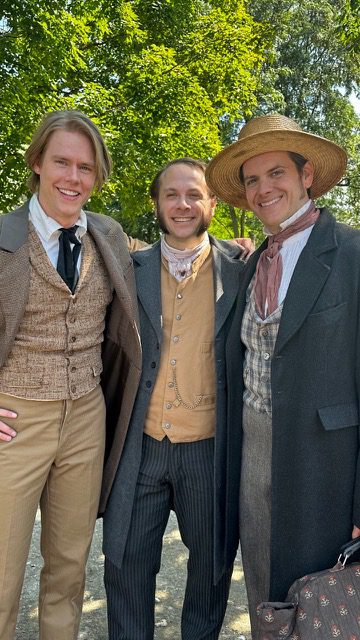
“Brigham Young,” “Wilford Woodruff,” and “Lyman Wight,” captured between the filming of scenes in Upper Canada Village.
My filmmaking friends, however, were not at all downcast. They immediately came up with another idea for a film. How about, they said, doing one on the August 1844 succession crisis? This difficult time in Church history pitted Sidney Rigdon against the Twelve, and, in particular, against the president of the Twelve, Brigham Young.
I agreed, realizing that this would be a very dramatic story, and that it was an important one to tell. I will frankly confess, though, that it didn’t seem so exciting to me, or of such pivotal, foundational significance, as the story of the witnesses to the Book of Mormon.
But I’ve changed my mind.
On the set of “Six Days in August,” Brigham Young ponders what to do following the assassination of Joseph Smith.
On the set of “Six Days in August,” Brigham Young ponders what to do following the assassination of Joseph Smith.
Why? I’ve grown more and more concerned as I’ve seen Brigham Young vilified, demonized, and thrown under the bus even by a few active, believing members of the Church of Jesus Christ of Latter-day Saints. And I’ve felt, more and more, the personal obligation to stand up and be counted as one who admires him and who is willing to defend him.
For the better part of two centuries, for instance, Brigham Young has been pronounced responsible for the atrocity known as the Mountain Meadows Massacre, despite the work of historians such as Juanita Brooks and, much more recently, Ron Walker, Rick Turley, and Glen Leonard. Such accusations continue.
He’s been denounced as a racist, to the point where some, at least, have even demanded that the three Church-owned universities that bear his name be rechristened, and that he be, to the extent that he can be, “erased.” However, while it is true that he said some things about race that make us cringe today, the same is true of Abraham Lincoln, the Great Emancipator, and — I recently read David McCullough’s biography of Harry Truman — of the modern American president who integrated the military and pushed some of the earliest civil rights legislation. And Brigham’s record contains some surprisingly positive elements, even with regard to racial issues, that shouldn’t be overlooked.
LORD POLONIUS: “My Lord, I will use them according to their desert.”
HAMLET: “God’s bodykins man, better. Use every man after his desert, and who should ‘scape whipping? Use them after your own honour and dignity. The less they deserve, the more merit is in your bounty.”
Brigham Young has been declared a vicious misogynist. And, since at least the days of the sensationalistic dime novels of the nineteenth century, and carried on by Zane Gray and his tales of the “Danites,” he has been labeled a murderer and an assassin. Recently he has even been accused of leading an apostolic coup to seize control of the Church and, no less, of having ordered John Taylor and Willard Richards to kill Joseph and Hyrum Smith in Carthage Jail.
Accordingly, I began quite some time ago to regard our decision to make Six Days in August as an inspired one and a timely one, quite beyond my wisdom or that of my filmmaking associates. Along with the materials that we hope to make available on the film’s website and the academic interviews that we continue to record and that we will incorporate into a docudrama sequel to accompany Six Days and turn into short video features, we are attempting, in our modest way, to reintroduce Brother Brigham to members of the Church that he led from 1844 to 1877.
The Heavenly Sign: Brigham Young’s Transfiguration at Nauvoo

To read more from Daniel, visit his blog: Sic Et Non.
One of the most consequential meetings in the history of the Church of Jesus Christ of Latter-day Saints was held in Nauvoo, Illinois, on 8 August 1844. The Prophet Joseph Smith and his brother Hyrum had been murdered nearly a month and a half before. The Church was in crisis. Its founding prophet was dead, and the mourning Latter-day Saints were unsure about what would happen next. They had never before experienced the death of a Church president. There was no precedent for a succession process. Some had probably assumed that there would never be a need.
The mourning Latter-day Saints were unsure about what would happen next.
Sidney Rigdon, the surviving counselor in the First Presidency, had just returned to Nauvoo from Pittsburgh, where had been living. A principal leader of the Church for many years—he even received the February 1832 revelation of the three degrees of glory (Doctrine and Covenants 76) with Joseph Smith—Sidney’s position in the Presidency certainly made him a plausible candidate to succeed the Prophet Joseph.
But the situation was complicated. Sidney’s relationship with Joseph had become somewhat strained. Indeed, in 1843, the Prophet had openly expressed his intention to release him from the First Presidency. However, at the Church’s general conference in October of that year, President Rigdon asked to remain in his position and, contrary to Joseph’s express wishes, the congregation agreed to let him stay.
After the vote, Joseph told them, “I have thrown him off my shoulders, and you have again put him on me. You may carry him, but I will not.” And now, with the Prophet dead, Sidney had returned to assert his right to be the church’s “guardian” or “protector.”
“I have thrown him off my shoulders, and you have again put him on me.”
Meanwhile, under their president, Brigham Young, members of the Quorum of the Twelve Apostles had also just returned to Nauvoo from various missions. They maintained their right and responsibility, as faithful followers of Joseph Smith and by virtue of the keys of authority that they had received from him, to lead the Saints he had left behind.
Sidney Rigdon rose first on that hot and humid summer day. An experienced preacher and perhaps the finest and most polished orator in the Church, Sidney spoke at length.
He was later followed by Brigham Young, the former Vermont carpenter and glazier who had ascended to the leadership of the Twelve and, in that capacity, had directed the flight of the Saints from Missouri to Illinois and presided over the enormously successful apostolic mission in England. Brigham spoke not to claim the presidency of the Church for himself—a new First Presidency would not be organized until the end of 1847, in Winter Quarters, Nebraska—but on behalf of the Twelve.
Brigham spoke not to claim the presidency of the Church for himself.
“For the first time in my life,” Brigham said, “for the first time in your lives, for the first time in the Kingdom of God in the nineteenth century, without a Prophet at our head, do I step forth to act in my calling in connection with the Quorum of the Twelve, as Apostles of Jesus Christ unto this generation— Apostles whom God has called by revelation through the Prophet Joseph, who are ordained and anointed to bear off the keys of the kingdom of God in all the world.”
And at the end of the meeting, the decision of the Saints was unmistakably clear. Brigham Young and the Twelve had carried the day.
And at the end of the meeting, the decision of the Saints was unmistakably clear.
What had happened?
In after years, many Latter-day Saints claimed that Brigham Young was transformed before them at some point during his remarks on that day in August. Some reported distinctly hearing not his voice, but that of the slain Joseph. Some declared that Brigham Young had even taken on the appearance of Joseph Smith. Many later said that, because of what they had heard and seen, all doubt about who should lead the Church was removed from their minds. And it is a matter of historical record that Sidney Rigdon seems that day to have withdrawn his leadership claim, at least for a while.
Unfortunately, while later accounts are abundant, no contemporary records have yet been found of what has been called “the transfiguration of Brigham Young,” when “the mantle of the Prophet” fell upon Brother Brigham. (The image of the “prophetic mantle” comes from the story of Elijah and Elisha that is told in 2 Kings 2.) And this lack of contemporary evidence is a concern to historians, who prefer to work with primary sources that were written as near as possible to the event that they’re studying. So it has been easy for some to pronounce the story a “myth,” a legend that grew over time.
Some declared that Brigham Young had even taken on the appearance of Joseph Smith.
The late Richard S. Van Wagoner published the most serious argument against the reality of the “mantle story” in the Winter 1995 issue of “Dialogue: A Journal of Mormon Thought,” under the title “The Making of a Mormon Myth: The 1844 Transfiguration of Brigham Young.” In the minds of many who read it, and trickling down to many others, Van Wagoner’s article seemed to show that nothing remarkable had occurred at that August 1844 meeting. It was just politics, just prosaic maneuvering.
“Deep in the Mormon psyche,” Van Wagoner wrote, “is an attraction to prophetic posturing and swagger.” In fact, he said, the tale of Brigham’s transfiguration had been generated by an apostolic “propaganda mill” that built on Brigham Young’s strategic mastery, cleverness, ambition, “political adroitness,” and “physical vitality,” with which Brigham had overwhelmed the ailing Sidney. “Not content to let the mantle of leadership pass him by, he simply wrestled it away from Rigdon.”
So it has been easy for some to pronounce the story a “myth.”
But Van Wagoner knew that his argument had a significant weakness: “The paramount dilemma with retrospective transfiguration recounting is why so many otherwise honorable, pious people recalled experiencing something they probably did not.” His proposed solution was “contagion theory.” As the story spread, people somehow came to believe that they had seen and heard something that they actually neither saw nor heard.
However, Van Wagoner’s problem was bigger than he had realized. He was able to cast doubt on a handful of recollections, but there were, it turns out, far more of them than he apparently knew.
The best discussion of the topic currently available is Lynne Watkins Jorgensen’s “The Mantle of the Prophet Joseph Passes to Brother Brigham: One Hundred Twenty-nine Testimonies of a Collective Spiritual Witness,” in the 2017 revised second edition of John W. Welch, ed., “Opening the Heavens: Accounts of Divine Manifestations, 1820-1844.” It is also available as a stand-alone Kindle publication (https://www.amazon.com/Mantle-Prophet-Joseph-Brother-Brigham-ebook/dp/B01N3A8CVQ). As her subtitle indicates, Jorgensen’s article gathers together fully 129 accounts, drawn from a varied multitude of witnesses and sources who testify to what they saw and heard. She also responds effectively to Van Wagoner’s specific arguments. I cannot do Jorgensen’s work justice in this brief column; it should be read for itself.
Jorgensen’s article gathers together fully 129 accounts, drawn from a varied multitude of witnesses
Furthermore, we can’t presume that modern research has found every account that was ever given. It’s very likely that other such narratives once existed but have perished, and that other witnesses testified orally to their experience but never recorded it in writing. It’s probable, too, that historians will continue to recover additional testimonies of the event. (Since its initial publication in 1996, Jorgensen’s own article has substantially expanded its collection of accounts.)
I myself recently chanced upon a report of the “transfiguration” that, so far as I’m aware, was not included in Jorgensen’s article. I came across it while reading Vickie Cleverley Speek’s 2006 book “God Has Made Us a Kingdom: James Strang and the Midwest Mormons.”
In 1855, William Hickenlooper wrote to his daughter and son-in-law, who had both chosen to follow James Jesse Strang instead of the Twelve. He explained his decision to follow Brigham Young and tried to convince them to leave Strang. “The first evidence I received that Brigham was the true successor of Joseph, was on the day when Sidney set up his claim for the presidency,” he wrote. “Brigham’s countenance, his voice, gestures and everything truly represented the martyred prophet in such a striking manner I shall never forget—I was convinced by the spirit of the Lord that the mantle of Joseph had fallen on Brigham.”
The son-in-law, S. S. Thornton, responded to Hickenlooper’s letter in an attempt to rebut it:
“I shall show by successful contradiction by your own arguments that he (Brigham Young) is an usurper, and has acted as such ever since Joseph’s death. Because Mr. Young had tried to mimic Joseph for several years before his death, and on his return from Boston after his (Joseph’s) martyrdom even went out and got a dentist to take out a tooth on the same side that Joseph lost one, to make himself appear as much like him as possible, that even his voice, gestures and likeness would seem like Joseph, and did, at the August conference, as you related, which was evidence to you that he was the man Joseph appointed, yet it is no evidence without he had come in at the gate, and been ordained, as the Lord had told Joseph before, which was by an angel.”
Strikingly, Thornton doesn’t deny his father-in-law’s claim that Brigham Young resembled Joseph Smith in both speech and appearance on that August day. Rather, he assumes the story to be factual but tries—rather lamely, in my view—to explain it away. This seems to indicate that it wasn’t only the Great Basin Saints who were familiar with Brigham’s “transfiguration”: At least some who had chosen to gather with J. J. Strang in the Upper Midwest were also well aware of it, already by1855.
The available evidence is persuasive that the story of Brigham’s transfiguration was being told quite early
In my judgment, the available evidence is persuasive that the story of Brigham’s transfiguration was being told quite early, and it’s difficult to imagine that so many testimonies over so long a period and from such far-flung areas emerged from a conspiracy to deceive or from a mysterious “contagion.” Something remarkable plainly seems to have happened at that meeting in August 1844.
A major argument leveled against the “mantle” story by Richard Van Wagoner is that some who claimed to have witnessed Brigham Young’s transformation weren’t even present in Nauvoo on 8 August 1844 to see it. But Lynne Watkins Jorgensen replies that some seem to have witnessed such a transformation on other dates and in other places, and that they weren’t necessarily even claiming to have been or to have experienced it there in Nauvoo on that day.
In partial support of her response, I offer a story from Wayne Borrowman, “John and Agnes Borrowman: A Story of the West” (Las Vegas: no publisher, no date) that I think relevant. Although it doesn’t describe a “transfiguration,” it tells of a seemingly miraculous attestation of Brigham Young’s right to succeed the Prophet Joseph that occurred nowhere near Nauvoo, and probably not on 8 August.
John Borrowman (1816-1898) was born in Scotland but was brought to Canada when he was four years old. He converted to the Church of Jesus Christ of Latter-day Saints in 1840 and was promptly disinherited by his father, who thereafter banned even the mention of his name. One day in the summer of 1844, he was traveling on foot in the open Canadian prairie country with his missionary companion (and future relative-by-marriage), James Pollack Park.
“The two companions were conversing with each other and wondering if Brigham Young was really the right man for the leadership role, when suddenly they noticed a strange man walking with them. He started to talk to them and said, “You were wondering about Brigham Young. I want to tell you that he is the right man in the right place.” They asked him where he came from, as they had not seen him come. He replied, “You did not see me come and you will not see me go.” John Borrowman made up his mind that he would certainly see him go when he did go, so kept his eyes fastened upon him. They came to a stream, and John glanced down to see where to step. In the instant his eyes were taken from the stranger, the man disappeared.”
Afterwards, the book relates, Elders Borrowman and Park always thought that this personage must have been John the Revelator. Whatever the stranger’s identity, however, the story seems to strengthen the idea that miraculous confirmations were indeed being given to confused and sorrowful members of the Church: Brigham Young and the Twelve were now the Lord’s chosen leaders.
FEATURES