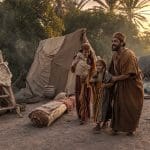

An Unforgettable Meeting in Africa with a Young Elder Thomas S. Monson


Cover image via LDS.org.
In 1975, I was serving as a full-time missionary in Rhodesia (now Zimbabwe), Africa, which at that time was part of the Johannesburg, South Africa Mission. Our small town of Salisbury (now Harare) was located about 700 miles north of the mission home in Johannesburg, so transfers were typically handled by plane. Visits from the mission president were usually months apart, since the missionaries were spread over an area the size of the western United States.
To say we were isolated is an understatement. At that time there was only one mission in all of the African Continent, and the distance from our town of Harare to Cape Town, South Africa (also in our mission) was approximately 1,600 miles away. This is about the distance from Tijuana, Mexico to Calgary, Canada. Hence, such a transfer usually involved a flight and a three day train trip to Cape Town. We had no cell phones, no faxes, no texting, no emails, and the only phone belonged to our land-lady downstairs. Mail from the United States took almost a month to arrive, and so any letters were extremely outdated by the time we read the “current news” from back home. We were grateful for a small LDS branch located in our town, but there were no stakes yet created in all of Africa.
It was in this context that we first learned that Elder Thomas S. Monson of the Quorum of the Twelve Apostles, was planning on a brief visit to our isolated African community as part of his mission tour. We were elated. Because of the size of the mission, such things as Zone Conferences or Mission Conferences were impossible, and even interviews with the mission president could be months apart.
So it was with great anticipation that we drove one morning to the LDS chapel across town on the designated date and sat in one of the small class rooms awaiting our special visitor from Salt Lake City. Our small district of 8 missionaries was sitting in a semi-circle when Elder Thomas Monson entered the room, accompanied by our beloved Mission President, Robert P. Thorn. At that point in his ministry, Elder Monson had been serving about 12 years as an apostle since his calling in 1963, at the young age of 36.
After a song, prayer and some pleasantries, Elder Monson, then just 48 years old, started at one end of the line of missionaries and began asking some very pointed questions, customized by inspiration to fit the needs of each individual recipient. I was amazed to note that each question was precisely what each respective missionary was struggling with in his own personal ministry.
The questions went something like this. “Elder, have you told your companion that you love him?” This was the only missionary in the room struggling with his relationship with his companion. I was impressed. As the District Leader of this isolated district of elders serving in the middle of Africa, I was privy to some confidential information due to my private interviews and exchanges with the elders.
A different question would then be asked to the next missionary: “Elder, are you memorizing the lessons?” This was the only elder in the room who refused to try to memorize the lessons, which was standard procedure in those days. “Elder, are you exercising daily? Then, “Elder, are you reading the scriptures every day? Followed by, “Elder are you saying your personal prayers every day?” This went on and on, with a little sermon and some loving advice shared by Elder Monson with each missionary after their honest and sincere answers to his queries. No two questions were the same. Each question was tailor fit for the recipient, and to the best of my recollection, each question dealt with the single most important issue that the particular missionary was struggling to overcome or master.
It was an electrifying experience to observe first hand an Apostle of the Lord walk into a room filled with missionaries he did not know, look them each in the eye, and then know exactly, through the Holy Ghost, with no hesitation whatsoever, the particular challenge that each respective missionary was struggling with and how to best encourage them to overcome their unique challenges. It was an inspiring meeting never to be forgotten. I still recall it as if it was yesterday.
That was the day when I first learned that Elder Thomas S. Monson was an inspired servant of the Lord. What he did was not possible without divine inspiration. We were sitting randomly in a row. He had not met any of us previously. He had other meetings before and after our brief encounter, and had a hundred other missionaries to meet on his tour.
That singular experience with a young Elder Thomas Monson in Africa has supported me through many callings of my own over the following years, including serving as a Stake President and Mission President. I know and testify that these special witnesses are called by God to help build up the Kingdom of God on the Earth! Their counsel is inspired. They know the challenges we face both individually and as a society. Where we live is irrelevant. Their love for us spans continents and oceans. The rescue taught by Elder Monson for many years continues unabated.
As for me and my house, we love and miss President Monson, a true Prophet and Seer of the Lord!
Sincerely,
Mark Albright
The World Still Needs Our Light

Sign up for Meridian’s Free Newsletter, please CLICK HERE
The following was written by Kerry Harding for the “Missionary Moment” column that is curated by Mark Albright.
During the last couple of weeks, several members of our ward were on a family vacation to Turkey. Therefore, I was more than a little interested when I saw that the origin of the hot news of the day was from Istanbul. According to the news report, near a high bluff where sheep had been grazing, for reasons still unknown, first one sheep jumped to its death. Then stunned Turkish shepherds, who had left the herd to graze while they had breakfast, watched as nearly 1,500 other sheep followed, each leaping off the same cliff.
In the end, 450 dead animals lay on top of one another in a billowy white pile. Those who jumped later were saved as the pile got higher and the fall more cushioned. Unfortunately, many of those who weren’t killed in the fall were later suffocated by the pile of sheep on top of them.
Kind of a gruesome tale, I know. I mean, who doesn’t like sheep anyway?
As I thought about this sad report, it made me think of other news reports I had read recently where “following the crowd” had cost someone or many dearly—a massive brawl at a soccer game in Brazil over a bad call; a boy, murdered by a group of teenage boys, because he refused to surrender his IPod to the gang; conviction of several key executives of a major corporation for colluding to falsify financial statements to make earnings appear much rosier than they really were. Perhaps one of the most disappointing announcements was that two major Christian denominations had voted not only to sanction the performance of gay unions but also to allow the ordination of actively gay clergy, “as long as they were in long-term, committed relationships.”
These stories, and others, made me think of the passage from Isaiah that says, “All we like sheep have gone astray, everyone turned to his own way. The Lord has laid the rebellion of everyone on his own son.”
In contrast to the defection of many of the “baby boomer generation” from mainstream religion to more secular pursuits, a recent U.S. News & World Report discussed the sweeping trend across American universities for “Generation X’ers” to search for or rediscover the faith their parents had taken for granted. Evangelism and outreach is at an all-time high, the story reported. And non-denominational campus religious organizations are reporting capacity crowds each Sunday. What can we learn from this?
We have taken it for granted that most of the people we know have diminished interest in learning about the gospel of Jesus Christ—so we never bring it up in conversation. I was amazed to discover that one of my own children’s friends had a great deal of interest in what Mormons believed and, not only did she have a number of questions that were easy to answer, but several misconceptions that were just as easy to clear up.
At a concert I attended this past week while on vacation in Massachusetts, above the stage in this small, historic church on Cape Cod, was a banner which read, “Ye are the light of the world.”
Reflecting on the important role of the many lighthouses which dotted the Cape to warn seafaring craft that dangers were nearby, I thought to myself how wrong I had been about what this scripture really meant. Mistakenly, I thought that it meant that we were to be merely “good examples,” and that, by watching those examples, others may desire to know more about the Gospel. So far, that strategy hadn’t been working very well. I realized that the role of the lighthouse is not merely to “look good,” but it is also to be actively sending a warning beacon. More action is required from many of us as well.
Therefore, what the Savior meant is that we are to warn those around us as well of the dangers of following the crowd, of failing to obey the commandments, of pursuing a self-centered lifestyle focused on consumption, lacking depth of character or understanding, and greed.
As the scripture says, “it becometh every man to warn his neighbor.” May we, in the spirit of loving kindness, take the first step by inviting them to come to church with us before the summer’s end.
Kerry Harding
Sacrifice Brings Forth the Blessings of Heaven

Sign up for Meridian’s Free Newsletter, please CLICK HERE
The following was written by Kerry Harding for the “Missionary Moment” column curated by Mark Albright.
On May 19. if you would have been in attendance at RFK Stadium to watch the Washington Nationals play the Milwaukee Brewers, up in the cheap seats you would have seen a mass of white that, through closer examination, would turn out to be short-sleeved shirts.
Navigating through a variety of logistical issues, the entire Washington, DC North Mission, 170 Missionaries strong, had finally been able to attend its first sporting event ever as a mission. Elder Menlove, half of a senior couple called to serve in the Anacostia Branch, sat to my right and fondly reminisced about the last time he had been at a Major League baseball game. It had been 50 years ago. He had just arrived in Boston to begin serving in the New England States Mission. His companions had met him at the train station and one said excitedly, “Let’s go put your suitcases away. We’re going to a Red Sox game. I hope you have enough money to get in!”
For some in our group, it was their first professional baseball game ever. For a couple of elders in the crowd who had aspirations of a major league career of their own someday, it was a chance to close their eyes and, just for a moment, dream of a bat in their own hands.
For a couple of hours on this warm Spring day, there were no doors to knock on, no reports to file, no lessons to learn, no disappointments or frustrations—just an overwhelming sense of camaraderie, experienced at its best when, with arms around adjacent shoulders, they sang the traditional “Take Me Out to the Ballgame” at the top of their lungs during the 7th Inning Stretch. I was an eyewitness to one of those rare moments in life of pure joy that I will never forget.
From across the stadium from where the group sat, if you looked closely at our group, you would have seen among the sea of white shirts, a speck of navy blue. It belonged to the jacket of a young man who less than six months ago, was busily serving as a missionary here himself.
Some had seen this man around the chapel, since he served in a local ward for nearly four months. Others had hosted him in their homes during his exchanges when he was assigned to another ward.
Few members though, knew the sequence of events that brought him here.
That he is in the church at all was kind of miraculous. When he first met the missionaries in Honduras at the age of 16, they were unaware that, because of his age, his baptism required his father’s consent. They were also unaware that, because he was an Israeli citizen, his baptism required approval from church authorities
His father, an Hassidic Jew, was also a Rabbi. When he learned that his son had been baptized Christian, he sent word quickly that this young man was no longer a part of the family. His bank accounts were closed; his credit card cancelled; a friend of his father’s even came to BYU from California and took back the car his parents had bought for him to drive. His father even attempted to prevent him from obtaining a new passport which would have forced him to return home to serve in the Israeli army for two years instead of the Lord’s. His mother and his siblings were forbidden to have any further contact with him of any kind. Birthdays, Jewish holidays, American holidays, each came and went without any acknowledgement except from his friends.
As far as his family was concerned, he was, as the line says from Fiddler on the Roof, literally “dead to us.”
In fact, later, while on his mission, when he attempted to call home on Mother’s Day, his father answered the phone and, hearing that it was him, said, “The dead don’t make phone calls,” and hung up.
Though he returned home in December, this former missionary had become somewhere between a hero and a legend. With an unshakeable testimony, everyone loved him, made obvious to me by the reception he received from his former peers when he showed up unexpectedly at the Nationals game as the mission president’s guest.
During our time together during his recent visit, I asked him if, at any point, he had ever questioned whether or not the enormous sacrifice he had made had been worth it. He paused briefly and then said simply, “No, I never did.”
These past few days, I have been thinking a lot about this intense yet loving man who embraced the Gospel with such fervor and faith. I think about all the people whom I have ignored because I decided on their behalf that they wouldn’t be interested in the Gospel. What if those elders in Honduras had done the same thing with this young man? In hindsight, the ramifications are too enormous to comprehend.
This week, I am going to try talking with someone who is way “out of the box” as far as a typical prospective investigator might be And, if I get nervous, I will ask myself, “What would this former missionary do now?” Sounds like pretty good strategy for the rest of us, too.
–Kerry Harding
Entering to Learn and Going Forth to Serve
Sign up for Meridian’s Free Newsletter, please CLICK HERE
The following is written by Kerry Harding as part of the “Missionary Moment” series curated by Mark Albright.
Cover image via LDS.org.
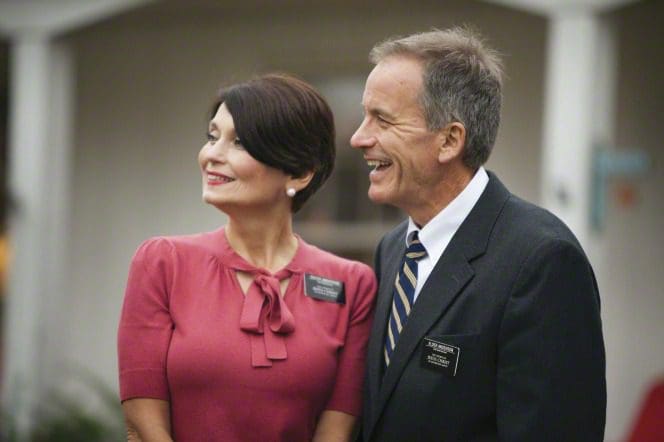
The above slogan shows up as the tagline under the words “Brigham Young University” at the school’s main entrance. I had the chance to be there a few years ago to accompany our son into the Missionary Training Center or “MTC” as it is more commonly known.
As we looked around the MTC chapel, I thought to myself, “Where on Earth are there nearly 500 better young people than in this room right now?” Then, I remembered that, an hour before, and an hour later, every day for the foreseeable future, there were, and would be, nearly 500 more young men and women of the same caliber entering this room. It was absolutely mind boggling.
What was also mind boggling were the coincidences that accompanied our experience. The family behind us, sending their son off to Paris, France, had another son with them who had just returned from the mission our son was heading to in New York City. Also in the room was a former missionary who had served in my ward for several months five years previously. He was dropping off his brother-in-law. Leaving the chapel, we saw another family from a ward in my stake dropping their son off in the next session. And, to our surprise, we discovered the daughter of the current MTC President had sung at our wedding nearly 30 years ago.
During my time in Provo, I had the chance to catch up with many of my “favorite” missionaries from Washington, DC who, now at BYU, had moved beyond their mission and were successfully integrating back into the real world. By sheer coincidence, I had the chance to meet the family of one of the former assistants to the mission president, who, at the time, were eagerly anticipating his arrival back home after he finished his mission the previous Thursday, and to tell them in person what an amazing, spiritual and loving missionary he had been during his time here.
As those of you know who’ve been through the routine know, it used to be that, when you took someone to the MTC, at the end of the spiel, the families got up and went through one door marked “Family Exit” and the missionaries went through another labeled “Missionary Exit.” This symbolic physical separation never seemed to get any easier—at least for me.
After going through this experience for the second time in two years, I thought to myself how much like my week in Provo my weekly attendance at Sacrament meeting each Sunday meeting is.
Each week, each of us walk through the chapel doors, and like those at BYU, we “enter to learn and go forth to serve.”
Each week, we partake of the Sacrament, and covenant, again, to “take upon us the name of Christ.” Like the MTC, it would be appropriate for there to be a sign on the doors of the chapel that says, “Missionary Exit” because, each Sunday, each of us leave to go out into the mission field for a one-week “mini-mission”—may it be to a school, an office, or, in some cases, even to our own home and family members.
Each of us needs to remember that, as we leave our homes each day, we are a missionary. As we come home each day, I guess whether or not we have been good ones depends on us.
Kerry Harding
Washington DC
All the Lost Children Have Been Found

Sign up for Meridian’s Free Newsletter, please CLICK HERE
The following was written by Kerry Harding.
The day was perfect. Hundreds of thousands of well-wishers had gathered on the National Mall for the Smithsonian’s 150th Birthday Bash. With abundant food, exhibits highlighting the best of the Institution’s 18 museums, and events designed for the whole family to enjoy, the planning committee had gone to great lengths to ensure that “a good time was had by all.”
As my family sprawled on the Mall in front of “The Smithsonian Castle,” we enjoyed watching the diversity of people, viewing the historical vignettes on the large screens behind the stage, and listening to the amplified music coming from the small figure at center stage.
After a rousing jazz number, the emcee approached the microphone to announce Buffie St. Marie, the legendary ‘60s folk singer, whose performance was to follow.
Before that, he read a list of names and descriptions of five children, ranging in age from six to fourteen, who had become separated from their parents, and asked that, if anyone knew where they were, that they help them rejoin their parents at the Lost and Found Tent.
Within the vicinity of where we were sitting, audible sighs expressed the empathy of the crowd as each reflected on how easy it would be to become separated from a loved one in this sea of people and the fear and anxiety that would result.
Later in the evening as stage hands prepared for the performances of the Queen of Soul, Aretha Franklin, the emcee once again approached the mic. “May I have your attention,” he began, “I just want you to know that all of the lost children have been found.”
The entire crowd spontaneously burst into applause. During the rest of the concert and subsequent fireworks display, I reflected on the significance of that statement:
“I just want you to know that all of the lost children have been found.”
What a joyous report! Yet how much more joyous a report that would be if it were coming from our Father in Heaven!
This month, He would have been able to tell the hosts of Heaven, “I want you to know that, for the Bethesda Ward, three of the lost children have been found—Mina Rezvani, David Irons and Lori Irons.”
I like to think that the resultant celebration would have made the Smithsonian’s own lavish fireworks display seem tame.
At the same time, I believe there would probably have been a subdued introspection as the realization came as to how may more were yet to be found.
As members of His church, the Savior has issued the call: many of our Heavenly Father’s children are lost, without the Gospel in their lives, strayed from the “straight and narrow way” that leads home. He asks—He depends on–us to find them and help bring them back to His own “Lost and Found Tent” –the great tent of Zion, anchored firmly, yet in part, by the members of each of our stakes.
Whether we are called to serve as full-time, ward, or member missionaries, let us strive this month to assist our Father in his search for His lost children through focusing on helping one of them return. In the spirit of the Ward Mission Plan, pray for, serve and invite a person or a family to feel the Spirit in a way that well be uniquely personal for you.
We are all He has. He’s counting on us. Let us each be ready…and willing…to become a member of His search party.
–Kerry Harding
Missionary Moment: Start Spreading the News

Sign up for Meridian’s Free Newsletter, please CLICK HERE
The following was written by Kerry Harding.
I think it was singer Frank Sinatra who said it best, “Start spreading the news. I’m leaving today. I want to be a part of it – New York, New York.” Those lyrics aptly described my son John’s unbridled excitement about his call and imminent departure to the New York, New York South Mission, which not only encompassed the boroughs of Brooklyn, Queens, Staten Island and Long Island, but interestingly enough, the island of Bermuda.
John has always had a special spirit about him when it came to the Church. At the age of three, during a Fast and Testimony meeting, he marched up to the podium, adeptly pulled the mic down to his level, looked out at the congregation and said, “How many people here feel the Spirit today?” He paused and, looking somewhat perplexed as not one person raised their hand, said, “Well, I guess I don’t have anything else to say to you then.”
A year later, his reluctance to go to church was squelched when he obtained a little navy suit jacket and a briefcase and could then go to church “looking like the Bishop.”
At the age of 13, he helped the missionaries teach Simon, a Russian immigrant who would later credit John’s simple but heartfelt testimony with his decision to join the Church.
In the 8th grade, he got permission to accompany his older brother to Seminary and, considering he wasn’t even expected to go, actually managed to go pretty faithfully.
As he transitioned through activities and events at his elementary and middle school, he was always the balanced man, doing what he most enjoyed doing whether it was deemed cool at the time or not…stand-up comedy, learning to play the cello, starting an a Capella group, participating in community and school team sports and learning to waltz and even tap dance for a high school musical.
He mixed easily with different groups at his high school, yet all knew what he stood for and where his limits were. Like the Savior, he loved the people around him unconditionally and never sought to be in the limelight or in the center of things. Recognition and awards (and probably this article) all made him uncomfortable.
Elder Harding, as he was eventually known, was as well prepared as he could be when he began his stint as an Ambassador of the Lord Jesus Christ in the “Big Apple.” Four years of seminary gave him a firm grasp of the scriptures and doctrines he will need to know. His Missionary Prep class at college taught him the fundamentals of what was then the new Preach My Gospel program. Everything on his checklist of things to bring was obtained days after his call was received. The money it took to fund his mission was in the bank and ready to be disbursed. But, more important, he was ready to love the people he would serve with and for in his mission.
As he went about his routine, from time to time, he was able to glimpse the patinated majesty of the Statue of Liberty. This reminded me of a gospel song I heard several years ago:
In New York harbor
stands a lady
with a torch raised to the sky.
And all who see her
Knows she stands for
liberty for you and me.
I’m so proud to be called an American—
to be named with the brave and the free.
I will honor our flag
and our trust in God
And the Statue of Liberty.
On lonely Golgotha
stood a cross,
With my Lord raised to the sky;
And all who kneel there,
live forever,
as all the saints can testify.
I’m so glad that
there was an Atonement,
that I’m named with the
ransomed and whole.
As the Statue liberates
the citizen
So the cross liberates the soul.”
When John left the Mission Training Center for New York City, eight million people from nearly 60 countries were there waiting for him. It’s possible that some of them were waiting just for him—that a door he knocked on, a referral he followed up on, or a person he stopped on the subway, may just have needed the message of hope he offered at that moment in time.
For the rest of us continuing on with our lives as they are—the word of the day, is “Gospel” which means“good news.” On behalf of John, as you go through your the paces of your own lives, “start spreading the news.”
–Kerry Harding
When Your Best Missionary Efforts are Rejected
Sign up for Meridian’s Free Newsletter, please CLICK HERE
Cover image via LDS.org.
In 2005, the only three freshman Mormons at the Walt Whitman High School in Bethesda, Maryland, known as the “Mormon Musketeers” were the ones to watch in the realm of the School’s 4-A lacrosse team.
During one of the matches, Walt Whitman High and Walter Johnson High, two of the toughest, most competitive rivals in the public high lacrosse arena, gathered for their annual showdown in Rockville. The teams were evenly matched throughout much of the first half, with each point being answered by the other.
Late in the second quarter, a Whitman player broke free from the pack and sprinted down the field in the fast break for an on-goal shot. Mano-a-Mano, with just the Whitman Attack facing the Johnson High Goalie and no other players from either team nearby, the Whitman Player took what would be the game-tying shot—only to have the ball go right into the head of the Goalie’s stick for a collective groan of dismay from the Whitman fans.
After missing what should have been, at least from the fans’ perspective, a “gimme”, the Whitman player took off his helmet in disgust and threw it across the field. He would not shoot again the rest of the game.
As a devoted fan, it was painful to watch. As the father of the player in question, it was even more so.
As I watched this unfold on the playing field, I thought to myself how much like missionary work this series of events was.
Each of us thoughtfully and, sometimes, prayerfully, identifies someone whom we think will benefit from having the gospel in their lives–a family member, friend, co-worker, classmate or other acquaintance. We carefully strategize our approach and then attempt to execute it with masterful skill—only to find that, instead of achieving our goal, frequently our efforts are, as the high schoolers say, “REEEEjected!”
Faced with the humiliation and/or disappointment of having our best efforts thwarted, too often, we give up and vow “never to take the shot again” rather than risk the accompanying feeling of embarrassment or shame from having failed in our attempt.
When that happened at the game in question, the opponent’s team had the starting attack player right where it wanted him – on the bench. In the realm of missionary work, the opponent revels in any noble activity thwarted by the fear of failure.
If, as the scriptures say, “the Harvest is great but the laborers are few,” we must continue to try, even if our initial attempt is unsuccessful. In the “Parable of the Lost Sheep,” the shepherd does not just try once and give up–he tries until the lost sheep has been found and is safely back to the fold.
Though he was not a Biblical scholar by any means, during his presidency, Teddy Roosevelt wrote what I consider to be one of the most profound pieces of applicable prose to missionary work that I have ever read:
“The credit belongs to the man who is actually in the arena; whose face is marred by sweat and blood; who strives valiantly; who errs and comes short again and again because there is no effort without error and shortcoming; who knows the great enthusiasms, the great devotion, spends himself in a worthy cause; who at best knows in the end the triumph of high achievement; and who at worst, if he fails, at least fails while daring greatly, so that his place shall never be with those cold and timid souls who have never tasted victory or defeat.”
We must get into the arena—and stay there. Like the lacrosse player, we must “shoot” whenever we have the chance, knowing that some of our efforts will be successful…and some will not.
1st Timothy 1:7 tells us that we are to be motivated “not by the Spirit of fear but of love.” As a driving force, love for our Father in Heaven, our Savior Jesus Christ, and his children who are all around us, will help us to overcome any fear of failure we might have.
Our goal is not one of nylon net and steel—it is to simply share the gospel whenever the opportunity presents itself in whatever way the Spirit prompts us at the time.
Whether you’re on the bench or on the sidelines, our team needs you on the field. The clock is ticking. How will you play?
–Kerry Harding
You Can Be the Bridge Between Missionaries and Investigators

Sign up for Meridian’s Free Newsletter, please CLICK HERE
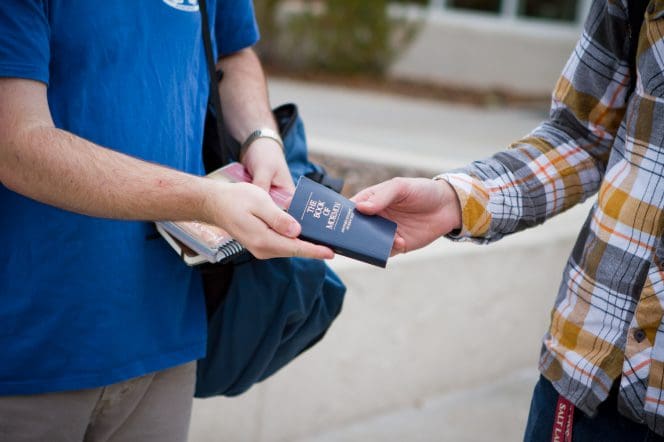
Last Thursday, after attending a Congressional reception on Capitol Hill, I boarded the Metro’s Blue Line for my subway trip back home. To my surprise, at the next stop, a couple of Mormon missionaries got on the train and sat down. Fortunately, the seat was available right behind them—which I took. After a few minutes, I leaned forward, tapped one of them on the shoulder and said, “Excuse me, could you tell me if there is a living prophet on the earth today?” I wish I would have had a picture of their faces as their heads whipped around and they stared at me incredulously. I started to laugh and introduced myself. We talked briefly and they got off at the next stop, leaving me laughing to myself about what had just transpired.
“What if,” I thought to myself, “it was really just that easy?”
Wouldn’t it be great if, in reality, we could just station missionaries at strategic points around the city, the country or even the world like traffic cops or park rangers, and people would come up to them and ask them the key questions they were hungering to have answered? Questions like, “Why is there suffering in the world?”, “Does God really answer prayers?’ or the simple but timeless question which so plagued 14-year Joseph Smith, “How can I know which church is right?”
Unfortunately though, for reasons I don’t fully understand, people don’t tap some stranger on the shoulder on the subway, at work or at school in their quest for spiritual nourishment. They usually just continue on, living as the saying goes, “lives of quiet desperation.”
How can you help? How can I help? There’s a middle ground between the unabashed boldness of those called to share the gospel as their “full-time job” and those of us who are not.
We can be the bridge between them. A couple of days ago, I was having lunch with the mission president and I marveled how artfully he transformed a routine conversation with our Russian waiter into a gospel conversation, securing his commitment to attend this week’s BYU Singers concert at the Visitors Center and promising that, if he came, there would be a missionary from his homeland there to meet him.
After the invitation had been extended and accepted, I thought to myself, “Now, I could have done that!” Yes, I could’ve, but I didn’t—not because I was afraid to but because I just didn’t think of it. We have been told to “seek out the elect” and share the gospel with them. I think that, too many times, we think we are better equipped to decide who the elect actually are than the Savior who said simply, “Go ye unto all the world.”
I have read with great interest this week of the extensive coverage surrounding the selection of Benedict XVI as the new Catholic “CEO.” In light of the protests surrounding his conservative doctrinal viewpoints, he responded, “Accept that this is our faith… The Church isn’t here to be constantly changed by the world; rather, she is here to change the world.”
I thought that was a pretty good response. As members of our ward, how are we changing the world in our part of the field? As a ward mission leader, some of my ward members’ efforts were more visible than others. Regardless of whether I knew that they were “actively engaged in a good cause,” the most important thing was that they knew you were.
This week, after months of searching, I was finally able to find a copy of an out-of-print CD called “Field of Souls,” by an obscure artist named Wayne Watson. The words of the title track touched me in how succinctly they described the gamut of our missionary efforts:
We work the field of souls
Together you and I
Some fields are blooming now
Other fields are dry.
We are not the same
But differences aside
We will work the field of souls
Together, you and I.
One is off to foreign soil
To work a distant land;
Another anchors close to home
To hold a neighbor’s hand.
Who has served the Father most?
And who has labored best?
That life devoted to our God
That devotion will be blessed.
One shouts the gospel in the streets
For everyone to hear.
He’s bold to everyone he meets
The Word is loud and clear
Another cries alone and prays
In silence on her knees
Before the throne day after day
Where human eyes don’t see.
The “field of souls” is all around us. You may be the parent who prays every night that a “prodigal son” will return to the gospel fold; one who shares the joy of the gospel with neighbors and friends; or one who is supporting the efforts of one laboring on “foreign soil” as the song says. However big or small your contribution, the important thing is that you are consciously making one.
Kerry Harding
A Missionary’s Christmas Parable to Take into the New Year

On a cold, dark Christmas Eve a hundred years ago, there sat a beggar by the banks of a river. From the distant streets he could hear the sounds of laughter and families celebrating, but it was nothing but a painful reminder to him of what little he had. To a beggar, Christmas was the coldest, longest, darkest day of the year, and he tried what he could to forget about it. He clutched his simple red and green blanket, the only possession he had other than the clothes on his back, around himself, and braced himself for the cold night.
It was then that he heard jingling footsteps along the river, and looking up he saw someone he didn’t expect to see. It was Santa Claus!
Full suit and hat, carrying a large sack and strutting along the river and whistling a happy tune to the beat of his tinkling footsteps. The beggar stared, and Santa, staring back, paused in front of him. “What are you doing all alone in the dark tonight? Shouldn’t you be getting home?” he asked. “Nobody should be without their family on Christmas.”
The beggar kicked a small tin can at St. Nick’s feet, half in reply, and half hoping the old man would have something to give. “I see,” said Santa. “You have nowhere to go?” There was silence for a moment as the two looked at each other, until St. Nick broke it with his next question. “Would you like to join me and my family for dinner?” The man couldn’t believe it. Really? A real Christmas dinner? An actual meal? He nodded exuberantly.
Santa laughed. “Then come along! We’ve got to go help get things ready.” The beggar stumbled to his feet, still holding tightly to his red and green blanket, following the big man in the red suit.
They walked by many large houses, with bright lights and beautiful decorations. The man looked around in wonder, thinking to himself that Santa’s must be the largest, most beautiful in the entire city. But his anticipation turned to disappointment as they wandered away from the town’s light to a poorer part of town. And there they arrived at an old, crumbling home with broken doors and boarded up windows. It looked like nobody had been home in a long time.
The beggar looked at St. Nick with bewilderment and indignation.
This wasn’t a home! And it certainly wasn’t the old man’s home.
“Now, don’t look at me like that, Brother. I admit it hasn’t been lived in for a while, but I assure you that this is my home. Give it a little time and we will have things back in order.
“But,” he said, now reaching into his bag, “now it’s time for your first toy.” He pulled out a hammer and nails handed them to his new friend, who still looked confused. “Take that and see if you can’t fix the doors. Should just need a few nails in the hinges.” Santa was going to have him clean his house! The beggar couldn’t believe it. He wasn’t someone who could just be called upon for manual labor at a heartbeat. “Now,” continued the old man, “while you do that, I’ll get the food and guests and then we will be ready. Good luck!” And the old man marched away.
The beggar weighed the hammer and nails in one hand, and the chances that Santa was lying and there was no food in the other. Deciding, though, that his conditions couldn’t get any worse, he walked up to the doorframe and started fixing the home.
The doors ended up being easier to fix than he expected, and as soon as he finished, Santa arrived with another poor-looking figure in tow.
“Oh good! You’ve finished. Now you can start on the windows too.
Here.” He gestured to the new man who the beggar recognized as a scavenger from across the river. Looking down, he saw the man’s feet were bare on the cold ground. He had no shoes. Santa pulled out a crowbar and gave it to the man. “You two go get to work together. I’ll be right back.” And he was off again before the two could ask him where he’s going.
They talked little, and worked hard, the promise of food still sharp in their minds. Santa returned again with a man who had recently lost his shop. After they finished the windows they were set to work clearing old, broken furniture out of the home and sweeping the floors. It was then that Santa brought the first crippled man.
It was a man with a twisted leg and a single crutch that the old man helped stumble along to the house. “Clean the fireplace and get a fire going.” The three began to protest. Where was the food? Why was Santa bringing them a man who couldn’t even help clean? What was he playing at? But the good saint wouldn’t hear their complaints. “This is my house and my feast. Before we get started we need a fire and a nice place for my friend to sit.”
And so they did as he said. Next Santa brought a freezing boy, who sat warming himself by the fire with the crippled man at his side. The other three went about lighting the lamps inside the house and wiping the windows.
Then they began to get food.
It started with a baker who had bread too stale to sell and needed a place for Christmas Eve. Then Santa brought a man selling soup on the street corner. Then a family selling chickens. Santa brought them all, but told them not to eat. “We don’t start eating until all the guests have arrived.” The beggar groaned, but he was warm and feeling better now inside the house. They kept on cleaning, setting the table and chairs, dusting, putting on hot water, preparing the food.
The guests kept on coming. Still, Santa brought them the beggars and the men on the streets, but there were others now too. Small families, street performers, travelers. They all arrived and helped along.
The house was changing quickly. The lights were on. Somebody had found a guitar and handed it to the crippled man, who surprised them all with his favorite Christmas carol. There was a street performer teaching the boy how to juggle. The dishes were ready and the table was set. Santa brought the shopkeeper’s wife and children with more food and the brother of the scavenger, who happened to be a butcher, and came carrying a large flank of beef.
Last of all was the Christmas tree. Mr. Claus went to the lot owner, who decided to join them with the last Christmas tree in the lot. It was a humble tree, but they brought it in and surrounded it with tinsel and decorations that the old man conjured from upstairs. They placed the Christmas star, a gift the scavenger had found in the trash a week before, on the top of the tree, and everything was ready.
Finally, it was time for the Christmas feast, but the house was no longer a broken down shed. From the chimney poured warm smoke. From the windows poured music. And from the windows poured light. The crowd of people that had gathered therein sat or stood or crouched wherever they could as Santa stood on a chair to address them all. “I’d like to thank you all for coming to my Christmas feast at such short invitation! You are always welcome under this roof and with these, my friends, my brothers and sisters. There is no better way to spend the most sacred, the most holy night of the year, with one’s loved ones. With one’s family.”
He said grace and they began the feast. The beggar, lost amid the crowd, couldn’t remember, even before his life went to pieces, a brighter Christmas in his entire life. The feast ended and Santa began passing out presents, as is his tradition. He started with the butcher and the shopkeeper’s son, and continued passing out gifts with red bows and bright paper. Nobody was sure where he was getting them from, but they unwrapped them to find toys, warm clothing, chocolates, books, and other needed items. A crutch. A coat for the boy. Shoes for the scavenger.
He laughed and smiled and hugged his guests as they received their gifts with tears of gratitude and words of thanks. Seeing this made the beggar smile, and he curled in his blanket, eagerly awaited his turn.
But it didn’t come.
Surely the old man hadn’t forgotten about him. But he made no effort to approach his first invitee. Perhaps he couldn’t see him. The beggar tried to make himself seen, but Santa was moving away from him, through the guests and towards the staircase. When he arrived at the first step he turned around sharply and looked straight at the beggar, catching him off guard. Good St. Nicholas’ disposition was suddenly changed. Before it had been all laughter, but now his eyes turned serious as he gestured for his friend to follow him upstairs.
Walking away from the lights and the noise, the beggar made his way up the stairs. There was a door at the top, and it opened into a very plain room, with a single candle burning. Santa knelt in silent prayer at his bedside. The beggar approached him silently.
Santa was shivering. “I’m cold.” he said. “Do you have anything warm? A coat or a blanket?”
The beggar’s hand shot immediately to his only warm red and green blanket. No. Not that. Anything but that. Surely not. “Everybody else has brought something.” He had worked for hours. He had been there from the start. It was the only thing he had. A gift given from a stranger long long ago. It had saved his life winter after winter, year after year, from the winds and storms and from the bitter cold.
It was his.
And then he saw the pattern of the bedsheets. There was no blanket on St. Nick’s bed. Only red and green sheets. It had been that way for years. Looking back between the blanket and the sheets, he knew they were a matching set. The beggar looked at the old man and knew know who the stranger had been all those years ago.
“I’m cold.” said the old man.
The beggar took the blanket from off his shoulders and draped it over the old man’s. “Here you go.”
Santa smiled again. “Thank you.” he said. “I have something for you now too.”
He walked to the closet and pulled out another package, wrapped in red paper and tied with a bow. The beggar took it and unwrapped it gingerly. Inside the paper was a box, and inside the box was a brand new coat. A big, red and white coat that matched the old man’s. He held it up, not sure what to say. The old man just laughed. “Go on!
Put it on! It’s my favorite style, in case you couldn’t tell.” The beggar put the coat on. It enveloped him like a huge cloud of warmth and softness. It was so thick and warm not a gust of cold could enter it, and the beggar began to worry he would start to sweat if he wore it too long. “I…” he couldn’t speak. “Thank you. Thank you so much.”
Santa just nodded, and said “Merry Christmas, Brother. Merry Christmas.”
“I’m going away for another year, but I’ll be back next Christmas.
Until then I need you to watch and take care of what we’ve done here.
I’ll leave you the keys and directions, but I need you to keep this house open. Full of light and food and shelter for whoever needs it.
Can you do that for me?”
The beggar was shocked at such a trust. “Directions?” he asked.
Santa nodded. “They’re simple enough, and you can figure out how you can best do it, just as I’ve tried to figure out how I could.
The directions are simple.
‘That which ye have seen me do, even that shall ye do.”
Elder Dallin David Albright
Japan Kobe Mission
She Decided to Keep Walking Until She Found Her New Church
Sarah is a young mother who moved with her family to the Springfield, Virginia, area in January. As a result, she wanted to quickly find a new church to attend because her previous church was located many miles away from her new home.
To make her search even more difficult, Sarah did not own a car, so she literally walks wherever she needs to go, or occasionally takes the bus. Early on her first Sunday morning, she began her search to find a new church in the area. She was not familiar with the neighborhood, so she told herself to just keep on walking until she came to a church that would fit she and her kid’s needs.
She walked down the street and took a right turn and then a left, and then another right turn. She was literally “led by the Spirit, not knowing beforehand the things which [she] should do.” 1 Nephi 4:6. Eventually she came to 6942 Sydenstricker Road. The sign outside the Chapel said, “The Church of Jesus Christ of Latter –day Saints,” and “Visitors Welcome.” She walked inside the front door at about 9:00 a.m., found a seat on a nearby pew and attended the meeting that was just getting started.
Next she attended a Sunday school class. When that class ended she noticed down the hall a class-room filling up with ladies, so she joined them as well. Hour after hour, she just followed the crowd, took a seat, and listened to the various gospel messages. When we did the math later, she apparently attended about 5 hours of various meetings, including sacrament, Sunday school and relief society meetings, and then started over with another ward. She loved everything she heard. It just felt right. She knew that she had found her new church. She determined that this would become her new church family.
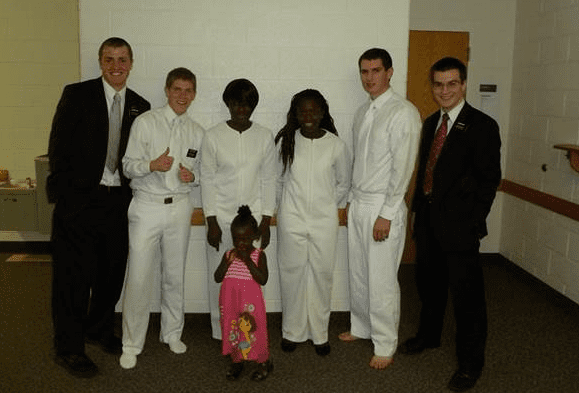
We eventually caught up with her and scheduled an appointment. It was my new companion’s first lesson as a new missionary. In fact, it was Elder Eaton’s first night in the mission field. During her first lesson, we invited Sarah to be baptized, and on March 24, a couple of months later, Sarah was baptized a new member along with her daughter. Elder Eaton’s first lesson was indeed “Golden.”
Out of all the many churches in Northern Virginia, and trust me there are many, Sarah had walked right into the only LDS church for miles. This is God’s true church and now Sarah is a member of it. Miracles have not ceased.
Elder Parker Norris
FEATURES