







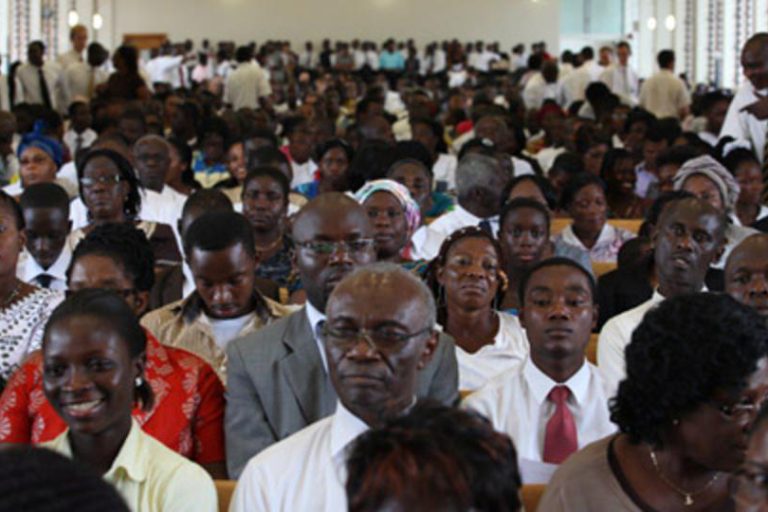


The growth of The Church of Jesus Christ of Latter-day Saints in Africa, Latin America, and Asia is reshaping the faith in ways reaching far beyond membership statistics. For most of its history the Church has been centered in the American West, shaped by the experiences, expectations, and leadership of communities with a shared common cultural background.
That balance is changing. Expanding congregations on three continents are influencing traditions, leadership development, and the everyday rhythms of worship and administration. The result is a religious community gradually broadening its sense of identity as new voices rise and new cultural settings become part of its standard landscape.
One of the strongest forces driving this shift is the rapid growth of the Church in Africa. Congregations in West and Central Africa have expanded at a pace rarely seen in the modern religious world. As local stakes and missions grow, members bring their own heritage of devotion, music, and communal support. They approach religious life with a sense of collective responsibility, often emphasizing shared welfare and mutual aid.
These patterns are influencing how leaders think about youth programs, community service, and member retention. African members are not simply recipients of policies developed elsewhere. They are shaping new ones through the decisions they make as bishops, stake presidents, and area leaders whose experiences come from life in bustling cities like Accra and Lagos or in rural provinces where churches serve as both spiritual and social centers.
Latin America adds another dimension to this global shift. The Church has been present in Mexico, Central America, and South America for many decades, and its growth has produced entire generations who see the faith as part of their family lineage. Large populations of multi-generational members in Brazil, Mexico, Chile, and Peru are producing a deep bench of leadership. Their contributions carry the influence of Catholic heritage, indigenous traditions, and strong family networks.
These factors affect everything from holiday celebrations to community expectations around service and hospitality. Latin American congregations tend to have vibrant youth programs, expressive worship through music, and close cooperation between extended families. These characteristics are making their way into Church-wide initiatives not as optional embellishments but as features shaped by lived experience in the global South.
Asia offers yet another path of growth. The Church’s expansion in the Philippines, India, and parts of Southeast Asia depends on adaptation and sensitivity to diverse religious landscapes. Members often come from societies where Christianity is a minority faith, so their approach to devotion is marked by careful navigation of social norms.
Leaders in Asia are developing ways to balance community outreach with respect for local customs in places where interfaith relationships are essential. Their strategies for teaching, sharing relief efforts, and managing congregational life influence mission training and administrative guidance throughout the Church. As more members from Asia take part in regional and international leadership, they bring a perspective shaped by multi-religious environments and by the realities of living in dense urban centers where congregations gather in small yet dedicated communities.
All three regions demonstrate growth outside the United States is no longer an appendix to the Church’s story. It is becoming the center of the story. As the population of the Church shifts, its leadership follows. The number of general authorities and auxiliary leaders with roots in Africa, Latin America, and Asia continues to rise. These individuals carry languages, histories, and daily experiences which expand the worldview of the Church’s highest councils. Their presence changes how global policy is discussed because questions of cultural nuance are no longer theoretical. They come from leaders who grew up far from the Great Basin and who understand how faith functions in societies shaped by different economies, family structures, and communal expectations.
This diversification influences traditions as well. Stake conferences now feature speakers who draw on stories of conversion from Ghanaian villages or Brazilian coastal towns. Youth programs incorporate music styles and service projects inspired by countries thousands of miles from Salt Lake City. Even temple design and architectural plans show adjustments as new temples are built in places that require different layouts to accommodate public transportation, dense populations, or tropical climates. Traditions are not abandoned. They are being reinterpreted through the experiences of a worldwide membership engaging with the faith through its own cultural settings.
The global expansion is also shifting the cultural center of gravity of the Church. While the administrative heart remains in Utah, the lived experience of the average member no longer resembles the life of those in the Wasatch Front. New converts in Kenya, longtime families in Mexico City, and young adults in Manila are part of a Church which belongs to them as much as it belongs to members in Idaho or Arizona. This shift creates a broader sense of ownership and invites conversations about how policies, programs, and educational materials can resonate with people who do not share American backgrounds. As this happens, the Church moves further from being a faith with an American center and grows into an institution shaped by many homelands.
The globalization of the Church of Jesus Christ of Latter-day Saints is therefore a story of expansion bringing change through human experience rather than through abstract strategy. Members in Africa, Latin America, and Asia are adding their voices to a shared spiritual narrative. They carry traditions and perspectives that stretch the imagination of the faith. As their influence grows, the Church becomes more diverse and more capable of understanding the needs of a worldwide community. The result is a religious body learning to see itself through a wider lens as its future unfolds across continents that now stand as essential parts of its identity.







Elder Donald GriffithsDecember 30, 2025
As an international Pathway Institute Teacher I experience this globalization in real ways. We don't tell stories of Pioneers but focus our examples and stories to reflect shared cultures. Even images of Christ, children, and disciples are selected to reflect cultural norms.