




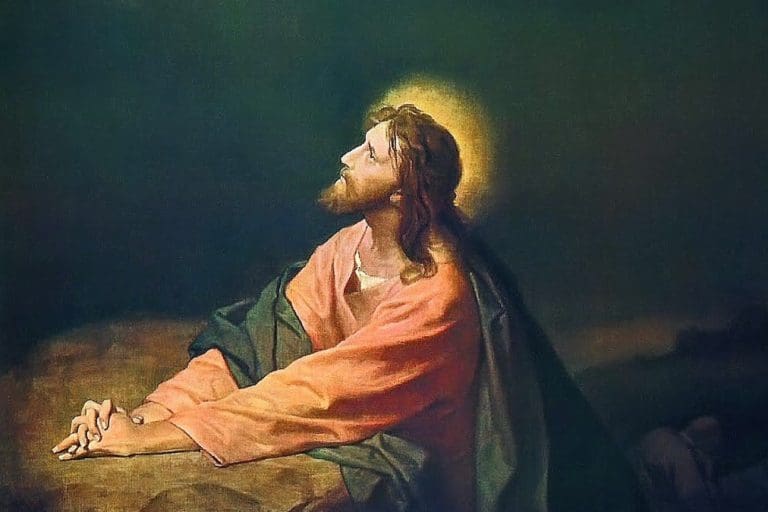


From the editors: When we formulated the idea of a magazine for Latter-day Saints, we wanted just the right name that would have our purpose in its meaning. We wanted a name that invited excellence and illumination, and so we chose Meridian. We knew that it meant the highest point of light in one sense and a measure of the world in another. Author Jeff Lindsay is on the same wavelength in this article.
Readers of Meridian Magazine may have thought about the meaning of “meridian” in the scriptures. There’s an interesting range of possibilities and a puzzle or two to ponder.
Four times the Book of Moses uses an extremely rare English term, “the meridian of time,” to describe the time when Christ would come:
For they would not hearken unto his voice, nor believe on his Only Begotten Son, even him whom he declared should come in the meridian of time, who was prepared from before the foundation of the world. (Moses 5:57)
Wherefore teach it unto your children, that all men, everywhere, must repent, or they can in nowise inherit the kingdom of God, for no unclean thing can dwell there, or dwell in his presence; for, in the language of Adam, Man of Holiness is his name, and the name of his Only Begotten is the Son of Man, even Jesus Christ, a righteous Judge, who shall come in the meridian of time. (Moses 6:57)
And now, behold, I say unto you: This is the plan of salvation unto all men, through the blood of mine Only Begotten, who shall come in the meridian of time. (Moses 6:62)
And it came to pass that Enoch looked; and from Noah, he beheld all the families of the earth; and he cried unto the Lord, saying: When shall the day of the Lord come? When shall the blood of the Righteous be shed, that all they that mourn may be sanctified and have eternal life?
And the Lord said: It shall be in the meridian of time, in the days of wickedness and vengeance.
And behold, Enoch saw the day of the coming of the Son of Man, even in the flesh; and his soul rejoiced, saying: The Righteous is lifted up, and the Lamb is slain from the foundation of the world; and through faith I am in the bosom of the Father, and behold, Zion is with me. (Moses 7:45–47)
We first consider relevant meanings of “meridian.” Linguist Stanford Carmack kindly sent me some definitions and examples of use from the extensive Oxford English Dictionary, 2nd edition:
2.2 The point at which the sun or a star attains its highest altitude.
c1450 Lydg. Secrees 347 Phebus‥In merydien fervent as the glede.1647 Crashaw Poems 130 Sharp-sighted as the eagle’s eye, that can Outstare the broad-beam’d day’s meridian.a1667 Cowley Ess., Greatness, There is in truth no Rising or Meridian of the Sun, but only in respect to several places.1728 Pope Dunc. iii. 195 note, The device, A Star rising to the Meridian, with this Motto, Ad Summa.1843 James Forest Days viii, The sun had declined about two hours and a half from the meridian.
b.2.b fig. The point or period of highest development or perfection, after which decline sets in; culmination, full splendour.
1613 Shakes. Hen. VIII, iii. ii. 224 And from that full Meridian of my Glory, I haste now to my Setting.1638 Sir T. Herbert Trav. (ed. 2) 93 Yet in the meridian of his hopes [he] is dejected by valiant Rustang.c1645 Howell Lett. (1655) III. ix. 17 Naturall human knowledg is not yet mounted to its Meridian, and highest point of elevation.1673 Temple United Prov. Wks. 1731 I. 67, I am of Opinion, That Trade has, for some Years ago, pass’d its Meridian, and begun sensibly to decay among them. 1700 Dryden Fables Pref. *Bb, Ovid liv’d when the Roman Tongue was in its Meridian; Chaucer, in the Dawning of our Language. a1761 Cawthorn Poems (1771) 61 My merit in its full meridian shone.a1859 Macaulay Hist. Eng. xxiii. (1861) V. 67 This was the moment at which the fortunes of Montague reached the meridian. The decline was close at hand.1893 G. Hill Hist. Eng. Dress II, 268 Dress was in its meridian of ugliness.
c.2.c The middle period of a man’s life, when his powers are at the full.
c1645 Howell Lett. i. vi. lx. (1655) 307 You seem to marvell I do not marry all this while, considering that I am past the Meridian of my age.1703 E. Ward Lond. Spy xvii. (1706) 406 As for her Age, I believe she was near upon the Meridian.1795 Mason Ch. Mus. ii. 133 When Purcel was in the meridian of his short life.1864 H. Ainsworth John Law Prol. iii. (1881) 19 Though long past his meridian, and derided as an antiquated beau by the fops of the day.1873 Hamerton Intell. Life iv. ii. (1875) 143 Any person who has passed the meridian of life.
The origins of the word “meridian” are explained at Etymology Online:
mid-14c., “noon, midday,” from Old French meridien “of the noon time, midday; the meridian; a southerner” (12c.), and directly from Latin meridianus “of midday, of noon, southerly, to the south,” from meridies “noon, south,” from meridie “at noon,” altered by dissimilation from pre-Latin *medi die, locative of medius “mid-” (from PIE root *medhyo- “middle”) + dies “day” (from PIE root *dyeu- “to shine”).
The cartographic sense of “a great circle or half-circle of a sphere passing through the poles” is attested from late 14c., originally astronomical. Figurative uses tend to suggest “point of highest development or fullest power,” implying a subsequent decline. [emphasis added]
“Meridian” is thus related to noon, the high point of time, the time of greatest light, with the figurative sense of fullest light or divine power, after which there would be a decline. While it has sometimes been understood as a chronological midpoint in 7,000 years of sacred history, it may be fruitful to consider more figurative meanings such as a high point, a time of fulness in power and authority, etc.
A Parallel to “the Meridian of Time” in the Book of Mormon?
One of the surprising things about the Book of Moses is that numerous passages in the small book are reflected in the Book of Mormon, sometimes with precisely matching language or language expressing related concepts, often with a common context – without being readily explained by an appeal to the King James Bible.
This possibility was first raised by Noel B. Reynolds in 1990 in “The Brass Plates Version of Genesis” where thirty-three parallels were found, including several that pointed to an unexpected direction of influence from the Book of Moses to the earlier translated Book of Mormon — a surprise that led Reynolds to hypothesize that a text related to our Book of Moses may have been on the brass plates.
In collaboration with Reynolds, that work was expanded in 2021 in “‘Strong Like unto Moses’: The Case for Ancient Roots in the Book of Moses,” bringing the number of proposed parallels up to ninety-six. In 2024, “Further Evidence from the Book of Mormon for a Book of Moses-Like Text on the Brass Plates” raised the number to 133, and then a project looking at statistics and the distribution of parallels further raised the number to 146 in a 2025 two-part publication (see Part 1 and Part 2 at Interpreter: A Journal of Latter-day Saint Faith and Scholarship).
Currently there are 162 proposed parallels. (The list is published at and will continue to be updated as needed at both AriseFromTheDust.com and JeffLindsay.com.) With that many parallels and with many of them occurring in multiple places in the Book of Mormon, 10.2% of the verses of the Book of Mormon (after excluding the chapters from the Bible that are essentially quoted in the Book of Mormon) are involved in one or more parallels with the Book of Moses.
That average of 10.2% comes from a highly non-uniform distribution, with parallels being nearly twice as frequent in the small plates text (15.8%) as in the remainder of the Book of Mormon (8.67%). The non-uniform distribution may in part be due to the high familiarity with the brass plates of early prophets such as Lehi, Nephi, and Jacob. On the other hand, in Mormon’s writings in his book of Mormon, the number is just under 4.0%.
A recently proposed and still tentative parallel, #162, involves the coming of Christ in the “meridian of time.” But how can this be a parallel when the Book of Mormon does not use the term “meridian of time” or even the word “meridian” at all? In this case, the parallel is not based on identical language but on semantically related language.
In light of the dictionary definitions and etymology of “meridian” discussed above, I propose that the “meridian of time” may be tantamount to “the fulness of time” used by Lehi twice in 2 Nephi 2 and by Nephi in 2 Nephi 11:
Wherefore, thy soul shall be blessed, and thou shalt dwell safely with thy brother, Nephi; and thy days shall be spent in the service of thy God. Wherefore, I know that thou art redeemed, because of the righteousness of thy Redeemer; for thou hast beheld that in the fulness of time he cometh to bring salvation unto men. (2 Nephi 2:3)
And the Messiah cometh in the fulness of time, that he may redeem the children of men from the fall. And because that they are redeemed from the fall they have become free forever, knowing good from evil; to act for themselves and not to be acted upon, save it be by the punishment of the law at the great and last day, according to the commandments which God hath given. (2 Nephi 2:26)
For if there be no Christ there be no God; and if there be no God we are not, for there could have been no creation. But there is a God, and he is Christ, and he cometh in the fulness of his own time. (2 Nephi 11:7)
Nephi appears to be reciting Lehi’s words, not just in using a phrase similar to “the fulness of time” but also Lehi’s words: “And if these things are not there is no God. And if there is no God we are not, neither the earth; for there could have been no creation of things” (2 Nephi 2:13).
Lehi’s phrasing may have other connections to the Book of Moses to consider. In 2 Nephi 2:3, Lehi includes the term “salvation” in “in the fulness of time he cometh to bring salvation unto men,” related to “This is the plan of salvation unto all men” in Moses 6:62 (Parallel 13).
Further, 2 Nephi 2:3 also includes “dwell safely,” perhaps influenced by another parallel with the Book of Moses, Parallel 93, “Dwell in safety forever,” involving Moses 7:20 and 2 Nephi 1:9.
Lehi’s words in 2 Nephi 2:26 include “to act for themselves and not to be acted upon,” which involve Parallel 125, “Agents unto themselves” with Moses 4:3 and 6:56, coupled with 2 Nephi 2:26, 10:23; Alma 12:13; and Helaman 14:30.
Connections to the Book of Moses are also evident in the adjacent verses around 2 Nephi 2:26, as shown with inline annotations:
Adam fell that men might be; and men are, that they might have joy [Parallel 144: “Adam fell that men/we might be” with Moses 6:48]. (2 Nephi 2:25)
Wherefore, men are free according to the flesh; and all things are given them which are expedient unto man. And they are free to choose liberty and eternal life [with v. 28, part of Parallel 14, “eternal life” with Moses 1:39] , through the great Mediator of all men, or to choose captivity and death, according to the captivity and power of the devil [with v. 29, part of Parallel 9, “devil-lead-captive-his will” with Moses 4:4]; for he seeketh that all men might be miserable like unto himself [with vv. 5, 11, 13, 18, and 23, part of Parallel 44, “Misery (either for Satan or his followers)”]. (2 Nephi 2:27)
2 Nephi 2 is one of the richest in the Book of Mormon for parallels with the Book of Moses. In terms of parallels per 1,000 words, it is essentially tied with Ether 8 for the most parallel-rich chapter (Ether 8 is rich in parallels pertaining to secret combinations, but lacks the thematic diversity of Lehi’s speech). Thirteen different parallels are found in its 30 verses, involving seventeen verses, seven of which have more than one parallel.
Lehi’s heavy use of Book of Moses-related material (material not easily explained by an appeal to the KJV Bible) in this chapter increases the likelihood that the reference to the time of the coming of the Messiah might have been influenced by the Book of Moses, even though “the meridian of time” was used in the English translation of the Book of Moses instead of “the fulness of time.”
Time(s) and Fulness in the New Testament
The parallel involving Lehi’s “fulness of time” and the Book of Moses is weakened by similar but not identical language in the New Testament that must be considered. While New Testament language would not have been available to influence Nephi or Lehi, it could have influenced Joseph Smith if or when the choice of wording was his, and likewise could have influenced the choice of English given to Joseph Smith in the translation process (e.g., it could have influenced wording choice by a hypothetical angelic agent assisting in the translation, if such were part of the translation process). Galatians 4:4 speaks of “the fulness of the time”:
But when the fulness of the time was come, God sent forth his Son, made of a woman, made under the law, . . .
“Fulness of the time” conveys an important difference relative to Lehi’s phrasing. It points to a specific time, with the concept of fully reaching a specific moment in time rather than an era that is the zenith of time or history. The Greek word chronos is used here for time, referring to a specific time, a chronological event. The New International Version of the Bible (NIV) has “when the set time had fully come,” while the New English Translation (NET) has “when the appropriate time had come.” Without the definite article before “time,” Lehi’s “fulness of time” seems more analogous to “the meridian of time.”
The other New Testament verse to consider is one often heard in Latter-day Saint discourse, Ephesians 1:10:
That in the dispensation of the fulness of times he might gather together in one all things in Christ, both which are in heaven, and which are on earth; even in him:
This is still slightly different from Lehi’s “fulness of time.” This verse is not about the time of Christ’s mortal ministry, nor about a precise time per se, but about a dispensation. The phrase “fulness of times” in this context may point to the completion of history or the culmination of time (or of multiple eras) when everything is finally put under Christ and united. Latter-day Saints generally understand our current era, called the “dispensation of the fulness of times,” to be the culminating era in the “last days” before the Second Coming of the Lord, preparing the world for the great Millennium.
Paul’s use of the term “dispensation” (sometimes translated as “administration”) can refer to the administrative era of the Restoration when authority and apostolic organization have been restored and the work of gathering begins in earnest, preparing mankind for the Millennium.
The era of “dispensation of the fulness of times,” a phrase used several times in the Doctrine and Covenants (see Doctrine & Covenants 27:13, 76:106, 112:30, and 124:41) can be considered to point to the era of the Restoration in the last days leading up to the Millennium. This need not be the same time as “the fulness of times” itself, as we glean from Doctrine and Covenants 76:106, referring to the punishment of the impenitent wicked:
These are they who are cast down to hell and suffer the wrath of Almighty God, until the fulness of times, when Christ shall have subdued all enemies under his feet, and shall have perfected his work.
In summary, “the dispensation of the fulness of times” begins with the Restoration and leads to the Millennium, while the “fulness of times” itself can point to the final completion of mortal time at the end of the Millennium when Christ has conquered all. But this is an entirely different issue than what Lehi refers to with “the fulness of time” when Christ shall come as a mortal to earth.
Neither of the two New Testament passages can adequately serve as the source for concepts and language in the Book of Mormon verses about the coming of Christ in “the fulness of time.” Thus, in spite of the overlapping New Testament language that weakens the parallel, it is still offered tentatively as a possible conceptual parallel for consideration.
More Puzzles: The Rarity of “Meridian of Time” and Its Presence in Doctrine & Covenants
A puzzling aspect of this inquiry into a potential parallel is how rare “meridian of time” is in English. Searching Google Books reveals no instances of this term before 1870 (obviously missing many Latter-day Saint publications). However, there are two instances of use in the Early Modern English Era, which ran from roughly the late 1500s to about 1700. For example, Sir Thomas Browne (1605-1682) wrote Hydriotaphia, urne-buriall, or, a discourse of the sepulchrall urnes lately found in Norfolk, published in 1658, accessible via Early English Books Online, which has this passage:
… even old ambitions had the advantage of ours, in the attempts of their vain-glories, who acting early, and before the probable meridian of time, have by this time found great accomplishment of their ddsignes [designs], whereby the ancient heroes have already out-lasted their monuments, and Mechanicall preservations: but in this latter scene of time we can not expect such mummies unto our memories, when ambition may fear the prophecy of elias that the world may last but fix [six] thousand years…
This does not seem to involve the coming of Christ, but about a future time — relative to more ancient days — of greater development with respect to the topic of burial urns.
Two more finds were shared with me by linguist Stanford Carmack, whose studies identifying Early Modern English influences on the originally dictated language of the Book of Mormon translation have opened significant new vistas of understanding. The first comes from Joseph Cooper in Misthoskopia, A prospect of heavenly glory for the comfort of Sion’s mourners, written no later than 1699 (the year of Cooper’s death) and published in 1700, roughly at the end of the Early Modern English era:
The good things of this Life, they are only calculated for the Meridian of Time, and do only shine with a borrowed light: So that when Death shall seize upon you, and Judgment overtake you, they will then be gone, and like a Shadow disappear for ever.
This seems to refer to the meridian of one’s mortal life, after which comes decline and death.
A second find also kindly provided by Carmack occurs shortly after the Early Modern English era in Benjamin Bennet (1674–1726), The christian oratory: or, the devotion of the closet (London: S. Chandler, 1725):
The RESOLUTION. ND am I immortal? Doth my Spirit at Death return to God, and exist for ever in a separate State? I wou’d henceforth resolve to live for Eternity, to prepare for my Return: In order to which I resolve Lord, help me by thy Grace to have my Eye fixed on the other World; and, in all my Designs, Undertakings and Ations [Actions], to preserve a constant Reference thither. I wou’d esteem every thing as little, as nothing comparatively, that’s calculated only for the Meridian of Time, that ferveth [serveth] only a present State. I resolve to chuse, prefer, pursue things, as they stand related to Eternity, judging of them by this Mark and Property.
This also refers to one’s fleeting mortal life, contrasting it with the eternal afterlife.
At least these finds may suggest that “the meridian of time” was a part, though perhaps a rare part, of Early Modern English, consistent with Stanford Carmack’s find that the dictated language of the Book of Moses reflects a strong Early Modern English component. This is related to his impressive work on examining the language of the originally dictated text of the Book of Mormon and finding a unique signature of Early Modern English influence that cannot be explained by imitating KJV language or by Joseph’s dialect, but points to elements of Early Modern English that sometimes significantly predate the King James Bible. For a collection of important papers on this topic, see Carmack’s list of publications at Interpreter: A Journal of Latter-day Saint Faith and Scholarship. For his work on the Book of Moses, see his 2021 paper, “The Original English of the Book of Moses and What It Indicates About the Book’s Authorship.” Carmack examined 30 different linguistic categories and compared their traits across the Book of Moses, the Book of Mormon, the King James Bible, Joseph’s early writings, and pseudo-archaic texts that sought to imitate archaic biblical syntax. Carmack’s findings are significant:
Joseph Smith’s native usage can explain 30 percent of Book of Moses usage, pseudo-archaism 44 percent, and King James usage 37 percent. The Book of Mormon, however, is able to account for most of the patterns and forms investigated: 86 percent of them, by this count. (It is possible, of course, to include other features, which would change the percentages somewhat.) But the Book of Mormon falls short of being able to explain a few of the linguistic features mentioned in table 2, most notably the past-tense usage. The few usage issues it cannot explain occur in the early modern period. Indeed, broader early modern usage (most of the time not Joseph Smith’s modern usage) accounts for all the linguistic features. Thus the simplest explanation of the Book of Moses’s English usage would be to adopt an early modern perspective—in other words, that a text showing true early modern sensibility in language use was revealed to Joseph Smith in 1830. [pp. 634–35]
The prominent use of the rare and apparently Early Modern English phrase “meridian of time” in the Book of Moses may be one more factor to consider regarding the linguistic influences on the Book of Moses text. As with the Book of Mormon, the existence of non-KJV Early Modern English in either the Book of Mormon or the Book of Moses is something that scholars did not expect. It is not a conclusion driven by any kind of apologetic agenda. It is based on objective data that may require us to reconsider common and sometimes simplistic assumptions about the translation process(es) related to both texts. Why that influence exists is still a matter of debate, though Early Modern English, especially the kind found in both texts, appears to be well suited to simplifying translation in many languages.
Yet another significant puzzle involves the Doctrine and Covenants, where the rare term “meridian of time” occurs twice, both shown here in context:
That as many as would believe and be baptized in his holy name, and endure in faith to the end, should be saved—
Not only those who believed after he came in the meridian of time, in the flesh, but all those from the beginning, even as many as were before he came, who believed in the words of the holy prophets, who spake as they were inspired by the gift of the Holy Ghost, who truly testified of him in all things, should have eternal life…. (Doctrine and Covenants 20:25–26)
Hearken and listen to the voice of him who is from all eternity to all eternity, the Great I Am, even Jesus Christ—
The light and the life of the world; a light which shineth in darkness and the darkness comprehendeth it not;
The same which came in the meridian of time unto mine own, and mine own received me not. (Doctrine and Covenants 39:1–3)
Section 39 was given in January 1831. According to the timeline for Joseph Smith’s work of his translation of the Bible given by Kent P. Jackson in Understanding Joseph Smith’s Translation of the Bible (Provo, UT: Religious Studies Center, Brigham Young University, and Salt Lake City: Deseret Book, 2022), pp. 3–4, the portion of that project that became the Book of Moses was given between June 1830 and December 30, 1830. Thus, it is logical that the 1831 text of Section 39 would employ a colorful and meaningful phrase from the unique Book of Moses.
The problem is that Section 20, which also uses “the meridian of time,” is based on revelation said to have been given in April 1830, although it was not published until 1835. The generally accepted April 1830 date is well before Joseph Smith began work on his translation of the Bible in June 1830. Was the term “meridian of time” something Joseph picked up from the dictation of the Book of Moses, that was later edited into our Section 20 of the Doctrine and Covenants? Was there a revelatory process associated with Section 20 that brought this term to Joseph’s mind for some reason? Or was “meridian of time” a term from the Book of Lehi in the lost 116 pages of the initial Book of Mormon translation?
While we don’t seem to have original manuscripts from 1830 related to Section 20, there are a few manuscripts prior to the 1835 Doctrine and Covenants that help us better understand the timing of the use of “the meridian of time.” One such source is provided in the Joseph Smith Papers website as “Articles and Covenants, circa April 1830, as Recorded in Gilbert, Notebook [D&C 20].” The Gilbert manuscript does not use “meridian” at all. Here is the passage corresponding to the part of Section 20 that has had “the meridian of time” at least since 1835:
[A]nd that he ascendid into heaven to sit down on the right hand of the Father to reign with Almighty power according to the will of the father that as many as would believe and be baptized in his name & endure in faith to the end should be saved, yea even as many as were before he came in the flesh from the beginning which believed in the words of the holy Prophets which were inspired by the gift of the Holy Ghost which truly testified of him in all things as well as they which should come after which should believe in the gifts & callings of God by the Holy Ghost, which beareth record of the Father & of the son, which father and son and the holy Ghost is one God infinite, eternal without end, Amen. [p. 4, emphasis added]
So in 1831, the relevant revelation had “even as many as were before he came in the flesh” instead of “those who believed after he came in the meridian of time, in the flesh” as we now have in Section 20.
A related manuscript on the Joseph Smith Papers website, “Articles and Covenants, circa April 1830, Symonds Rider Copy [D&C 20],” also contains a copy of the material related to Section 20. It was copied by Symonds Rider in May 1831, again without “the meridian of time.”
Surviving copies of the 1833 Book of Commandments, the publication of which was interrupted by a mob destroying the Church’s printing press, also show that “the meridian of time” had not yet entered what is now Section 20. Like the 1831 copies of the “Articles and Covenants,” it has “even as many as were before he came in the flesh, from the beginning,” with no mention of “the meridian of time.”
However, Chapter 41, with its January 1831 revelation related to our Section 39, has “The same which came in the meridian of time unto my own” in v. 2, the same as our Section 39. It seems plausible that in the final edits made for the 1835 publication, that Section 20 was edited to include its current language with the poetic phrase from the Book of Moses.
Conclusion
The “meridian of time” as used in the Book of Moses may be a particularly appropriate figurative and poetic term for describing the time of Christ’s mortal ministry and the spiritual revolution He brought. This was a meridian or a zenith of history in which the Son of God lived with humans on the earth, founded His church, and completed His infinite work. After the rapid growth of the church, there was decline in both the Old World and the New World that required correction by the Restoration in these last days.
When Lehi spoke of the coming of the Messiah that was to be in the “fulness of time,” his language may have been reflecting a concept he encountered in the brass plates having a version of Genesis closely related to our modern Book of Moses. The four passages there about the coming of Christ in “the meridian of time” may be reflected in Lehi’s related statements in 2 Nephi 2 associating the birth of Christ with “the fullness of time,” where “fullness” has connections to figurative meanings of “meridian,” possibly forming a parallel between the Book of Mormon and the Book of Moses, one of many. Given similar language in the New Testament and the conceptual nature of the parallel, this parallel may be one of the weakest among the 162 proposed so far, but may still be worth considering.
The English translation with “the fullness of time” may reflect word choices by Lehi from his speech, by Nephi in his written record, and by the translation process that gave us the English. When faced with the complex relationships between these inspired and miraculously translated texts, we generally cannot say exactly who intended what and why.
Nevertheless, much can be learned by exploring how similar words and concepts are used elsewhere and considering what that might suggest about the intent of authors or translators, or the depth of meaning in the texts. The word choices in the scriptures are often worth pondering.
Readers of Meridian Magazine may wish to reflect upon the meaning of “meridian” and related concepts in the scriptures, as well as the welcome role this publication plays in bringing more light into these troubled times before the Millennium.