







To read more from Daniel, visit his blog: Sic Et Non.
Liverpool was, for many years, the European headquarters of the Church of Jesus Christ of Latter-day Saints. It was also, by a considerable distance, the principal port of embarkation for members of the Church (and also for nonmembers of the Church, such as my Norwegian Lutheran grandmother) who were departing Northern Europe for North America. Something of the flavor of the Latter-day Saint emigration can be discerned, though, in this eyewitness account that was written from London by an illustrious British novelist:
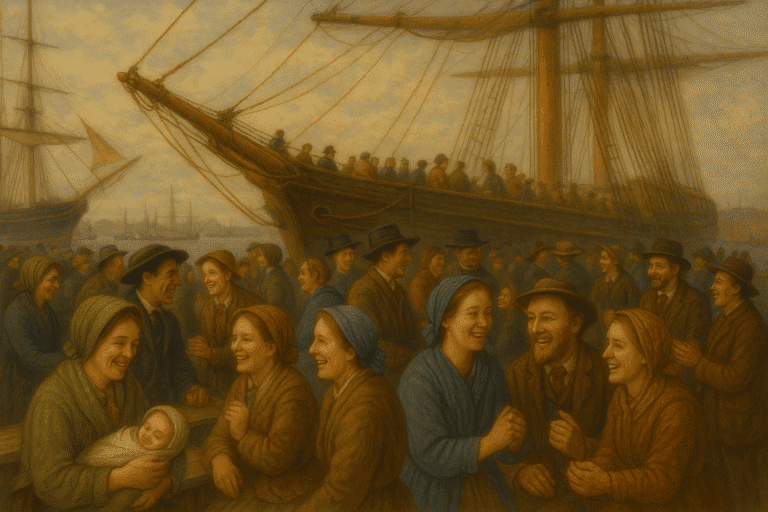
In June 1863, the passenger ship Amazon set sail from London for America with nearly 900 Latter-day Saint emigrants aboard. However, just before she weighed anchor, many Londoners—including both government officials and clergymen—came to take a look at the “Mormons,” up close and at first hand, as well as at their traveling arrangements. One of these visitors Charles Dickens, the famous author of such works, by that time, as The Pickwick Papers (1837), Oliver Twist (1839), Nicholas Nickleby (1839), The Old Curiosity Shop (1841), Barnaby Rudge (1841), A Christmas Carol (1849), Martin Chuzzlewit (1844), Dombey and Son (1848), David Copperfield (1850), Bleak House (1853), Hard Times (1854), Little Dorrit (1857), A Tale of Two Cities (1859), and Great Expectations (1861). He is generally regarded as one of the greatest novelists of Victorian England and, indeed, in all of English literature.
Dickens spent several hours aboard the Amazon, quietly observing the Saints on the ship and interviewing George Q. Cannon, the English-born member of the Quorum of the Twelve — a native, in fact, of Liverpool — who was serving at the time as the president of the British Mission. (Elder Cannon, who had played a pivotal role in opening the Hawaiian Mission and in translating the Book of Mormon into Hawaiian, would go on to represent Utah as a territorial delegate to Congress and to serve as a counselor in the First Presidency to Brigham Young, John Taylor, Wilford Woodruff, and Lorenzo Snow.)
A month or so after his visit to the Amazon, Dickens published an account of his experience in an essay for the periodical All the Year Round (4 July 1863), titled “The Uncommercial Traveller.” In his essay, he remarked that virtually all of the emigrating Latter-day Saints were tradesmen and craftsmen and their families, people of the working class. He was worried about what these British converts to “Mormonism” might encounter when they actually arrived in Utah. (He was surely familiar with the horror stories going around England at the time – which would continue for the next several generations — about the theocratic “Mormon kingdom” in the remote North American west.) But he was deeply impressed by what he had actually seen. The emigration was thoroughly well-organized, calm, orderly.
“I went on board their ship,” he wrote, “to bear testimony against them if they deserved it, as I fully believed they would; to my great astonishment they did not deserve it; and my predispositions and tendencies must not affect me as an honest witness. I went over the Amazon’s side feeling it impossible to deny that, so far, some remarkable influence had produced a remarkable result, which better known influences have often missed.” Of the Saints themselves, Dickens confessed that, had he not known they were Latter-day Saints, he would have described them as, “in their degree, the pick and flower of England.”