





You give to the people who bring you service at Christmas. Please give to Meridian in a voluntary subscription by clicking here. We really need your help to bring you the quality magazine you love to receive.
This is part 2 of the serialization of Stone Manger: The Untold Story of the First Christmas. See part 1 here.
The Couple From Galilee

Now is a good time to begin referring to Joseph and Mary by their genuine Hebrew names – the names by which people who knew them actually called them. Joseph was called Yosef by those who knew him. The name was pronounced Yo-sef, with emphasis on the second syllable. And Mary’s name was really Miryam, pronounced Mir-yam, with about equal emphasis on both syllables.
These were both well known names from the Hebrew Bible. Yosef appears in the book of Genesis as the name of ancient Joseph who was sold as a slave into Egypt, and who eventually became the prime minister of the land. And Miryam appears in the book of Exodus as the sister of the prophet Moses.
Referring to the young couple from Galilee by their original Hebrew names lends a sense of authenticity to the telling of their amazing story. This is not to suggest that we have to use the Hebrew names in our everyday conversation about Christmas. That would seem odd. But for the purposes of this book, Mary will be referred to by her real name, Miryam (from this point on out spelled without italics). And Joseph will be called by his actual name, Yosef.
Other than this, however, no attempt at any type of artificial literary “character development” will be made in this story. Yosef and Miryam were real persons, and their real characters are revealed in the pages of the New Testament. Fictional devices are not necessary for readers to come to know and appreciate, to some degree, these two remarkable people.
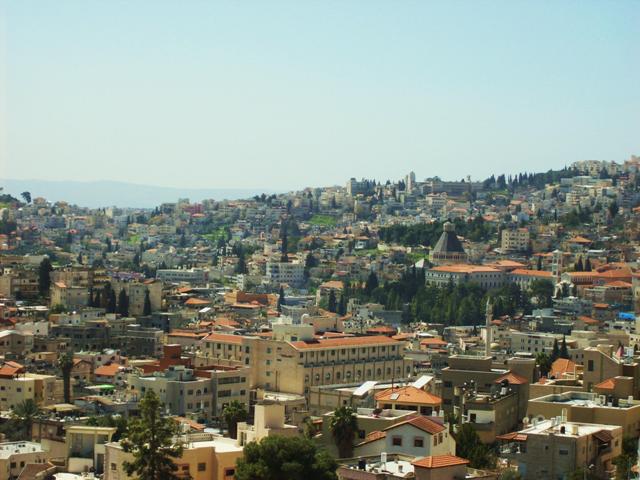
So, now, on with the story. When Yosef and Miryam, the newly married young Jewish couple we read about in the New Testament, decided to make their way to Bethlehem, it was not because they had to go there to pay taxes to the Roman empire. That old but mistaken notion is due to archaic and faulty translations of the original Greek manuscripts of the New Testament gospel accounts. (To avoid such mistakes, all New Testament passages that appear in this book from Chapter II forward will be fresh translations from the original Greek, made by the author.) The Gospel of Luke relates the young couple’s move to Bethlehem. Correctly translated, Chapter 2 of Luke begins with this report:
It came to pass in those days that a decree went out from Caesar Augustus that all the world (or empire) should be registered. This registration took place before Kyrenius was governor of Syria. And all went to be registered, each to his own city. (Luke 2:1-3)
In the above translation the original Greek terms apographesthai and apographi are correctly translated as “registered” and “registration.” In some traditional versions of the Bible, the Greek terms were incorrectly translated as “taxed” and “taxing.” This led generations of readers to believe that Yosef and Miryam went to Bethlehem to pay Roman taxes. But they didn’t.
Modern New Testament translations have sometimes erroneously rendered the Greek text to read that Caesar Augustus ordered a census of the Roman empire. But this, too, is inaccurate. There is no historical evidence that Augustus ever ordered any census on an empire-wide basis. Conducting a census was very expensive, so the procedure was infrequently employed. And whenever a census was conducted, it was almost always on a provincial basis, not empire-wide.
It is well known, however, that city registers were kept in the Roman empire as early as the reign of Augustus. City registers were functions of the local governments, and included the recording of names and residential locations of people living in each town, as well as rural locations in the vicinity of those communities. As Luke noted (see again the fresh translation above) each person went to be registered in their own city. The city registers were used for taxing purposes, of course, as well as certifying residency. They could also be totaled together to come up with regional population counts. Such counts were more practical than actual census taking.
Luke’s second chapter reports that Yosef and Miryam (who was pregnant with her child) left Nazareth of Galilee and moved to Bethlehem of Judea, and that a reason for this was specifically to be registered as residents of that town:
And Yosef also went up from Galilee, out of the city of Nazareth, to Judea, to the city of David which is called Bethlehem, (because he was of the house and lineage of David), to be registered with Miryam, his betrothed wife, who was pregnant. (Luke 2:4-5)
It was not only Yosef who was registered in Bethlehem, but also Miryam his bride. Both became documented residents of the town. And when Miryam’s son was born, he, too, would also become a registered, documented resident of Bethlehem.
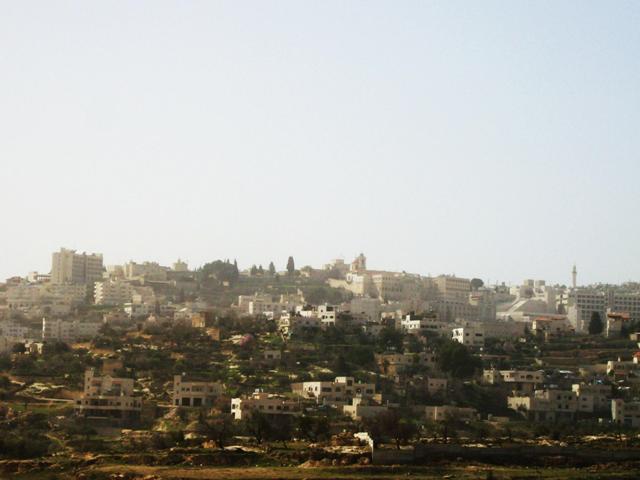
Another common error which appears in almost all New Testament commentaries is based on this passage. It is the odd notion that to participate in the supposed “taxing” or “census” ordered by Rome, the couple from Nazareth was forced to travel all the way to Bethlehem, just because it was the hometown of the ancient king David, Yosef’s distant ancestor. Commentaries claim that Rome made some kind of special accommodation for Jews, whose unique religious traditions allegedly required them to be counted or taxed in the cities of their ancient ancestors.
But from a historical perspective, this is simply nonsense. There is no support for this idea, not from the Bible, nor from any other historical document. And, from a practical standpoint, it would make no sense at all. Ancient governments, like modern ones, collected taxes locally. They did not force citizens or subjects to travel long distances from their homes to be counted in a census or to pay their taxes. Too many people would simply not have complied.
Beside all this, Rome did not even handle tax collections in Galilee or Judea at the time of Jesus’ birth. Herod the Great was king over all the Land of Israel. It was Herod’s agents who collected taxes from the local Jewish population, not Roman officials and not Roman soldiers.
In fact, there were no Roman officials or soldiers at all in Herod’s kingdom at this time. Though the Land of Israel was important territory in the Roman empire, Herod governed it himself. He was a Roman citizen, of course, and a client king appointed by the Roman senate and supported by the emperor.
But he was essentially an independent agent on behalf of the empire. No Roman legion was stationed in Herod’s kingdom. Herod’s own army, made up of local Jews, Samaritans, Idumeans, and other gentiles and foreign mercenaries, policed the country.
* * *
Quite a bit of new information has been introduced in the last few pages. Let’s take a moment to summarize what we know, so far, about the journey of Yosef and Miryam to Bethlehem.
First, they did not make the trip of more than one hundred miles from Nazareth because they were forced to do so by Rome.
Second, they did not travel to Bethlehem to pay any taxes. Nor did they travel there to be counted in a census.
Third, they were not harassed by Roman soldiers or officials. They were not mere unwitting victims of circumstance, driven to Bethlehem by forces beyond their control.
And fourth, when Miryam’s baby was born in Bethlehem, it was neither a surprise nor a coincidence.
Rather, Yosef and Miryam moved from Nazareth to Bethlehem on purpose. The young couple knew what they were doing, and they carried out their plans with faith and resolve. They relocated to Bethlehem with the intent of making it their permanent home. They even obtained land there, and built themselves a house in the town. We will speak more of that house later.
Yosef deliberately recorded himself and his wife as residents of Bethlehem in the town’s register – a fact we just read from the Gospel of Luke.
He and Miryam did all these things for one reason: they both knew that her child would be the Messiah of Israel! They both knew of the prophecy which said that Israel’s Messiah must be born in Bethlehem, and must be known to have been born in Bethlehem! And they did everything they possibly could to bring that prophecy to pass.
CHAPTER III
Miryam of Nazareth
Miryam of Nazareth was an extraordinary young Jewish woman. What we know of Miryam’s story is taken primarily from the Gospel of Luke, but a few details are found in the other New Testament gospels, and one or two early traditional sources. Let’s go back in her story nine months or so and examine what happened to put her on the path to Bethlehem.
Like most women in ancient times, Miryam was probably in her teens when she became married. Her conversation in the account of Luke suggests that she possessed great spirituality, remarkable courage and resolve, and an unusually mature attitude for such a young person. But most likely, she was just seventeen at the time she became formally betrothed, and was visited by the angel.
One ancient source refers to Miryam as a virgin both beautiful and fair. This probably means that she was not only lovely, but had a lighter complexion for an olive-toned Mediterranean girl. Chances are, however, that she possessed the luxurious dark hair and dark eyes dominant in the region. Another antique account, known as the Protoevangelion, gives the names of her parents as Yo’akim and Hannah, both authentic Jewish names. In English Yo’akim is often rendered “Joachim.” And Hannah is written in Greek as Anna, and she is called either Saint Anne or Saint Anna in traditional Christian literature.
The New Testament also indicates that Miryam had a sister. In English Bibles her name is usually rendered as “Salome.” But in Hebrew this name was pronounced Shlomit. She was probably a few years younger than Miryam. Eventually, Shlomit married a man named Zebedee and gave birth to James and John, cousins of Jesus who, as young adult men, were chosen as two of Jesus’ apostles. (A further note about Shlomit will appear at the end of this chapter.)
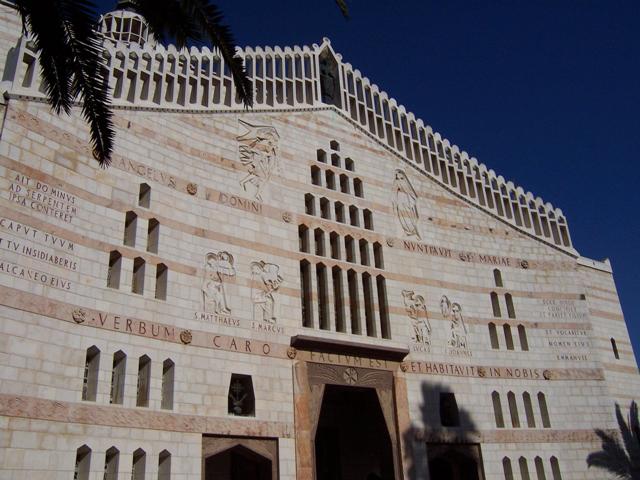
So, young Miryam had grown up in Nazareth with her parents, Yo’akim and Hannah, and with Shlomit, her younger sister. She was about seventeen and engaged to be married when we first meet her in Chapter One of Luke’s gospel. There we read of the event known traditionally in Christianity as the Annunciation, the angelic “announcement” that Miryam would become the mother of the Son of God.
Luke reported that the angel Gabriel appeared to Miryam in “the sixth month” – that would have been the sixth month of the Jewish calendar. That calendar consisted of twelve lunar months, each twenty-nine to thirty days long (see the cycle in illustration #4 below). In the common Jewish calendar of Yosef and Miryam’s era the beginning of each new year came in early autumn, and was known as Rosh HaShannah, the first day of the month of Tishri. The sixth month after the new year was known as Adar, and occurred about parallel to our late-February through late-March. This was during spring season in the Land of Israel.

It was still the rainy season during Adar, and the springtime hills of Galilee and Judea were covered with lush green grasses and tens of thousands of beautiful, colorful wild flowers – red, yellow, blue, and white. It must have been near the end of Adar, or sometime late in March, when the angel Gabriel visited Miryam. We can calculate this from the fact that right after the angel’s visit, Miryam travelled south to Judea for the Passover, which occurred in the following month of Nisan (more will be said of this timing in Chapter IV).
The angel’s visit was a shocking and startling event for young Miryam. Luke wrote that the angel’s first words to her were:
Greetings, oh favored one! The Lord is with you, and among all women you are blessed! (Luke 1:28)
Miryam was speechless – struck with awe at the sight and sound of this messenger from heaven. The angel continued with his message:
Fear not, Miryam, for you have found favor with God. Behold, you shall conceive in your womb, and give birth to a son, and call his name Yeshua. (Luke 1:30-31)
The Hebrew name Yeshua means “salvation” – it is the name we know so well in English as “Jesus.” The angel explained:
He shall be called great, and shall be called the Son of the Most High. The Lord will give him the throne of his ancestor David, and he shall reign over the house of Jacob forever. Of his kingdom there shall be no end! (Luke 1:32-33)
The young woman’s response to the angel confirms the fact that she was genuinely a virgin. And it reveals her as totally pure and virtuous in her heart as well as in her physical person.
How shall this be, since I know not a man? (Luke 1:34)
The question is really quite revealing. It was essentially this: ‘How is it possible that I will conceive when I have never had intimate relations with any man?’ In other words, Miryam had not yet become sexually active; not with Yosef, to whom she was betrothed, nor with any other man.
The answer was that God, the Most High, whom many Jews referred to as their Father in Heaven, would enable Miryam to conceive and bear the child. The angel’s metaphoric language was that “the power of the Most High” would “overshadow” the young woman.
The Holy Spirit would first come upon her to prepare and sanctify her for the divine event, as recorded by Luke:
The Holy Spirit shall come upon you, and the power of the Most High shall overshadow you. Therefore, the Holy One born of you shall be called the Son of God! (Luke 1:35)
The details of just how the Most High would cause Miryam to conceive were not related by the angel.
The topic of that miraculous conception has become a discussion for the ages, but there is not a soul on earth who can really say how it happened. Its reality, however, was confirmed to Miryam with the angel’s parting words – words that have become memorized by millions:
With God nothing shall be impossible! (Luke 1:37)
And Miryam’s own willingness to carry out her divine assignment, a task she could hardly have understood at the time, is recorded in her final reply to the angel:
Behold the servant of the Lord. Be it unto me according to your word. (Luke 1:38)
Gabriel then left her to ponder the remarkable message she had received, and to prepare herself for the events to come.
Once again, we have covered new issues in our discussion – items that are not generally discussed in traditional telling of the Christmas story. Let’s take just a moment and summarize what Miryam, the young woman of Nazareth, now knew as a result of the Annunciation, even before her baby was conceived:
First of all, Miryam knew that her child would be the Son of God – the angel had called him the Son of the Most High. He would not be the son of any mortal man, in spite of what anyone else might say.
Second, she knew that her son would also be the Messiah of Israel – the Anointed One who, as the angel had said, would reign forever upon the throne of David as King over the house of Jacob.
And third, she even knew what her son’s name should be – Yeshua, or as we would say it, Jesus, meaning “Salvation.”
So Miryam had specific advance knowledge about the nature and identity of her firstborn to be. But, there was one thing she still did not know, and that was how Yosef, her betrothed husband-to-be, would react to her situation. That challenge was still four months and many miles away.
* * *
Watch for the next installment of The Stone Manger tomorrow on Meridian.
Insert Chadwick_stonemangercover
To download Stone Manger by Jeffrey Chadwick as an ebook click here or go to www.stonemanger.com
Chapter II Notes
Note #2:1 – The term “before” in Luke 2:1-3
In the passage Luke 2:1-3 above, the word I have translated as “before” is rendered from the Greek word proto, as suggested by the respected New Testament historian F. F. Bruce in chapter 7 of his landmark study entitled The New Testament Documents – Are They Reliable (Eerdmans, Sixth Edition, 1981).
Chapter III Notes
Note #3:1 – Shlomit
The sister of Miryam is known from five passages in the New Testament. Three of those passages describe her, as an adult woman, being present at Jesus’ crucifixion. The account of Mark 15:40 which names her as “Salome” (in Greek and English, see also Mark 16:1), the name we render in this book in its authentic Hebrew form – Shlomit. The account of Matthew 27:56 reports that she was “the mother of Zebedee’s children” (see also Matthew 20:20). And it is the account of John 19:25 which notes that she was the sister of Jesus’ mother Miryam. That Shlomit was somewhat younger than Miryam is derived from the general understanding that James and John, Shlomit’s sons, were younger than Jesus, Miryam’s son. Although this is not to be demanded, the probability is high.
Note #3:2 – The Sixth Month
In Stone Manger the reference to “the sixth month” in Luke 1:26 is presented as an allusion to the sixth month of the common Jewish calendar – the spring month of Adar. For a short discussion of this issue, and why “the sixth month” must indeed refer to the spring month of Adar, the reader may see Afterword #4 at the end of this book.