






This week we’ll take a closer look at two eastern religions: Buddhism and Taoism. We’ll hear two perspectives on Buddhism – one from a Western practitioner, the other from a revered spiritual leader. And we’ll learn more about the Taoist religious and philosophical tradition from a respected Chinese teacher.
“Experience should teach theory, not the other way around”
Why I Am a Buddhist: No-Nonsense Buddhism with Red Meat and Whiskey
By Stephen T. Asma, PhD
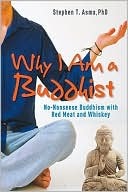 Dr. Asma, a practicing Buddhist living and working in Chicago, explains that the goal of Buddhism is “liberation from ego.” As a sometimes “frazzled father,” he recognizes that it’s not possible for him to be a “cave-dwelling monk” or to be completely freed from experiences and feelings. However, by finding a Middle Way between extremes and applying mindfulness, we can be more effective and less overwhelmed by the stress and worry of daily life.
A basic foundation of Buddhism is codified in The Four Noble Truths:
- All life is suffering.
- All suffering is caused by craving.
- Letting go of craving liberates us from suffering.
- The Eightfold Path is the way to let go of suffering.
While the First Noble Truth certainly sounds awfully pessimistic, Dr. Asma clarifies that “the Buddha is simply stating that a variety of pains and misfortunes accompanies the human condition.” If you’ve lived, you’ve experienced pain and misfortune; no argument there! Building off the Second Noble Truth, Dr. Asma explains that “suffering flows from the clinging attachment that mistakes impermanent things and sensations for lasting and permanent realities.” It isn’t the experiences themselves that necessarily cause suffering; it’s an erroneous mindset that misplaces their priority and elevates their importance.
The Third Noble Truth states that if attachment causes suffering, the way to avoid suffering is to avoid being attached. However, as Dr. Asma describes it, “freedom is not the renunciation of all emotions and feelings, it’s the ability to rise above the incoming sensations.” The Fourth Noble Truth points the way towards putting the first three into practice by finding the Middle Way or a balance in life. The Eightfold Path includes Right Speech, Right Action, Right Livelihood, Right Effort, Right Mindfulness, Right Concentration, Right View, and Right Thought.
One perspective I found fascinating in Why I Am a Buddhist is the idea that “technically speaking, there are no sins in Buddhism, not in the sense of violations of divine prohibitions” because, according to Buddhism, there isn’t a deity or religious leader who declares binding laws. Instead, “activities and life choices are always weighed pragmatically as to whether they contribute to or detract from suffering.” The activities in and of themselves are neutral; however, they can become good or bad based on your attachment to them and their effect on other people. While this may not seem to mesh very neatly with the LDS understanding of sin, I can certainly find parallels. For example, Paul’s counsel to the Corinthians to avoid eating meat that had been offered as a sacrifice to idols was not because the actual act of eating the meat was in itself sinful, but because it could be a stumbling block to others (see 1 Cor. 8:1-13).
Dr. Asma has a very practical, down-to-earth approach to Buddhism, weaving this Eastern tradition into his modern Western life. He provides applicable suggestions for living a more peaceful, balanced, and mindful existence, regardless of your religion.
“I believe that the purpose of life is to be happy”
In My Own Words: An Introduction to My Teachings and Philosophy
By His Holiness The Dalai Lama
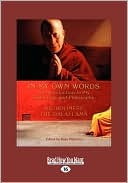 His Holiness The Dalai Lama is nothing is not prolific. His website lists over 100 books he has written or co-written since the 1960s, ranging from autobiographies to scientific essays on particle physics, instructions on meditation, and a Buddhist perspective on the teachings of Jesus. In My Own Words provides a brief explanation of his foundational beliefs and opinions on how they apply in various circles of influence.
The very essence of Buddhism, according to the Dalai Lama, is “interdependence coupled with non-violence.” In other words, we are all connected to each other and, consequently, any violence done to another is, in reality, violence done to ourselves. Therefore, “whatever you do should benefit others.” And not just in our personal lives. “Altruism should be a driving force in business” as well. Breaking into global politics, he claims that economic inequality “remains the greatest source of suffering on this planet.” True compassion is a firm commitment an individual makes that is founded on reason. However, “good wishes alone are not enough.” Good intentions or thoughts are insufficient. “We have to assume responsibility” for making needed changes in ourselves and the world.
Meditation is a powerful tool in the Buddhist tradition. Its main purpose is to “train the mind” to focus outside of oneself, to be mindful in all actions, and to accept what is. Emotions can be mastered, good habits can be formed, changes can be made when the mind is prepared and properly disciplined.
Regarding other faiths, the Dalai Lama states that “all religions are means to help us become better.” Rather than the divisive stance taken by some regarding differences in religions, the Dalai Lama describes the purpose of religion: “to cultivate positive human qualities” such as tolerance, generosity, love. Religions exist to reduce selfishness and to help us learn to serve others and “each religious tradition has immense intrinsic value and the means for providing mental and spiritual health.” This world needs more compassionate, inclusive, and welcoming voices like the Dalai Lama’s.
“Happiness is internal. It does not depend on what we have but on what we are”
Do Nothing & Do Everything:An Illustrated New Taoism
By Qiguang Zhao
 At first glance, the Taoist concepts of Wu Wei (do nothing) and Wu Bu Wei (do everything) seem mutually exclusive. In this book, Mr. Zhao patiently and with gentle humor shows how Wu Wei and Wu Bu Wei are complementary, not contradictory; two equally necessary approaches, like the eastern symbol of the Yin and Yang.
Mr. Zhao clarifies that Wu Wei “is to follow the course of nature. It is confidence in the universe.” Wu Wei “is not refusing to do anything, it is refusing to do insignificant things. Wu Wei is efficiency…giving up secondary matters and aiming for the key matters.” On the other hand, Wu Bu Wei “is the creativity to build a good habit.” It is “leaving nothing undone.” Taoists strive to settle between the two, finding the right balance for the present moment.
One of the recurring themes of Mr. Zhao’s exploration of Taoism is constant learning, but in the right way and with proper perspective. “In the present world,” he states, “we drown in information and starve for knowledge, We drown in expertise and starve for wisdom.” Anyone who has ever performed a Google search can attest to that! He encourages his readers to “be patient towards all that is unanswered in our heart, and to try to love the questions themselves.” I especially appreciated his injunction to “recognize your ignorance and know your limits” as a way to maintain humility and to remain open to learning more.
He also cautions that “when we only follow what we know, and forget to follow what we feel, we can easily be lead down the wrong path.” That brings to mind the scripture in Doctrine & Covenants 8:2 where the Lord tells Oliver Cowdery, “I will tell you in your mind and in your heart, by the Holy Ghost…”
Taoism seems to present a consciously relaxed approach to life. For example, Mr Zhao asserts that “everything will resolve itself sooner or later. This is the way of the Tao. Walk through life without fear for the future or regret for the past.” It also urges kindness: “We should treat ourselves with the same forgiving compassion as we give others. Nothing in the world is without flaws, so be tender and kind to others and yourself when you or others stumble.” What a vital reminder for everyone, whether Buddhist, Taoist, Christian or any other faith!
* For more insight into Taoism, please revisit my February 21, 2011, column “The Middle Kingdom” in which I discuss the Tao Te Ching in greater depth.
**************************
On My Bedside Table…
Just finished: The Lost Princess of Oz by L. Frank Baum
Now reading: Your Medical Mind: How to Decide What Is Right for You by Jerome Groopman, MD, and Pamela Hartzband, MD
On deck: One for the Money by Janet Evanovich
**************************
More on world religions next time! I’d love to hear about your experiences interacting with those of other faiths and the good and true things you have gleaned from them. Come find me on goodreads.com or email suggestions, comments, and feedback to egeddesbooks (at) gmail (dot) com.