






Revisiting Golgotha and the Garden Tomb- Part II
by Jeffrey R. Chadwick
(Read part 1 here)
Editor’s Note: This article is reprinted from the Religious Educator, a journal published three times a year from the Religious Studies Center at Brigham Young University. It is for teachers and students of religious education in the Church. Those interested in learning more or subscribing can go to https://tre.byu.edu/ .
The Skull Feature as Golgotha
The skull feature sits just north of the modern wall of Jerusalem’s Old City and fits all the requirements of the New Testament setting that the Holy Sepulchre’s Hill of Calvary does not. It was outside the city wall in Jesus’ day and was located well over twenty-five meters (fifty cubits) to the north of the city, which avoided any question of wind direction and the ritual purity of inhabited areas or the temple. It was near an area where Jewish tombs were being located in Jesus’ day (I will return to this issue later), and there is good reason to suppose that the people of ancient Jerusalem would have called it “the skull.” That is because it does indeed look like a skull.
The skull feature is a naturally occurring rock formation in the southern scarp of a large hill called el-Edhemieh by local Arabs. (The toponym is derived from the name of Ibrahim el-Edhem, a Muslim mystic who lived in the eighth century.) The top of the hill has been a Muslim cemetery for nearly two centuries. Three horizontally lenticular caves, all natural and very small and shallow, pock the limestone scarp of el-Edhemieh’s south side. When viewed from the south, the center cave of the three is not visible, and the two outside caves have the uncanny resemblance of slitted eye sockets in a human skull. When viewed from the west (from the Garden Tomb platform), the westernmost cave blends visually with the rock around it, but the center and eastern caves give the same impression-the two eye sockets of a skull. No matter how you look at it, it looks like a skull. A slightly protruding piece of stone that slopes downward from between the two easternmost caves gives the optical illusion of a skeletal nose bridge, and horizontally fissured layers of limestone below the nose bridge lend a jawlike quality to the whole picture.
As early as 1842, the German scholar Otto Thenius suggested the skull feature site as Golgotha.[11] The British Major Claude Condor came to the same conclusion prior to 1870 and the scholar Fisher Howe in 1871.[12] Not until 1883 did the famed British General Charles George Gordon arrive at Jerusalem and join the ranks of Christian students who concluded that the skull feature must have been Golgotha, but it was his famous name that became attached to the site, which since then has often been referred to (sometimes snidely) as “Gordon’s Calvary.” Prior to the buildup of modern eastern Jerusalem, and in particular the bus station that was erected there by the Jordanians in the 1950s, the skull feature was much more visible. Photographs from the late 1800s and early 1900s, when ground level of the area in front of the stone formation was lower and void of buildings, show a stone image that is skull-like from jaw to forehead-a grim cranial visage staring off to the south (see photo at beginning of article). But even today, from the top of the Old City wall, or even from the parking lot of the bus station, the skull-like appearance of the escarpment is easily discernable from below the nose bridge to the top of the brow.
This natural formation has probably not changed significantly in the last three thousand years, though the areas around it were extensively cut away in biblical times. Because of the pocked and fissured nature of its stone, the skull feature itself was not quarried, while the area just to the east, traditionally called Jeremiah’s Grotto, has experienced a great deal of stone quarrying. The entire area from Jeremiah’s Grotto eastward and south to the Old City wall was cut away anciently for building stone, resulting in a wide moat north of the “second wall.” Evidence of this quarrying is visible even in the hump-shaped bedrock beneath the Old City wall itself, just across the street south of the bus station (about one hundred meters east of Damascus Gate). The type of bedrock in this part of Jerusalem is called meleke, a medium-hard Turonian limestone excellent for quarrying because it withstands natural erosion very well. Like the stone building blocks anciently cut away, the quarry itself remains uneroded after thousands of years. The skull feature, of that same meleke limestone, but never quarried away, has also resisted erosion.
So the skull feature looked essentially the same in Jesus’ day as it does today. That Aramaic-speaking Jewish inhabitants of Herodian Jerusalem would call this feature golgotha is not at all improbable; in fact, it is to be expected. Other instances come to mind of Jews calling sites after their resemblance to certain physical things. Examples include Gamla (Aramaic for “the camel”), the Jewish city on the Golan built atop a hill shaped like a camel’s hump, and Susita (Aramaic for “the horse”), a town built on a horse-head-shaped hill east of the Kinneret (even Greek speakers called it Hippos, Greek for “horse,” showing that Gentiles saw the same feature).
Given the plausibility that the skull feature would have been called golgotha, the next question is whether crucifixions could have been carried out at the site. The answer to that is also positive. Romans crucified their capital convicts in conspicuous places near cities and towns, generally at crossroads or along the sides of other well-traveled roads, so that the public would be able to see the executed convicts without hindrance. This was thought to act as a deterrent against crime and rebellion. The skull feature is located one hundred meters northeast of Damascus Gate, the gate area of the “second wall” at the time of Jesus (see figure 3). At that time, the open area below the skull face was a natural plaza and junction of two major roads leading away from the gate. The “Jericho Road” going east toward the Mount of Olives, now called Sultan Suleiman Street, ran through the moat-like corridor left from quarrying between the city wall and Jeremiah’s Grotto. The road going north was on the west side of el-Edhemieh and followed essentially the same route as modern Nablus Road. This northward road passed through an abandoned cemetery from the eighth and seventh centuries b.c., the tombs closest to the road having long since been cleared of their human remains, lest Jewish travelers unwittingly become ritually unclean. Archaeological research has demonstrated that burials were not interred on the west side of el-Edhemieh during the time of Jesus, not even at the Garden Tomb. The active necropolis (cemetery) to the north of Jerusalem in the early first century a.d. was located on the east side of el-Edhemieh, where there was no major road in Jesus’ day (although it is the site of modern Saladin Street).
Crucifixions at the natural plaza in front of the skull feature (today’s bus station parking lot) would have been close to and clearly visible to ancient Jews walking along both roads-the “Jericho Road” east and “Nablus Road” north. The grisly scene of execution would have been all the more ominous because of the giant stone face of death in the background behind the crucified victims.
In summary, when geographical, cultural, archaeological, and geological evidences are taken together-the skull feature’s location outside the northern wall of Jerusalem in Jesus’ day, the fact that it was just west of an area permissible for tomb construction at the time, its position in relation to the main roads leading north and east, and the plausibility that because of its natural appearance the Jews of the day would have called it golgotha (“the skull”)-the skull feature was very likely the location of the Crucifixion.
The Garden Tomb
The burial cave known as the Garden Tomb was unearthed around 1867 by a local land owner who lived in Jerusalem.[13] (Archaeologists often use the term “cave” to refer to a rock-cut tomb.) Because of its close proximity to the skull feature, it was soon suggested as the tomb of Jesus by a variety of different parties, including, for a time, General Gordon. At the time, there was no real archaeological expertise as we know it today-no one then could have accurately dated the tomb on the basis of content or design. The earliest descriptions of the cave were brief reports prepared in 1874 and 1892 by Conrad Schick, a German missionary who lived in Jerusalem and who studied antiquities.[14] The cave and surrounding property were purchased in 1893 by a committee of British Christians founded just for the purpose-the Garden Tomb Association of London. Throughout the twentieth century, the burial cave has gained popularity, among Christians uncomfortable with the Holy Sepulchre site, as a candidate for the tomb in which Jesus was laid.
Many Latter-day Saint tourists and students visiting Jerusalem have become convinced that the Garden Tomb was the sepulchre provided by Joseph of Arimathea for the burial of Jesus. Since President Harold B. Lee’s visit to the site in 1972, every Church President has visited the Garden Tomb and expressed feelings of reverence at the site, although none has stated absolutely that the tomb was the one in which Jesus was laid. (President Hinckley’s statement that was quoted at the beginning of this article is characteristic of the caution exercised by previous Church Presidents.) If a poll were conducted, however, probably an overwhelming majority of Latter-day Saints would maintain that the Garden Tomb was the actual site of Jesus’ burial and Resurrection. But was it?
In March 1986, Israeli archaeologist Gabriel Barkay, an expert on ancient Jewish tombs in Israel, published his now-famous article on the Garden Tomb in Biblical Archaeology Review.[15] In that article, he reported: “I have concluded that the cave of the Garden Tomb was originally hewn in the Iron Age II, sometime in the eighth or seventh century b.c. It was reused for burial purposes in the Byzantine period (fifth to seventh centuries a.d.), so it could not have been the tomb of Jesus.”[16] Barkay’s article presents at least three basic propositions:
- That since the Garden Tomb was originally an Iron Age II multichambered, triple-bench sepulchre cut out six to seven hundred years before Jesus was born, it could not have been a “new tomb” (Matthew 27:60) “wherein never man before was laid” (Luke 23:53) in Jesus’ day, as required by the New Testament.
- That the tomb’s benches were carved into fixed sarcophagi for burial of Byzantine Christians four to six hundred years after Jesus (an act that would not likely have occurred had any Christians of the time identified the tomb as that of Jesus).
- That the features outside the Garden Tomb, including the “track” feature and large cistern, were from a stable complex for donkeys or mules constructed during the Crusader period, eleven centuries after Christ, and could not be evidence of a missing rolling stone-the “track” was in fact a water channel.
At this point, it becomes necessary to rehearse my past reactions to Barkay’s claims and how subsequent research has changed those views. When Barkay’s article originally appeared, my reaction to it was negative. My rebuttal, entitled “In Defense of the Garden Tomb,” was published by Biblical Archaeology Review in its July 1986 “comments” section.[17] At the time, I was not a trained archaeologist but did hold a master’s degree in near eastern studies, had taught in three BYU Jerusalem student programs, and reasoned myself qualified to comment on the authenticity question surrounding the Garden Tomb. In my BAR comments, I took Barkay to task for an “unconvincing and disappointing” article that “offered no real evidence that the Garden Tomb was cut out during the First Temple period rather than the Second Temple period.”[18] (Those themes were later repeated in a 1990 book entitled The Holy Land, and although the senior coauthor of that book was D. Kelly Ogden, I alone was responsible for the section titled “The Garden Tomb and Golgotha.”)[19]
Since offering those original comments, however, I have learned a good deal more about the tombs and burial customs of the region, having since become a practicing field archaeologist in Israel with a doctorate in near eastern archaeology and anthropology. Although still maintaining that Barkay could have argued his case better by using more convincing parallels and visuals, I must now agree that on every issue Barkay addressed concerning the Garden Tomb, he was right. Here is how that realization came to be.
Upon completing a Ph.D. in archaeology, I began a systematic archaeological investigation to evaluate every aspect of the Garden Tomb, with the goal of determining if the cave could be positively identified as a first century a.d. tomb-one that could have been where Jesus was laid. The investigation turned into a multiyear project (see note 2) and included careful examination and consideration of all the physical remains outside the Garden Tomb as well as inside and the production of updated drawings of all the architectural features of the site. The Garden Tomb Association of London kindly granted permission to enter the tomb itself with measuring instruments and on two occasions (in 1993 and 1998) allowed me inside the gate of the tomb’s inner chamber to examine, measure, and photograph features of the cave at the closest range possible. The data gathered were compared with published archaeological descriptions of other tombs in Jerusalem and the vicinity. Additionally, I visited anew every known and accessible Jewish tomb complex in the Jerusalem area and beyond from both the First and Second Temple periods to compare their architectural styles with the features of the Garden Tomb’s interior. A key opportunity also became available during those years as the Israel Antiquities Authority excavated the large Crusader complex “Montjoie” at Nebi Samuel near Jerusalem, which I visited several times to compare with the features of the Garden Tomb’s exterior and grounds. The research was essentially complete by 2001 but was supplemented with clarification visits to several sites in 2002. The results of the project seem irrefutable, although the conclusions are just the opposite of what I had presupposed. In the spirit of the principle of “two or more witnesses,” it is now time to make those conclusions public.
The burial cave interior. The Garden Tomb itself shows every sign, as Barkay maintained, of having been constructed in the late eighth or seventh century b.c.-the end of archaeological Iron Age II. This would date it to sometime in the era beginning with the prophet Isaiah and ending with the prophet Jeremiah. Before it was altered by gentile Christians in the Byzantine period, who carved its stone benches into casket-like troughs, the Iron Age II burial cave consisted of two chambers: an outer chamber with a single stone bench along the back (north) wall and an inner chamber to the right (east) with a triple-bench design-stone benches along three walls, north, east, and south. (See figure 4 for a three-dimensional drawing of the tomb, and figure 5 for a reconstructed plan drawing.) The ceiling height of the outer chamber is just under two meters (just over six feet), but because of the lower floor of the inner chamber, its ceiling is about 2.3 meters high (seven feet). A doorway that was originally about 1.5 meters high and measuring 68 centimeters wide (2 feet 3 inches) was located in the wall between the two chambers. A small, square opening 70 centimeters wide (2 feet 4 inches) and originally about the same height sat low in the south wall of the outer chamber, serving as the entry to the tomb from outside.
Figure 4. The Garden Tomb, Iron Age II, ca. 700-600 b.c.
This cutaway drawing by the author shows the original bench design.

Figure 5. The Garden Tomb, Iron Age II,
reconstructed plan drawing by the author.
The remains of the tomb’s original benches are still obvious from the ridges left behind after the Byzantine vandalism, and their original measurements can still be discerned. The benches were not perfectly rectangular but measured about a meter wide (3 feet 3 inches) on average, except for the middle (eastern) bench in the inner chamber, which was only 68 centimeters wide (2 feet 3 inches). The length of the benches was over two meters long (6 feet 6 inches) in each case. Benches in the inner chamber averaged 70 centimeters high (2 feet 4 inches), rising from the floor 65 centimeters (north bench) to 75 centimeters (south bench), the floor sloping slightly downward toward the south. The bench in the outer chamber was about 75 centimeters high (2 feet 6 inches).
In its original form, the Garden Tomb was not very similar to the highly ornate Iron Age II tombs at the St. Stephen’s Monastery, located just north of the Garden Tomb grounds, even though both sites featured the triple-bench design common to many Iron Age II burial caves. In 1986, I rejected Barkay’s comparison of the two tomb complexes on the grounds that, aside from the triple-bench layout, many of the architectural features were very different. During my own later survey of Jerusalem area tombs, however, I discovered that many other Iron Age II burial caves, plainer and simpler in design than the ornate caves at St. Stephen’s, matched the features of the Garden Tomb cave in every respect. (For this reason, I maintain that Barkay would have done better if, in his 1986 BAR article, he had offered plan drawings of the smaller, simpler Iron Age II tombs he knew about rather than focus on the St. Stephen’s caves as a parallel to the Garden Tomb.) Such tombs generally consist of an outer chamber with one or more inner chambers and feature a triple-bench plan in their inner chambers similar to the original Garden Tomb’s inner chamber (see figure 6). Many are exact parallels of the two-chamber design of the Garden Tomb, with triple benches in their inner chambers but a single- or double-bench layout in their outer chambers (see figure 7). The Garden Tomb, in its original state, was a very typical example of the two-chamber, triple-bench genre. The area just north of Damascus Gate, around Nablus Road, was home to several triple-bench Iron Age II tombs of both the two-chamber and the multichamber types. Known examples include the burial caves just across the street from the Garden Tomb (on the west side of Nablus Road) at the White Sisters Convent, which are not published, but which I examined personally, and the caves discovered by British surveyors while doing work on the Jerusalem drainage system north of Damascus Gate under the modern Sultan Suleiman Street, published by Amihay Mazar in 1976 [20] (see figure 8). Additionally, the elaborate tomb complex at St. Stephen’s, just north of the Garden Tomb, dates from Iron Age II. However, not a single tomb from the Second Temple Period, Herodian or otherwise, has been discovered in the Damascus Gate and Garden Tomb vicinity. Burials were simply not occurring in the area west of el-Edhemieh in Jesus’ day-it was too close to the city gate and the busy road north now called Nablus Road.

Figure 6. Typical Iron Age II Tomb at Ketef Hinnom (after Barkay).
Note the two-chamber plan and bench alignment similar to the Garden Tomb.

Figure 7. Iron Age II Tomb on Mount Zion (after Geva, NEAEHL).
Note the reverse image of the Garden Tomb plan.
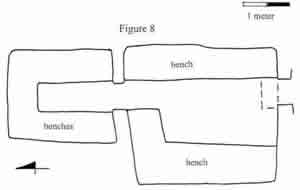
Figure 8. Iron Age II Tomb near Damascus Gate (after Mazar).
The tomb, no longer extant, was excavated beneath Sultan Suleiman Street.

Figure 9. Map of Garden Tomb grounds (after White). Legend: (1) Garden Tomb,
(2) bedrock cornerstone, (3) ancient winepress, (4) modern entry.
Outside the Garden Tomb. On the Garden Tomb grounds are features that have often been cited as evidence that the Garden Tomb itself was located in a garden at the time of Jesus. These include the large cistern near the tomb (a cistern is an underground water reservoir cut into bedrock) as well as a small winepress to the south of the tomb’s entrance (see figure 9 for a diagram of the area). The rock-cut channel below the tomb’s entrance has traditionally been identified as the track of a rolling stone, and the arched feature carved into the tomb’s outer facade above the entrance and the flat bedrock floor in front of the tomb entrance have usually been postulated as evidence of an early Christian church or shrine marking the place of Jesus’ Resurrection (see figure 10). In light of what is now known archaeologically, all of these suppositions turn out to be false.
I will deal with the garden issue first. The small winepress is difficult to date, and it is unclear whether the press was present during the Herodian period or was constructed later. But a winepress is, in any case, no evidence of a garden, since the biblical term “garden” does not refer to an area where grapes are grown. The term in the New Testament used to describe a grape-producing plot is “vineyard” (Greek amteloni; see Matthew 21:28).[21] The term “garden” (Greek kepos) is used to describe an orchard of fruit-producing trees, very often olive trees (see John 18:1, where the term kepos refers to the olive garden near Gethsemane, and John 19:41, where kepos denotes the garden in which the tomb was located). Had John meant to tell us that the area where Jesus was buried was a grape-producing plot, he would probably have called it a vineyard (amteloni), and we could suppose that a winepress might have existed at the site. But since John called the plot a garden, it is not likely that a winepress or grapevines were present-grapes were not planted in tree gardens because shade from the trees would not allow proper growth of the vines or ripening of the fruit.[22] Additionally, the term for the caretaker of a vineyard is “husbandman” (Greek georgos) in John 15:1, whereas the term employed in John 20:15 is “gardener” (Greek kepouros). This language also suggests that the plot in which Jesus’ tomb was found was not a vineyard. The winepress found near the Garden Tomb may suggest that a vineyard was once there but proves nothing concerning a garden there in New Testament times.
Contrary to what Garden Tomb visitors are often told, the presence of a large cistern near the tomb in no way suggests that the area was a working garden in Jesus’ day. Artificial irrigation of working gardens, whether olive gardens (like the garden near Gethsemane) or other fruit-producing gardens, was not practiced in the land of Israel during biblical times. Winter rains and summer dews were the adequate sources relied upon for watering of olives and other tree fruits, as well as grapes, grains and grasses. The only exception was the small “garden of herbs” (vegetable garden) often maintained adjacent to a private home (see Deuteronomy 11:10). But since a tomb had been cut in the garden of Jesus’ burial and since it was outside the city wall, no home would have been in that garden-it was not a small vegetable garden of which the New Testament is speaking. The supposition that a “gardener” might be at work there (see John 20:15) also suggests that it was a fruit-producing garden of trees, most probably an olive garden, in which Jesus’ tomb was located. Such a garden, as already stated, would have required no irrigation. The large cistern near the Garden Tomb proves nothing concerning a garden.

Figure 10. Facade of the Garden Tomb. Note the arched feature in the facade,
the channel or “track” below the door, and the finished bedrock floor in front of the tomb.
More important, the bell-shaped cistern was not even present at the site during the first century a.d., nor anytime close to the life of Jesus. It was, in fact, cut out and plastered sometime between about a.d. 1100 and 1187, during the Crusader period. The type of plaster used to seal the cistern against water leakage is known from other Crusader cisterns in Israel, and Crusader crosses carved into the interior wall of the cistern are a typical identifying stamp of twelfth-century construction. The cistern measures 9.4 meters in depth (31 feet) with a bottom area 9 meters wide (29 feet 9 inches) by 20.1 meters long (65 feet 9 inches). When full, it could hold an estimated one million liters of water (250,000 gallons), and it is still used for water storage today. But since the cistern did not exist at the time of Jesus, it cannot be cited as proof of a garden then. It does, however, relate to other Crusader remains at the site.
A section of rock-cut channel below the entrance to the Garden Tomb, 8.5 meters long (27 feet 7 inches), is nearly always represented to visitors as a track in which a large stone disc once stood-a “rolling stone” to seal the tomb entrance. However, this “track” was not designed at all properly for a stone-disc type of tomb door. The inside face of the channel’s outer edge was not cut straight up and down but was cut at a 45-degree angle away from the tomb facade, making the width of the channel 37 centimeters wide (15 inches) at the bottom but 50 centimeters wide (19 inches) at the top (see figure 11). This is an impossible arrangement for a stone disk, since the angle of the outer edge would provide no support for the disk-a large “rolling stone” would have been prone to fall outward, crushing anyone trying to move it. The outer edge, in any case, is too low to have been meant for a large, disk-type stone. At other “rolling-stone” tombs, such as Jerusalem’s Tomb of the Kings and those found at Midras in the Shfelah, the outer edge of the stone track was built straight up and was essentially an outer wall as tall as the disk itself, preventing the stone from tipping or falling. In other words, the stone disk actually rolled between two upright walls, not in a low-cut track (see figure 12). There is no archaeological precedent for a low-cut track for a stone-disk door, particularly a track with a slanted outer edge as we see at the Garden Tomb.
Moreover, if the Garden Tomb channel were actually the track of a stone disk, we would expect the low point or resting point of the track to be directly in front of the cave opening. But it is not. The channel actually slopes away from the Garden Tomb entrance, downward to the west. None of the features of this channel were designed to function as a track for a “rolling stone.”
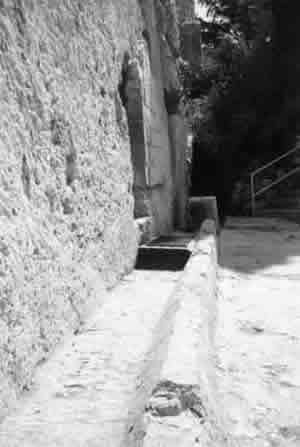
Figure 11. The rock-cut channel beneath the Garden Tomb door.
Note the westward slope of the channel away from the door (bottom of photo)
and the angle of the outer edge’s inside face, a feature insufficient for supporting a large stone disk.
In reality, the channel was not made for a “rolling stone” at all but was cut by Crusader workmen as a water trough for an eleventh-century donkey stable built directly in front of the Garden Tomb (the stable is described below). This trough was cut well below the tomb door (see again figure 11) so that water in the trough could not run over the threshold of the tomb entrance and flood the cave itself, which was probably used as a storage room for fodder. But the trough was still high enough above the bedrock floor in front of the tomb to afford donkeys comfortable access to the water it brought into the stable. The 45-degree angle on the inside of the trough’s outer edge allowed donkeys an easy drink without hitting their heads against the exterior wall of the tomb. Water for the trough was undoubtedly brought from the nearby Crusader cistern, either by manual transfer or more likely via a clay pipeline or extension channel of the trough that ran east of the stable and turned south to connect with the cistern.
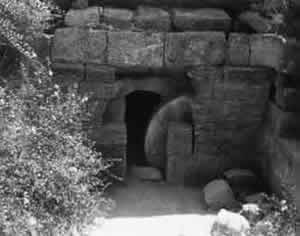
Figure 12. Jewish “rolling stone” tomb at Midras. Note that the large disk-type
stone actually rolls between two walls, not in a low track.
In his 1986 Biblical Archaeology Review article, Barkay used an endnote to argue that the “rolling stone track” was really a Crusader channel used in connection with the Crusader stable, but he did not specify its use as an animal trough.[23] In my 1986 response, I argued that the channel “does not seem to go anywhere nor is it correctly cut for drainage”-it was “much more likely . . . a track for a huge rolling stone.”[24] I was wrong on the “rolling-stone” part but right on the drainage part, even though I did not know why. Now I do. The channel did not drain because it was not designed for drainage. The Crusaders designed it to retain water-it was the stable’s water trough. The slight westward slope of the trough was meant to let water entering the stable from the east side (the cistern side) run the length of the trough, keeping it full for the animals.
What of the stable itself? Above the Garden Tomb entrance, carved into the solid rock of the tomb’s exterior, is an arched feature six meters wide and some 5.5 meters high. It obviously fit into a vaulted roof that extended outward from the tomb facade, covering the bedrock floor in front of the tomb entrance. This feature is often represented to visitors as evidence of an early Christian church or shrine at the site, erected by people who felt the tomb had been the sepulchre in which Jesus was laid. But arched vaulted roofs were not yet being built in Herodian Israel or in the second century afterward-at least not for synagogues, domestic buildings, or mundane structures such as stables. On the basis of architecture alone, the building could not date prior to the Byzantine period (fourth century a.d.)-it cannot have been an early Christian (that is, pre-Byzantine) shrine to the Resurrection. The proportional dimensions of the arched feature are, however, typical of vaulted roofs from the Crusader period. The building the vaulted roof covered was, in fact, a Crusader structure-the stable spoken of above.
The bedrock floor of the stable was flattened manually by the Crusader builders, who lowered it 30 centimeters from the top of the water trough’s outer edge. In his 1986 article, Barkay explained why the Crusader floor was cut so low: “In order to create vaults that were high enough, but would not extend above the escarpment, the Crusader builders lowered the rock surface in front of the cave entrance. As a result, today one must step up to enter [the tomb].”[25] In the 1986 rebuttal, I disagreed: “When did Crusaders ever lower a solid stone floor . . . for a structure as common as a stable?”[26] Within a few years, an answer to that question was unearthed. During the mid-1990s, the Israel Antiquities Authority carried out a wide-ranging excavation of the Crusader complex “Montjoie,” complete with large stables and troughs, at Nebi Samuel northwest of Jerusalem. Upon visiting the new excavations and examining the fresh finds, I was astonished at how similar they were to the area in front of the Garden Tomb. From the stone-cut troughs (set higher for horses) to the flat finished bedrock floor, the resemblance to the area in front of the Garden Tomb was striking. Nebi Samuel’s stone stable floors even featured the same type of shallow drainage channels visible in the surface at the Garden Tomb a few meters south of the door. These shallow drains, about 10 centimeters in width, allowed liquid waste from the animals to flow away to the outside of the structure and also allowed wash water to drain away when workers would muck out the stable and wash the floor with water taken from the trough. The archaeological parallels between the Nebi Samuel stables and the Garden Tomb exterior were too significant to be ignored.
It is now even possible to ascertain the approximate floor plan of the Garden Tomb’s Crusader stable. In July 1997, during work to expand the area for visitor seating in front of the tomb, a section of bedrock cut to function as a cornerstone was unearthed exactly 7.5 meters south of the arched feature’s eastern ledge.[27] This bedrock cornerstone stands 70 centimeters high and was cut into the shape of a block about 95 centimeters square (see figure 13). Cuttings in the bedrock surface between the block and the arched feature suggest that a wall 7.5 meters long once ran from the arch’s eastern ledge to that cornerstone-the eastern wall of the stable. The likely reconstruction of the building would have the wall then run south from the cornerstone some 15 meters. This is the known length of the escarpment on the north from the arch’s eastern ledge to the end of the extended ledge that runs on the arch’s western side. The whole stable, re-created, would have featured a 7.5-by-15-meter floor plan, with a vaulted roof on the eastern end, and probably a pitched roof on the west end (see figure 14 for proposed plan and section drawing of the stable).
Figure 13. Bedrock cornerstone discovered in 1997 in front of the Garden Tomb,
photo by Brian Bush. This feature is marked on figure 9 as item 2. Photo courtesy of Brian Bush.

Figure 14. Proposed plan and northern section of
Crusader stable at the Garden Tomb.
But why the odd dual-roof design? Why did not the Crusaders simply run a pitched roof for the entire east-west length of their stable? The reason for vaulting the roof on the east end was that a supporting ledge for the pitched roof could not be cut into the rock face of the tomb itself. Because of the open chamber behind it, there would be no rock for a ledge at all. Thus, to cover the stable’s eastern section, rather than a pitched roof resting upon a ledge, the area directly in front of the tomb had to be vaulted well above the burial cave’s ceiling level. Hence, the result is the unusual combination of arch and ledges that we see in the Garden Tomb’s facade today (see figure 15).

Figure 15. The Garden Tomb facade, looking north. Note the bedrock shelf
to the left, which sits slightly lower than the level of the tomb door and ceiling.
In summary, the Garden Tomb cannot be materially connected to the New Testament accounts of Jesus’ burial and Resurrection. The tomb itself was not a “new sepulchre” in Jesus’ day, having been cut out six or seven centuries earlier, in Iron Age II. The “track” in front of the tomb was not designed for a “rolling stone” at all; it was really a water trough that was part of the donkey stable built eleven centuries after Jesus. The stable itself was certainly no early Christian shrine. And even though it is possible that a garden occupied the area in Jesus’ day, neither the winepress nor the nearby cistern is proof of this. In any case, the cistern also dates to eleven centuries later. None of the features at the Garden Tomb, either inside the burial cave or outside it, can be connected archaeologically with the events of Jesus’ burial and Resurrection as recorded in the New Testament.
NOTES
- Gordon B. Hinckley, in Special Witnesses of Christ, videotape, Intellectual Reserve, Inc., 2000.
- The author holds a Ph.D. in near eastern archaeology and is an active field archaeologist at sites in Israel. The long-term investigation was carried out periodically, during the author’s free time, beginning with his two-year appointment to the full-time faculty of Brigham Young University’s Jerusalem Center for Near Eastern Studies (1992-94) and continuing as he returned to Jerusalem each summer on Jerusalem Center teaching assignments or for archaeological excavation at Tel Miqne (biblical Ekron) and Tel Safi (biblical Gath) from 1995 to 2002.
- This conclusion represents a change of position for the author, who in previous publications, prior to completing a degree in archaeology, had supported the Garden Tomb as a candidate for Jesus’ sepulchre. See Jeffrey R. Chadwick, “In Defense of the Garden Tomb,” Biblical Archaeology Review 12, no. 4 (July/ August 1986): 16-17; and D. Kelly Ogden and Jeffrey R. Chadwick, The Holy Land: A Geographical, Historical and Archaeological Guide to the Land of the Bible (Jerusalem: HaMakor and BYU Jerusalem Center, 1990), 340-45.
- Jerome Murphy-O’Connor, The Holy Land: An Oxford Archaeological Guide from Earliest Times to 1700, 4th ed. (Oxford and New York: Oxford University Press, 1998), 45-47.
- Babylonian Talmud, Baba Batra 25:a, literal translation by the author. The Hebrew version reads as follows:

Although the Hebrew version uses the term ruah (wind), the Soncino English translation idiomatically renders the term as “direction,” which is not incorrect but which does not preserve the important aspect of wind direction. The Gemara that follows specifies that the sages were discussing wind-related issues-hence the need for a more literal translation of the Mishnah.
- Hillel Geva, “Jerusalem/Tombs” in The New Encyclopedia of Archaeological Excavations in the Holy Land, ed. Ephraim Stern (Jerusalem: Israel Exploration Society & Carta, 1993), 748.
- John J. Rousseau and Rami Arav, Jesus and His World: An Archaeological and Cultural Dictionary (Minneapolis: Fortress Press, 1995), 169.
- Rousseau and Arav, Jesus and His World, 167-68. The singular presence of the so-called “Herod family tomb” to the west of Jerusalem’s Old City, on the grounds of the present-day King David Hotel, is explained by its distance from the Temple Mount-over 2,000 cubits, or 3,000 feet.
- Rousseau and Arav, Jesus and His World, 169.
- James E. Talmage incorrectly supposed that “the exposure of skulls and other human bones . . . would not be surprising; though the leaving of bodies or any of their parts unburied was contrary to Jewish law and sentiment.” But he also concluded that “the origin of the name is of . . . little importance” (Jesus the Christ [Salt Lake City: Deseret Book, 1915, 1973], 667).
- Bill White, A Special Place: The Story of the Garden Tomb, Jerusalem (Lincolnshire, England: Stanborough Press, 1989), 15.
- William Steuart McBirnie, The Search for the Authentic Tomb of Jesus (Montrose, California: Acclaimed Books, 1975), 42.
- McBirnie, The Search for the Authentic Tomb, 47.
- McBirnie, The Search for the Authentic Tomb, 47.
- Gabriel Barkay, “The Garden Tomb-Was Jesus Buried Here?” Biblical Archaeology Review 12, no. 2 (March/April 1986): 40-57.
- Barkay, “Garden Tomb,” 50.
- Chadwick, “In Defense,” 16.
- Chadwick, “In Defense,” 16.
- Ogden and Chadwick, The Holy Land, 340-45.
- Amihay Mazar, “Iron Age Burial Caves North of the Damascus Gate, Jerusalem” Israel Exploration Journal 26, no. 1 (1976): 1-8.
- The same is true in the Old Testament, where the Hebrew term kerem is consistently rendered as “vineyard.”
- Even today, grapevines are usually not planted in modern Arab tree gardens (orchards) because the shade from the trees would hinder vine growth and ripening of the grapes. On the other hand, it is not uncommon in modern Arab vineyards to see one of two fruit trees growing among the rows of grapevines-an occasional tree does not cast enough shade to block the vines from needed sunlight as the angle of the sun changes throughout the day. It is unlikely, however, that this Arab habit was practiced by ancient Jews, since the law of Moses specifically forbade mixing other fruit species in a vineyard (see Deuteronomy 22:9). In any case, the point is moot because the setting of Jesus’ tomb is referred to as a garden and not a vineyard, and grapevines would not likely have been planted among the trees of that garden.
- Barkay, “Garden Tomb,” 57.
- Chadwick, “In Defense,” 17.
- Barkay, “Garden Tomb,” 57.
- Chadwick, “In Defense,” 17.
- The discovery of the bedrock cornerstone was made by Brian Bush, the Garden Tomb’s director of grounds and maintenance, who permitted me to use the photo he took.
- Amos Kloner, “Did a Rolling Stone Close Jesus’ Tomb?” Biblical Archaeology Review 25, no. 5 (September/October 1999): 29. Kloner reaches the same conclusion for a different reason. He maintains that arcosolia were at most two feet high, and angels could not have sat upright in such a niche. But I have visited tombs in Jerusalem and the Shfelah with arcosolia more than three feet high and have sat upright in them.
- Zvi Greenhut, “Burial Cave of the Caiaphas Family,” Biblical Archaeology Review 18, no. 5 (September/October 1992): 29-36.
- Kloner, “Rolling Stone,” 29.
- Kloner, “Rolling Stone,” 28.
- Kloner, “Rolling Stone,” 29.
- Kloner, “Rolling Stone,” 23-29