





Only a small number of people on this earth know where Parowan is but, oh, the memories it holds for me. So many memories came flooding back recently as I sat in this special and unique building in a high, mountain Utah valley where I spent my youth.
I remember such towering figures as David O. McKay, Harold B. Lee and others speaking from its pulpit 50 years ago, back in the days when stake conferences were held every three months and a General Authority usually attended every one.
Although I usually sat in the balcony (along with the other teenagers) and spent my time whispering and jostling with friends, still, over the years the booming voices of prophets and apostles ricocheted of the vaulted ceiling and stirred up the beginnings of a testimony in my heart.
On a return visit last week-after 50 years away-I was reminded of these good times, but I also took note of the place this unique building holds in the architectural history of LDS ward and stake buildings.
In the late 1800s, Mormon buildings were patterned after those of the Protestant churches around them. Most featured spires in which to house a bell and which today we associate with the typical New England landscape we might expect to see in a Rockwell painting. For example, the first church building the Mormon pioneers built in Parowan after their arrival in 1851-affectionately today called “The Old Rock Church”–looked much like those across Middle America. (Note the twin doors, the left for sisters, the right for brothers-Quaker style.) 
Although Mormon buildings in the latter half of the nineteenth century adopted a variety of motifs, many of which were incorporated into the flagship Salt Lake Temple, the prominence of spires was a central element.
However, with the arrival of the twentieth century, architectural styles were changing. When the Church was interested in building a temple in Cardston, Alberta, Canada, it threw the architectural design open to a competition. Several designs came in, most of which were patterned after the Salt Lake Temple.
But one design took a whole new direction. It picked up the architectural design elements being developed by Frank Lloyd Wright. Often called the “prairie style,” this form of architecture featured bold design, original decorative details and a blending with natural surroundings. Set as it was on a rise in the otherwise flat prairie, the Cardston Temple design eschewed the soaring spires of other designs-spires being expensive and serving little functional purpose-and instead planted itself squarely on its surrounding terrain. It was unique and resembled nothing that had come before.
It won the design contest.
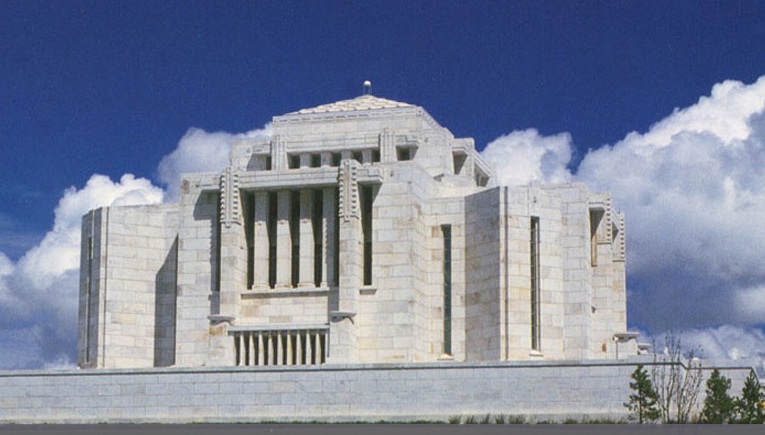
At about the same time, nearly 20 ward chapels and tabernacles followed the same design. But this style was short-lived. Church architecture, after flirting with this style for only a dozen years, moved on and today there are only a small number extant. The Parowan East Ward building is one of them.
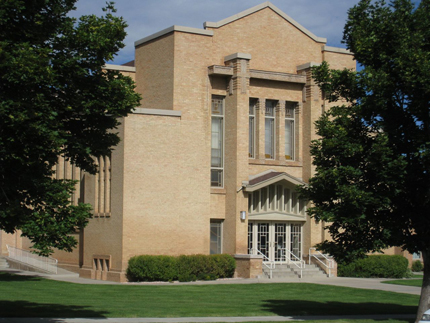
As I sat there in sacrament meeting last Sunday, my eyes danced fondly over the art deco elements of the interior-the blending of stained oak panels with the painted trim, the light fixtures, the faulted ceiling, etc. My appreciation of this unique period in architectural history mixed together with all the great doctrine I had heard from the pulpit.
It is amazing how well this building has aged. Through the loving care of the Church’s architectural department, all the unique design elements of the Parowan East Ward have been preserved. Moreover, a wing has been added to house more classrooms and offices, and its lines mimic those of the parent building. Inside this addition, care has been taken to incorporate the same trim and molding of the main chapel. It appears to be in tip-top condition.
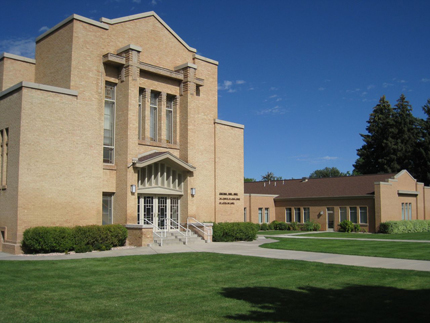
Surrounded as it is by ages-old maple trees and meticulously groomed green grass, it is a sight that lifts the spirit and gladdens the heart. While the giant cathedrals of Europe are awe inspiring, this little jewel set in a small town in the American West is a treasure all its own.