





Medicine didn’t used to hold any fascination for me. Back in high school, I strategically scheduled my biology class for 5th period, by which time the limited supply of doomed frogs would already be dissected and pinned appropriately by earlier students. All I’d have to do was look at them, as briefly as possible, in order to complete the required course work. Brilliant, no?
Then I married a man earning a graduate degree in a medical field. Always looking for new topics to explore, I decided to read my husband’s old anatomy and physiology textbook for, well, fun (and so I had some clue what he was talking about while studying for exams). A little later I got an administrative job at a multi-specialty clinic where I started learning about the physician training process, the licensing and credentialing bureaucracies and the labyrinthine complexities of medical insurance. The more exposure I had to any aspect of the medical field, the more intrigued I became.
The two books this week come from two vastly different places within this broad topic. In the first, an oncologist follows the storied history of one of the most dreaded diagnoses in modern medicine: cancer. In the second, a journalist explores how health care is delivered under various models around the world.
“The essence of a four-thousand-year-old war”
The Emperor of All Maladies: A Biography of Cancer
By Siddhartha Mukherjee

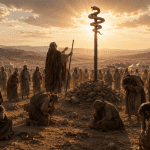
The first identifiable documentation of cancer can be traced to a crumbling papyrus scroll. The translated text relates teachings of the great Egyptian physician Imhotep, who lived around 2625 B.C., including recommended treatments for broken bones, abscesses and burns. Remarkable for its lack of attribution to magic or superstitions, this scroll records forty-eight medical cases each with specific details regarding the diagnosis, treatment, and prognosis. In case number forty-five, Imhotep describes a “bulging mass in the breast” that is “cool, there being no fever at all therein…they have no granulations, contain no fluid, give rise to no liquid discharge.” In today’s vernacular: breast cancer. For forty-seven cases he suggests treatment; for this one he simply states “there is none.”
With this ominous beginning, Dr. Mukherjee sets himself a high and lofty goal: to provide a readable and accessible history of cancer. He dubs this history a “biography,” highlighting how cancer often seems to take on a personality of its own. Throughout the 400+ page narrative I was impressed with his storytelling ability; this comprehensive tale covers thousands of years, tracks hundreds of scientific discoveries and advances, and describes dozens of complex biological processes, without ever losing focus on the human face of those suffering from the disease.
The basic biology of cancer is explained step-by-step, as the scientists, physicians, and researchers throughout history discovered new aspects of the disease. This “line upon line” approach to our understanding of cancer dovetails with the explanations of the various treatments that were developed in conjunction with the scientific discoveries. Without condescending to the reader, Dr. Mukherjee provides a window into the minds of those who have studied and fought cancer over generations.
There is always a risk of losing sight of the individuals suffering with a disease when the disease itself is the framework of the story, but Dr. Mukherjee carefully balances the technical details with personal stories. As with any biography, there is a large cast of supporting characters. Socialite and activist Mary Laskar, instrumental in the creation of the American Cancer Society, increased both public awareness and political will with her tireless organizing and lobbying. Einar Gustafson, dubbed “Jimmy” as a more generically American name, served as the poster child of the first national cancer research fundraiser, and makes a humble, but triumphant, reappearance toward the end of the book. Dr. Barry Marshall voluntarily swallowed a concoction containing a 4-day culture of Helicobacter pylori to prove that the bacteria caused gastric inflammation, the chronic form of which can lead to stomach cancer. Dr. Janet Rowley used chromosome staining to identify the translocation that occurs in every case of chronic myelogenous leukemia, indicating that cancer is “organized chromosomal chaos: specific and identical mutations existed in particular forms of cancer.” Dozens of research scientists and clinicians and patients appear in the book as their lives intersect with cancer.
At 571 pages, this is not a light, quick read (though the last 150 pages or so are extensive index, bibliography, and notes sections). However, you’ll close the book grateful for modern medicine and with a better idea of how far there still is to go in our understanding of cancer and the drive for a cure.
“The basic moral imperative”
The Healing of America: A Global Quest for Better, Cheaper, and Fairer Health Care
By T.R. Reid

The Healing of America is one of the most clear, accessible and succinct analyses of foreign health care systems I have read. The author visits and personally experiences health care in France, Germany, Japan (which all use variations of the Bismarck Model), the United Kingdom (the Beveridge Model), Canada (the National Health Insurance Model), and India (the Out-of-Pocket Model). He also looks at two countries who only fairly recently adopted universal health care (Taiwan and Switzerland) to show how it was done. I was amazed at the variety – like many Americans I had foolishly assumed that all foreign health care systems were very similar. Not so in the slightest. In addition to Mr. Reid’s own experiences, he has done his homework regarding the systems in place in each of these countries. He does a good job describing the pros and cons of each system, neither sugar-coating nor black-balling any system.
One of the more striking revelations to me was that, ironically, we in the U.S. of A. actually already use each of the models mentioned above on some segment of the population. For most working people under 65 we use a version of the Bismarck model. For Native Americans, military personnel and veterans we use the Beveridge Model. For those over 65, we use a National Health Insurance model. Finally, for the uninsured, we use an Out-of-Pocket Model.
I appreciate that Mr. Reid kept the emotional sob stories to a minimum, instead appealing to the reader’s intellect and sense of fairness. The one personal story he shares, besides his own, opens the book with a powerful punch. He introduces Nikki, a 32-year-old American woman diagnosed with lupus. Lupus is an autoimmune disease with a generally good prognosis for living a normal life span as long as certain standard treatments and medications, covered by health insurance, are utilized. Nikki, however, lost her health insurance when she became too ill to work and was denied coverage by every individual insurance plan to which she applied, finally being kicked off her state’s Medicaid plan due to budget cuts. Unable to afford the cost of the doctor visits and medications out of pocket, she didn’t continue her regimen and died shortly thereafter. In a direct appeal to the “American exceptionalism” he details later in the book, Mr. Reid states, “If Nikki White had been a resident of any other rich country, she would be alive today.”
Ouch.
A chapter on preventive medicine points out that, as opposed to countries with universal health care and especially with a single payer system, there are few incentives for health insurance companies in the United States to focus on the preventive side of care.
Most people are simply not on their plans long enough for any preventive measures to make a difference, since the average length of time an individual stays with a certain coverage is only about six years. As for-profit entities answerable to shareholders, U.S. health insurance companies have plenty of incentive to deny claims and to reject applicants with preexisting conditions: it increases their bottom line. Under the current system, preventive medicine will not be a high priority, despite the long-term benefits to individuals.
While The Healing of America was written before the new health care bill was signed into law, it is still a must-read for anyone who has any stake in the American health care system or wants to better understand the pros and cons of other countries’ health care models.
**************************
On My Bedside Table…
Just finished: Alcatraz versus the Scrivener’s Bones by Brandon Sanderson
Still slowly slogging through: American Grace: How Religion Divides and Unites Us by Robert D. Putnam and David E. Campbell
Next up: A Thomas Jefferson Education by Oliver Van DeMille
**************************
More on modern medicine next time! Come find me on goodreads.com or email suggestions, comments, and feedback to egeddesbooks (at) gmail (dot) com.