



Funny thing about life, it’s often easier to know what should have been done once it becomes history. My selections this month scream that very message.
The Secret River, Kate Grenville
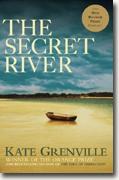 What did it take to create the country we know today as Australia? Most people with a decent background in world history are likely aware that Australia was founded as a British penal colony, where hardened criminals, as well as destitute Jean Valjean-types, were sent away for the remainder of their natural lives. Those that survived the journey from Britain to Australia, sometimes found what they were originally sold on as “better than being hung,” was far worse. With the heat, the desert, the snakes, and all manner of other difficulties, the harsh Australian landscape provided a bar-free prison for the convicts sent to populate its shores, giving only the sense of freedom but providing none of its accoutrements.
Surprisingly, however, more than a few men were able to earn their freedom and create lives for themselves quite apart from the rough scrabble streets of filth and poverty left behind in the Old World. Within only a couple of years, with hard work and enterprise, a man could be free to become a land owner with servants, a house, and property they never would have known the likes of in London.
Author Kate Grenville takes readers on a compelling journey, following just such a man. Having a distant grandfather who himself came to the continent as a convict, Grenville sought to recreate both the Dickensian streets of Cheapside London, from which a family could go from merchant class to street class with one swift, painful turn of fate, and the brutal outback of Captain James Cook’s New South Wales.
The Secret River describes in detail the life of young William Thornhill, who, despite a wretched family life and gnawing poverty, has a personality and entrepreneurial spirit that brings him up in the world by way of an apprenticeship to a boatsman on the River Thames. Unfortunately, just as things are progressing smoothly for Thornhill, he is again thrust out onto the streets to beg and scrape out a living, but this time with a wife and infant son in tow.
Deflated and bereft of his own boat, the husband and father seeks work where he can find it, and skims whatever product he can get away with to supplement his meager income. With his wife on the verge of turning to the streets for additional money, Thornhill gambles on a prize that isn’t his to win and loses. Big.
At the point of his conviction before a British magistrate, Thornhill’s wife, Sal, reaches out to a former customer of his, a well-connected, amiable gentleman, who is able to redeem his old friend’s neck from the hangman’s noose. Thus, instead of death at the end of a rope in London, Thornhill is shipped to Sydney under the charge of Sal.
From the point of Will and Sal’s arrival in Sydney harbor to the point of their trying to create a semblance of a life in such a ruthless, untamed territory, Grenville explores what it was for these ill-educated, ill-prepared, parents with vastly differing dreams to raise a family in a hostile foreign land. Her creation of a marriage dynamic between the primary characters that is full of love and mutual need, yet stretched with tension at times, is admirably executed.
The Secret River is well constructed and a deeply personal exploration of Australian’s early years. Grenville’s descriptions of the area and the time period are vivid. The squalid streets of Cheapside London and the unforgiving outback of New South Wales are recreated with careful attention to detail, and there is much to be learned between its covers by way of history. I appreciated Grenville’s ability to tell Thornhill’s story with sympathy and a minimum of “Monday morning quarterbacking.” Without being condemning, she allows the characters’ actions and consequences to speak for themselves, giving significant insight into the thought processes and the conventions of the average early nineteenth century settler.
Not to be excluded from this narrative of colonial life, is the treatment of Australia’s aboriginal population by both the settlers and the government. As was often the case during the expansion of the European powers, there were good players and bad players in native affairs, but very few in between.
In Thornhill’s attempt to raise his standing in this new world by becoming a land owner, he finds it necessary to engage in tedious and unwelcome negotiation with the area’s Aborigines. Unfortunately, nothing in his previous life prepared him for this arduous and intense process. In pursing a course of gentrification, Thornhill seems to have only two choices of action: forceful seizure or uneasy coexistence. He attempts both with varying levels of success and finds retaining both his self-respect and the coveted farm land is more difficult a task than Thornhill had ever have imagined.
Readers will notice that the dialogue in The Secret River is subtle, with more time devoted to the dissection of Will and Sal’s lives than their physical interactions. The third person presentation of their story is written so that all dialogue is integrated in the narrative, giving it the feeling of an abridged journal.
I’d give this one a PG-13 rating for scattered language, brief moments of violence, and some suggestive occasions between husband and wife.
Discussion Guide (link)
P.S. Grenville has also written Searching for the Secret River, which details her research and process for writing The Secret River.
The Night Journal, Elizabeth Crook
Contemporary events differ from history in that we do not know the results they will produce. Looking back, we can assess the significance of past occurrences and trace the consequences they have brought in their train. But while history runs its course, it is not history to us. It leads us into an unknown land, and but rarely can we get a glimpse of what lies ahead. (1) — F.A. Hayek
So begins the introduction to The Read to Serfdom. While reading this vital and important political text the other day, I was struck by how well those opening lines apply to the overall message of Elizabeth Crook’s historical novel The Night Journal. Though not the most consistent writing I’ve encountered in recent days, Crook creates a story that gives one pause to consider how our actions today can affect the generations yet to come.
Hannah Troy came west from Chicago in 1891 to make a life for herself in the New Mexico territory. She had gained employment in one of the large resorts outside of Santa Fe, where she would receive room, board, and a small salary for her work as a “Harvey Girl.” From the moment Hannah stepped aboard the train to Albuquerque, she determined to record her experiences. Decades after Hannah’s life ended at the hands of Tuberculosis in 1900, her life’s choices still haunt the women who came after her.
In an attempt to both memorialize and romanticize the parents she only vaguely remembers, Hannah’s daughter, Claudia “Bassie” Bass became a PhD historian, publishing and extensively footnoting her mother’s journals. Bassie’s scholarship earns her great notoriety, but her obsession with the past alienates Meg, the granddaughter she rescued from her own neglectful and self-destructive daughter.
Attempting to protect her precious memories from a developer’s backhoe, Bassie manipulates Meg into accompanying her from Austin to her birthplace in Las Vegas, New Mexico. The process of traveling to the place of her family’s beginnings opens a portal for Meg to connect with her infamous great-grandparents.
While there, Meg confronts many of her own issues and comes to understand so many more of Bassie’s. For years Meg has spurned Hannah’s journals, in turn rejecting all things of import to Bassie. But being on premises which have reached mythical proportions in her grandmother’s life, Meg is finally drawn towards her great-grandmother.
However, the record Bassie so lovingly compiled of Hannah’s short life is incomplete and full of inconsistencies. It is not until the earth outside of the Bass homestead is disturbed for the first time in almost a century is all truth revealed; and Meg is ultimately able to reconcile with the driven, imposing, obsessive woman who raised her.
Crook’s Night Journal is an interesting read from a both a general and family history perspective. She delves deeply into the political dealings of an expansionist corporate America and into a surprising bit of LDS history as well. The latter came as a complete surprise for me, as I was not aware of this particular plot twist before reading Crook’s work, but the perspective she gives on one of the darkest periods in our faith’s history is one that is sure to impress.
The author deftly weaves the story of Hannah and Elliot, giving a strong sense of what it must have been to be both a woman and a settler on this particular American frontier. In fact, it is only because of the elder Bass’ story that I can recommend Night Journal, as I was markedly less inspired by Crook’s “current day” coverage of Bassie and Meg. Their characters and story line seemed a bit stereotypical and lifeless, whereas, Hannah’s spirit simply vibrates on the page. The retelling of her trip to New Mexico and the risk she undertook by simply stepping aboard a train in 1891 was simply fascinating, as was all that follows. I hope you will give her story an opportunity to be heard.
PG-13 for a small scattering of language.
Next month: Exploring Judaica: The Jew Store and My Name is Asher Lev
End Note:
Hayek, F.A. The Road to Serfdom. (The university of Chicago Press: Chicago, 1994) 3.
I’d love to know what books you’re reading and whether or not you’ve enjoyed my recommendations. Please, add me to your friends’ list at GoodReads.com or contact me via email at [email protected]