







Editor’s note: This is the fifth installment of a series for potential senior missionaries. Read part 4 here.
My husband and I are in the final months of our 18-month call to the Chile Santiago West Mission. We were in the Missionary Training Center in Provo at the same time as our youngest son, Rob, who will complete his service in the Germany Berlin Mission in October. It’s been a memorable experience, one that we’ve been glad to be able to share with other “veterans” in the “Army of Helaman.”
One of the great blessings of modern technology is that we’ve been privileged to hear occasionally from other friends – senior missionary couples – serving in various parts of the world. Some, like us, are in places and doing assignments they requested, while others were open to accepting a call wherever and in whatever way they were needed.
Some have planned to serve from the time they married; some felt the need to offer their time and service in gratitude for the blessings they’ve received; others desired to set an example for their posterity.
For all, it comes down to obedience to Church leaders who have asked senior couples to serve and promised blessings to them and their families as they obey.
Some senior couples work in the mission office every day, taking care of the myriad physical, financial, travel, living space, and organizational tasks required to keep a mission running. Others have specific assignments in such areas as family history, visitors’ centers, employment, humanitarian service, Church Education System, or music. Many are serving in leadership positions in developing areas of the Church. Still others spend much of their time visiting less-active members and inviting them back.
Their challenges have ranged from surviving typhoons and military takeovers of the government to more mundane things such as struggling with the local language, fighting boredom, and living in much smaller spaces and far less comfortable circumstances than they’ve been accustomed to.
Along with hearing about their challenges, we’ve been privileged to share their triumphs in overcoming obstacles in order to serve the Lord and bring souls to Christ. I asked them to answer some specific questions. I believe their responses will give prospective missionary couples a clearer picture of what it’s like to serve together and help them know what to expect.
Challenges
Some of the challenges seem common to almost all senior couples, while others are unique to the area where they’re assigned, or even to their own personalities. First off, anyone who says they weren’t homesick for the first few months is fibbing. “Expect it” is the advice of Michael and Roberta Vaclaw, serving in the California San Francisco Mission.
Grandchildren are the biggest void for all the couples, but “I even miss my dog!” said Elder Vaclaw. Another said candidly, “I wouldn’t mind an occasional afternoon in LaVell Edwards Stadium.” (Elder Sowby misses the automatic dishwasher – after the grandkids, of course.)
Second on couples’ lists of challenges was “having less-defined roles” and “not knowing what was expected of us.” In many cases, couples may be assigned an area or ward but not given any specific assignment, only told to “find your niche.” For people who need a little more direction and don’t know the area or people or language, that can be a huge challenge. “It took us several months to get to the point of feeling useful,” said the Vaclaws. Their lament is echoed by many.
After our own first couple of months of feeling bored and frustrated with not much to do in the daytime (because people are usually only available at night, after work, here in Chile), we started visiting stake presidents on our own and setting up music courses. We shared our frustration with our mission president, who has since involved us in teaching classes during zone conferences and interviews, doing apartment inspections, and helping with other mission-operating tasks during daytime hours.
We started a tradition of serving a big dinner to our 16 local missionaries at our apartment once every transfer period and on special occasions. We bought a DVD player and started inviting members and missionaries with investigators for family home evening with Church videos. We got acquainted with other senior couples serving in the area offices in Santiago and started doing a few things socially with them. It all made a positive difference in how we felt about our service and contribution. But we had to discover these things on our own and make more things happen.
Grant and Gayle Drollinger, proselyting missionaries in the California San Francisco Mission, noted that the missionary handbook is 82 pages long, with only a page and a half for couples. “Our greatest fulfillment has come from seeing the needs in the wards and branches, or with the young missionaries, and finding ways to fill them,” they said.
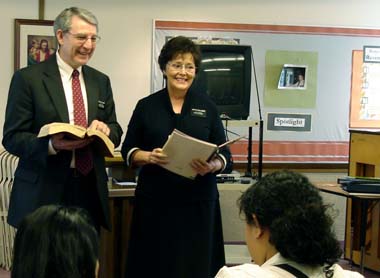
They say they love their “uncluttered lives” and enjoy inviting two missionaries to have breakfast and scripture study with them every Friday morning. They appreciate having time to read, and they’ve set a goal to read each of the Standard Works during their mission.
For office couples, the situation is often the opposite, with too much to do and too little time for such things as reading and exercise. “It has been physically harder than we were led to believe,” said Judy Jackman, serving with her husband, Vic, in the San Francisco Mission office. “I am still waiting to see that 35-40-hour week. We miss the morning study time because we’re in the office, and at night, we have other catch-up things to do or just fall into bed.”

Robert and DeeAnn Buchanan, in the mission office in Quezon City, Philippines, find the 10-12-hour work days challenging and miss having time or a place to exercise. Some locales where seniors serve are either unsafe or just plain unappealing for outdoor exercise of any kind. Weight gain is not unusual for seniors, who are not putting in the mileage the younger missionaries are on foot.
Adjusting
There are a lot of adjustments to make – physical, emotional, and lifestyle – and they can prove difficult. If you don’t speak or understand the local language immediately, that can lead to feeling isolated and frustrated. Even in countries where English is the official language, various dialects can be very difficult to understand. Couples cope by trying to learn a handful of new vocabulary words each day; studying their language books; making an effort to speak with the locals; and employing the language skills of young missionaries as interpreters.
“Everything we do is guided by the Spirit and mistakes,” said John Robbins, serving with his wife, Brenda, in the office of the Fiji Suva Mission. That’s especially apt when it comes to communication.
The climate can be a difficult adjustment for some, uncomfortably hot in some places and uncomfortably cold in others. Several sisters said they’ve given up on their hair in humid climates and learned to live with less makeup. Those who live where homes are unheated have learned to wear several layers inside the house during cold weather.
Culture shock is common, especially for couples going from the U.S. to less-developed countries. Victor and Adele Austin, who served Spanish-speaking missions before they were married and now serve as area family history directors for Chile, decided before they came that they would not speak disparagingly nor criticize local people or customs, but instead “just be delighted by things we found that were different.” That positive attitude has made it easier for them to adjust, although the transition has not been without its difficulties.
Time Together
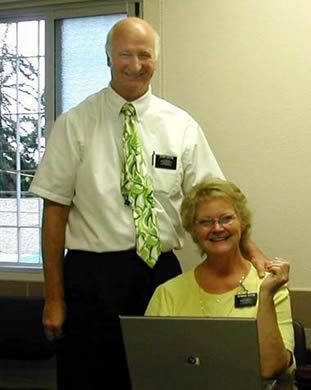
Missionary couples never have to wonder who their companion will be, yet it can be challenging being together so much of the time (although seniors aren’t required to follow the same strict rules as younger missionaries and don’t have to be together 24/7).