









The worst lie I ever told was to the person I love most.
Two weeks. I’ll just be gone for two weeks. That’s what I said to my wife, standing on the train station platform in 2009.
The next time I saw her was two years later.
Escaping North Korea was the hardest decision I ever had to make.
I lived there for over 20 years, and for much of that time, I believed my life was normal.
I grew up in a big city by the river. When the wind blew, I could smell the water on the breeze, and on holidays, I played along the banks with my friends.
The river ran along the border between North Korea and China. I could see across the water into a different world-one where cars lined the streets, and buildings stretched high into the sky. There were people too, living on the other side.
This view was my first glimpse at how life could be different.
But I didn’t realize that life should be different, until the day they took my father away.
My father was a great businessman. He cared for us, and provided for our family so that we never faced too much hardship. He did this despite being forcibly discharged from the military when his Minister of Defense was executed by Kim Il Sung.
Those who are forced to leave the military leave with the lifelong label of “traitor” attached to their name. It’s a permanent mark on your status in society banning you from any decent jobs or opportunities. Still, my father was a clever man and was able to start his own business.
Working within the private market system that many North Korean people rely on to survive, my father found great success. Until one day, the police came to investigate him.
Without reason or warning, he was arrested and imprisoned. They tortured him for a year at the detention center.
When he was released, my father weighed only 66 pounds. He had faced unspeakable cruelty, and it had reached the point where he was so weak, the police sent him home.
They had sent him home to die.
Even after surviving the unimaginable, my father was defiant.
He wrote a letter – 20 pages of handwritten complaints directed towards the Central Party. The letter detailed the human rights violations he had suffered, and the injustice and inhumanity he had faced at the hands of the government. My family was terrified of the consequences my father could face.
But we couldn’t stop him from speaking out.
My father was a stubborn man, and he fought for his voice to be heard.
We didn’t know what would happen once he sent his letter.
We lived in fear of retaliation.
Then, on a warm spring day, a car arrived at our home-it was a Mercedes-Benz, license plate number 216.
February 16th was Kim Jong Il’s birthday, and cars with this license plate were only given to his closest aides. For someone with this kind of central power to appear at our home meant that my father’s letter had made an impact.
My father spoke with the man for hours. They discussed his letter and all the injustices he had suffered. The man apologized and promised something like this wouldn’t happen again. This gave us a bit of hope for the future – for the possibility of change.
But the man left for Pyongyang.
And then, the police returned.
I never saw my father again.
For two years, my family and I lived in unknowing agony-receiving no news on how my father was doing in prison.
Eventually, we heard from my father’s friend, who was a police officer at the time, that my father had passed away in prison.
With no news from the government-no certificate, no ceremony-my father died, far away and alone. At the very least, we wanted to send him off properly, so we asked that same friend how we could get my father’s body. The friend went to find out for us, and three days later, he returned. But he couldn’t speak. For a long time, he stood outside, smoking, staring at nothing.
Finally, he told us – – -they would not return my father’s body.
We were in disbelief.
When we asked why, he said it was because my father had been sentenced to eight years in prison. He’d passed away after two.
He still had six more years to serve – as a dead body. As a corpse.
For the first time, I wondered whether this was the way normal people lived.
In 2009, I decided to escape from North Korea. Life had become near impossible for me after my father’s death, and I continued to face discrimination due to our family’s status in society. When Kim Jong-Un began his ascent into power, I realized that there was no hope for me then. Nothing was going to change, and so I had to.
By that point, I had been married to my wife for two years. Most of our relationship before marriage was through the phone, because we lived far apart, and traveling in North Korea is difficult.
So we called each other every night and talked for hours on the phone. I could tell my wife everything. But once I decided to escape, I couldn’t tell her anything.
I knew what the pain of not knowing felt like. But still, I had to lie to her.
I told her I was going on a business trip. I worked exporting minerals at the time, so l said I was going to the mines to collect some minerals. Deep in the mountains, there’s no phone signal or method of contact. I told her not to worry if I didn’t call.
Two weeks. I’ll just be gone for two weeks.
She still cried at the train station, thinking of those two weeks. I couldn’t cry with her, because if I did, then she would know the truth. So I boarded the train without a word, and watched it take me away from her. I didn’t know if I was going somewhere she would never be able to reach.
It was the most difficult thing I’ve ever done.
From the moment I escaped North Korea, it felt like I was being chased by a grim reaper. For three thousand miles, I was tense and terrified. There were multiple close-calls where I felt death breathing down my neck.
I was once hiding in a corn field near the Chinese border. Lying on my stomach, I watched soldiers patrol the area when suddenly, one of them turned to face me.
I froze in place.
He had a gun. He was walking towards me and it was too late to run away or find somewhere else to hide.
I had brought poison with me in case something like this had happened – I knew it would be better to kill myself rather than be captured. I was the son of a so-called traitor. If I was caught trying to escape, I would either be imprisoned for life or killed.
I would face the same fate as my father – my family would receive no news from the government about me. There would be no certificate, no ceremony. I would die here far away and all alone.
But as I prepared to take the poison, I thought of my wife. I thought about how she would never know what happened to me. How the uncertainty would hurt her the most.
In that moment of sheer terror, I heard the sound of water. The soldier stood right beside me. But he hadn’t seen me. He had only walked over to relieve himself.
For the next few minutes, I couldn’t move. The soldier had left, but my body held onto the terror of that moment. I remained hunched and hurried for the rest of the journey.
I eventually made it safely to South Korea.
I started working as soon as possible – 12-hour days to pay back the broker fee, and save up money for my wife’s escape. My schedule was just working and sleeping, working and sleeping.
I lived like that each day, thinking of her, dreaming of the life we could have once we were together again. Of course, it was hard, but for the first time in a long time, I had hope. I was in a world with breathing room, where my hard work could pay off.
And eventually, it did. I was able to find a broker who put me in contact with my wife. It had been ten months since I’d defected at that point – ten months of her not knowing whether I was dead or alive.
All that time I’d spent working, she had spent crying. Her husband, who said he’d be gone for two weeks, had disappeared, and every day was another day of not knowing.
She told me, later, that she used to hate seeing the sunrise. She lived like that for months, crying on bright days.
When she received the call from the broker, they set up a meeting to contact me. They couldn’t make the call in the city because the signal could be intercepted, so they hiked up to the top of a mountain.
For the first time in almost a year, we heard each other’s voices again.
At first, all we could do was cry-we couldn’t speak. But we didn’t have much time, and so I asked her, you’re coming, right?
She said she was.
On December 27th, 2011, my wife crossed the river to escape North Korea on the same route that I took.
As soon as she arrived in South Korea, I went to meet her. I was so excited. I couldn’t stop crying. When my wife came into the room, she was crying too – but do you know what’s the first thing she did when she saw me?
She punched me – crying, calling me a liar.
And I deserved it.
We stayed there, just holding each other for a while. Two weeks had turned into two years. We’d spent as much time apart as we had together.
But as we held onto each other, I knew that finally, we were free.
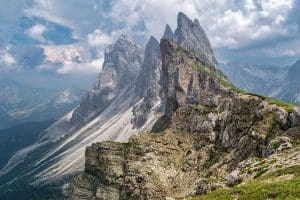
The mountains brought me back to her, and the river brought her back to me.
We live together in Utah now, with our two beautiful sons. We go fishing, camping, and hiking together, and I love playing outside with my sons.
Every time I see them, I realize I’m living in a different world – one where cars line the streets, and buildings stretch high into the sky. One where we can finally dream and decide our own future.
This is the life I’ve made for my children.
This is the life my father envisioned for me, and for all North Korean people, when he made his act of defiance.
For him, and for all the others who cannot be here today, I stand before you as a testament to the strength and hope of my people.
Thank you for listening and sharing our stories.
And thank you for choosing to care.
My father died fighting for his voice to be heard – and now, finally, he’ll be heard by the world.
Doohyun Kim and his wife Jiyeon Mayeng are converts to The Church of Jesus Christ of Latter-day Saints who found their faith in South Korea.
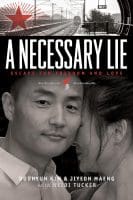
For more information on his book, A Necessary Lie: Escape for Freedom and Love, CLICK HERE.





Jean Cook RyggAugust 18, 2025
I read this book earlier this year. What an Eye Opener! How awful to be living a big lie - day after day, year after year in N. Korea! I'm very glad to learn that this couple made it to the USA and have found the Church of Jesus Christ of Latter-day Saints. As I read the book, I kept hoping that they had.
Ric GarciaAugust 17, 2025
In a world where fake news fill our daily life it is hard to know what is real what is not. As a member of the church of Jesus Christ of latter-day Saints and a convert I can see truth in this story because of my own personal experiences leaving my country of birth. It is not important if you believe it or not but what is important is to know that God will reward all righteousness from his children and give each and everyone what we have earned during our time on earth. Justice will prevail since Jesus has been appointed as our judge and Saviour.