










Editor’s Note: The following is part one in a four-part series on religious liberty.
The U.S. government specifically set aside Thanksgiving as a day for public acknowledgment and gratitude to God, with wholehearted official government acknowledgment of and expression of gratitude to God. Days of Thanksgiving to God had also been practiced in Pilgrim days and Colonial days, but origins within the U.S. government extend back to 1776, soon after our nation’s independence had been declared, when Washington and his troops stopped and held a Thanksgiving to God near Valley Forge.
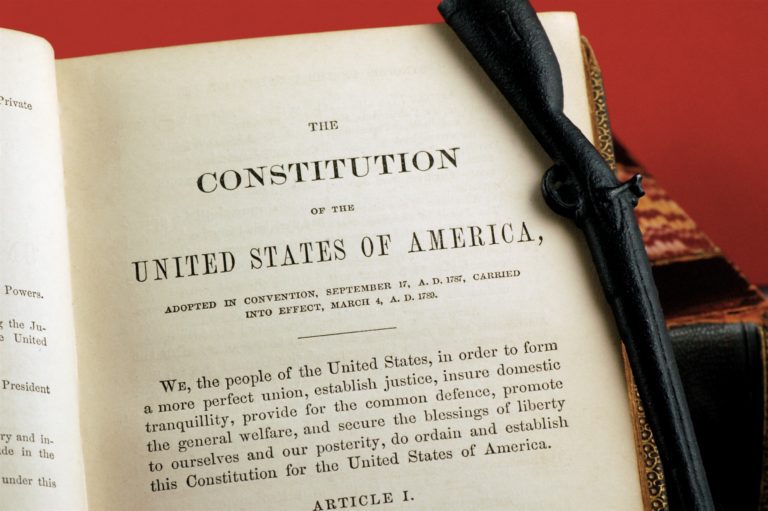
The Founding Fathers celebrated Thanksgiving as an official U.S. holiday under resolution of the first Congress. This same session of Congress drafted the Establishment Clause of the U.S. Constitution, and, significantly, passed the Thanksgiving to God resolution after drafting the clause. Therefore, according to standards of Jurisprudence relating to consistency of actions of a legislative body within the same session, the establishment clause cannot be interpreted as prohibiting Governmental acknowledgment of God.
Let us examine the background.
Elias Boudinot proposed the day of Thanksgiving to God. The following is from the annals of Congress Sept. 25, 1789:
Mr. Boudinot said, he could not think of letting the session pass over without offering an opportunity to all the citizens of the United States of joining, with one voice, in returning to Almighty God their sincere thanks for the many blessings he had poured down upon them.
Embracing the idea, Washington proclaimed, “It is the duty of all nations to acknowledge the Providence of Almighty God” and officially assigned Nov. 26 “to be devoted by the people of these states to the service of that great and glorious being.”
This was the first official proclamation of any U.S. President.
From time to time, the U.S. government celebrated other days of Thanksgiving. Abraham Lincoln made Thanksgiving an annual event, setting it apart as “a day of thanksgiving and praise to our beneficent Father who dwelleth in the heavens.”
These days, people may take for granted or may not be aware of the religious nature of Thanksgiving, but even if people were to outright intentionally refuse to celebrate it or even if we abolish the holiday altogether, my point would still stand. The same session of Congress that drafted the first amendment set apart a day for all U.S. Citizens to give Thanks to God. Therefore, the First Amendment’s framers did not believe it prohibited public acknowledgment of God.







mary jane fritzenMarch 16, 2015
thank you for that clear statement.