






A horrific kind of darkness settles in when the life you spent years—perhaps decades—building suddenly crumbles into ashes. When you are rejected by the person you loved most, the pain isn’t just emotional. It is existential. You can find yourself standing in the ruins of a covenant you expected to last forever, wondering how a person of your education, work ethic, and faithfulness could end up in such a desperate place.
You may be a single mom who dedicated herself to living the Proclamation on the Family but finds herself having to figure out how to support yourself after a decade or two out of the workplace. You may be a single father who is missing his wife as she posts pictures of herself on Instagram “living her best life” while he struggles to make support payments and rebuild a career that languished as his mind was focused on saving his marriage. Every story is a little different. But common themes I have discovered include emotional pain and financial difficulty.
I know the silence that comes with the dark despair of divorce. I have felt the weight of the perceived failure that follows many divorcees like a shadow. You feel as though you have been stripped of your status, your wealth and possessions, your family, your faith community, and your future, all in one swift, agonizing tsunami of suffering you felt powerless to stop.
For many of us, entering single life is not simply a relocation. It is a financial and emotional freefall. You might be the successful professional who suddenly experiences a rude awakening that he or she can’t qualify for a loan to buy a used car—or the single parent who is now counting pennies to see if there is enough gas to make it to the next custody exchange. The idea of starting over feels overwhelming. You may be a single mom or dad who realizes that you are living alone, at least part-time, for the first time in your life. During my own painful crucible of divorce, the adversary kept whispering to me, “If it can all be taken away so quickly, what’s the point in trying to climb that mountain? You will just lose it all again.” That thought kept me stuck in a poverty of spirit that left me financially broke and emotionally empty for about five years after my separation.
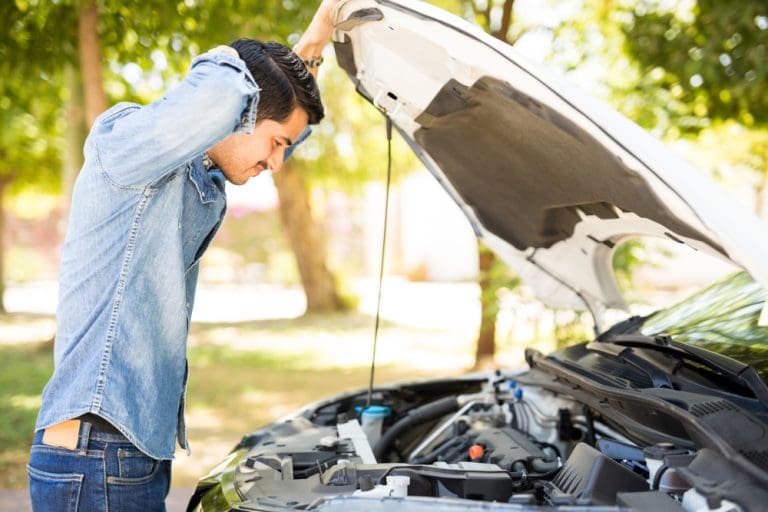
When I hear people tell their divorce stories, I often think of the night I spent on the cold floor of a trucker’s lounge in Snowville, Utah, on New Year’s Eve. Unable to sleep, I was watching my sons sleep because I didn’t feel I could spend sixty dollars for a motel room, or $500 to rent a car and pay for gas to get us where we needed to go. With only a few hundred dollars in my checking account, I lacked the $600 I would need to have my car repaired when auto mechanics would re-open for business on Tuesday, January 3, 2011—three days later. I lacked the money to put gas in my car even if I could somehow figure out how to get it fixed. I was essentially down to my last buck. My friends, that is an absolutely terrifying place to be.
If I only had $1,000 in my checking account, I could have taken care of myself and my kids in that moment. But my total earthly possessions at that time amounted to a broken-down car with over 150,000 miles on it and approximately $300 in my checking account. That was all I had to show for eight years of university education, including a year of post-doctoral work, and fifteen years’ experience as a lawyer where I was once a serious candidate for the Washington Court of Appeals in my thirties. I felt the crushing shame of a man who thought he had built a great life, only to come to a place where he was one mechanical failure away from total desperation. And then that unthinkable failure came to visit me and brought with it the deepest shame of my life.
The Giant Poverty Tax
While the emotional pain of divorce is personal, financial ruin often follows a structural path. According to the Federal Reserve, 37% of Americans cannot cover a $400 emergency with cash. When the emergency is over $1,000, half the population cannot cover the cost from personal savings. This lack of a buffer creates an “Invisible Tax.” It is the cost of paying higher interest, late fees, and delaying $100 maintenance until it becomes a $3,000 catastrophe. You cannot defeat a giant you refuse to name. But naming it is the first step to defeating it.
I don’t doubt that many of you reading this article are, or have been, in the trucker’s lounge of life, feeling like the struggle just to meet your basic needs is unbearably difficult. If this describes your experience, I feel your pain. I have lived it. And you are constantly in my thoughts and prayers. Poverty is a curse that not only may follow your divorce but threatens to keep you emotionally stuck and even prevent you from starting over, remarrying, and building a new life for yourself and your children. I have felt that desperate longing for a new life, a new companion to love and a blessed life to share with her—and I wondered if it would ever happen for me. A beautiful life like I dreamed of always seemed just a little bit out of reach which multiplied my feeling of loss and emptiness.
I have learned through hard experience that it is very expensive to be poor. A few examples may include the following
- The Dental Trap: Delaying a $150 filling because you don’t have the cash, may turn into a $1,500 root canal or an extraction six months later.
- The “Cheap Shoe” Fallacy: Buying $20 shoes that wear out in three months and cause back pain/medical bills, instead of $100 boots that last five years and give you comfort and better health at work. (This is a classic example of how the “Poverty Tax” keeps people from investing in quality.)
- The Delay to Pay Trap: Failing to pay your car insurance premium for lack of money can result in a significant traffic fine, suspension of your driver’s license and, paradoxically, much higher insurance premiums and state monitoring.
We could go on listing hundreds of examples, but these are enough to illustrate the principle. Juggling bills, paying late, and cutting or delaying essential expenses because you lack the money to afford your life is emotionally and spiritually oppressive and exhausting.
If you are reading this article, there is a good chance you already know the problems—and wish you could see a more obvious answer. The following principles will help you turn things around.
Budget: Begin by getting organized. You may protest that keeping track of expenses won’t manufacture more money and that you simply don’t have enough to go around. But being aware of what debts you owe and where you are spending money can be very revealing. Write a budget that realistically includes all your necessary or legally required expenses. Placing all those obligations on a spreadsheet, where you can see it all in one place, will help you start to feel more in control, even if you don’t have the income to cover your expenses. Once you understand the extent of the problem, you have a target to aim for and you have some idea of what it might take to get there. To quote a familiar cliché, “The devil you know is better than the devil you don’t.” The boogeyman you are afraid to look at is scarier than the one you are guessing at in your moments of great anxiety.
Pay Attention to Small Expenses: Cancel every automated monthly charge that isn’t a life necessity (streaming services, apps, gym memberships not being used). You can call this “finding the holes in the bucket.” This isn’t necessarily forever. But until you are back on your feet, it is important to find savings wherever you can. Knowledge is power, especially in the area of personal finance. Knowing how little you can get by on will enable you to make better decisions, even if your expenses exceed your income for the present.
The “Found Money” Rule: Any tax refund, rebate, or “unexpected” $20 bill goes 100% toward the fund—zero “celebration” spending until the $1,000 goal is met. Eventually you want to have 3-6 months of basic expenses saved in a relatively liquid form in case you are faced with an unexpected employment crisis. But first focus on putting every dollar you can into a $1000 emergency fund. When you achieve that milestone, be proud of yourself.
Restructure: Do you have a car payment? Could you make a deal to turn the car back over to the bank or the dealership for something more modest that would reduce or eliminate your payment? If credit card payments are causing you to seriously run short every month, credit card companies will sometimes settle your debt for a fraction of the debt if you agree to close the account. It will hurt your credit rating a little, but not as much as numerous credit marks based on missed or late payments. It sounds counter-intuitive, but if you are already living beyond your means, now is not the time to rack up more debt or interest obligations.
If you are experienced in financial matters, you may be able to negotiate these agreements yourself. If not, a credit counseling service might help you to get rid of a lot of consumer debt or put you on a restructured payment plan to free up more of your disposable income for savings. Student loans often allow forbearances or income-sensitive payment if you are unemployed or underemployed.
Whatever money you can free up by restructuring expenses should be used for savings, not to allow more spending in other areas. Once you have accumulated $1000 or more in savings, you will suddenly start to see lots of fun things you could spend that money on. You might tell yourself “I saved it once. I can do it again.” Spending savings in other areas is “eating your seed corn.”
Don’t spend your emergency fund except for genuine emergencies. Christmas is not an emergency. It comes every year and should be planned for. If you must, reduce Christmas to a collection of dollar store toys rather than risking the loss of your ability to get to work because your transmission fails and you don’t have the money to fix it. I understand this is painful and you don’t want your kids to feel the pain of your divorce more than they already are. Divorce guilt is a powerful emotional burden. But teach your kids responsibility by doing what you must to meet their basic needs before you indulge their wants.
Generic Brand Sovereignty: Shifting to generic labels for all household staples. You noted that this alone can save $40–$60 a month without changing your lifestyle.
The Lunch Lockdown: Bringing a thermos and a sandwich every day. For a professional, this “leak” often accounts for $300 a month that could be converted to “oxygen” instead.
Get a Bigger Shovel: One of the most important components of my financial recovery was my prior eight years of post-secondary education and an active license to practice law. Even if no one was anxious to hire me at first, I could hang out a shingle and ask for $300 an hour for my time. That didn’t guarantee me clients, and they came slowly at first. For a while I took quasi-legal work for $300 a day. Having a marketable skill or a professional license is a big advantage when you are trying to climb out of a big financial hole.
Could it be time for you to go back to school? If you are 29 years old with only 1 child, going back to school to become a medical doctor, a lawyer, or a CPA might be the answer. If you are 50, with fewer years to use the education after you finish, a lengthy and expensive educational program may not be wise. But there are plenty of great opportunities for people who are willing to work and eager to learn.
For example, it takes approximately a year to become a licensed practical nurse, and they have starting salaries of approximately $53,000 to $55,000 per year. If you decide to become a registered nurse, you can often do the training while you are working and being paid in your field, and your salary as a registered nurse may be in the 6-figure range. America currently has a nursing shortage, and you are likely to be in high demand.
A Commercial Driver’s License for a trucker generally provides a starting salary of around $50,000 per year and it goes up from there. Many experienced long-haul drivers make close to 6-figure salaries. The licensing course is between a month and 6 weeks long—well worth the time and investment.
Depending on the program, beginner life insurance salespeople average $64,000 to $74,000 per year and the training is only a few weeks long. You will be required to work hard, learn your product, and develop selling skills, which not everyone can do. But if you have the talent and the work ethic, you can make great money without a college degree as a licensed insurance agent. My 18 year-old stepson managed to pass the licensing exam after a few weeks of study in the evenings. If he can do it, I’m sure you can too.
I could go on and on with examples of careers that may be available even if you are middle-aged and have not been in the workforce in 20 or 30 years. Set aside some time every day to make a few phone calls to people in industries where you might like to work and ask people about the process of getting qualified and involved. I have known many divorcees who were exploring career fields through informational interviews who got job offers just by showing the initiative to make phone calls.
Think about careers you think you might like and start asking questions. Get enthusiastic about the possibilities. This is a time when you have the opportunity to build a new life! Embrace it for the challenge to your abilities it is and start to build something that will provide for you better than you have experienced in the past.
Use AI: There are many opinions out there about the use of artificial intelligence. Just like television, the internet, and social media before it, AI can be a waste of time or a tremendous tool for your success. You can get a free account on one of the many AI platforms. Talk to your AI agent to identify ways to save money, refine your budget, increase your income, or hone in on career opportunities. AI is a powerful tool with a wealth of information and tools to sift through it to get the results you want. AI is not without problems, and it is not infallible. But it is a good thought partner and source of ideas—which you should think critically about. Get on YouTube and learn how to use it effectively, and it can multiply your efforts in all these areas.
Trust in the Promise of Restoration:
If you are currently stewing in the “trucker’s lounge” of life, please hear me: this moment is not how things end for you. Your life can change as quickly and dramatically for the better as it did for the worse.
Consider Joseph. In a single day, he was stripped of his “coat of many colours” (Genesis 37:23) and thrown into a pit. His brothers faked his death and sold him as a slave. Joseph went from a favored son and anointed heir to a slave. He was later falsely accused and went to prison for a crime he didn’t commit. I can imagine the deep and hollow ache in the pit of his stomach. How utterly alone he must have felt. Yet the pit was not his destination—it was the path to his destiny.
Through faithfulness, Pharaoh eventually told him, “Thou shalt be over my house . . . only in the throne will I be greater than thou” (Genesis 41:40). He was elevated to a position of power over the world’s largest empire. And with that power he did great things—saving a nation from hunger and even rescuing his own family from starvation and reclaiming his eternal destiny.
Consider Job, who lost everything—his wealth, his health, and his children—in a series of swift calamities. Yet the biblical record shows that “the LORD turned the captivity of Job” and “the LORD gave Job twice as much as he had before” (Job 42:10).
Joseph was a slave and in prison approximately 13 years before he was elevated to power in a single day. In the 14 years since that night I spent on the floor of the trucker’s lounge in Snowville, I have seen this restoration in my own life. My career completely turned around, and I have the best law practice situation of almost anyone I know. A little over a week before I submitted this article, I woke up at a 5-star resort in Cancun, next to the woman of my dreams—as we celebrated our 8th anniversary. I thought about how far the Lord has taken me from spending that cold night on the floor of the trucker’s lounge in the middle of nowhere. Having lost everything, I take nothing for granted. The blessings that have been restored to me fill me with gratitude every single day. The Lord kept His promise, “I will restore to you the years that the locust hath eaten” (Joel 2:25). In the final talk of his mortal ministry, Come What May, and Love It, another Joseph, Elder Joseph B. Wirthlin said:
“The Lord compensates the faithful for every loss. That which is taken away from those who love the Lord will be added unto them in His own way. While it may not come at the time we desire, the faithful will know that every tear today will eventually be returned a hundredfold with tears of rejoicing and gratitude.”
Faith in that promise can carry you through the crucible of divorce. Figuring out how to support yourself and build that first $1,000 of financial breathing room is a critical part of your new life. It is within your reach. Even if you feel like you are barely surviving; the Lord is preparing you to thrive.
Resource:
Intentional Courtship can help in this journey.
About the Author
Jeff Teichert, and his wife Cathy Butler Teichert, are the founders of “Love in Later Years,” which ministers to Latter-day Saint single adults seeking peace, healing, and more joyful relationships. They are co-authors of the Amazon bestseller Intentional Courtship: A Mid-Singles Guide to Peace, Progress and Pairing Up in the Church of Jesus Christ of Latter-day Saints. Jeff and Cathy each spent nearly a decade in the mid-singles community and they use that experience to provide counsel and hope to mid-singles and later married couples through written articles, podcasts, and videos. Jeff and Cathy are both Advanced Certified Life Coaches and have university degrees in Family & Human Development. They are the parents of a blended family that includes four handsome sons, one lovely daughter-in-law, and two sweet little granddaughters.
Purchase Jeff & Cathy’s book Intentional Courtship:
https://amzn.to/3GXW5h1
Connect with Jeff & Cathy:
Website: http://www.loveinlateryears.com/
Podcast: https://anchor.fm/loveinlateryears
YouTube: https://www.youtube.com/c/loveinlateryears
Facebook: https://www.facebook.com/groups/LoveInLaterYears
Instagram: http://instagram.com/loveinlateryears/
Email: [email protected]