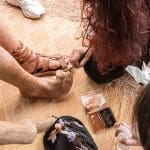






As I’ve read and learned about China over the past few weeks, one of the biggest surprises has been how much diversity there is in a nation I’d ignorantly thought of as monolithic. Of course, with more than 1.3 billion people, how could there not be an incredible variety of ethnicities, personalities, religions, and lifestyles? I enjoyed the books below for their penetrating and thorough depictions of ordinary Chinese people in so many walks of life. The authors celebrate the unique cultural and historical influences that make the Chinese who they are while reminding us of all we have in common.
“China is the kind of country where you constantly discover something new”
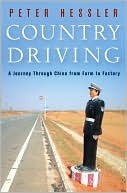 Country Driving: A Journey through China from Farm to Factory
By Peter Hessler
Mr. Hessler’s book Country Driving is divided into three parts. The first chronicles his attempts to travel the length of the Great Wall of China. The second draws an intimate portrait of the changes that take place in a small village north of Beijing over several years. The third is an engrossing look at life in southeast China’s industrial society. Each section provides a brief glimpse of a slice of life in this vast country and the incredible rate of change and (sometimes dubious) progress.
Country Driving begins with Mr. Hessler setting off from Beijing in a rented car with Sinomaps of questionable accuracy in hand in an attempt to travel the length of the Great Wall of China. Along the way he encounters shrinking village after shrinking village as all the youth have left for the big cities. Many of the remaining inhabitants of these dying towns are delightful characters, intrigued by this American who speaks their language and is so interested to learn about their Changcheng or “long wall.” Mr. Hessler incorporates lessons on ancient Chinese history into his narrative, describing the wall-building periods of the Qin and Ming dynasties, debunking myths about the Great Wall (no, it can’t be seen from the moon), and recounting the astounding accomplishments of Genghis Khan and the Mongols.
Driving is a relatively new skill for many Chinese; as recently as 2001 there were less than ten million passenger vehicles in a country with a population of more than a billion. Consequently, Mr. Hessler runs across some humorous situations. Farmers deliberately put their freshly harvested grain crops on the dirt roads so passing cars will do the hard work of threshing for them. Fiberglass statues of uniformed police officers decorate intersections to remind drivers to follow traffic laws and speed limits, while not a single live traffic cop is anywhere to be seen. The driving test itself is quite the study in Chinese culture:
352. If another motorist stops you to ask directions, you should:
a) not tell him.
b) reply patiently and accurately.
c) tell him the wrong way.
Mr. Hessler’s second section, titled “The Village,” is the most personal part of the book. Mr. Hessler rents a home in the small village of Sancha to use as a writer’s retreat and befriends the neighboring Wei family. He relates how the Chinese penchant for road building upgrades Sancha’s prospects from yet another vanishing town losing its younger generations, to a weekend destination for vacationers from Beijing as infrastructure is updated and traveling to Sancha becomes less difficult. Mr. Hessler grows to care deeply for the family and describes the effects their changing fortunes have on them, especially their young son, Wei Jia.
Finally, Mr. Hessler travels to the province of Zhejiang in the southeast and experiences “China’s version of the Industrial Revolution.” He visits various towns in the area that each specialize in their own simple, low-margin product: playing cards, drinking straws, socks, table tennis paddles. In these towns he found a huge migrant population, growing by an estimated ten million every year and willing to “eat bitterness.” The workers he spoke with and came to know worked hard for long hours doing difficult, often dangerous manufacturing jobs, but also harbored dreams of self-sufficiency and financial independence.
Country Driving is a moving depiction of a culture with strong ties to its ancient past trying to navigate its foray into the future and manage the confusion that transition brings to the present. Mr. Hessler’s honest, humorous, and human portrayal of the many people with whom he crossed paths gently reminds us that others are not as “Other” as we sometimes think.
“Graceful as a pheasant, powerful as a dragon”
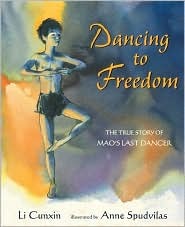 Dancing to Freedom: The True Story of Mao’s Last Dancer
By Li Cunxin
In the early 1970s, a young boy leaves the only home he’s ever known in desperately poor, rural China to study at the Beijing Dance Academy. After several years of hard work, practice and study, he is invited to visit the Houston Ballet as an exchange student. More and more opportunities open up for him as he travels the world dancing before audiences in London, Paris, and Moscow. In all these years – at least a decade – he is unable to return to China to see his family. Finally, one day he learns that his parents will be allowed to leave China to watch him perform. After so many years, they will finally be reunited!
This beautifully illustrated children’s book is surprisingly affecting. My heart just ached for the little boy separated from everything familiar and loving, and the loss both he and his parents must have felt over the years they were apart. I even shed a tear or two at the end when Mr. Cunxin’s parents beam with joy from the audience while he dances the best Nutcracker of his life just for them. Anne Spudvilas’s watercolors are richly evocative of the story’s emotional impact. I enjoyed the progression of the color palette: mostly grays and blues early on while depicting Li’s family’s poverty and then his loneliness, moving toward warmer colors as he gains confidence through dancing, travels to America, and finally performs for his parents.
*Note: For a more detailed and nuanced telling of the story written for adults, check out Mao’s Last Dancer, Mr. Cunxin’s earlier memoir.
“A testament to the dignity of modern Chinese lives”
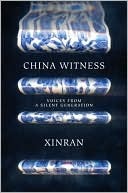 China Witness: Voices from a Silent Generation
By Xinran
This past century has been a tumultuous one for China. Until 1912, China was still ruled by the Qing Dynasty, which gave way after the Xinhai Revolution to a series of regional warlords vying for supremacy. Nationalists were finally able to consolidate power by 1928, but then war, first with Japan and then civil war within China, was followed by the Communist revolution in 1949. The “Time of the Leadership of the Party” and the Cultural Revolution caused untold suffering, including millions of deaths from starvation during the Great Leap Forward. In China Witness, Xinran undertook an prodigious, almost Herculean, project. This amazing woman, a journalist in China for over two decades, set out to record the experiences of ordinary Chinese people, particularly those of her parents’ generation, before they were lost and forgotten.
Few historical records have survived the chaos of these “cataclysmic changes” in China. Many people were understandably reticent to commit anything to paper due to fear of reprisals; the winds of fortune could change very swiftly and an innocuous comment one day could be seen as dangerous proof of disloyalty or insufficient zeal for the motherland the next day.
During the Cultural Revolution, many precious traditional landmarks and practices were systematically and intentionally wiped out by those in power in an attempt to “modernize” or simply remove other focuses that might draw loyalty or attention away from the Party; even family genealogical records had to be hidden or they would be destroyed. The lack of written documentation and the aging of the population who had lived through this time period gave Xinran’s project a strong sense of urgency. She spent years laying the groundwork and then traveling all over China interviewing people about life during this period.
Her interviewees include a shoe-mender who has fixed footwear on the same back street in Zhengzhou on the Yellow River for 28 years; a husband and wife pair who were two of the founders of China’s oil industry; and lantern makers in Nanjing in eastern China desperately trying to keep their ancient cultural tradition alive, but resigned to its eventual demise. Xinran traveled to the desert in the extreme northwest corner of China to an isolated city called Shihezi. Located on the ancient Silk Road, Shihezi is a modern city that was built by hundreds of thousands of political prisoners in the 1950s. She visited big cities like Beijing and Shanghai and small villages all over the country. The result is a broadly painted, but deeply intimate, portrait of a Chinese generation.
Common themes crop up again and again: national pride and self-respect, resilience and persistence in the face of incredible hardship, forgiveness and a willingness to move forward despite the pain of the past. One frequent sadness expressed by those Xinran interviewed involved lost time with family. Children were often raised by grandparents while the parents devoted themselves to the aims of the Communist Party in far-flung places, sometimes able to visit only a few times a year. Xinran mentions during one interview: “Almost all the parents have shared that pain – that is, they didn’t give their children the family and the love that they should have done, or fulfilled their needs, and it’s the biggest regret of their lives.”
Xinran invites her Western readers to learn about her homeland. “Knowledge about China is so small,” she laments, “it is a decimal fraction many positions after the decimal point.” In her afterword she relates her disappointment in the Western media coverage leading up to the Beijing Olympics, her sorrow at the devastating 7.8 earthquake that hit north Sichuan on 12 May 2008, and her devout hope that more individuals in the West will make a sincere effort to understand China and her people. “As a Chinese media person I struggled with Chinese censorship for a long time before I moved to London in 1997. Now, I feel the same sense of struggle again, but in the West, not with censorship, but with ignorance about my motherland.” Reading China Witness is a solid first step towards diminishing that ignorance and increasing understanding.
**************************
On My Bedside Table…
Just finished: American Wasteland: How America Throws Away Nearly Half of Its Food by Jonathan Bloom
Now reading: American Grace: How Religion Divides and Unites Us by Robert D. Putnam and David E. Campbell
On deck: A Thousand Sisters: My Journey into the Worst Place on Earth to Be a Woman by Lisa J. Shannon
**************************
Though I was originally only planning for two columns about China, I’ve found so many great books to share that I have enough for a third column in two weeks! Come find me on goodreads.com or email suggestions, comments, and feedback to egeddesbooks (at) gmail (dot) com.