






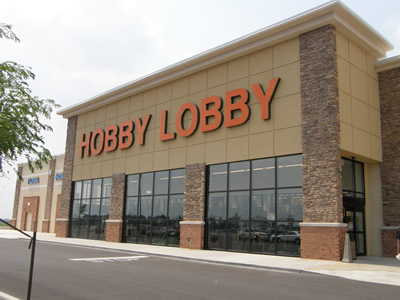
The United States Supreme Court decided an important religious freedom case this week. In a 5-4 decision the court ruled that a privately held corporation is allowed its free exercise of religion. The landmark case, made famous by the mega-craft store Hobby Lobby, held that plaintiffs dont have to comply with certain parts of Obamacare that offend their religious beliefs. Specifically, Hobby Lobby and two other plaintiffs are not required to pay for an employees abortion-related contraception such as the “morning after” pill.
The basis of this precedent-setting decision is a federal law known as the Religious Freedom Restoration Act, or RFRA.
RFRA states that the federal government shall not substantially burden a persons free exercise of religion and the court held that a privately owned family business is a “person” in terms of this law.
Under RFRA, for the federal government to violate a persons religious beliefs it has to demonstrate a “compelling government interest” and it then has to pursue a solution to enforce that interest in “the least restrictive means” possible. In other words, to force Hobby Lobby to pay for its employees abortion pills, the federal government would have to prove why abortion pills for employees are more important than the religious beliefs of employers and, even if that were possible to prove, the federal government would have to enforce its mandates in the least restrictive means possible. The court properly acknowledged that requiring Hobby Lobby to pay daily fines of $1.3 million, or nearly a half-billion dollars a year, in noncompliance is a clear burden to its free exercise of religion.
Of course, the progressive left is going crazy implying (and sometimes outright lying about) what this decision really means. They say its an attack on women, jeopardizes womens health and allows employers to make decisions that should remain the province of a doctor and her patient. All of that is irrelevant.
The majority court also addressed a dissenting criticism that for-profit companies dont have religious rights. Justice Samuel Alito wrote, “While it is certainly true that a central objective of forprofit corporations is to make money, modern corporate law does not require for-profit corporations to pursue profit at the expense of everything else, and many do not do so. If for-profit corporations may pursue [many] worthy objectives, there is no apparent reason why they may not further religious objectives as well.”
In the end, employees for Hobby Lobby still receive birth control as a part of their company insurance plan; they just dont receive abortion pills at company expense.
While the Hobby Lobby decision means that religious freedom is alive and well at the federal level, the future of religious freedom in states without a RFRA law remains uncertain.
The federal RFRA law covers federal attempts to burden religious freedom. It doesnt cover state and local policies that might infringe on your free exercise of religion. Nineteen states have passed state RFRAs, but Utah has yet to join those ranks. Some people believe that Utah has some magical “Zion curtain” that prevents state and local government from challenging your religious freedom. It doesnt.
Legislatures in Utah and other states would be prudent to consider passing state RFRAs. Attacks against religious freedom are knocking at our door.
Paul Mero is president of Sutherland Institute.