




PHOTO ESSAY

Basking in an 18th Century Williamsburg Christmas – A Photographic Essay
Come with us to Colonial Williamsburg in Virginia and join in celebrating Christmas an old-fashioned way. Enjoy beautiful photographs of the Duke of Gloucester Street before the winter sunrise. Come and see.
-

-
-
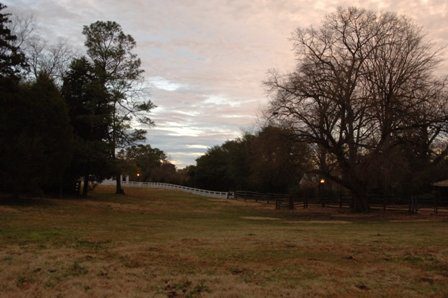
The light and colors here are breathtaking in my book. I think Al Rounds could paint a marvelous watercolor of this scene and not want to change a thing. I am always attracted to the silhouettes of skeletal trees in winter. They, to me, are the picture of hope for new life.
-
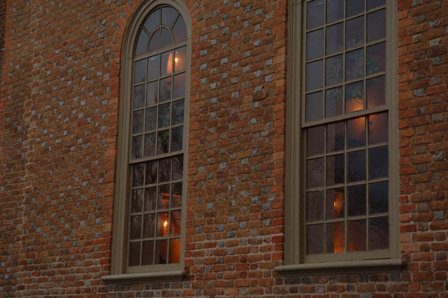
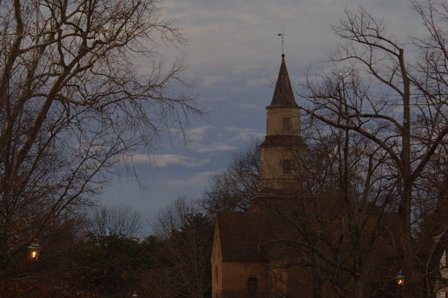
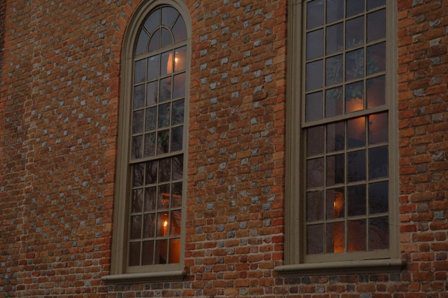
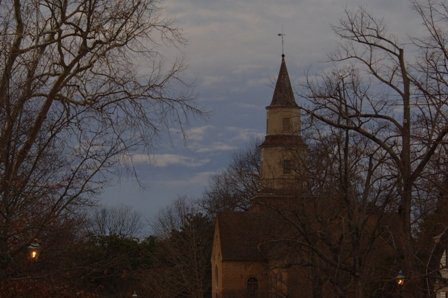
Bruton Parish Church was the scene of many a fiery pre-revolution speech. We love going here and listening to very knowledgeable, costumed interpreters who bring Williamsburg alive in the 18th century.
-
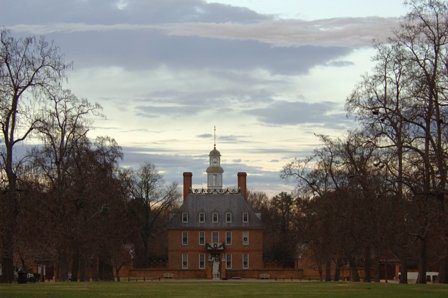
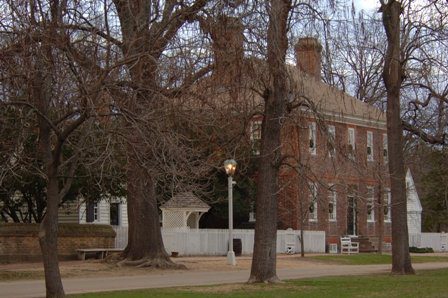
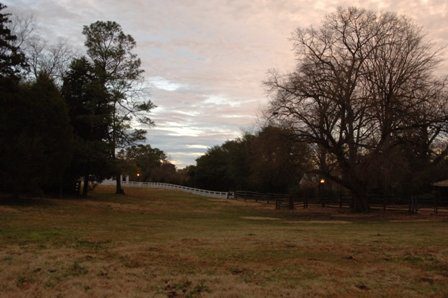
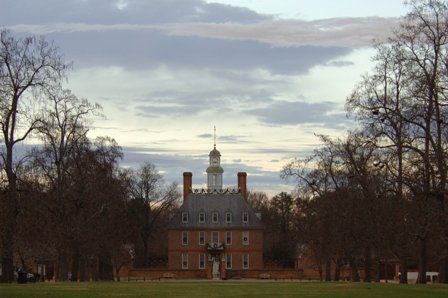
The Governor’s Palace and Green are a centerpiece of Colonial Williamsburg. We have been here early in the morning and late at night for re-enactments and fife and drum parades. This is a rare moment where the stillness of morning is captured in a timeless way.
-
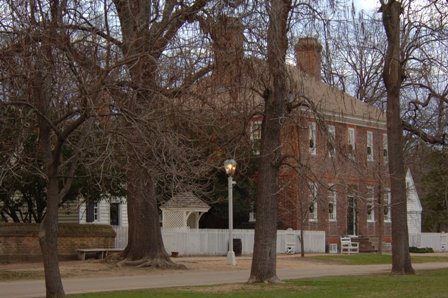
The Wythe House is full of feeling and meaning. Here Thomas Jefferson was tutored by the amazing George Wythe (pronounced “with”). “No man ever left behind him a character more venerated than George Wythe,” Thomas Jefferson wrote. “His virtue was of the purest tint; his integrity inflexible, and his justice exact; of warm patriotism, and, devoted as he was to liberty, and the natural and equal rights of man, he might truly be called the Cato of his country.” George Wythe was the first of the Virginia delegation to sign the Declaration of Independence.
-
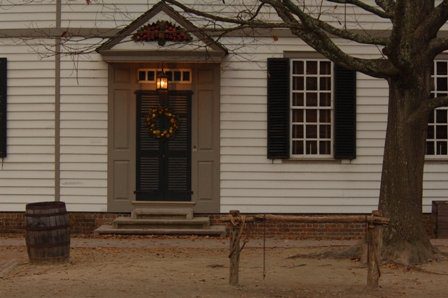
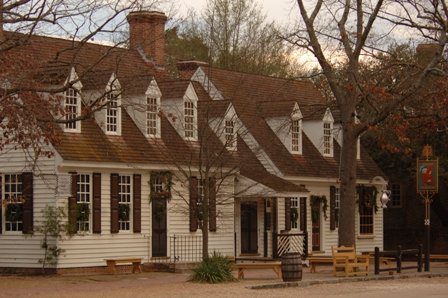
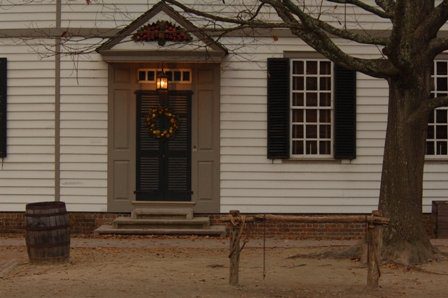
Some homes are decorated with a subtle Christmas look, like this one, others are more elaborate. Most of the decorations in the 18th Century were simple and used the materials readily available to the colonists.
-
Though we see lots of fresh fruit on the handmade wreaths today, fruit, especially citrus, was not readily available in the 18th Century.
-
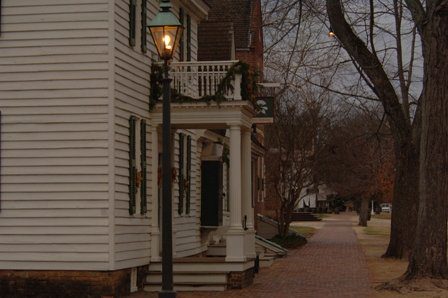
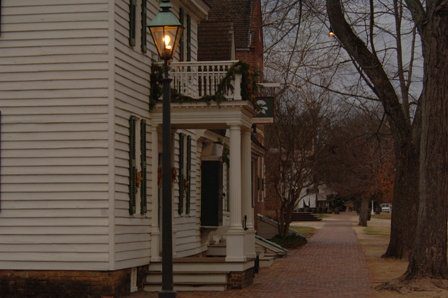
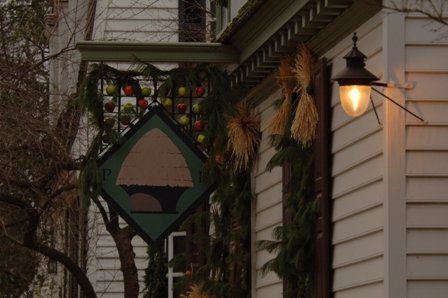
I love the lamps throughout Williamsburg. Though they are electric, they still give the sense of gas lamps and a harking back to the distant past. Bruton Parish Church is on the Duke of Gloucester Street.
-
Josiah Chowning’s Tavern shown here was first opened in 1766 and appealed to the “ordinary sort.” That must be why we like the place so much.
-
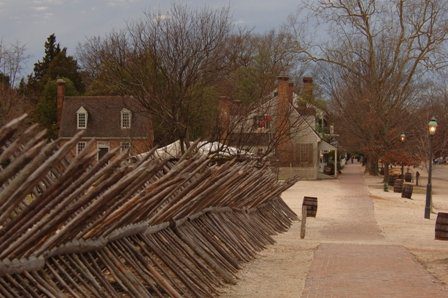
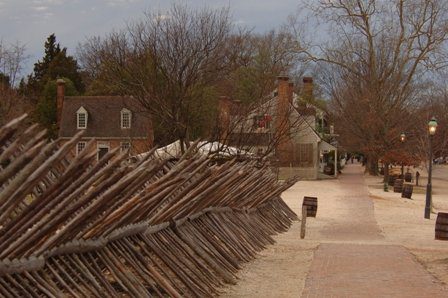
The Magazine, where all the arms were stored and protected, was surrounded by this specially built fence of pickets.
-
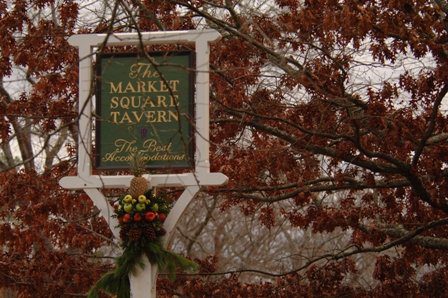
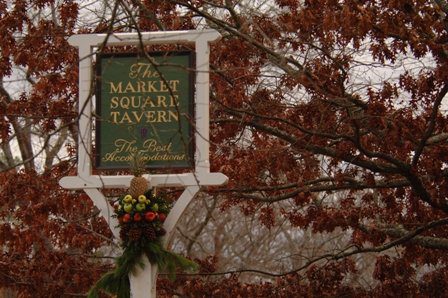
The pineapple can be seen everywhere in Williamsburg and is a common symbol of colonial times here. Because the exterior of the fruit resembled the pine cone, and the sweet fruit was similar to the texture and taste of an apple, the name was changed by the British from its original “anana” to pineapple.
-
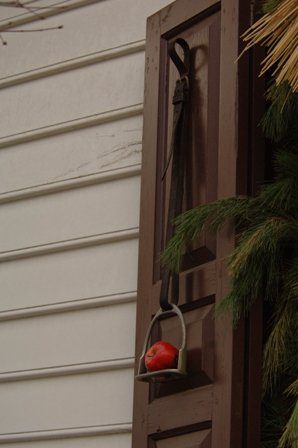
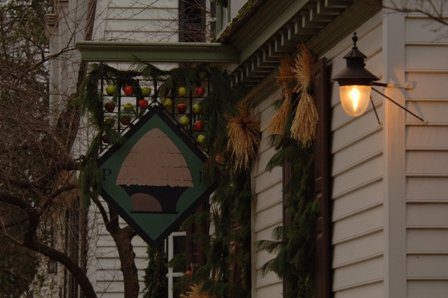
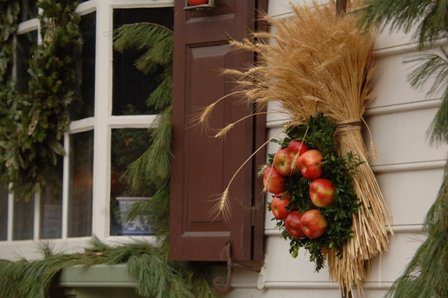
Apples of many varieties are used to decorate on the outside and inside of the homes in Williamsburg. With a touch of wheat and some pine boughs an 18th century home can quickly be made to look quite festive.
-
I loved this arrangement so much I made it the cover image for today’s essay. There is something about this that just makes me so happy.
-
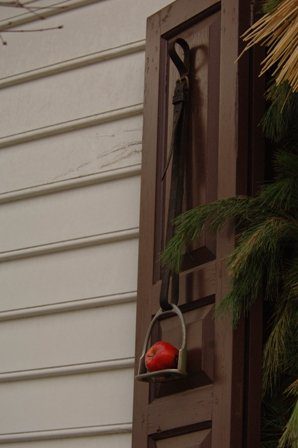
Here’s a simple and attractive Christmas touch with an apple and a stirrup
-
The light and colors here are breathtaking in my book. I think Al Rounds could paint a marvelous watercolor of this scene and not want to change a thing. I am always attracted to the silhouettes of skeletal trees in winter. They, to me, are the picture of hope for new life.
-
Bruton Parish Church was the scene of many a fiery pre-revolution speech. We love going here and listening to very knowledgeable, costumed interpreters who bring Williamsburg alive in the 18th century.
-
The Governor’s Palace and Green are a centerpiece of Colonial Williamsburg. We have been here early in the morning and late at night for re-enactments and fife and drum parades. This is a rare moment where the stillness of morning is captured in a timeless way.
-
The Wythe House is full of feeling and meaning. Here Thomas Jefferson was tutored by the amazing George Wythe (pronounced “with”). “No man ever left behind him a character more venerated than George Wythe,” Thomas Jefferson wrote. “His virtue was of the purest tint; his integrity inflexible, and his justice exact; of warm patriotism, and, devoted as he was to liberty, and the natural and equal rights of man, he might truly be called the Cato of his country.” George Wythe was the first of the Virginia delegation to sign the Declaration of Independence.
-
Some homes are decorated with a subtle Christmas look, like this one, others are more elaborate. Most of the decorations in the 18th Century were simple and used the materials readily available to the colonists.
-
Though we see lots of fresh fruit on the handmade wreaths today, fruit, especially citrus, was not readily available in the 18th Century.
-
I love the lamps throughout Williamsburg. Though they are electric, they still give the sense of gas lamps and a harking back to the distant past. Bruton Parish Church is on the Duke of Gloucester Street.
-
Josiah Chowning’s Tavern shown here was first opened in 1766 and appealed to the “ordinary sort.” That must be why we like the place so much.
-
The Magazine, where all the arms were stored and protected, was surrounded by this specially built fence of pickets.
-
The pineapple can be seen everywhere in Williamsburg and is a common symbol of colonial times here. Because the exterior of the fruit resembled the pine cone, and the sweet fruit was similar to the texture and taste of an apple, the name was changed by the British from its original “anana” to pineapple.
-
Apples of many varieties are used to decorate on the outside and inside of the homes in Williamsburg. With a touch of wheat and some pine boughs an 18th century home can quickly be made to look quite festive.


No Comments | Post or read comments